Become a Data Engineer with AI in 2026: Master Azure, Databricks, Microsoft Fabric & SQL
Introduction: Build Your Future in AI-Driven Data Engineering
Data is one of the most valuable assets for modern organizations. From customer transactions and financial records to real-time applications and artificial intelligence, businesses depend on reliable data systems to make inform`ed decisions.
This growing need has made Data Engineering a valuable career path in 2026. Companies require professionals who can collect, process, transform, secure, and deliver data using modern cloud platforms and advanced data processing technologies.
By learning SQL, Python, Microsoft Azure, Azure Databricks, Microsoft Fabric, and AI-assisted development, aspiring professionals can develop the technical skills needed to work with modern data platforms.
At SQL School Training Institute, learners can explore these technologies through structured training, practical exercises, and real-time project development.
1. The New Era of Data Engineer: From Traditional ETL to AI-Ready Data
Traditional data engineering focused primarily on extracting data from source systems, transforming it, and loading it into databases or data warehouses.
Modern data engineering extends beyond traditional ETL processes. Engineers now build scalable cloud pipelines, process large datasets, support streaming analytics, implement data governance, and prepare trusted data for AI applications.
Today’s data engineering ecosystem includes:
- Cloud-based data integration and orchestration.
- Data lakes, lakehouses, and cloud data warehouses.
- Distributed data processing using Apache Spark.
- Automated data quality and validation.
- Real-time and incremental data processing.
- AI-ready data preparation and retrieval systems.
Understanding these concepts helps you build solutions that support analytics, business intelligence, and intelligent applications.
2. Build a Strong Technical Foundation with SQL and Python
SQL and Python form the foundation of many data engineering workflows.
SQL: The Language Behind Reliable Data Systems
SQL helps data engineers retrieve, manipulate, validate, and organize information stored in relational databases.
Important topics include:
- SQL queries, joins, subqueries, and common table expressions.
- Window functions, ranking, and analytical calculations.
- Stored procedures, views, and user-defined functions.
- Indexing and query performance optimization.
- Data modeling, constraints, and transaction management.
- Incremental data loading and data validation.
Strong SQL skills make it easier to work with operational databases, staging tables, and analytical data warehouses.
Python: Automate and Transform Data Efficiently
Python is widely used to automate data workflows and build data processing applications.
Focus on:
- Python programming fundamentals.
- Working with CSV, JSON, and other file formats.
- Reading data from APIs and external systems.
- Exception handling, logging, and reusable functions.
- Data manipulation and transformation.
- PySpark for distributed data processing.
Combining SQL and Python enables you to build more flexible and maintainable data solutions.
3. Engineer Cloud Data Pipelines with Microsoft Azure
Microsoft Azure provides services for ingesting, storing, processing, and managing data in the cloud.
A data engineer should understand how these services work together to create dependable data pipelines.
Essential Azure Data Engineering Technologies
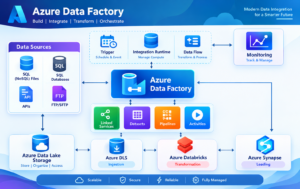
Azure Data Factory (ADF): Create pipelines, configure activities, schedule data movement, and orchestrate workflows.
Azure Data Lake Storage Gen2 (ADLS Gen2): Store structured, semi-structured, and unstructured data in a scalable cloud environment.
Azure SQL: Work with relational data, database objects, and cloud-hosted SQL workloads.
Azure Synapse Analytics: Understand data integration and analytical processing capabilities where relevant to the target architecture.
Azure monitoring and security: Learn pipeline monitoring, error handling, access management, and operational troubleshooting.
Practical Example: Automating a Daily Sales Pipeline
Imagine an organization receiving sales data from multiple branches every day.
A data engineer can use Azure Data Factory to ingest the files, store raw data in ADLS Gen2, apply validation and transformation rules, and load the cleaned data into an analytical destination.
The resulting dataset can support reporting, forecasting, and business decision-making.
4. Scale Data Processing with Azure Databricks and Lakehouse Engineering
When organizations need to process large datasets, traditional database queries alone may not be sufficient. Distributed processing technologies such as Apache Spark help process data across multiple computing resources.
Azure Databricks provides a collaborative environment for developing data engineering workloads using Spark and related technologies.
Databricks Skills Every Aspiring Data Engineer Should Explore
- Apache Spark architecture and Spark SQL.
- PySpark DataFrames and transformations.
- Batch and incremental data processing.
- Delta Lake tables and reliable data operations.
- Auto Loader and file ingestion patterns.
- Medallion architecture.
- Job scheduling, monitoring, and troubleshooting.
- Data access and governance using Unity Catalog.
Understanding the Bronze, Silver, and Gold Architecture
The medallion architecture organizes data into layers according to its processing stage.
Bronze layer: Stores raw data ingested from source systems.
Silver layer: Contains cleaned, standardized, and validated data.
Gold layer: Provides business-ready datasets for reporting, analytics, and downstream applications.
This approach supports traceability, data quality, and organized transformation workflows.
5. Unlock Unified Analytics with Microsoft Fabric
Microsoft Fabric brings together data engineering, data integration, analytics, and business intelligence capabilities in an integrated platform.
Professionals who understand Fabric can develop data solutions that connect ingestion, processing, storage, and reporting.
Microsoft Fabric Technologies to Learn
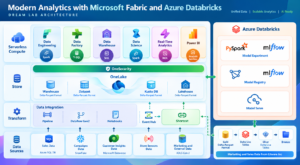
OneLake: The unified logical data lake foundation for Fabric workloads.
Fabric Lakehouse: Organize data for engineering and analytical workloads.
Fabric Data Factory: Build data pipelines and dataflows for integration and transformation.
Fabric notebooks: Develop data processing logic using Spark and supported programming languages.
Fabric Warehouse: Work with structured analytical data and SQL-based warehouse workloads.
Power BI: Build dashboards and reports from curated datasets.
Azure Databricks vs. Microsoft Fabric
Azure Databricks is particularly useful for Spark-based data processing, lakehouse engineering, and scalable data workloads. Microsoft Fabric integrates data engineering with a broader analytics environment.
The right choice depends on the organization’s existing architecture, data requirements, governance needs, and technical ecosystem. Learning both platforms can help you understand different approaches to modern data engineering.
6. Integrate Artificial Intelligence into Your Data Engineering Workflow
AI is changing how technical teams write code, investigate errors, document systems, and develop data applications.
For data engineers, AI is most useful when combined with reliable data pipelines, clear validation rules, and appropriate security controls.
Practical Applications of AI in Data Engineering
AI-assisted SQL development: Generate query drafts, explain complex joins, and identify potential query improvements.
Pipeline development assistance: Draft transformation logic, expressions, and technical documentation.
Automated data quality support: Suggest rules for identifying missing values, duplicate records, and inconsistent formats.
Intelligent troubleshooting: Help interpret pipeline errors and investigate possible causes.
AI-ready data preparation: Prepare clean, governed datasets for AI-powered search, machine learning, and enterprise applications.
Retrieval-Augmented Generation (RAG): Learn how document processing, embeddings, vector search, and retrieval can support applications that answer questions using relevant source material.
AI-generated results must be reviewed, tested, and validated before production use. Sensitive information should never be shared with unapproved AI tools.
7. Learn by Building: Four Industry-Oriented Data Engineering Projects
Practical project development helps learners understand how individual technologies work together in a complete solution.
Project 1: E-Commerce Sales Intelligence Pipeline
Build a solution that processes customers, products, orders, payments, and sales transactions.
Technology stack: SQL Server, Azure Data Factory, ADLS Gen2, Databricks, PySpark, and Power BI.
Project objectives:
- Ingest data from multiple sources.
- Clean and validate transactional records.
- Transform data using SQL and PySpark.
- Organize data using Bronze, Silver, and Gold layers.
- Create sales and customer analytics dashboards.
Project 2: Financial Data Quality and Reconciliation Platform
Develop a workflow for validating financial transactions and identifying inconsistencies.
Technology stack: SQL, Python, Azure Data Factory, and Databricks.
Project objectives:
- Identify duplicate and missing transactions.
- Standardize date and transaction formats.
- Apply business validation rules.
- Create exception and reconciliation reports.
- Maintain audit information for troubleshooting.
Project 3: Microsoft Fabric Lakehouse Analytics
Create an integrated data solution that prepares business data for analytics.
Technology stack: Microsoft Fabric, OneLake, Lakehouse, Fabric Data Factory, notebooks, and Power BI.
Project objectives:
- Ingest datasets from different sources.
- Transform raw data into curated tables.
- Apply data quality checks.
- Prepare analytical datasets.
- Build interactive business reports.
Project 4: AI-Powered Enterprise Knowledge Assistant
Develop a prototype that answers questions using an approved collection of business documents.
Technology stack: Python, document processing, embeddings, vector search, and a suitable large language model.
Project objectives:
- Extract and clean document content.
- Split documents into searchable sections.
- Generate embeddings and retrieve relevant passages.
- Produce answers grounded in retrieved information.
- Test response quality, access permissions, and data protection.
These projects can provide useful portfolio examples when supported by clear documentation, working demonstrations, and an explanation of the design decisions.
8. Your 2026 Data Engineering Career Roadmap
A structured learning plan helps you progress from database fundamentals to cloud and AI-enabled engineering.
Phase 1: Master Database Fundamentals
Learn SQL, T-SQL, relational databases, data modeling, and query optimization.
Phase 2: Develop Programming Skills
Practice Python, file handling, APIs, data transformations, and PySpark.
Phase 3: Build Azure Data Pipelines
Explore Azure Data Factory, ADLS Gen2, data ingestion, scheduling, and monitoring.
Phase 4: Practice Distributed Data Engineering
Learn Databricks, Spark, Delta Lake, incremental loading, and medallion architecture.
Phase 5: Expand into Microsoft Fabric and AI
Explore OneLake, Fabric Lakehouse, Data Factory, AI-assisted development, and AI-ready data workflows.
Phase 6: Complete Projects and Prepare for Interviews
Build end-to-end solutions, troubleshoot realistic scenarios, document your work, and practice technical interview questions.
Your learning timeline depends on your previous experience, available study hours, and project depth. Consistent hands-on practice is more valuable than learning every tool superficially.
9. Explore Career Paths Across the Modern Data Ecosystem
After developing the relevant technical skills and practical experience, you can target positions such as:
- Azure Data Engineer
- Databricks Data Engineer
- Microsoft Fabric Data Engineer
- Cloud Data Engineer
- Big Data Engineer
- ETL Developer
- SQL Developer
- Data Platform Engineer
Each position has different expectations. Review current job descriptions and focus on the technologies, architecture patterns, and practical experience relevant to your target role.
10. Why Choose SQL School for Practical Data Engineering Training?
SQL School Training Institute in Hyderabad offers technology-focused training for learners who want to develop database, cloud, and data engineering skills.
The learning approach emphasizes connecting technical concepts with practical exercises and project development.
Training features include:
- Hands-on SQL and database practice.
- Azure Data Engineering concepts and pipeline development.
- Databricks, Spark, PySpark, and lakehouse fundamentals.
- Microsoft Fabric and modern analytics workflows.
- Scenario-based exercises and real-time project practice.
- Resume guidance and interview preparation.
- Placement assistance.
Sai Phanindra, Founder and Trainer, brings extensive industry experience to technical training. Learners should select a program that aligns with their existing skills and career goals.
Frequently Asked Questions About Data Engineering in 2026
Can beginners learn Data Engineering with AI?
Yes. Beginners can start with SQL and Python, then progress to cloud data services, distributed processing, and AI fundamentals through structured practice.
Is SQL still important for Data Engineers in 2026?
Yes. SQL remains an essential skill for querying, transforming, validating, and managing data across relational databases and analytical platforms.
Do I need to learn Azure Databricks and Microsoft Fabric together?
Not necessarily. You can start with the platform most relevant to your career goals and expand your knowledge as needed. Understanding both broadens your familiarity with modern data architectures.
What projects should I include in my Data Engineering portfolio?
Consider an end-to-end ETL pipeline, a data quality solution, a lakehouse analytics project, and an AI-powered document search prototype. Clearly explain the architecture, technologies, validation rules, and results.
How can AI help a Data Engineer?
AI can assist with code generation, documentation, troubleshooting, data validation design, and preparing datasets for AI applications. Technical review and testing remain essential.
Conclusion: Turn Your Data Engineering Skills into Practical Experience
The future of data engineering combines strong database fundamentals, cloud-native architecture, distributed processing, unified analytics, and AI-assisted development.
By mastering SQL, Python, Microsoft Azure, Azure Databricks, Microsoft Fabric, and essential AI concepts, you can build the foundation required to develop modern data solutions.
Start with the fundamentals, practice with real-world scenarios, and create projects that demonstrate your ability to solve business problems.
Data Engineer Training: https://sqlschool.com/azure-data-engineer-training/
Data Engineer Curriculum: https://sqlschool.com/wp-content/uploads/2026/10/SQL-with-Azure-Data-Engineering.pdf
Ready to become a Data Engineer with AI in 2026?
Explore practical Data Engineering training at SQL School Training Institute and take the next step toward your career goals.
Contact SQL School: +91 96664 40801 / +91 99514 40801
Website: https://sqlschool.com/
#DataEngineering #DataEngineer2026 #AzureDataEngineer #AzureDatabricks #MicrosoftFabric #SQL #Python #PySpark #AI #CloudComputing #DataEngineeringProjects #SQLSchool

