

Module 1: Database & SQL Server Concepts
Module 2: Core SQL DBA
Module 3: Azure SQL DBA + CoPilot
Module 4: DP-300 + Resume Preparation


Database Administrators (DBAs) are always in demand. As a DBA, we are responsible for Database Maintenance, Repairs, Troubleshooting, Optimizations, Updates, Upgrades, Security, Data Cleaning and more..
Training Highlights
✅ SQL Server Installation & Configuration
✅ Backup, Restore & Recovery Strategies
✅ HA-DR Strategies, Tuning & Issues
✅ Tuning, Alerts, Troubleshooting
✅ Upgrades, Patching & Security
✅ Azure SQL DB Migrations
✅ Azure AI Search, Licensing
✅ Azure VMs, Always-On (AOAG)
✅ 3rd Party Tools, DAC, Rebuilds
Modules We Learn:
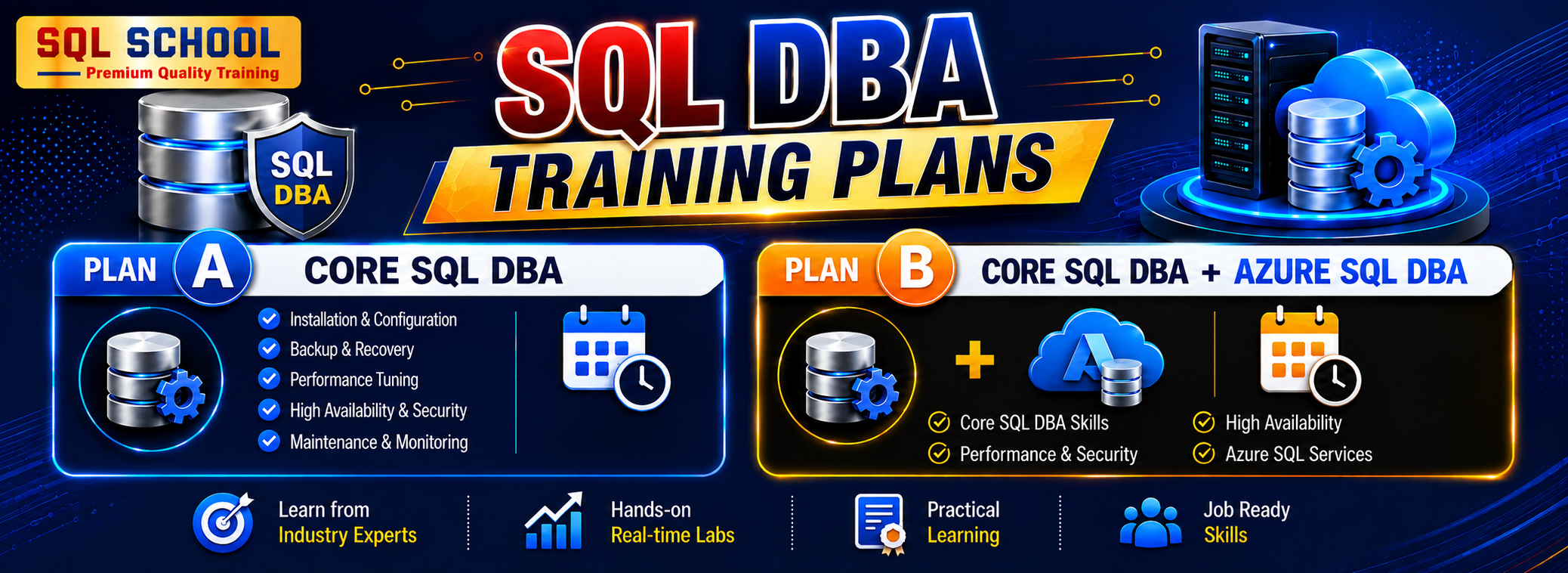
✅ Module 1: Core SQL DBA
✅ Module 2: Azure SQL DBA
✅ Module 3: Real-Time Projects
✅ Module 4: DP-300 Exam Guidance, Resume
Course Duration: 2 Months
SQL DBA
Course Contents:
Module 1: Core SQL DBA
Ch 1: SQL Database Job Roles
- Introduction to Databases
- DBA Job Roles, Activities
- 3rd Party Tools, Incident Management
- DBA Job Scope, Growth
Ch 2: Database Intro & Installations
- SQL Server Installations
- Instance & Collations
- SSMS & Connections
- Authentications. Installation Issues
Ch 3: SQL Basics V1 (Commands)
- SQL Basics (DDL, DML, etc.)
- Creating Databases, Tables
- Data Inserts (GUI, SQL)
- Basic SELECT Queries
Ch 4: SQL Basics V2 (Commands, Operators)
- DDL: Create, Alter, Drop
- DML: Insert, Update, Delete
- DQL: Select, Fetch. SQL Operators
Ch 5: Schemas & Database Imports
- Schemas, Table Grouping
- Data Imports with Excel
- Data Types Detection
- OLE-DB, GO, 4 Part Naming
Ch 6: Constraints, Keys & RDBMS
- Null, Not Null Constraints
- Unique Key & Check
- Primary Key & Default
- Foreign Keys, DB Diagrams
Ch 7: Joins & Queries
- Joins & TSQL Queries
- Inner Joins, Matching Data
- Outer Joins: Left, Right, Full
- Self Joins, Conditions
Ch 8: Views & RLS
- Views: Realtime Usage
- DML, SELECT with Views
- WITH CHECK OPTION
- RLS, Important System Views
Ch 9: Stored Procedures – 1
- Stored Procedures & Parameters
- SELECT & Conditional DML
- IF Statement, SP Recompilation
- System Stored Procedures
Ch 10:Functions & Queries
- Scalar, Table Value Functions
- Variables & Parameters
- Date Time, Conversion Functions
- String, Aggregated Functions
Ch 11: Triggers & Automations
- DDL & DML Triggers
- For / After, Instead of Triggers
- Disabling DMLs Triggers
Ch 12: Transactions & ACID
- Auto Commit & Explicit
- Commit, Rollback, Lock Hints
- Checkpoint, Query Blocking
- TRY…CATCH, Error Handling
Ch 13: SQL Server Architecture
- Database Engine Components
- Parser, Compiler & Optimizer
- Checkpoint, SQL OS
- Memory Manager & IO Managers
Ch 14: DB Architecture (VLDB)
- Planning Large Databases
- Files, Filegroups
- Pages, Extents
- VLF, LSN, Mini LSN
Ch 15: Backups & Audits
- Database Backups & Types
- DB, Filegroup, File Backups
- Copy Only, Partial Backups
- Checksum, Backup Audits
Ch 16: Restores & Recovery, PITR
- DB, Filegroups, File Restores
- Restoring & Online States
- Standby Mode & MOVE
- Point-In-Time (PITR) Restores
Ch 17: Jobs, Maintenance Plans
- SQL Server Agent, Jobs
- Steps & Schedules
- Maintenance Plans, Backups
- Common Errors, Solutions
Ch 18: Database Mail, Alerts
- Database Mail, SMTP
- Alert System: Agent Settings
- Operators, Job Notifications
- Email Connections, Tests
Ch 19: Security Management – 1
- Security Objects, Logins
- Users, Roles & Principals
- Object, Column Level Security
- Security Audit, Logon Failures
Ch 20: Security Management – 2
- Keys & Certificates
- Encryptions & Data Security
- Password Encryptions
Ch 21: Database Migrations
- Credentials, SSIS Proxies
- CDW Packages. SMO Method
- Database Detach – Attach
- Detect, Fix Orphan Users
Ch 22: Tuning: Audits, AM Tool
- Activity Monitor. Perfmon Tool
- Query Store. Recovery Models
- DMVs, DMFs. Long Running Queries
Ch 23: Tuning: Indexes
- Clustered, Non Clustered, Online
- Column Store, Included, Covering
- Indexed Views, Selectivity
- Execution Plans, Index Seek
Ch 24: Tuning: Partitions, Statistics
- Partitions: Performance Tuning
- Functions & Schemes, Compressions
- Index & Column Statistics
- Stats Updates in Real-Time
Ch 25: Index Management
- Index Rebuilds, Re-Organize
- Database Maintenance Plans
- Resumable & Online Indexes
- PAUSE, RESUME in Rebuilds
Ch 26: Tuning Tools
- Tuning Tools: DTA, Profiler
- PDS Recommendations
- Query Execution Cache
- Tuning Tools, Precautions
Ch 27: Execution Plans & AI Tuning
- Execution Plan Analysis
- IO, CPU Cost, SubTree, Operators
- NUMA Nodes, Processor Affinity
- Thread Count, DOP, CTEs
- AI Enabled Tuning For SQL DBAs
Ch 28: Locks & Isolation Levels
- S, X, IX, U and MD Locks
- Sch-M and Sch-S Locks
- SP_WHO2, SP_LOCK
- Isolation Levels, Versioning
- Read Committed Snapshot
Ch 29: Deadlocks, LIVE Locks
- Deadlocks in Real-world
- Profiler Tool & Deadlocks
- Deadlock Avoidance, Prevention
- sysprocesses & sp_who2
Ch 30: HA DR @ Replication – 1
- Replication: Realtime Usage
- Distributor Configurations
- Publisher and Subscriber
- Snapshot, Transactional
- Replication Monitor, Alerts
Ch 31: HA DR @ Replication – 2
- Merge Replication & Usage
- Peer – Peer Replication
- Conflict Detection, Avoidance
- Limitations with Replication
- Common Errors, Solutions
Ch 32: HA DR @ Log Shipping
- Log Shipping Configurations
- Primary, Secondary Servers
- TUF Files, NORECOVERY, STANDBY
- Common Errors, Solutions
Ch 33: HA DR @ DB Mirroring
- Database Mirroring Concepts
- Principal, Mirror, Witness
- Synchronous, Asynchronous
- Automated Failover Process
Ch 34: DB Health Checks, Repairs
- DBCC for Audits, Repairs
- MSDB Suspect Pages, DB Repairs
- Single User Mode. Emergency Mode
Ch 35: Updates & Upgrades
- Updates Process. RTM, SP, CU
- Upgrades Process (In-Place)
- Cautions & Maintenance. Rollbacks
- Command Line Installations, DAC
- System DB Rebuilds, SQL CMD
Ch 36: SLA & OLA & Ticketing Tools
- Incident Management. KB Articles
- SLA & OLA. Ticketing Tools
- Service Requests & Escalation Process
Ch 37: 3rd Party Tools, AI For SQL DBA
- Redgate Monitor, Blocking
- SQL Sentry, AI Enabled Administration
- sp_whoisactive
- Execution Plan Analysis
Ch 38: SQL DBA Project – Phase 1
Environment: Ecommerce Database
- Routine DBA Activities
- Maintenance DBA Activities
- Auditing Techniques
- RCA (Root Cause Analysis)
Ch 39: SQL DBA Project – Phase 2
Environment: Ecommerce Database
- Emergency DBA Activities
- Slow Database Issues
- Network Errors, Security Strategies
- HA DR Strategies, Common Error Codes
Module 2: Azure SQL DBA
Ch 40: Cloud Basics, Azure Funda
- Cloud Fundamentals
- IaaS, PaaS, SaaS Cloud Types
- Azure Resources & Services
- Azure Account & Subscription
Ch 41: Azure SQL Deployments
- Azure SQL Server Deployments
- Azure SQL Databases, Firewall
- SSMS Tool: Test Connections
- Azure SQL DB Operations
Ch 42: vCore, DTU, Elastic Pools
- Azure SQL DB Licensing
- DTUs: Basic, Standard Types
- VPU and Cost Optimization
- Elastic Pools, eDTU
- Elastic Query Processing
Ch 43: Azure Storage Account
- Azure Data Lake Storage Account
- General Purpose, Big Data Options
- Storage Containers, BLOB File Uploads
Ch 44: Azure SQL DB Migrations
- SQL DB Migration Options
- ADLS & Bacpac
- Azure SQL DB Import
- Migration Issues
Ch 45: Azure Automated Tuning, AI
- Server, DB Level Tuning
- Built-In Intelligence, AI
- Azure AI Search Service
- AI Indexes, Tokens, Refresh
Ch 46: Query Store, Insights, Alerts
- Azure SQL DB Metrics
- CPU, Memory, Log Metrics
- Data File Metrics, Alerts
- Action Groups & Emails
Ch 47: Azure Backups, Restores
- Azure SQL DB Backups
- LTR Backups, Log Backups
- Backup History, Restores
- LTR & PITR Restores
Ch 48: HA DR @ Replication
- Geo Replication
- Manual & Automated Failover
- DMVs For Replication
- Replication Tests
Ch 49: HA DR @ Server Failover
- Multi Database Replication
- Failover Groups
- Replica DB: Status
- Automated Failover
Ch 50: Azure Security: Logins, RLS
- Azure SQL Server Security
- Logins, Users, Roles
- Row Level Security (RLS)
- Dynamic Data Masking (DDM)
Ch 51: Azure Security: RBA, TDE
- Azure AD Users, AD Principals
- IAM Concepts, Implementing RBAC
- MFA Authentication
Ch 52: Azure Managed Instance
- Azure MI Implementation
- Cloud Azure MI Access
- Azure MI Migrations
- On-Premises Versus Azure
Ch 53: Azure Elastic Jobs
- Elastic Job Agent & Architecture
- Job Credentials, Managed Identity & Target Groups
- Scheduling Elastic Jobs
- Job Execution, Monitoring & Troubleshooting
Ch 54: PowerShell, Azure CLI
- Azure PowerShell
- Az and get Commands
- Resources, Password Resets
- Firewall Config, Cleanups & Azure CLI
Ch 55: Azure Virtual Machines
- Azure IaaS, Capacity & Size
- Lock Pages, Disk Capacity
- Instant File Initialization
- RDP, Bastion. DB Operations
Ch 56: Always-On: Concepts
- HA DR in Azure IaaS
- Always-On Concept, Requirements
- SQL VMs, DC VM, ADDS
- AOAG Requirements, Listener
Ch 57: Always-On: Virtual Network, DC
- AOAG Resource Groups
- Virtual Network, Subnet & Ranges
- Windows Server VM, DCVM Networking
Ch 58: Always-On: DCVM, FSW
- Active Directory Domain Services
- DNS, Forest, Domain Name
- AD Users, Domain Admin
- ADLS & Witness, Quorum
Ch 59: Always-On: SQL Clusters, HA-DR
- Availability Groups, AG Listener
- SQL Server Clusters, Cluster Services
- DC Linking. Master & Slave Nodes
- WSFC Concepts, AOAG Config
Ch 60: Always-On: Database Configurations
- Always-On Config Verifications
- System Views & Metadata
- Adding AOAG Databases
- Listener & Peer Verifications
Ch 61: Always-On: Monitoring, Issues
- Availability Groups, Listener
- SQL Server Clusters
- Always-On Testing & Monitoring
- Common Issues & Solutions
Ch 62: SQL DBA Project 2 – Phase 1
Environment: Ecommerce Database
- Routine DBA Activities
- Emergency DBA Activities
- Maintenance DBA Activities
- Auditing Techniques, RCA
Ch 63: DBA Project 2 – Phase 2
Environment: Ecommerce Database
- Login Failure Errors
- Slow Database Issues
- Network Errors, Security Strategies
- HA DR Strategies, Common Error Codes
Module 3: SQL DBA Exam
- DP 300 Exam Guidance
- Exam Prep. Guide
- Exam Dumps & Exam Mocks
Module 4: Career Guidance
- Resume Optimization
- Mock Interviews
- Job Assistance
What is the SQL DBA with Azure Training?
This course teaches complete SQL Database Administration including SQL Server Concepts, Core DBA, Azure SQL DBA, CoPilot integrations, High Availability, Disaster Recovery, Tuning, Migrations, and Real-Time Projects.
Who can join this SQL DBA course?
Anyone — freshers, non-IT learners, support engineers, developers, or professionals wanting to switch into Database Administration. The course starts from basics and requires no prior experience.
What is the duration of the course?
The duration is 2 months, including 2 real-time projects, daily assignments, and DP-300 exam guidance.
What system requirements are needed for SQL DBA practice?
Windows OS, 6GB RAM, any processor. Installation, configuration, and lab setup are fully guided by the trainer.
What SQL basics are taught in the DBA course?
Database creation, tables, DDL/DML/DQL, imports, schemas, constraints, joins, views, stored procedures, functions, transactions, CTEs, and linked servers.
Will I learn SQL Server Architecture?
Yes. Database engine components, parser, compiler, optimizer, SQL OS, memory manager, I/O manager, protocols, and query processing internals.
Does the course cover Backup and Restore in detail?
Yes. Full, differential, file/filegroup backups, copy-only backups, mirror backups, validations, PITR restores, standby restores, MOVE options, and restore states.
Will I learn SQL Server Agent Jobs and Maintenance Plans?
Yes. Agent configuration, job scheduling, history tracking, maintenance plans, backup jobs, error handling, and alerts.
Are Security & User Management included?
Yes. Logins, users, roles, schema-level security, object-level permissions, encryption, certificates, and auditing logon failures.
Is database migration included?
Yes. Detach/attach, backup-restore migrations, SSIS-based migrations, SMO migrations, CDW packages, fixing orphan users, and migration scheduling.
Does the training cover Performance Tuning?
Yes. Activity Monitor, PerfMon counters, DMVs/DMFs, indexing, statistics, partitions, query store, buffers, execution time, long-running query analysis, and tuning tools.
Will I learn Locking, Isolation Levels & Deadlocks?
Yes. Lock types (S, X, IX, U), blocking, deadlock graphs, events, prevention techniques, read committed snapshot, hints, sp_who2, sysprocesses, and real-time lock monitoring.
Do you teach High Availability & Disaster Recovery (HA/DR)?
Yes. Replication (Snapshot, Transactional, Merge, Peer-to-Peer), Log Shipping, Database Mirroring, Failover processes, Alerts, and Monitoring.
Is troubleshooting and repair part of the syllabus?
Yes. DBCC audits, suspect pages, emergency mode, single-user mode, slow DB fixes, tempdb issues, memory issues, and common DBA problems.
Do you teach Patching & Upgrades?
Yes. Patch planning, edition checks, rollback methods, in-place upgrades, maintenance steps, and version comparisons.
Is Azure SQL DBA included?
Yes. Cloud fundamentals, Azure SQL deployments, firewalls, connections, licensing models (DTU vs VCore), metrics, alerts, tuning, automated indexing, backups, PITR restores, Geo Replication, Failover Groups, RBAC, RLS, and Data Masking.
Does the course cover Azure VM & Clusters?
Yes. Azure VM deployment, security, networking, clustering, Always-On setup, AG monitoring, listeners, and comparing IaaS vs PaaS.
Will I learn PowerShell for SQL DBA?
Yes. Az commands, creating resources, validations, password resets, firewall rules, cleanup operations, and administrative automation.
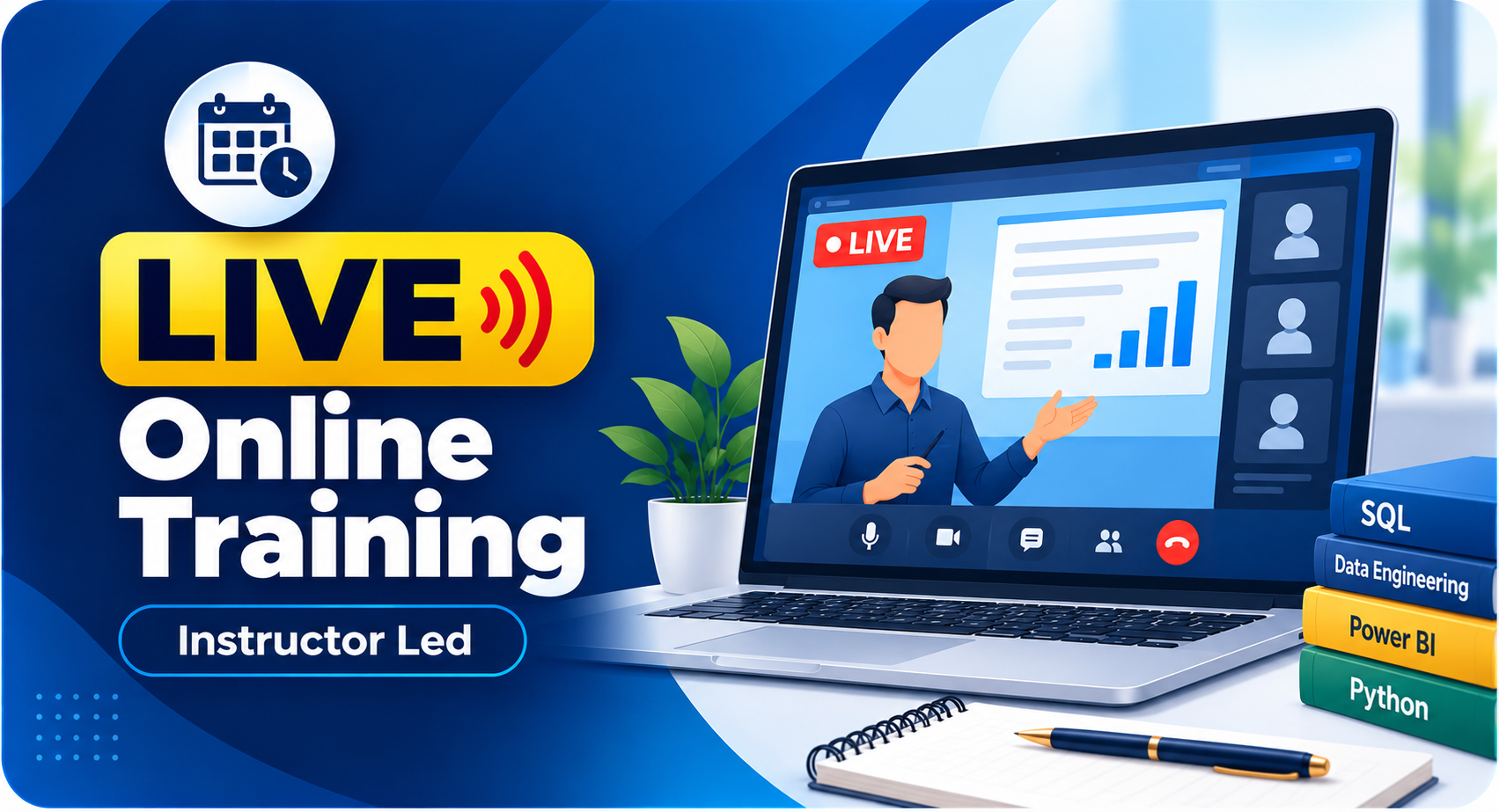
What training modes are available?
Live Online Training, Self-Paced Videos, Real-Time Projects, Resume Preparation, Mock Interviews, and DP-300 Exam Guidance.


Training Modes






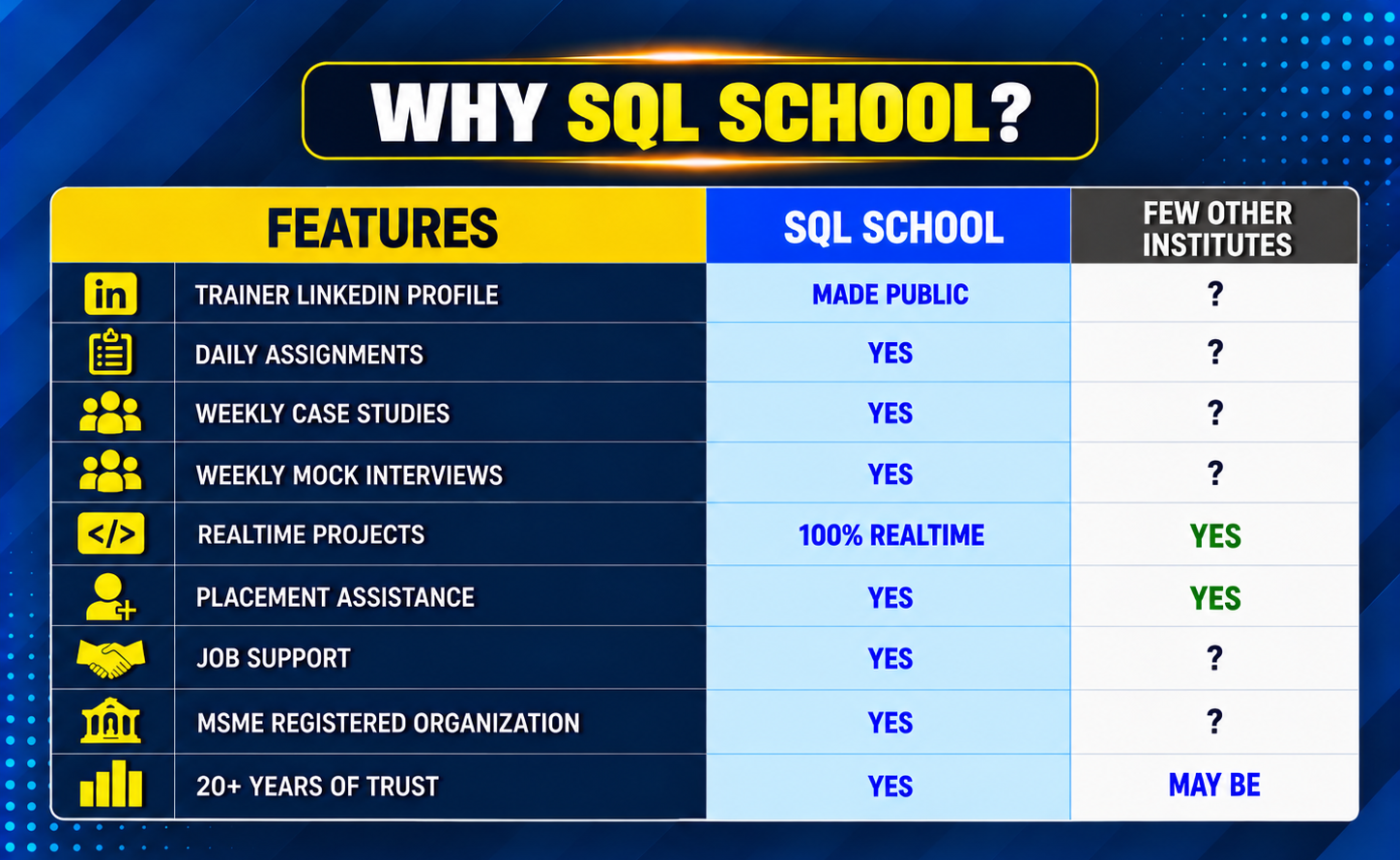
Why Choose SQL School
- 100% Real-Time and Practical
- ISO 9001:2008 Certified
- Concept wise FAQs
- TWO Real-time Case Studies, One Project
- Weekly Mock Interviews
- 24/7 LIVE Server Access

- Realtime Project FAQs
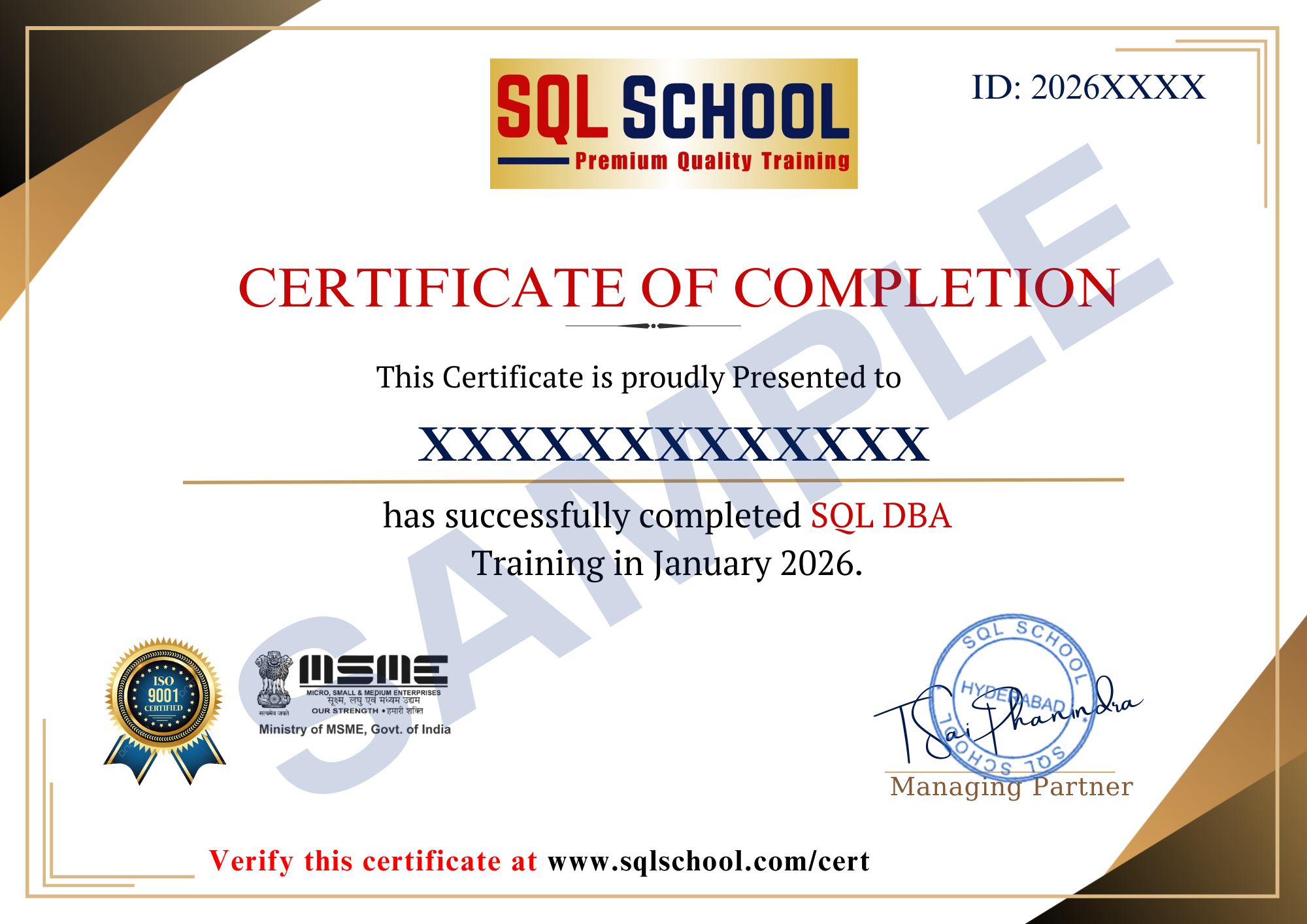
- Course Completion Certificate
- Placement Assistance
- Job Support
- Realtime Project Solution
- MS Certification Guidance