
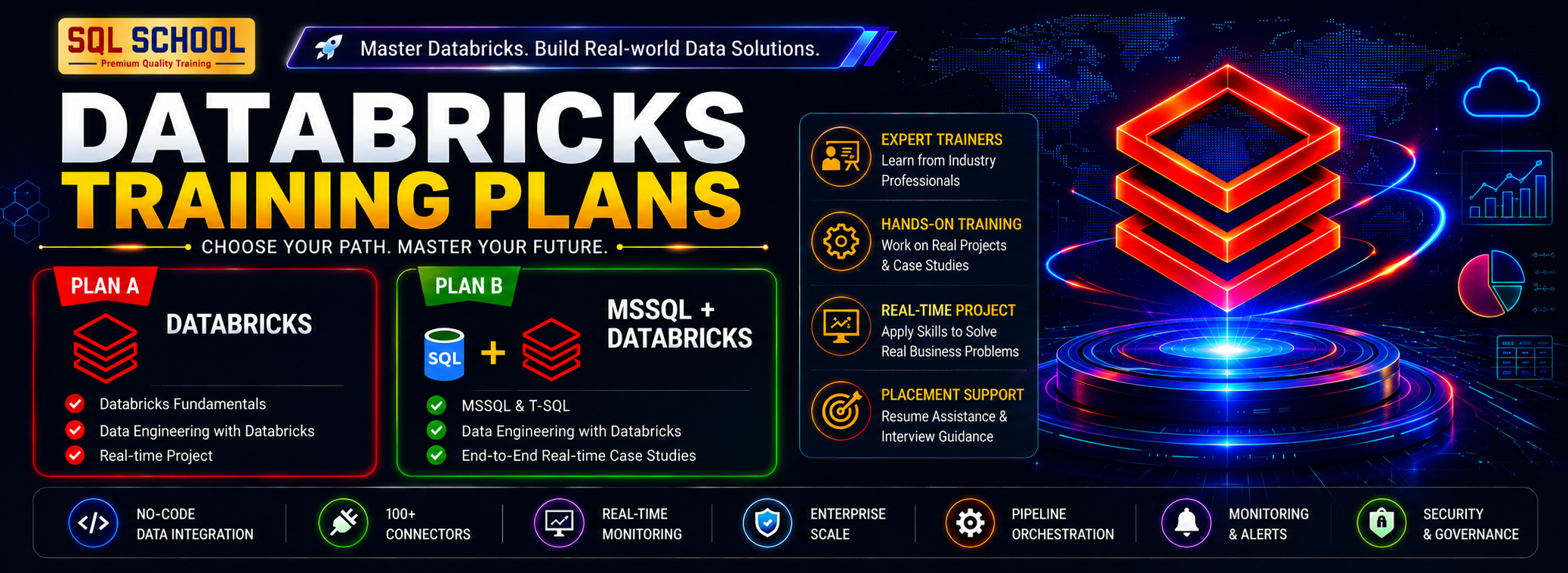


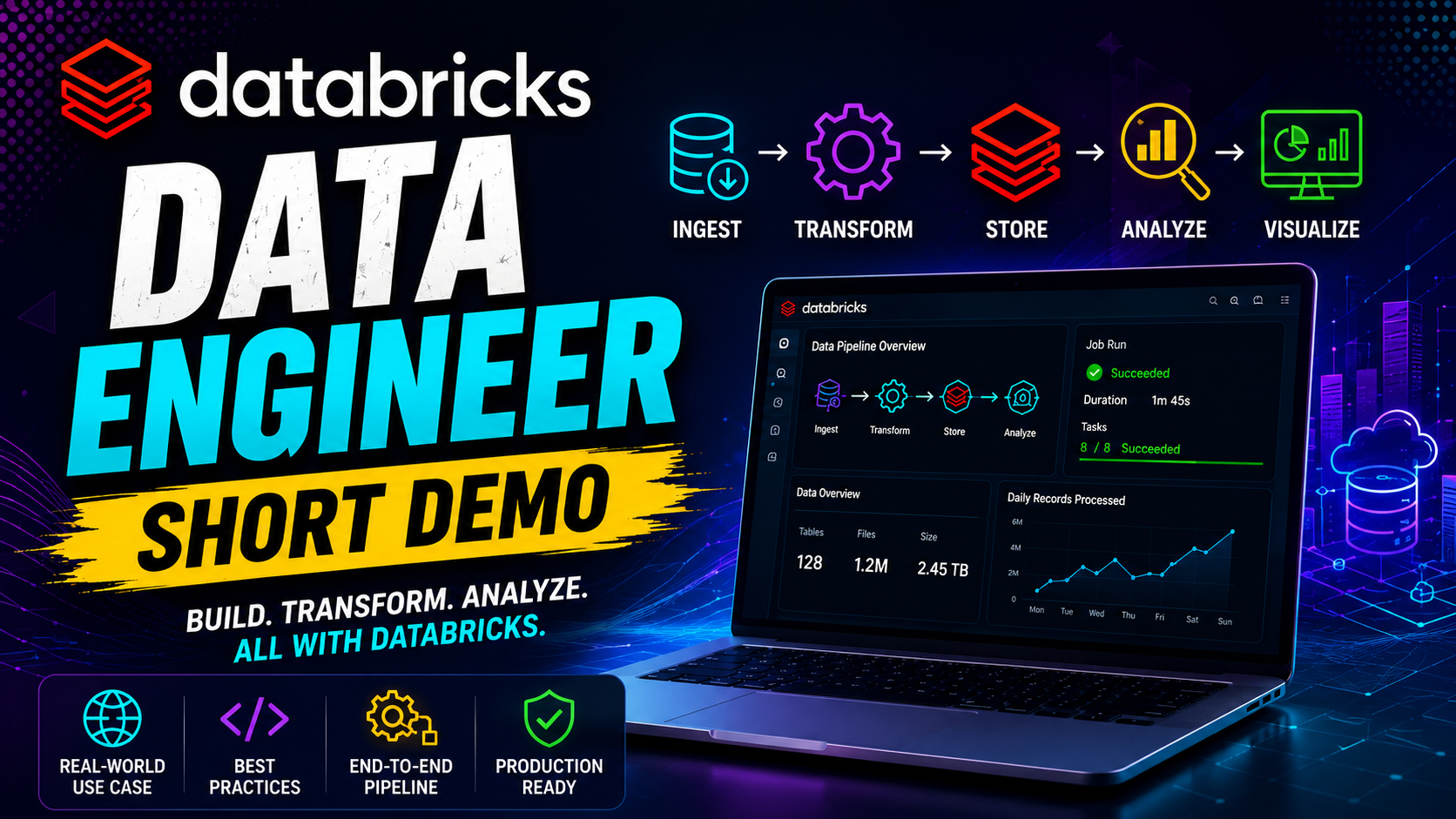
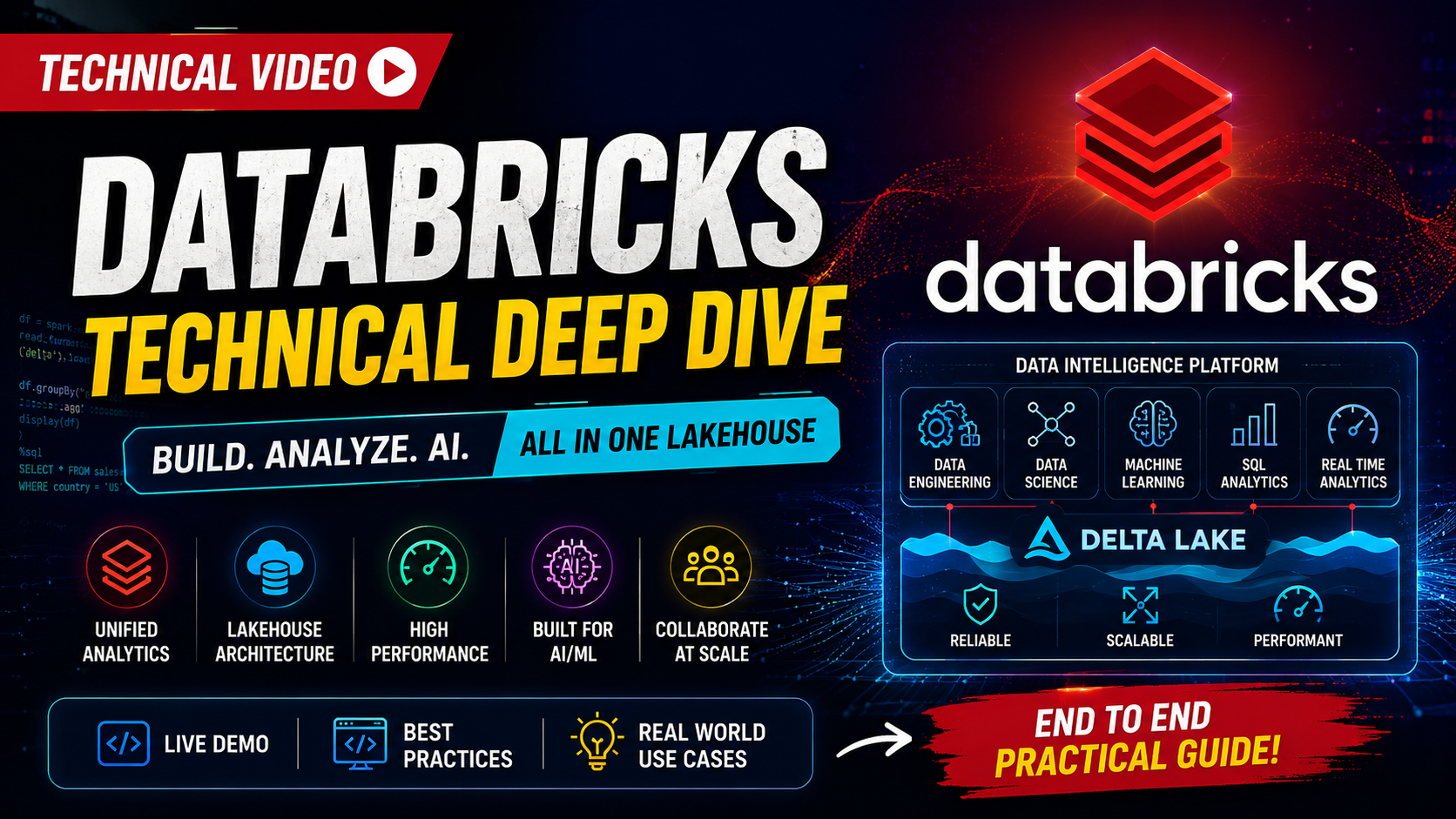
Databricks Data Engineer is the backbone of today’s data-driven world — uniting data, analytics, and AI on one collaborative platform. Built on Apache Spark, it enables seamless data integration, scalable ETL pipelines, and real-time analytics.
From finance to healthcare, Databricks Data Engineers power intelligent insights, optimize data workflows, and drive business transformation across industries.
Training Highlights
✅ Databricks Architecture
✅ PySpark & Spark SQL
✅ Delta Lake & Delta Tables
✅ Databricks Notebooks
✅ Python, PySpark, SQL
✅ Event Hub, Kafka
✅ Job Workflows & Automation
✅ CI-CD Integrations (DevOps)
✅ Real Time Projects
Modules We Learn:
✅ Module 1: Databricks
✅ Module 2: Real Time Project (E-commerce)
✅ Module 3: Databricks Data Engineer Certification Guidance
Course Duration: 7 Weeks
Databricks Data Engineer
Module 1: Databricks (Spark, PySpark, Big Data, Genie AI)
Phase 1: Databricks Fundamentals, Architecture & Unity Catalog
Ch 1: Databricks Introduction
- Cloud ETL, DWH
- Cloud Computing
- Databricks Concepts
- Databricks Account
- Big Data in Cloud
Ch 2: Databricks Architecture
- Databricks Runtime (DBR)
- RDD & DAG
- Databricks Lakehouse Architecture
- Spark Compute Concepts
- Workers & Drivers
- Databricks Framework
- Databricks APIs
Ch 3: Unity Catalog
- Unity Catalog Concepts
- Metastore
- Catalogs & Schemas
- Managed & External Tables
- Storage Credentials
- External Locations
- Volumes
- GRANT / REVOKE
- Data Permissions
- Lineage
- Data Governance
- Databricks Workspace UI
- Spark Table Creations
Phase 2: Spark SQL Concepts
Ch 4: Spark SQL: Basics
- Spark SQL Notebooks
- Creating Catalog
- Creating Schemas
- Creating Tables
- Spark Data Types
- PySpark API: SQL Queries
- Dropping Objects
- Notebooks: Exports, Clone
Ch 5: Spark SQL: Table Types
- Delta Tables
- Managed Tables
- External Tables
- Data Partitioning
- Union, Views in Spark
- External Volumes
Ch 6: Spark SQL: Functions
- Math, Sort Functions
- String, DateTime Functions
- Conditional Statements
- SQL Expressions with expr()
- Volume for our Data Assets
- File Formats, Schema Inference
- Spark SQL Aggregations
Ch 7: Spark SQL: Time Travel
- Time Travel Concepts
- Spark DB: Logical Architecture
- Spark DB: Physical Store
- Data File Store
- Log File Store
- Time Travel
- DESCRIBE, EXTENDED
- HISTORY
- Version Numbers
Phase 3: Python ETL & Analytics Concepts
Ch 8: Python: Introduction, Print
- Python Introduction
- Python Versions
- Python Implementations
- Python in Spark (PySpark)
- Python Print()
- Single, Multiline Statements
Ch 9: Python: Variables
- Python Variables
- Variable Declarations
- Variable Values
- Value Types
- Multi Variable Values
- Common Variable Values
- Realtime use of Variables
Ch 10: Python: Operators
- Need for Operators
- Arithmetic Operators
- Assignment Operators
- Comparison Operators
- Operator Precedence
- Operands in Python
Ch 11: Python: Control Statements
- Python Control Structures
- If … Else Statement
- Short Hand If
- ELIF & ELSE IF Statements
- OR, AND Concepts
- Python Loops
Ch 12: Python: Data Types
- Python Data Types
- Integer / Int Data Types
- Float, String Data Types
- List Data Type
- Dictionary Data Type
- Tuple Data Type
Ch 13: Python: Modules & DataFrames
- Python Modules
- Pandas
- NumPy
- DataFrame Concepts
- Handling Nulls
- Data Cleansing Concepts
- Python Functions
Phase 4: PySpark, Medallion Architecture, Delta Lake, Auto Loader & Lakeflow
Ch 14: PySpark DataFrames & Transformations
- Creating PySpark DataFrames
- Reading Data Sources
- select(), filter(), withColumn()
- Handling NULL Values
- Data Type Casting
- Joins
- union() / unionByName()
- Aggregations
- Window Functions
- Writing DataFrames
- DataFrame vs Spark SQL
Ch 15: Medallion Architecture – 1
- Medallion Architecture
- Aggregated Data Loads
- Bronze, Silver and Gold
- Temp Views
- Spark Tables (Parquet)
- Work with File Sources
Ch 16: Medallion Architecture – 2
- Medallion Architecture
- Azure SQL DB Connections
- Joining Source Tables
- Data Frames, Temp Views
- Aggregated Data Loads
- Gold Data Consumption
- Raw Sources → Bronze → Silver → Gold → BI/Analytics
Ch 17: Delta Lake
- Databricks Delta Lake
- Schema Evolution
- Azure SQL DB Connections
- DataFrames, Temp Views
- Delta Table API
- Update, Delete Records
- MERGE / Upsert Operations
- Version History & Data Retention
- Delta Transaction Log
Ch 18: PySpark: Widgets
- PySpark Parameters
- Text Widgets
- User Parameters
- Manual Executions
- Automations
- UI & JSON For Widgets
Ch 19: Lake Flow Jobs
- Workflows & CRON
- Job Compute, Running Tasks
- Python Script Tasks
- Parameters into Notebook Tasks
- Parameters into Python Script Tasks
- Concurrent Executions, Dependencies
- Branching Control with the If-Else Task
Ch 20: PySpark: Auto Loader – 1
- Auto Loader Concept
- Cloud Files Architecture
- Checkpoint Configurations
- Schema Location
- Checkpoint Location
- Initial Loads
Ch 21: PySpark: Auto Loader – 2
- Reading Streams
- Manually Cancel your Data Streams
- Writing to a Data Stream
- Schema Evaluation Modes
- Workspace Modules
- Incremental File Ingestion
- Schema Evolution
- Rescued Data Column
- Trigger Options
- Exactly-once processing concepts
Ch 22: LakeFlow Declarative Pipelines
- SDP: Spark Declarative Pipelines
- Delta LIVE Tables
- Streaming Data Loads
- Bronze, Silver, Gold Data
- Materialized Views
- Pipeline Clusters
- Databricks CLI
- Data Quality Checks
Ch 23: Databricks Optimizations
- Lazy Evaluation
- Explain Plan
- Caching
- Data Shuffling
- Broadcast Joins
- Partitions
- Data Skipping
- Liquid Clustering
- VACUUM
- OPTIMIZE, Z Ordering
Ch 24: Databricks Security, AI
- Overview of ACLs
- Adding a New User to Workspace
- Workspace Access Control
- Cluster Access Control
- Groups & Lake Bridge
- Access Keys (Tokens), Genie AI
Ch 25: GitHub Concepts
- Creating GitHub Account
- GIT Project Concept
- GIT Project Creation
- GIT: Main, Branches
- GIT Credentials
- Connecting with ADF
- Connecting with Databricks
Module 2: Realtime Project Retail (End to End)
Project Title
Retail Sales Analytics Platform using Databricks (Medallion Architecture)
Project Overview
Students will build a production-style data platform using Lakehouse Architecture (Bronze, Silver,
and Gold), implementing modern ETL practices, data quality validation, incremental processing,
orchestration, optimization, and reporting.
Business Scenario
A multinational retail company receives daily data from multiple operational systems. The
company wants to build a centralized analytics platform to:
- Consolidate data from different business domains
- Improve data quality and consistency
- Track sales performance across regions
- Analyse customer purchasing behaviour
- Monitor inventory levels
- Generate business KPIs for decision-makers
- Deliver Power BI dashboards with near real-time insights
Source Systems
Students will work with multiple datasets including:
- Customer Master
- Product Master
- Orders
- Inventory
- Region Master
Technologies Covered
- Apache Spark
- PySpark
- Spark SQL
- Delta Lake
- Unity Catalog
- Databricks Workflows
- Git Integration
Resume Highlights
After completing this project, you can confidently showcase experience in:
- PySpark & Spark SQL
- Delta Lake
- Medallion Architecture
- ETL Pipeline Development
- Incremental Data Processing
- Data Quality & Validation
- Unity Catalog
- Workflow Automation
- Performance Optimization
Module 3: Databricks Data Engineer Certification Guidance
- Exam Q & A, Scenarios
- Certification Exam Objectives
- Topic-Wise Revision
- Scenario-Based Questions
- Practice Assessments
- Mock Exams
- Databricks Interview Questions
- Real-Time Scenario Discussions
- Resume Project Explanation
- Technical Mock Interview
Why Choose This Training?
- Industry-Oriented Curriculum
- End-to-End Real-Time Projects & Solutions
- Medallion Architecture Implementation
- 100% Hands-on Practical Sessions
- Production-Ready ETL Pipelines
- PySpark & Spark SQL from Basics to Advanced
- Interview Preparation
- Assignments & Practice Labs
- 100% Practical • No Unnecessary Theory
- Learn Like You’re Working in a Real Company
- EXPLORE OUR FREE DATABRICKS LEARNING SERIES
Watch practical Databricks content before you enroll:
- Technical Tutorials
- Short & Full Demo Classes
- Real-Time Project Walkthroughs
- PySpark, Spark SQL & Delta Lake
- Interview Questions & Scenarios
- Job Roles & Career Guidance
🚀Watch a Free Class Before You Decide..
Databricks Data Engineering Free Classes: https://www.youtube.com/playlist?list=PLT3eLIlc1sgg
BUILD REAL SKILLS. WORK ON REAL PROJECTS. BECOME JOB READY.
At SQL School, our focus goes beyond completing a syllabus. You will learn through hands-on
labs, production-style scenarios, end-to-end projects, assignments, interview preparation, and
certification guidance designed to build practical Databricks Data Engineering skills.
- Practical Skill Development
- Real-Time Project Guidance
- Resume & Interview Preparation
- Certification Guidance
What is the Databricks Data Engineer Associate Training?
This training covers Databricks concepts end-to-end including Spark SQL, PySpark, Delta Lake, Lakehouse, Auto Loader, DLT, Unity Catalog, Workflows, Streaming, Medallion Architecture, and Real-Time Projects.
Who should join this course?
Aspiring Data Engineers, Cloud Engineers, BI Developers, Data Science Engineers, and freshers who want to build a strong career in Databricks and modern Data Engineering.
What modules are included in this training?
Module 1: MSSQL
Module 2: Python
Module 3: Databricks (Complete)
Module 4: Databricks Data Engineer Associate Exam Guidance
Is SQL included as part of the training?
Yes. SQL Server basics to advanced topics including DDL, DML, Joins, Constraints, Keys, Views, Procedures, Functions, CTEs, Tuning, Indexes, Group By, Subqueries, Transactions, and Window Functions.
Do I need Python knowledge to learn Databricks?
Yes, and this course teaches Python from scratch including data types, loops, functions, modules, file handling, exception handling, and full pandas for ETL.
What Databricks basics will I learn?
You will learn Workspace, Notebooks, Clusters, Filesystems, Catalogs, Schemas, and Databricks Architecture including Spark and Lakehouse fundamentals.
Does the course include Spark SQL?
Yes. Spark SQL API, creating schemas, altering columns, unions, math functions, sort functions, string functions, date/time functions, conditional logic, expr() and complex SQL expressions.
Will I learn PySpark in detail?
Yes. Creating DataFrames, reading/writing CSV/JSON/ORC/Parquet, schema inference, grouping, filtering, joins, union, pivot/unpivot, transformations, and rendering outputs.
Is Unity Catalog included in the curriculum?
Yes. Managed tables, external tables, volumes, catalogs, schemas, views, access control, workspace binding, lineage, metastore, system tables, and securable objects.
Will I learn Data Ingestion & Auto Loader?
Yes. Auto Loader streaming ingestion, schema inference, evolution, streaming reads/writes, cancellations, and workspace modules.
Is Medallion Architecture taught?
Yes. Bronze, Silver, Gold layers, aggregated loads, temp views, parquet tables, file/table sources, and building reliable pipelines using Medallion principles.
What Delta Lake concepts does this course cover?
Delta Table API, delete/update/merge, time travel, history, schema evolution, DML operations, retention, transaction logs, and Delta Lake SCD Type 2 implementation.
Will I learn SCD Type 2 in real-time?
Yes. Incremental loads, new/existing record handling, history retention, upserts, and automation using Delta Lake and notebooks.
Does the course include Streaming & Structured Streaming?
Yes. Streaming simulations, micro-batches, schema evolution, watermarking, time-based aggregations, triggers, and Delta streaming pipelines.
Do you cover Databricks Workflows (Jobs)?
Yes. Jobs scheduling, CRON, task dependencies, branching logic, passing parameters into notebooks/py scripts, concurrent executions, and job clusters.
Is Databricks Tuning part of the training?
Yes. Explain plans, lazy evaluation, caching, data shuffling, broadcast joins, partitioning, data skipping, Z-ordering, Liquid Clustering, and Spark configs.
Will I learn GitHub Integration?
Yes. Git prerequisites, linking GitHub with Databricks, Git folders, adding modules, version control, code sync, and pipeline updates.
Does the course include Delta Live Tables (DLT)?
Yes. Pipeline clusters, Data Quality checks, declarative pipelines, streaming datasets, parameterization, and DLT streaming live tables.
Is a real-time project included?
Yes. E-Commerce/Banking/Sales projects with requirements, solutions, FAQs, architecture flow, interview questions, and resume guidance.
Is exam preparation for Databricks Data Engineer Associate included?
Yes. Exam guidance, sample questions, mock exams, and hands-on practice for the certification.
Training Modes







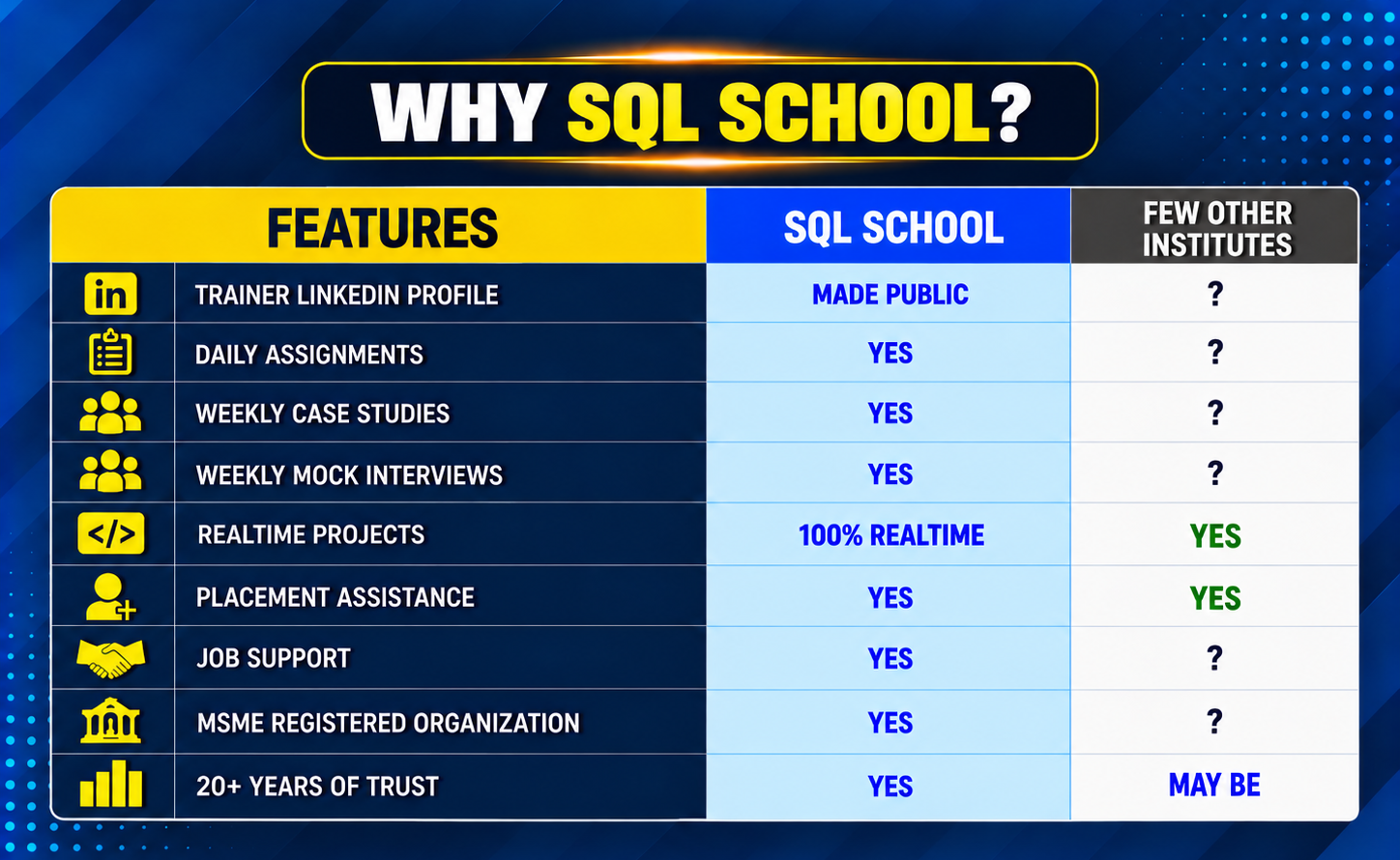
Why Choose SQL School
- 100% Real-Time and Practical
- ISO 9001:2008 Certified
- Concept wise FAQs
- TWO Real-time Case Studies, One Project
- Weekly Mock Interviews
- 24/7 LIVE Server Access

- Realtime Project FAQs
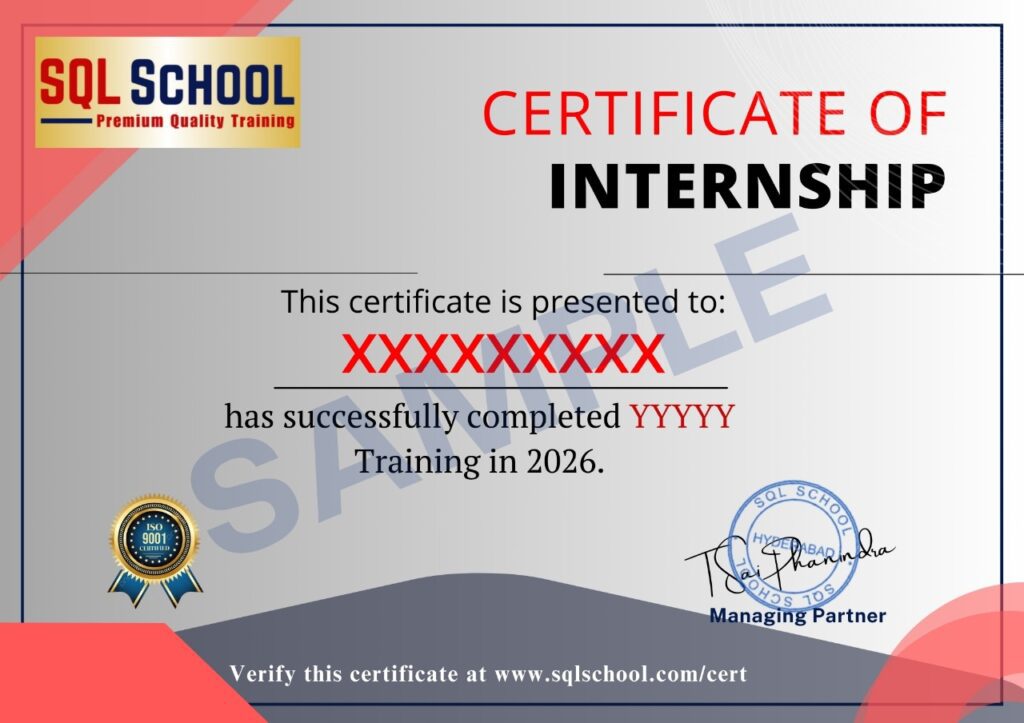
- Course Completion Certificate
- Placement Assistance
- Job Support
- Realtime Project Solution
- MS Certification Guidance