The program duration is 4+ months with hands-on, step-by-step practical sessions.
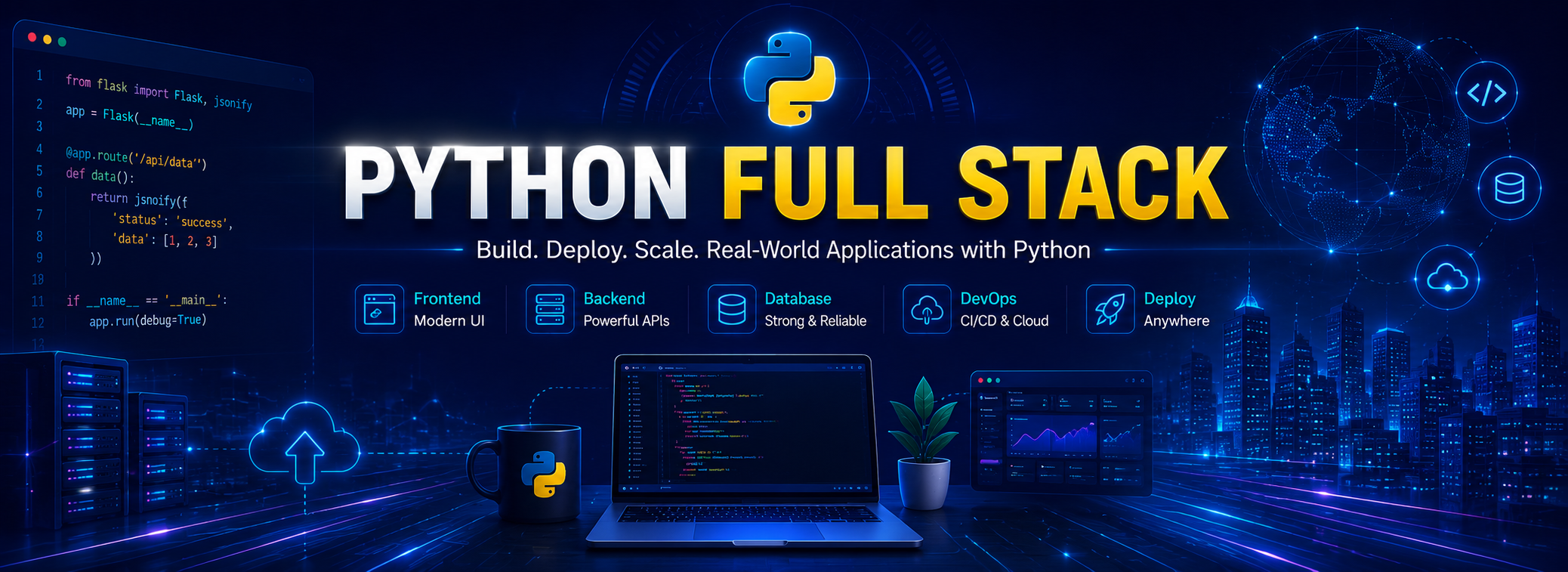


A Python Full Stack Developer is skilled in building complete web applications using Python for the backend and modern tools for the frontend. They commonly use frameworks like Django or Flask to create robust server-side logic. On the frontend, they work with HTML, CSS, JavaScript, and libraries like React or Angular for dynamic user interfaces. This role is in high demand for developing scalable, real-time, and data-driven web applications.
Training Highlights
✅Python Core Concepts
✅Python Advanced Concepts
✅SQL + Python for Data Processing
✅Pandas, NumPy & PyTorch
✅Flask/Django for Web Apps
✅UI / UX Controls
✅AI/ML Integration with Python
✅ML Concepts, ML Models
✅Real Time Project
✅1:1 Mentorship, Resume
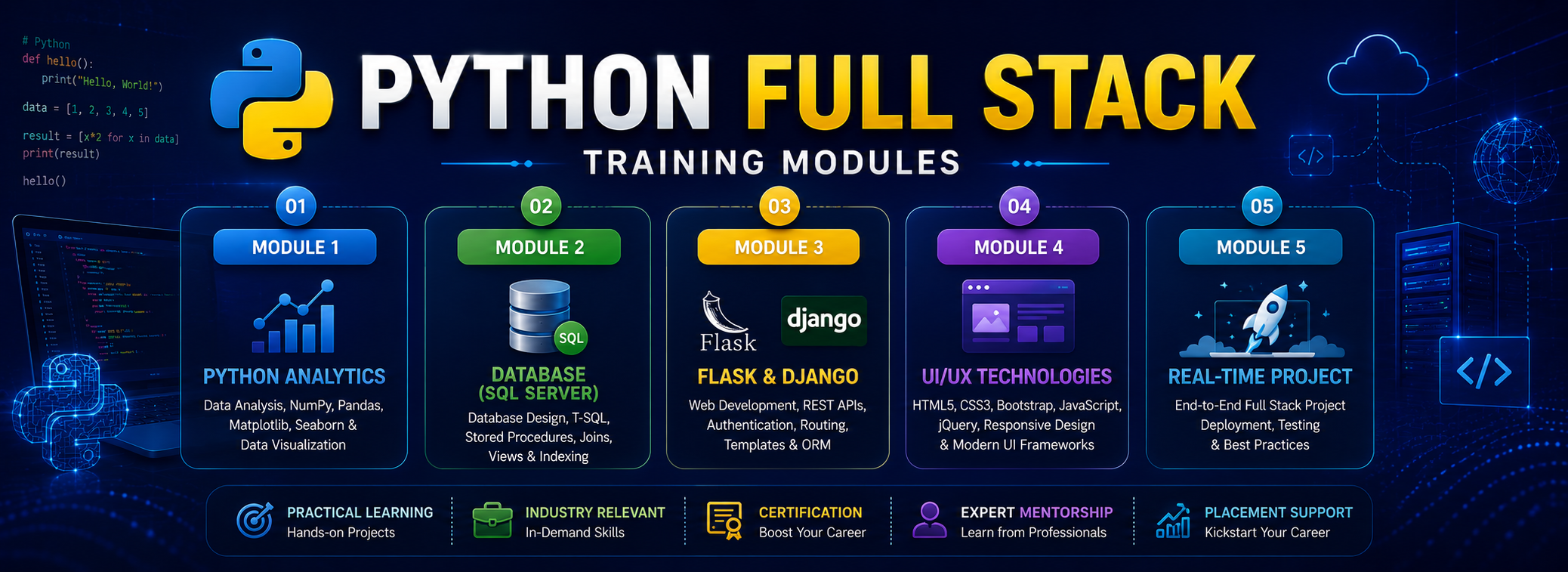
Modules We Learn:
✅ Module 1: Python Analytics
✅ Module 2: Database (SQL Server)
✅ Module 3: Flask & Django
✅ Module 4: Ul/UX Technologies
✅ Module 5: Real-time Project
Course Duration: 3 Months
Module 1: Python Concepts & Analytics
Ch 1: Python Introduction
- Python Introduction
- Python Versions
- Python Job Roles
- Python for Data Analysts
- Python for Data Engineers
- Python for Data Scientists
- Python for Data Science Engineers
Ch 2: Python Architecture
- Python Architecture
- PVM: Python Virtual Machine
- Compiler
- Byte Code
- Execution Process
- Resource Allocations
- Python Implementations
Ch 3: Python Installations
- Python Introduction
- Python Installations
- Anaconda Installation
- Python IDE & Usage
- Jupyter Notebooks
Ch 4: Python Print Statement
- Python Print Statement
- print(), print()
- Testing Case Sensitivity
- Single Line print()
- Multi Line print()
- print() with single quotations
- Debug with AI (AI Assistants)
Ch 5: Python Variables
- Python Variables
- Assigning values
- Purpose & Rules
- Variable Value Reads
- Multiple Variables & Print()
Ch 6: Python Operators
- Athematic *& Multiplier Operators
- Python String Literals
- Single, Double Quotes
- Format Strings (f string)
- Comparison, Indexing Operators
Ch 7: Python Data Types
- Python Data Types
- Integer, Float, String Data Types
- Type Casting
- Type Identification
- Multi Value Assignments
- Python Built-In Classes (data types)
Ch 8: Python Lists
- Creating Python Lists
- Printing List Items
- Print List Slices
- Length & Type
- list() method
- Empty Lists, Append
- Loops, List Updates
Ch 9: Python Dictionaries
- Python Dictionary
- Creating, Indexing Dictionaries
- Edit / Overwrite Key Values
- Lists inside Dictionaries
- Delete & Clear
Ch 10: Python Tuples
- Python Tuples
- Defining, Indexing
- Length(), Type()
- Mixed Values in Tuples
- Overwriting Tuples
- Tuple Class, (( ))
Ch 11: Python IF..ELSE Condition
- If..Else conditions
- if..elif..else & Shorthand if
- composite conditions
- Indent, pass statement
- in & negation operators
- range conditions
Ch 12: Python Loops (For)
- Python For Loop
- For Loop @ Range
- For Loop @ Sequence Values
- Nested Loops
- Loop Control Statements
- Break, Continue, Paas
Ch 13: Python Loops (While)
- While Loop
- Termination Checks (Expressions)
- Variables, Logical Conditions
- Loop Conditions, Operators
- Exit Conditions
- iter() and Looping Options
Ch 14: Python Dataframes
- Dataframes: Creation
- Pandas Dataframes
- Dataframes From Single List
- Dataframes from Dictionary
- Display Dataframes, List Items
- Identify, Replace Nulls, NumPy
Ch 15: Python SQL DB Access
- SQL DB Access with Python
- import pandas.DataFrame
- pyodbc module, sql functions
- SQL DB Cursor Connections
- SQL Query Executions: DDL, DML
- Filters, Aggregations with SQL
- Dataframe Usage with SQL
Ch 16: Dataframe Transformations – 1
- Dataframe Transformations
- Concat & Append
- Merge Function
- Join with Multiple Dataframes
- Indexing Operations
- Data Type Checks, Conversions
- Loops with Dataframes
Ch 17: Dataframe Transformations – 2
- Pandas – Cleaning Data
- Replace, Transform Columns
- Data Discovery & Column Fill
- Identify & Remove Duplicates
- dropna(), fillna() Functions
- Data Plotting & matlib Lib
Ch 18: Python Functions & Lambda
- Python Functions & Usage
- Function Parameters
- Default & List Parameters
- Python Lambda Functions
- Recursive Functions, Usage
- Return & Print @ Lamdba
Ch 19: Python File Handling
- File Handling, Activities
- Loop, Write, Close Files
- Appending, Overwriting
- import os, path.exists
- f.open, f.write
- f.read, f.close
Realtime Case Study (Banking / Finance) For Data Analysis
Module 2: Python Programming
Ch 19: Python Modules
- Import Python Modules
- Built In Modules & dir
- datetime module in Python
- Date Objections Creation
- strftime Method & Usage
- imports & datetime.now()
Ch 20: Python User Inputs & TRY
- Try Except, Exception Handling
- Raise an exception method
- TypeError, Scripting in Python
- Python User Inputs
- Python Index Numbers
- input() & raw_input()
Ch 21: Python Dictionary
- Dictionary Creation, Use
- Hashing, Copy, Update
- Deletion, Sorting
- Len(), Inbuilt Functions
- Variable Types – python List
- Cmp() List Method
- Python Dictionary Str(dict)
- Programming Concepts
- Loops and Sets
- Realtime Usage
Ch 22: Python Packages
- Package in Python
- Creating a package
- Package Imports, Modules
- Sub Packages Creation
- Sub Package Imports
- Popular Packages in Python
- NumPy & SciPy
- Libraries in Python
- Python Seaborn
- Python framework
Ch 23: Exception Handling
- Shell Script Commands
- OS operations in Python
- File System Shell Methods
- os – math – cmd -csv – random
- Numpy (numerical python)
- Pandas – sys – Matplotlib;
- Common RunTime Errors
- Python Custom Exception;
- Exception Handling
Ch 24: Python Class & Objects
- Class variables, Instances
- Built in Class Attributes
- Objects – Constructors
- Modifiers – Self Variable
- Python Garbage Collections
- Hierarchical Inheritance
- Multilevel, Multiple, Hybrid
- Overloading & OverRiding
- Polymorphism – Abstraction
Ch 25: Regular Expressions
- Regular Expression
- Regular Expression Patterns
- Literals – Repetition Cases
- Groups andGrouping
- w+ and ^ , \s Expressions
- split function
- Regular expression methods
- match() in Regular Expr
- search(), re.findall for Text
Ch 26: Multi-Threading
- Python Multi-Threading
- Thread Synchronization
- Multiprocessing
- Python Gil & Programming
- Thread Control Block (TCB)
- Stack Pointers & App Usage
- Program Counters in Realtime
- Thread State Concept
- Python Exception Handling
Ch 27: Python TKinter
- Tkinter GUI Program
- Components & Events
- Adding Controls inTkinter
- Entry, Text Widgets
- Radio & Check Buttons
- Tkinter Forms in Realtime
- List Boxes, Menu, ComboBox
- Mainloop () & Functions
Ch 28: Python Web & IoT Intro
- Python Web Frameworks
- Django : Advantages
- Web Framework
- MVC and MVT – Django
- Web Pages using python
- HTML5, CSS3 usage
- PYTHON Bottle & Pyramid
- Falcon ; smart_open in python
Realtime Project on Banking / Finance
Module 3 : Database & SQL Concepts
Ch 29: Introduction
- Database Introduction
- Types of Databases
- Need for & ETL, DWH
- BI Implementations
- SQL Server Advantages
- Version, Editions of MSSQL
- MSSQL Job Role
Ch 30: Installations
- SQL Server Installation
- SSMS Tools Installation
- Database Engine (OLTP)
- SCM, Configuration Tools
- Instance Types, Uses
- Authentication Modes
- Collation, File Stream
Ch 31: SQL Basics – 1
- Need for Databases, Tables
- Need for SQL Commands
- DDL, DML & DQL Statements
- Database Creation @ GUI
- Data Operations @ GUI
- Session ID, SQL Context
- DB, Tables, Data @ SQL
Ch 32: SQL Basics – 2
- DDL Variants in MSSQL
- DML Variants in MSSQL
- INSERT & INSERT INTO
- SELECT & SELECT INTO
- Basic Operators in SQL
- Special Operators in MSSQL
- ALTER, ADD, TRUNCATE, DROP
Ch 33: Data Imports, Schemas
- Data Imports with Excel
- ORDER BY & UNION
- UNION ALL For Sorting Data
- Creating, Using Schemas
- Real-world Banking Database
- Table Migrations @ Schemas
- 2 Part, 3 Part & 4 Part Naming
Ch 34: Constraints, Index Basics
- Need for Constraints, Keys
- NULL, NOT NULL, UNIQUE
- Primary Key & Foreign Key
- RDBMS and ER Models
- Identity Property, Default
- Clustered Index, Primary Key
- Non-Clustered Index, Unique
Ch 35: Joins & Views Basics
- JOINS: Inner Joins
- Left / Right / Full Outer Joins
- Cross Joins, Query Tuning
- Creating & Using Views
- DML, SELECT with Views
- RLS: WITH CHECK OPTION
- System Views & Metadata
Ch 36: Grouping & Cube
- Group By & HAVING
- Cube, Rollup & Grouping
- Joins with Group By
- 3 Table, 4 Table Joins
- Query Execution Order
Module 4 : FLASK & DJANGO
Ch 37: Introduction
- Introduction to flask and its architecture
- Installing flask package
- Introduction to flask components
- Introduction to Virtual Environment
- Creating Virtual Environment and activating, deactivating it
- Introduction to routing in Flask
- Building sample flask application
Ch 38: Building routes with Flask
- What is a dynamic route?
- Building dynamic routes with flask
- Redirection in Flask
- Dynamic URL building with url_for function
- URL converters in Flask
- int and string url converters
- request and response in Flask
Ch 39: Introduction to Django
- Understanding web development frameworks
- Introduction to Django and its features
- Installing Django and setting up a development environment
- Creating a simple Django project and app
Ch 40: Django Models and Database Integration
- Creating models and defining database tables
- Working with Django’s Object-Relational Mapping (ORM)
- Performing database queries using Django’s QuerySet API
- Migrations and database schema evolution
Ch 41: Views and Templates
- Building views to handle HTTP requests
- Creating templates for dynamic HTML generation
- Routing and URL patterns in Django
- Passing data from views to templates
Ch 42: Django Forms
- Creating HTML forms in Django
- Form validation and handling form submissions
- Customizing form behavior with Django form classes
- Integrating forms with models
Ch 43: Django Admin Panel
- Utilizing the Django admin interface for content management
- Customizing the admin panel for specific models
- Adding custom actions and filters
Ch 44: Authentication and Authorization
- Implementing user authentication in Django
- Managing user sessions and passwords
- Configuring permissions and authorization
Ch 45: Django REST Framework
- Introduction to RESTful APIs
- Building APIs with Django REST Framework
- Serializers, views, and authentication for APIs
- Consuming APIs in Django applications
Ch 46: Frontend Integration with Django
- Integrating frontend frameworks with Django
- Using static files and media in Django projects
- AJAX and asynchronous behavior in Django applications
Ch 47: Testing and Debugging in Django
- Writing unit tests for Django applications
- Debugging techniques and tools
- Best practices for testing in Django
Ch 48: Deployment and Scaling
- Preparing a Django application for deployment
- Choosing a hosting platform
- Configuring production settings
- Scaling Django applications
Module 5 :UI/UX Technologies
Ch 49: Introduction to frontend technologies
- Introduction to HTML, CSS and Java Script
- Hierarchy of HTML
- Basic HTML programs
Ch 50: Bootstrap
- Introduction to bootstrap
- Understanding its working
- Building basic functions
Ch 51: Java Script
- Introduction to Java Script
- Basic functions
- Script Validations
Ch 52: Attaching External Script File
- Introduction
- Integrating Java Script to Python
Ch 53: DevOps Practices
- Introduction
- Waterfall Model Vs Agile Model
- Basic definitions
- Working
- Introduction to containers and container orchestration
Ch 54: End to End Real time Project
What is the Python Full Stack Developer Training?
This training covers Core Python, Advanced Python, SQL Database Concepts, Flask, Django, UI/UX Technologies, and a complete Real-Time Project. It is a practical, job-oriented program designed for full-stack development.
Who can join this Python Full Stack course?
Anyone — freshers, non-IT learners, programmers, analysts, job seekers, and professionals. The course starts from basics and progresses to real-time development.
What job roles can I get after this course?
Python Developer, Full Stack Developer, Data Analyst, Software Engineer, Machine Learning Engineer, Data Engineer, and DevOps Engineer. (Listed on page 1 image.)
What modules are included in this program?
Module 1: Core Python
Module 2: Advanced Python
Module 3: SQL Concepts
Module 4: Flask & Django
Module 5: UI/UX Technologies
Does the course include Python basics?
Yes. Python versions, installation, architecture (PVM, compiler, bytecode), print statements, variables, operators, data types, lists, dictionaries, tuples, loops, and conditions.
Will I learn Data Analysis using Python?
Yes. Pandas DataFrames, transformations, merging, joining, cleaning, plotting, NumPy, handling null values, replacing data, and analytics workflows.
Does the course include SQL Database concepts?
Yes. Database introduction, SQL installation, DDL/DML/DQL, tables, constraints, keys, joins, views, indexing, grouping, cube, rollup, schemas, and SQL queries.
Will I learn to connect Python with SQL?
Yes. pyodbc, SQL cursor operations, SQL query execution, DDL/DML queries, filters, aggregations, and integrating SQL results into DataFrames.
Is Advanced Python covered in this course?
Yes. Functions, lambda, file handling, modules, packages, OOPs (classes, objects, inheritance, overriding, polymorphism), regex, multithreading, and Python frameworks.
Do you teach GUI development in Python?
Yes. Tkinter GUI development, forms, controls, radio/check buttons, menus, combo boxes, and real-time GUI applications.
Is web development included?
Yes. Flask routing, dynamic routes, environment setup, URL building, Django models, ORM, views, templates, forms, admin panel, authentication, API development, and deployment.
Will I learn full-stack UI/UX technologies?
Yes. HTML, CSS, JavaScript, Bootstrap, script validations, attaching external JS, AJAX, and integrating UI components in full-stack applications.
Does this course include DevOps basics?
Yes. Agile vs Waterfall, containers, container orchestration, and DevOps fundamentals. (Module 5 includes DevOps practices.)
Is there a real-time project included?
Yes. A complete end-to-end project is included in Module 5 — including Python, SQL, Flask/Django, UI/UX, and deployment workflows.
Do you teach authentication and APIs in Django?
Yes. Django REST Framework, serializers, views, authentication, and consuming APIs from frontend or backend Python code.
Is multithreading and performance programming included?
Yes. Python Thread Synchronization, GIL concepts, thread control, TCB, stack pointers, and real-time multithreading usage.
Is this course beginner-friendly?
Yes. The training begins from basic print statements to advanced web apps and full-stack workflows, suitable even for beginners.
What makes this Python Full Stack course unique?
All sessions are practical, step-by-step, include real-time case studies, SQL integration, Django REST, Flask, UI/UX, and complete deployment guidance. (Mentioned on last page.)
What training modes are available?
Live Online Training, Self-Paced Video Training, 1-on-1 mentorship, Real-Time Labs, Resume Building, and Mock Interviews.
SQL SCHOOL vs Other Institutes
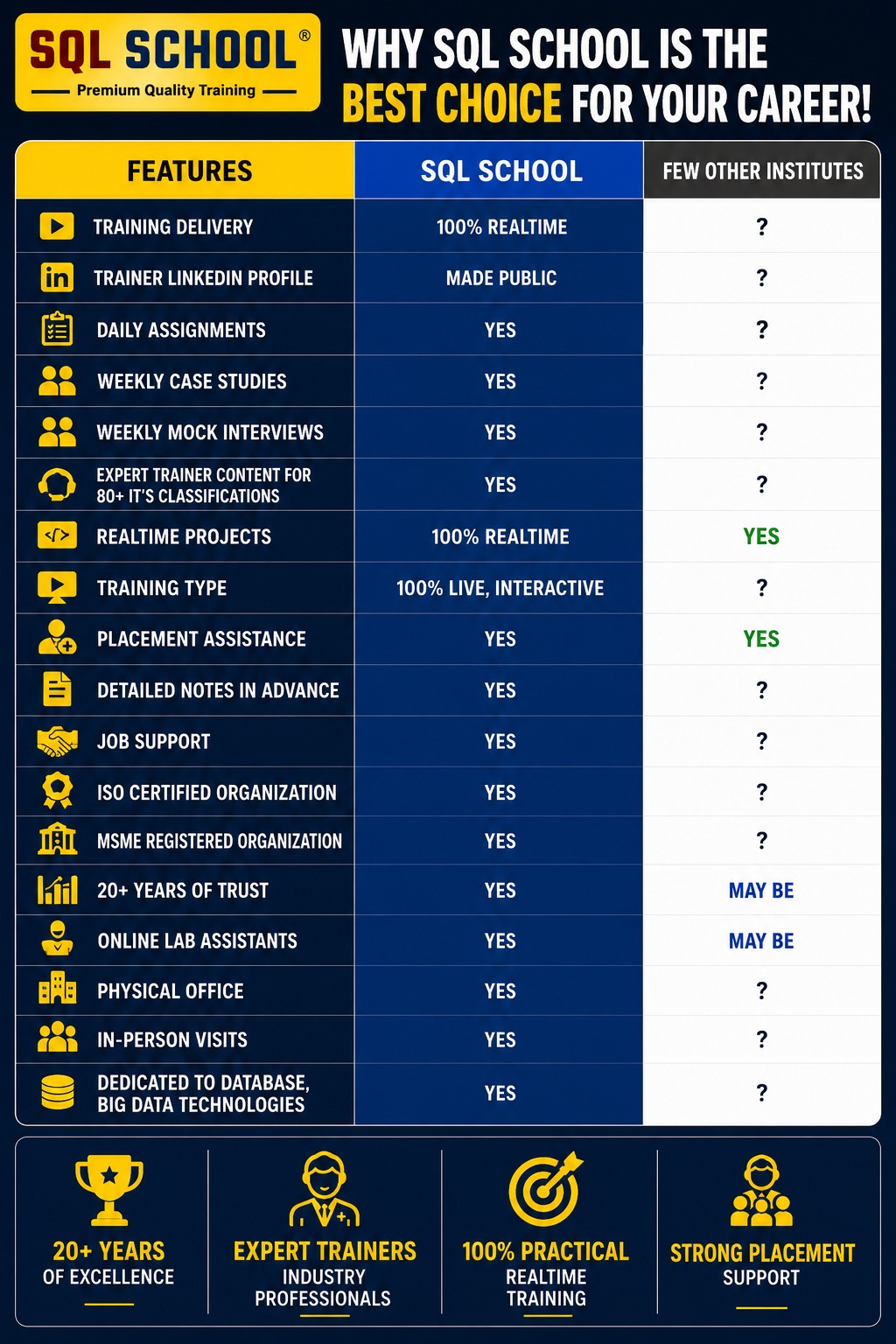
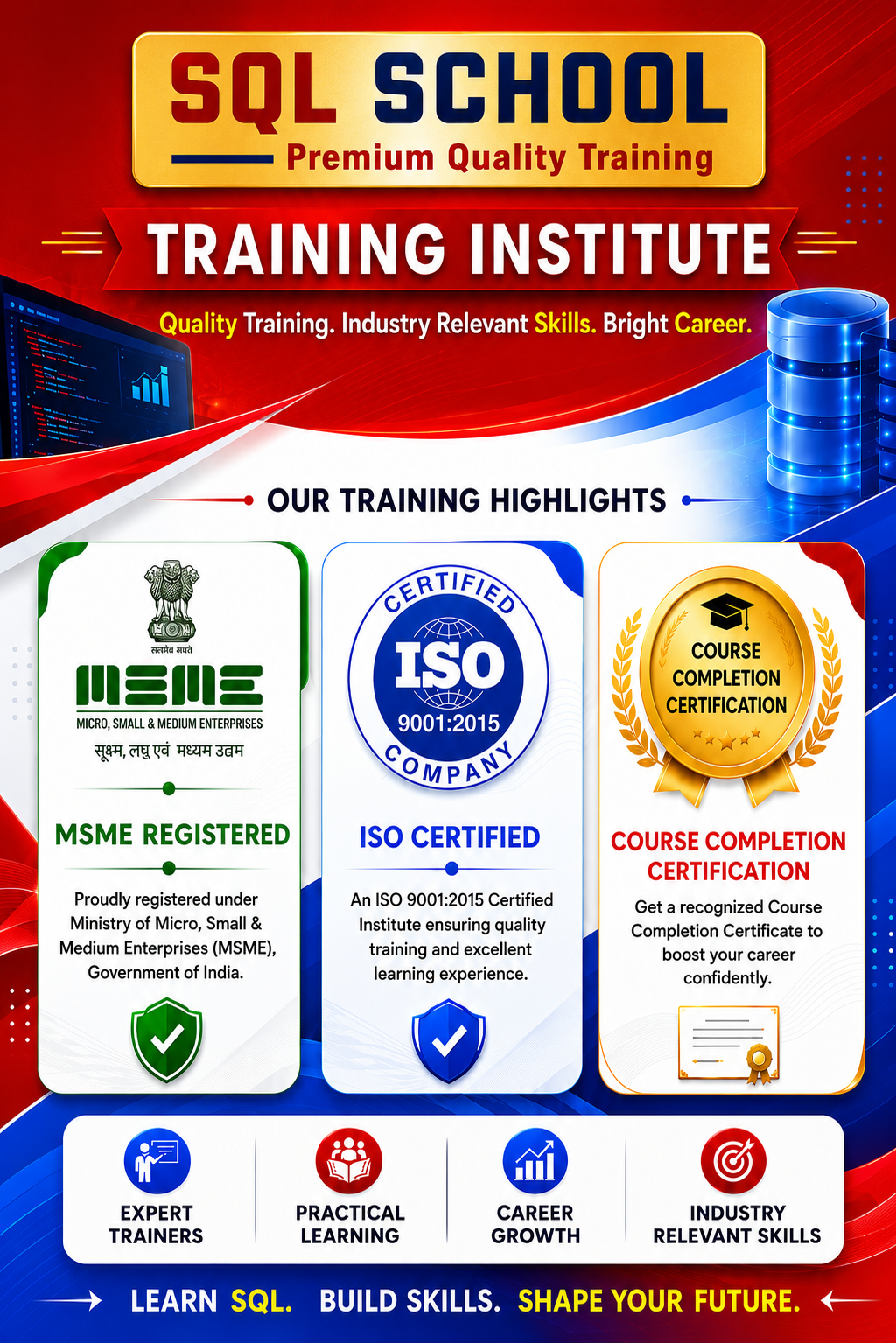

Why Choose SQL School
- 100% Real-Time and Practical
- ISO 9001:2008 Certified
- Concept wise FAQs
- TWO Real-time Case Studies, One Project
- Weekly Mock Interviews
- 24/7 LIVE Server Access

- Realtime Project FAQs
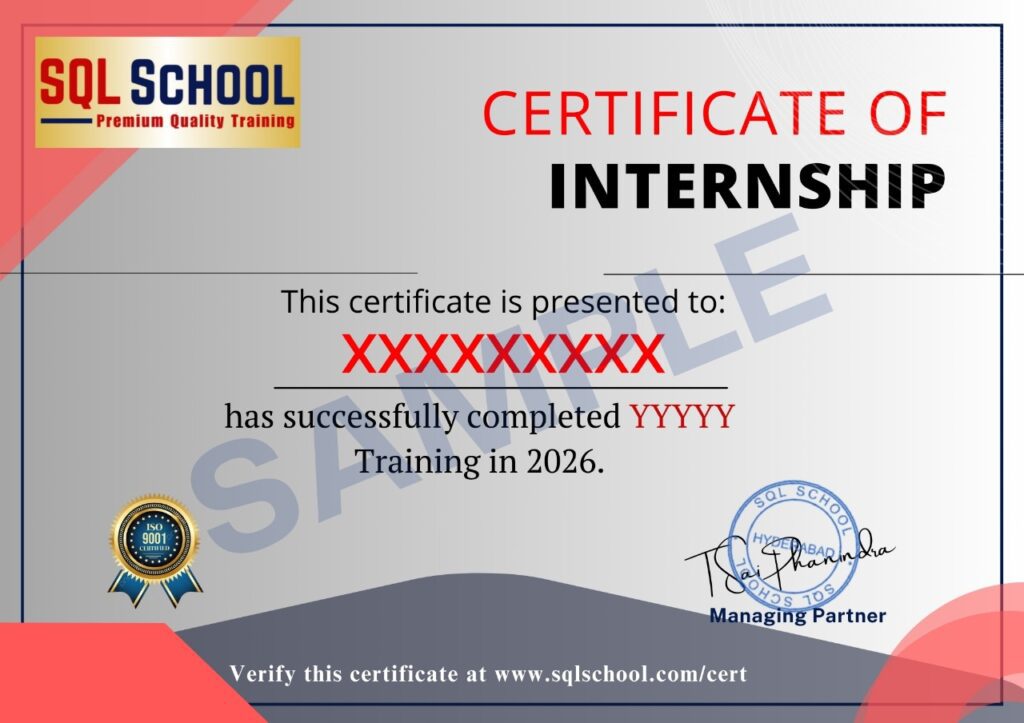
- Course Completion Certificate
- Placement Assistance
- Job Support
- Realtime Project Solution
- MS Certification Guidance