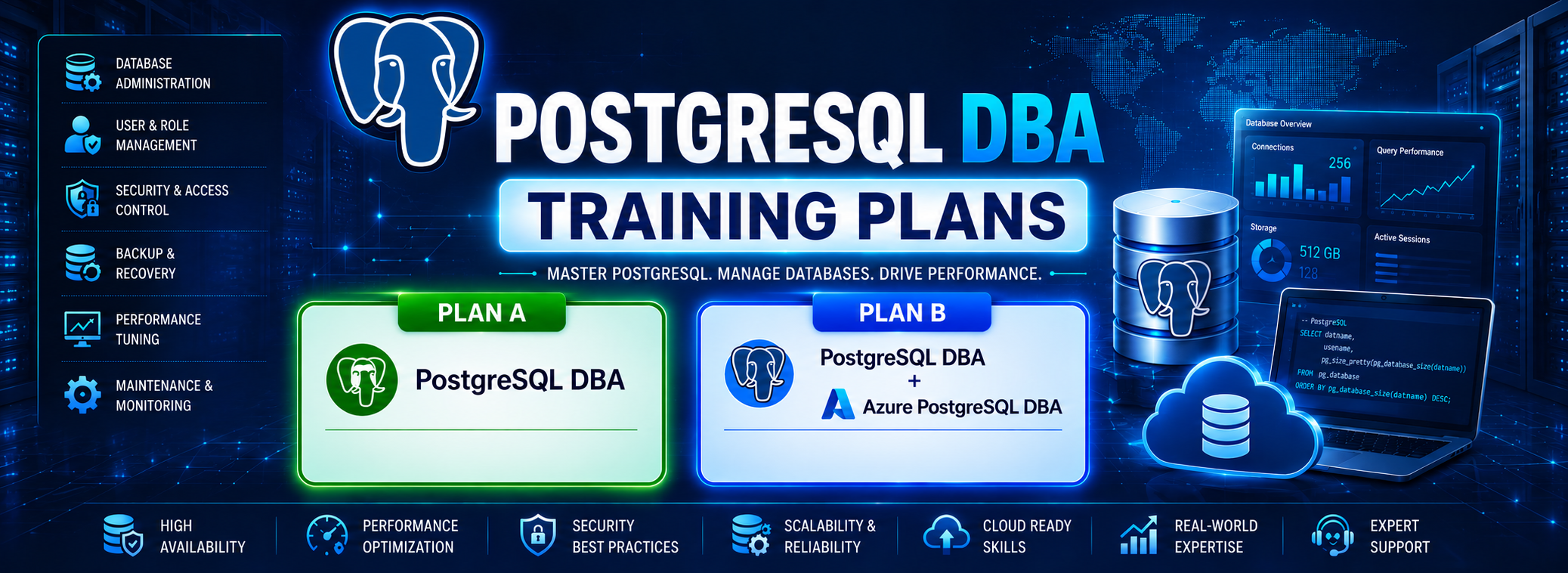
Plan A: PostgreSQL DBA (Chapters 1–30) – 6 Weeks
Plan B: PostgreSQL + Azure PostgreSQL DBA (Chapters 1–45) – 8 Weeks
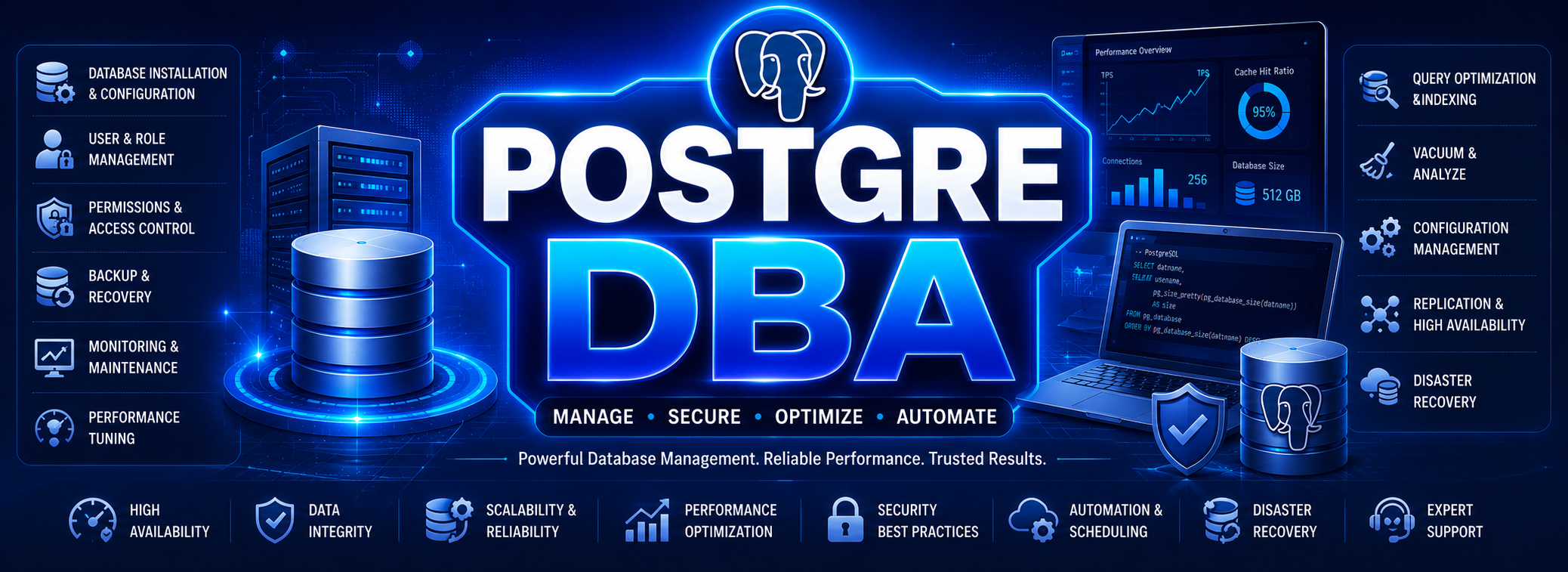


PostgreSQL DBA has seen a rapid growth of opportunities in the recent times. A PostgreSQL DBA (Database Administrator) specializes in managing PostgreSQL databases for performance and reliability. They handle tasks like installation, configuration, backup, recovery, and performance tuning. Learning PostgreSQL offers strong career opportunities in open-source database management.
Training Highlights
✅ PostgreSQL Installations, Issues
✅ Database Design & Schemas
✅ Backup, Restore & PITR
✅ High Availability & Replication
✅ Performance Tuning, Tools
✅ Security, Roles & Access
✅ Monitoring (pgAdmin, Scripts)
✅ Upgrades, Patching & Migrations
✅ 1:1 Mentorship, Interview Guidance
Modules We Learn:
✅ Module 1: PostgreSQL DBA Concepts
✅ Module 2: PostgreSQL Administration in Cloud (Azure)
Course Duration: 9 Weeks
Postgre SQL DBA Course Contents:
Module 1: PostgreSQL DBA Concepts
Ch 1: PostgreSQL Introduction
- Database Concepts
- DBA Job Roles
- PostgreSQL DBMS
- Postgres Features
- Postgres Editions
Ch 2: Installation & Setup
- Installing PostgreSQL on Linux
- Installing PostgreSQL on Windows
- Package-based Installation
- Source Installation
- PostgreSQL Directory Structure
- Initial Cluster Creation
- Start, Stop & Restart using pg_ctl
- Managing PostgreSQL using systemctl
Ch 3: Database Administration
- Creating Databases
- Managing Schemas
- Tablespaces
- Roles & Users
- Privileges & Permissions
- Default Privileges
Ch 4: Configuration Management
- postgresql.conf
- pg_hba.conf
- pg_ident.conf
- Configuration Reload vs Restart
- Parameter Classification
- Memory Configuration
- Logging Configuration
Ch 5: Security Management
- Authentication Methods
- SSL Basics
Ch 6: PostgreSQL Architecture
- PostgreSQL Process Architecture
- PostgreSQL Storage Architecture
- System Catalogs
Ch 7: Tools & Utilities
- psql
- pgAdmin
- createdb
- dropdb
- createuser
- dropuser
Ch 8: Backup & Recovery
- Logical Backup
- pg_dump
- pg_restore
- pg_dumpall
- Physical Backup
- Base Backup (pg_basebackup)
Ch 9: WAL Fundamentals
- WAL Architecture
- WAL Files
- Checkpoints
- WAL Configuration
Ch 10: Routine Maintenance
- VACUUM
- VACUUM FULL
- ANALYZE
- AUTOVACUUM
- REINDEX
- CLUSTER
- MVCC
- Maintenance Best Practices
Ch 11: Monitoring
- pg_stat_activity
- pg_stat_database
- pg_locks
- pg_stat_user_tables
- pg_stat_statements
- Session Monitoring
Ch 12: Extensions
- pg_stat_statements
- pg_buffercache
- postgres_fdw
- pg_repack
- pgstattuple
- uuid-ossp
Ch 13: Advanced Backup & Recovery Strategies
- WAL Archiving
- Point-in-Time Recovery (PITR)
- Recovery Targets
- pgBackRest/Barman
- Backup Scheduling using Cron Jobs
Ch 14: Performance Tuning – 1
- PostgreSQL Optimizer
- Query Planner
- EXPLAIN, EXPLAIN ANALYZE
- Buffer Usage
Ch 15: Performance Tuning – 2
- Cost Estimation
- Slow Query Analysis
- Index Optimization
- Execution Plans
- Join Strategies
- Parallel Queries
Ch 16: Indexing
- B-tree
- Hash, GIN
- GiST, BRIN
- Expression Indexes
- Partial Indexes
- Covering Indexes (INCLUDE)
Ch 17: Vacuum Internals
- Dead Tuples
- Auto vacuum Internals
- Bloat Analysis
Ch 18: Locking & Wait Events
- Lock Types
- Deadlocks
- Blocking Sessions
- Types of Wait Events
- Transaction Isolation Levels
Ch 19: Replication
- Streaming Replication
- Logical Replication
- Synchronous Replication
- Asynchronous Replication
- Cascading Replication
- Replication Lag Monitoring
Ch 20: High Availability
- Failover, Switchover
- Automatic Failover (pgpool-II / Patroni)
- Disaster Recovery (DR)
Ch 21: Partitioning
- Range, List
- Hash
- Partition Pruning
Ch 22: Upgrades
- Minor Version Upgrade
- Major Version Upgrade
- pg_upgrade
- Best Practices Upgrade
- Rollback Planning
Ch 23: Enterprise Monitoring
- Prometheus
- Grafana
Module 2: PostgreSQL Administration in Cloud (Azure)
Ch 13: Cloud Fundamentals
- IaaS
- PaaS
- SaaS
- Managed PostgreSQL
Ch 14: Introduction to Azure Database for PostgreSQL
- Overview of Azure Database Services
- PostgreSQL on Azure Architecture
- Deployment Models
Ch 15: Azure Postgres DBA: Flexible Server
- Creating Flexible Server
- Compute and Storage Options
- Networking Configuration
- Start/Stop Server
- Cost Optimization
Ch 16: Azure Postgres DBA: Single Server
- Single Server Architecture
- Features and Limitations
- Single Server vs Flexible Server
Ch 17: Azure Postgres DBA: Backups
- Automated Backups
- Backup Retention Period
- Point-in-Time Recovery (PITR)
- Restore Operations
- Backup Monitoring
- Backup Best Practices
Ch 18: Azure Postgres DBA: Migration
- Azure Database Migration Service (DMS)
- Migration using pg_dump and pg_restore
Ch 19: Azure Postgres DBA: Monitoring
- Metrics and Alerts
- Performance Dashboard
- Query Performance Insights
Ch 20: Azure Postgres DBA: High Availability and Replication
- HA Architecture
- Read Replica
- Replica Creation
- Failover Process
- Disaster Recovery (DR)
Ch 32: PostgreSQL DBA Realtime Project
Enterprise PostgreSQL Production Database Administration
Project Scenario:
A retail/e-commerce company runs a business-critical PostgreSQL production database.
Environment:
PostgreSQL on Linux with one Primary Server, one Standby/DR Server, and a monitoring
environment.
What is the PostgreSQL DBA Training?
This course teaches complete PostgreSQL Database Administration including installation, configuration, architecture, security, backup & restore, replication, HA/DR, tuning, migrations, Azure PostgreSQL DBA, and a real-time project.
Who should join this PostgreSQL DBA course?
DBAs, Developers, System Administrators, Data Analysts, Data Engineers, IT Professionals, Students, or anyone wanting to start a career in the Database Platform.
Is this course beginner-friendly?
Yes. The training starts from basics of PostgreSQL, SQL operations, architecture, and gradually moves into advanced DBA, HA, DR, and Azure cloud administration.
What system requirements do I need?
8GB RAM, 10GB free disk space, and any OS such as Linux, Windows, macOS, FreeBSD, Solaris. Full installation guidance is provided.
What PostgreSQL basics will I learn?
PostgreSQL introduction, architecture, versions, features, installation on Windows/Linux, configuration files, directory structure, and cluster management.
Do you teach PostgreSQL Architecture in detail?
Yes. Postmaster process, utility processes, memory components, shared buffers, and full DB engine architecture.
Will I learn SQL operations inside PostgreSQL?
Yes. Create/Drop Database, Users, Schemas, CRUD operations, constraints, functions, operators, and PostgreSQL tools like psql and pgAdmin.
Is Tablespace management covered?
Yes. Local/global tablespaces, temporary tablespaces, creation, and storage-level management
What backup and restore methods will I learn?
pg_dump, pg_restore, psql backups, offline/online backups, pg_basebackup, pgBackRest, and PITR (Point-In-Time-Recovery).
Do you teach MVCC and Transaction Management?
Yes. MVCC concepts, transaction snapshots, vacuum, analyze, statistics, autovacuum, and wraparound handling.
Will I learn Performance Tuning?
Yes. Query tuning (EXPLAIN, ANALYZE), indexing (B-Tree, Hash, GIN, BRIN), subquery optimization, partitioning, configuration tuning, monitoring, and hardware tuning.
Are Data Loading tools covered?
Yes. COPY, pgloader, FDW (Foreign Data Wrappers), migrations, exporting, and importing large datasets.
Do you teach High Availability & Replication?
Yes. Streaming replication, logical replication, manual failover, auto-failover, switchover, pgpool, repmgr, Patroni, and full HA/DR strategies.
Will I learn PostgreSQL partitioning and server parameter tuning?
Yes. Server parameters, performance tuning options, and partitioning methods for large datasets.
Do you cover PostgreSQL upgrades and migrations?
Yes. Manual migrations, pg_dump/pg_restore, migration tools, version upgrades, common issues, and solutions.
Is Monitoring included in the training?
Yes. Monitoring with Grafana, pg_stat_statements, pgBadger, and performance dashboards.
Does this course include Azure PostgreSQL DBA?
Yes. Azure cloud fundamentals, Azure PostgreSQL services, creation of objects, CRUD operations, migrations (DMS/ADF), automated backups, PITR restores, tuning, and HA/DR in Azure.
Is there a real-time PostgreSQL DBA project included?
Yes. Requirements, design, implementation, HA/DR, performance tuning, monitoring, and resume preparation with project FAQs.
What training modes are available?
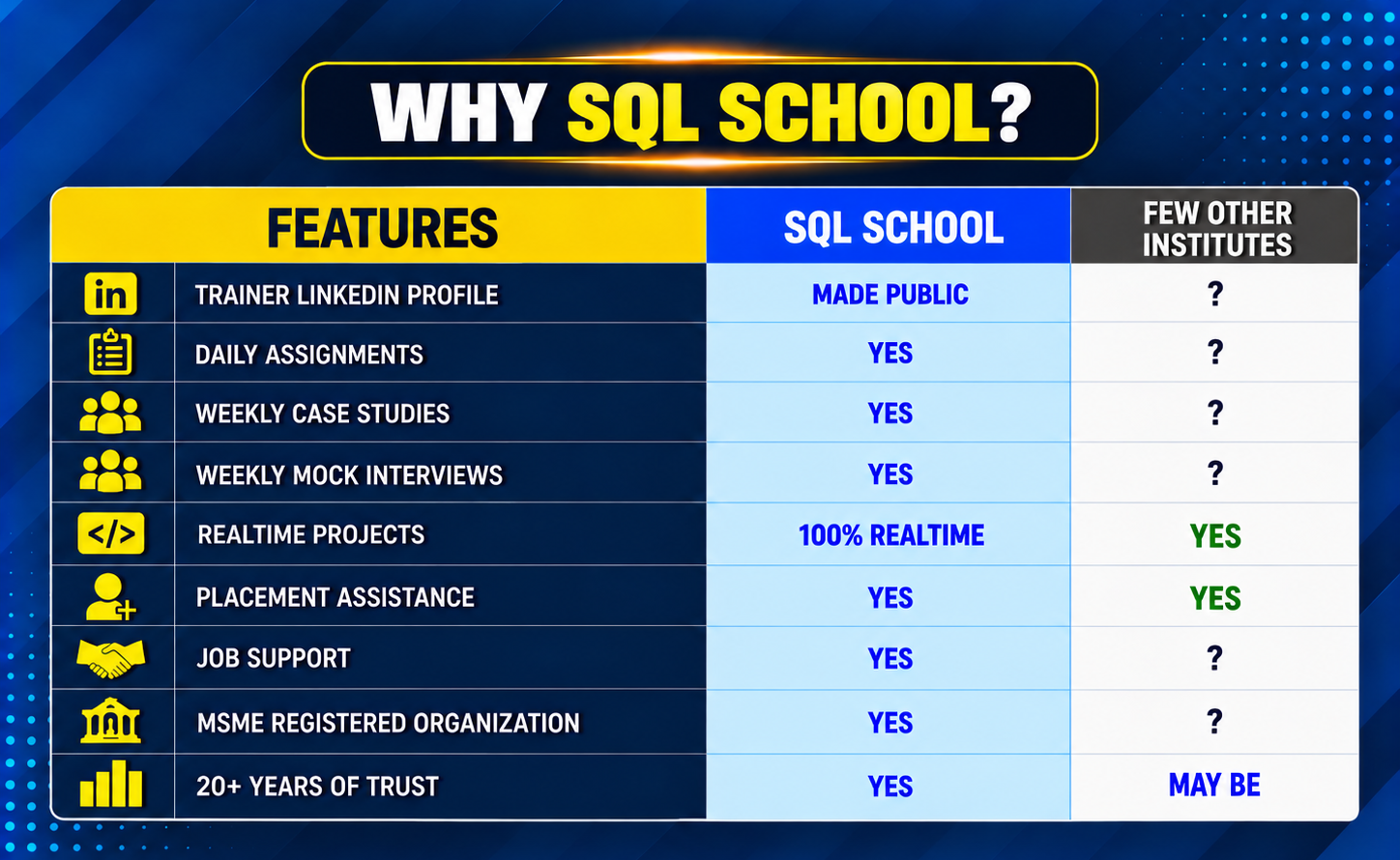
Live Online Training, Self-Paced Videos, Real-Time Labs, Resume Guidance, Mock Interviews, and 1-on-1 Mentorship.
Demo Videos
Training Modes






Why Choose SQL School
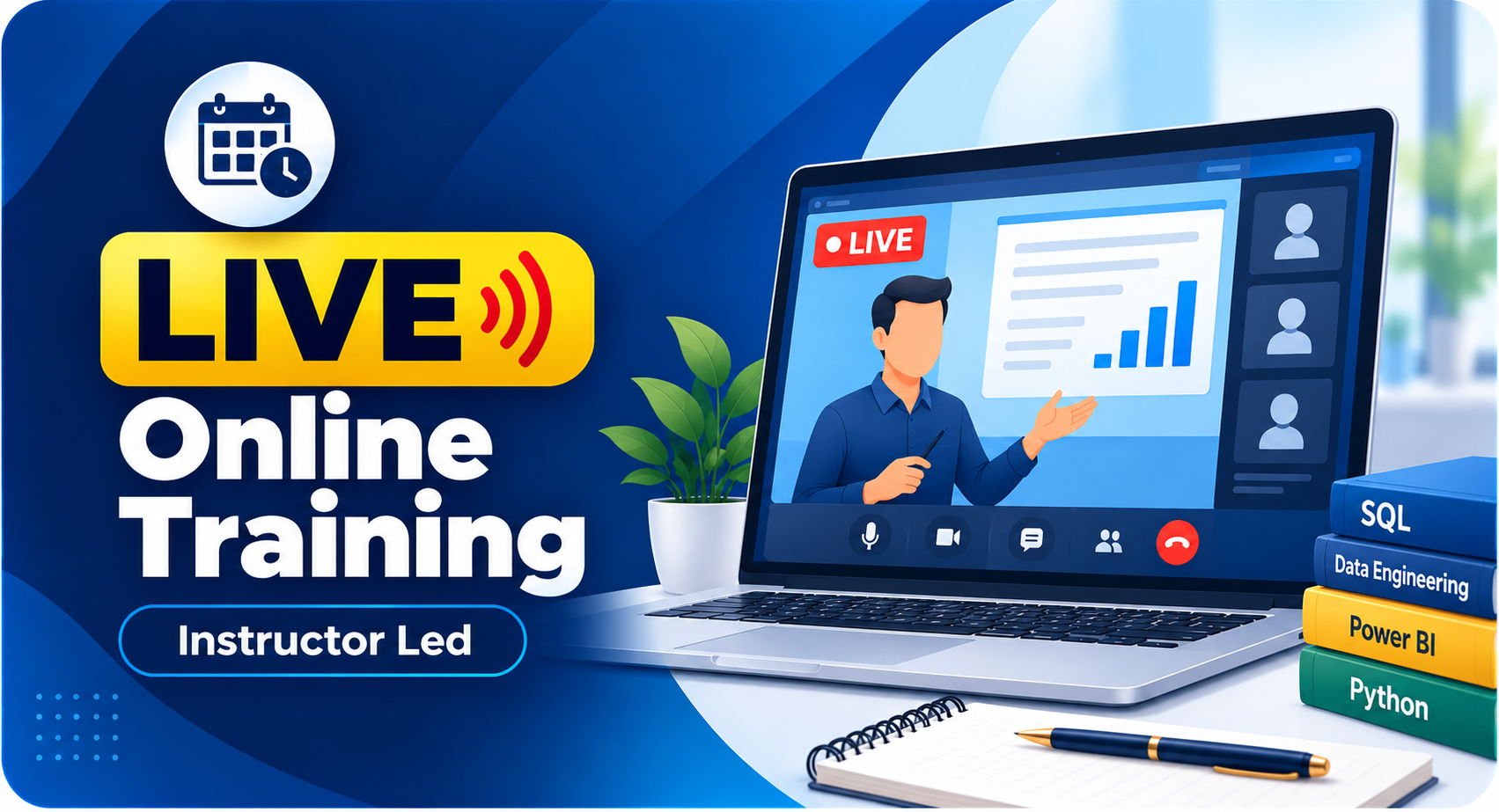
- 100% Real-Time and Practical
- ISO 9001:2008 Certified
- Concept wise FAQs
- TWO Real-time Case Studies, One Project
- Weekly Mock Interviews
- 24/7 LIVE Server Access

- Realtime Project FAQs
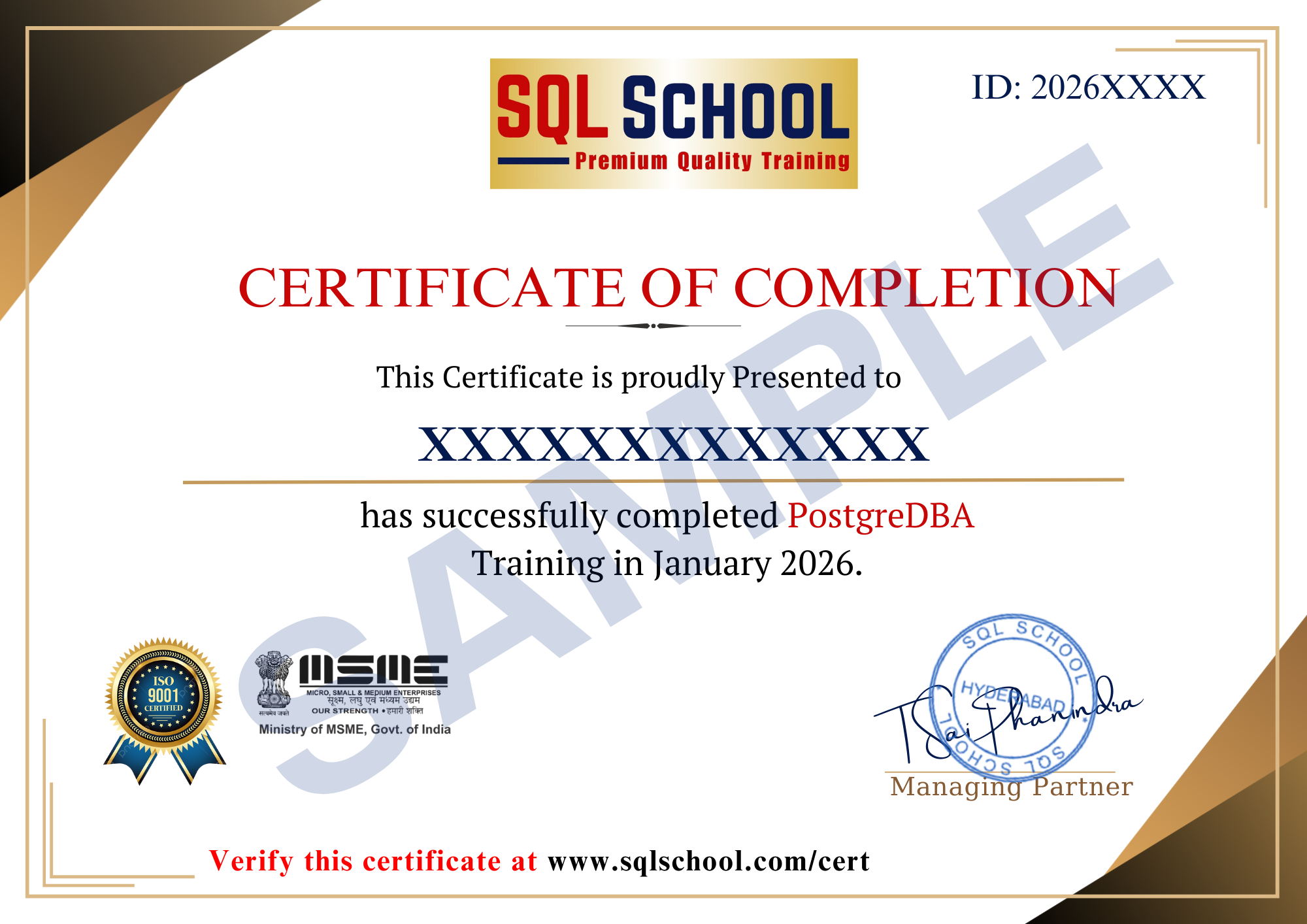
- Course Completion Certificate
- Placement Assistance
- Job Support
- Realtime Project Solution
- MS Certification Guidance