


This Job Oriented Course is 100% practical, step by step. Carefully planned to make you understand the concepts with Basic to Advanced Level of Microsoft SQL with AI, use case scenarios and realtime project. This SQL with AI Course will make you Job Ready, help you to secure your job with ease.
Training Highlights
✅ Microsoft Fabric Core Concepts & Architecture
✅ Lakehouse Design & Delta Lake Fundamentals
✅ Data Ingestion, Pipelines & Orchestration
✅ Dataflows, Notebooks & Spark Transformation
✅ Fabric Data Warehouse & SQL Analytics
✅ Real-Time Intelligence & Event Streaming
✅ Power BI Reports & Semantic Layer in Fabric
✅ Data Security, Governance & Purview Basics
✅ DP-800 Exam Preparation & Practice Test
Modules We Learn
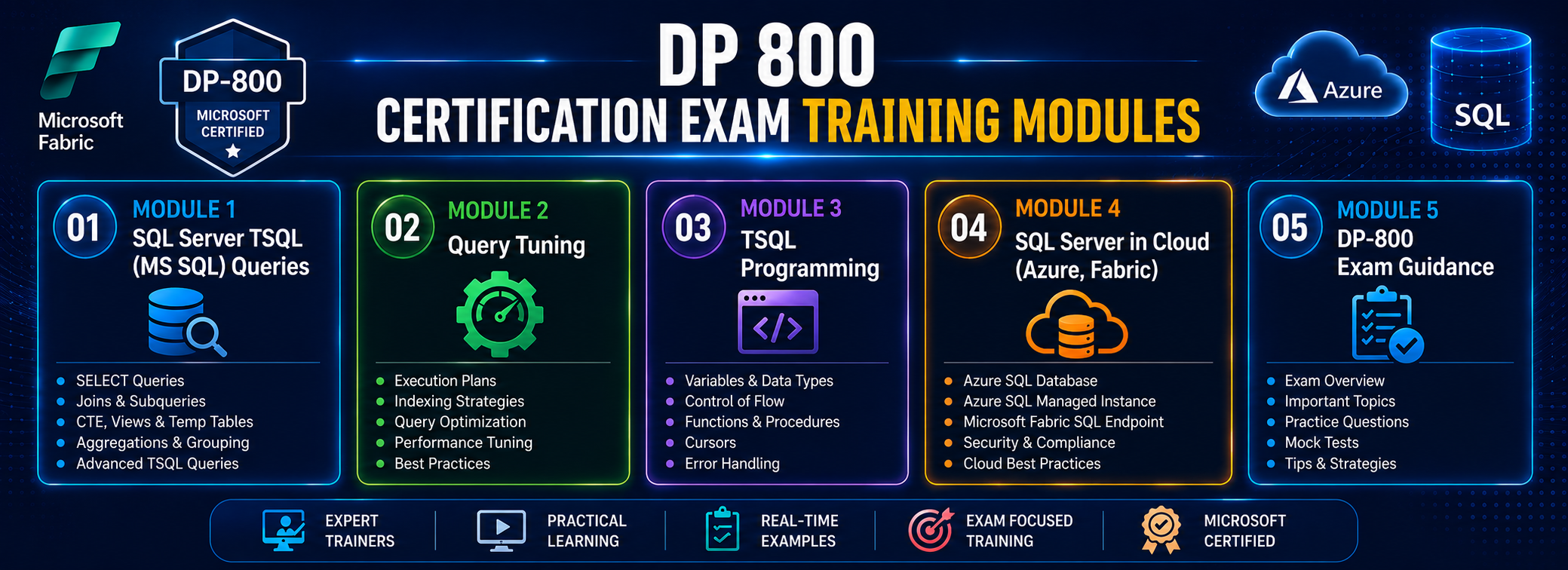
✅ Module 1: SQL Server TSQL (MS SQL) Queries
✅ Module 2: Query Tuning
✅ Module 3: TSQL Programming
✅ Module 4: SQL Server In Cloud (Azure, Fabric)
✅ Module 5: DP-800 Exam Guidance
Course Duration: 2 Months

DP 800 Course Contents:
Module 1: SQL Server TSQL (MS SQL) Queries
Ch 1: SQL Database Job Roles
- Introduction to Data
- Database Intro, Types
- OLTP, DWH, OLAP
- DBMS Concepts
- Database Job Roles
- Data Engineer Job Roles
Ch 2: Database Intro & Installations
- SQL Server Installations
- Instance Concepts
- Authentication Types
- Authentication Modes
- SSMS Tool Installation
- Connections, Authentications
Ch 3: SQL Basics V1 (Commands)
- Creating Databases (GUI)
- Creating Tables, Columns (GUI)
- SQL Basics (DDL, DML, etc..)
- Creating Databases, Tables
- Data Inserts (GUI, SQL)
- Basic SELECT Queries
Ch 4: SQL Basics V2 (Commands, Operators)
- DDL: Create, Alter, Drop, Add
- DML: Insert, Update, Delete
- DQL: Select, Fetch
- SQL Operators
- Special Operators
Ch 5: Excel Data Imports
- Data Imports with Excel
- Order By: Asc, Desc
- Order By with WHERE
- TOP & OFFSET
- UNION, UNION ALL
Ch 6: Schemas & Batches
- Schemas: Creation, Usage
- Schemas & Table Grouping
- Real-world Banking Database
- 2 Part, 3 Part & 4 Part Naming
- Batch Concept & “Go” Command
Ch 7: Constraints, Keys & RDBMS
- Null, Not Null Constraints
- Unique Key Constraint
- Primary Key Constraint
- Foreign Key & References
- Default Constraint & Usage
- DB Diagrams & ER Models
Ch 8: Normal Forms & ERD
- Normal Forms: 1 NF, 2 NF
- 3 NF, BCNF and 4 NF
- Self Referencing Keys
- Cascading Keys
- Database Diagrams
Ch 9: Joins Queries – Level 1
- Joins: Table Comparisons
- Inner Join & Outer Joins
- Cross Join & Cross Apply
- Table Combination
- Table & Column Aliases
Ch 10: Joins Queries – Level 2
- Group By & Aggregations
- Joins with Group By
- 3 Table, 4 Table Joins
- Join Queries with Aliases
- WHERE & HAVING
- Query Execution Order
Ch 11: Sub Queries
- Distinct & Union, Union All
- Sub Queries Concept
- Sub Queries & Aggregations
- Joins with Sub Queries
- Correlated Queries
Ch 12: Views & Data Analytics
- Views: Realtime Usage
- Storing SELECT in Views
- DML, SELECT with Views
- RLS: Row Level Security
- Data Analytics with Excel
- Important System Views
Ch 13: Stored Procedures – Level 1
- Stored Procedures: Realtime Use
- Procedures with SELECT
- System Stored Procedures
- Metadata Access with SPs
- Stored Procedures, Tuning
Ch 14: Stored Procedures – Level 2
- Merge Statement
- Upsert Operations with Merge
- Merge with OLTP & DWH
- Matched and Not Matched
- Merge Statement inside SPs
Ch 15: Functions – Level 1
- Using Defined Functions (UDF)
- Scalar Functions in Real-world
- Table Valued Functions
- Parameterized Queries
- Returns and Return
- SP Versus Functions
Ch 16: Functions – Level 2
- Aggregated Functions
- Date & Time Functions
- String Functions
- Window Functions
- Rank, Row_Number
- DenseRank, Partition By
Ch 17: Triggers & Automations
- Need for Triggers in Real-world
- DDL & DML Triggers
- For / After Triggers
- Instead Of Triggers
- Memory Tables with Triggers
- Disabling DMLs & Triggers
Ch 18: Transactions & ACID
- Transaction Concepts in OLTP
- Auto Commit Transaction
- Explicit Transactions
- COMMIT, ROLLBACK
- Lock Hints & Query Blocking
- READPAST, LOCKHINT
Ch 19: Indexes Basics, Tuning
- Indexes & Tuning
- Clustered Index, Primary Key
- Non Clustered Index & Unique
- Creating Indexes Manually
- Composite Keys, Query Optimizer
- Composite Indexes & Usage
Ch 20: CTEs & Tuning
- Common Table Expression
- Creating and Using CTEs
- CTEs, In-Memory Processing
- IIF(), CASE Statement
- Cube( ) and Rollup( )
- Sub Totals & Grand Totals
- Grouping( ) & Usage
Ch 21: Data Types & Variables
- Integer Data Types
- Character, MAX Data Types
- Decimal & Money Data Types
- Boolean & Binary Data Types
- Date and Time Data Types
- SQL_Variant Type
- Variables in SQL
- Cursor Variable & Fetch
Ch 22: Temp Tables
- Local Temp Tables
- Global Temp Tables
- Testing Temp Tables
- SELECT..INTO Statement
- Bulk Copy Operations
Ch 23: SQL Server Architecture
- Network Protocols
- Query Execution Engine
- Parser, Compiler, Checkpoint
- SQL Manager, DB Manager
- Storage Engine, Locks
- SQL OS Components
Ch 24: Real-Time SQL Server Case Studies
✅ Healthcare Management System
- Patient Records Management
- Doctor Appointment Scheduling
- Billing & Insurance Processing
- Medical Reports Analysis
✅ E-Commerce Database
- Customer & Product Management
- Order Processing
- Inventory Tracking
- Sales Reporting
Module 2: Query Tuning
Ch 25: Tuning: Indexes
- Indexes : Sort Locations
- Clustered & Online Indexes
- Non Clustered, Column Store
- Included Indexes in Realtime
- Filtered Indexes & Usage
- Covering Index & Selectivity
- Indexed Views (Materialized)
Ch 26: Tuning: Partitions
- Partitions: Performance Tuning
- Partition Functions & Schemes
- Partition Un-partitioned Tables
- Compressions: ROW, PAGE
- Auditing Partitions
- Partitions Limitations in OLTP
- Partitions with DWH
Ch 27: DB Architecture (VLDB)
- Planning Large Databases
- Primary, Secondary Data Files
- Filegroups, Spacing and Sizing
- Log File: Usage and Precautions
- Creating Tables with Filegroups
- Pages and Extents for Storage
- VLF, MiniLSN & Checkpoint
Ch 28: Lock Management
- Open Transactions in Realtime
- Open Transaction, Blocking
- LOCKS: Types & Audits
- S, X, IX, U and MD Locks
- Sch-M and Sch-S Locks
- SP_WHO2, SP_LOCK
- sysprocesses & Lock Waits
Ch 29: Isolation Levels
- Lock Hints and Isolation Levels
- Read Committed, Uncommitted
- Serializable, Repeatable Read
- Snapshot Isolation, Versioning
- Read Committed Snapshot
- Choosing Correct Isolation Level
Real-Time Case Study For Query Tuning
✅ Healthcare Management System
- Indexing & Tuning
- Tuning Tools
- Partitions, DTA Recommendations
- Lock Management
- Tuning Recommendations
Module 3: TSQL Programming
Ch 30: Variables & Try. Catch
- Variables: Declaration & Usage
- Assigning Values to Variables
- SELECT & SET Operations
- Using Variables in SPs
- Variables Versus Parameters
- Try.. Catch Block with Variables
- THROW Statement, Error Handling
Ch 31: Updatable Views
- Using Triggers with Views
- Updatable Views, DML
- Views & Stored Procedures
- Data Distributions in Tables
- Transactions with Procedures
- Conditional Commits in SPs
- Rollback Options in Realtime
Ch 32: Stored Procedures & TVPs
- Using TVP with Procedures
- Creating User Defined Types
- Big Data Copy & Transactions
- Using SPs & Table Variables
- Transactional Integrity with SPs
- Conditional Commits, Rollbacks
- Procedure Recompilations
Ch 33: Stored Procedures, Cursors
- Cursors Types: Local, Global
- Using Procedures with Cursors
- Formatting Queries, Nvarchar
- WHILE Loop: @Fetch Status
- Variables with Dynamic SQL
- sp_executesql Extended SP
- Dynamic SQL Programming
Ch 34: SPs & Recursive CTEs
- CTEs: Common Table Expression
- CTEs For DML Operations
- Defining Recursive CTEs
- Anchor Element: Realtime Use
- Termination Checks and Loops
- Defining SPs with CTEs
- Cautions with Recursive CTEs
Ch 35: Functions & Loops
- Inline, Table Line Functions
- Multi Line Table Functions
- Using LOOPs in Functions
- Variables & Return Values
- Table Generation Logic
- Date & Time Data Types
- Calendar Data Generations
Ch 36: Open Fuzzy Logic, Debugging
- Using OPENROWSET( )
- EDIT_DISTANCE
- EDIT_DISTANCE_SIMILARITY
- JARO_WINKLER_DISTANCE
- MATCH Operator
- JSON_OBJECT, JSON_ARRAY
- JSON_ARRAYAGG, JSON_CONTAINS
- OPENJSON
Ch 37: PIVOT, UNPIVOT
- Reading Denormalized Data
- Normalizing Table Data
- PIVOT Operation with TSQL
- PIVOT with Aggregates
- FOR and IN Operators
- UNPIVOT with TSQL
- PIVOT with Functions, SPs
Ch 38: Change Data Capture
- CDC Concept
- Database Level CDC
- Table Level CDC
- CT Tables (Change Tracking)
- DDL & DML Tracking
Real-Time Project
✅ Banking Transaction Management System using SQL Server & T-SQL
- Customer Account Management
- Savings / Current Account Tables
- Deposit and Withdrawal Transactions
- Fund Transfer Between Accounts
- Transaction History Report
- Daily, Monthly, Yearly Statements
- Loan Application & EMI Tracking
- Stored Procedures for Banking Operations
- Views for Customer & Account Reports
- Functions for EMI, Interest & Balance Calculation
- Triggers for Audit Tracking
Module 4: SQL Server in Cloud (Azure, Fabric)
Ch 39: Cloud Basics, Azure Funda
- Cloud Fundamentals
- Cloud Concepts, Benefits
- IaaS, PaaS, SaaS Cloud Types
- Azure Cloud Concepts
- Azure Resources & Usage
- Azure Services & Purpose
- Azure Account & Subscription
Ch 40: Azure SQL Deployments
- Azure SQL Services
- Azure SQL Server Creation
- Azure SQL Databases
- Azure Firewall: Rules
- SSMS Tool: Test Connections
Ch 41: Azure Storage Accounts
- Azure Storage Account
- Azure Data Lake Storage (ADLS)
- Azure BLOB Data
- Containers & File Uploads
- Azure Tables
Ch 42: Azure SQL DB Migrations
- SQL DB Migration Options
- Data Migration Assistant: DMA
- DMA Tool, Migration Options
- On-Premises DB Export
- Azure SQL Database Import
- Azure Storage Account
Ch 43: Azure SQL DB Metrics
- Azure SQL DB Metrics
- CPU, Memory, Log Metrics
- Data File Metrics, Alerts
- Azure Action Groups
- Azure Notifications
Ch 44: Azure SQL DB Tuning, AI
- Automated Tuning Options
- Server Level Tuning
- Database Level Tuning
- Watermark Columns
- Filterable, Searchable
- Indexer & Data Refresh
Ch 45: Azure Key Vaults
- Azure Encryptions at REST
- SMK & CML Concepts
- Azure Key Vaults
- Azure Keys
- Key Access Policies
Ch 46: Azure Log Apps
- Azure Logic Apps
- Consumption Logic
- Standard Logic
- Logic App Connectors
- Triggers & Parallel Branches
- Data Governance
Ch 47: Azure Functions
- Creating, Using Functions
- Azure Functions with TSQL
- TSQL Debugging
- Testing Azure Functions
Ch 48: Regular Expressions
- REGEXP_LIKE
- REGEXP_REPLACE
- REGEXP_SUBSTR
- REGEXP_INSTR
- REGEXP_COUNT
- REGEXP_MATCHES
- REGEXP_SPLIT_TO_TABLE
Ch 49: TSQL in Microsoft Fabric
- Microsoft Fabric Concepts
- Fabric Account & Workspace
- Fabric Warehouse Creation
- TSQL in Fabric Warehouse
- TSQL Events in Fabric
Ch 50: TSQL with AI, Co-Pilot
- CoPilot Concepts
- CoPilot Architecture
- CoPilot with TSQL
- CoPilot in Fabric
- Model Context Protocol (MCP)
- GitHub Copilot
- MCP End Points
Module 5: DP-800 Exam Guidance
- DP-800 Certification Overview
- Exam Objectives & Latest Syllabus
- SQL Server & Azure SQL Concepts Review
- Performance Tuning & Query Optimization
- Transactions & Concurrency Control
- Data Migration to Azure SQL
- Microsoft Fabric T-SQL Concepts
- AI & GitHub Copilot for SQL Development
- Exam Scenario-Based Questions
What is the DP-800 Certification?
The Microsoft DP-800 is the Fabric Analytics Engineer Associate certification exam. It validates your ability to design, build, and manage end-to-end analytics solutions using Microsoft Fabric — including Lakehouses, Data Warehouses, Pipelines, Notebooks, Spark, Real-Time Intelligence, and Power BI. Earning this certification demonstrates expertise in both data engineering and analytics within the Fabric ecosystem.
What are the Job Roles after DP-800 Certification?
✅ Fabric Analytics Engineer
✅ Microsoft Fabric Data Engineer
✅ Azure Data & Analytics Consultant
✅ Fabric BI Developer
✅ Cloud Data Engineer (Microsoft Stack)
✅ Data Platform Engineer (Fabric + SQL)
DP-800 certified professionals are in high demand across MNCs, product companies, and cloud service providers hiring on the Microsoft Fabric stack.
What does the DP-800 Training at SQL School cover?
👉 Module 1: MSSQL & TSQL Queries
👉 Module 2: TSQL Programming
👉 Module 3: TSQL Tuning
👉 Module 4: Azure SQL Development
👉 Module 5: Azure Functions with TSQL
👉 Module 6: Fabric SQL (TSQL) — Lakehouse, Warehouse, Spark, Security
👉 Module 7: CoPilot, GitHub & AI Integration
👉 Module 8: DP-800 Exam Guidance, Sample & Mock Tests
Every module is 100% practical, step-by-step, and mapped to real-world use cases.
Who can join the DP-800 Training?
This course is suitable for:
- Freshers looking to build a career in Microsoft Fabric & Cloud Analytics
- SQL Developers / DBAs upgrading to Fabric and Azure
- Data Engineers working on Azure who want to add Fabric expertise
- BI Developers expanding into data engineering with Fabric
- IT Professionals targeting Microsoft certification in analytics
What training modes are available for DP-800?
Option 1: LIVE Online Training — Instructor-led, fully interactive, step-by-step with assignments after every session.
Option 2: Self-Paced Videos — Pre-recorded, 100% practical sessions you can watch at your own pace with concept-wise assignments.
Both options follow the same curriculum. The trainer is available for doubt clarification, assignment reviews, and exam guidance in both modes.
How does SQL School prepare me for the DP-800 Exam?
SQL School provides dedicated DP-800 Exam Guidance as a separate module covering:
- DP-800 Exam Strategy & Topic Weightage
- DP-800 Sample Questions walkthrough
- DP-800 Mock Tests with detailed explanations
- Concept-wise practice tasks mapped to exam objectives
- Real-time scenario-based Q&A sessions
This ensures you are exam-ready alongside being job-ready.
Why should I choose SQL School for DP-800 Training?
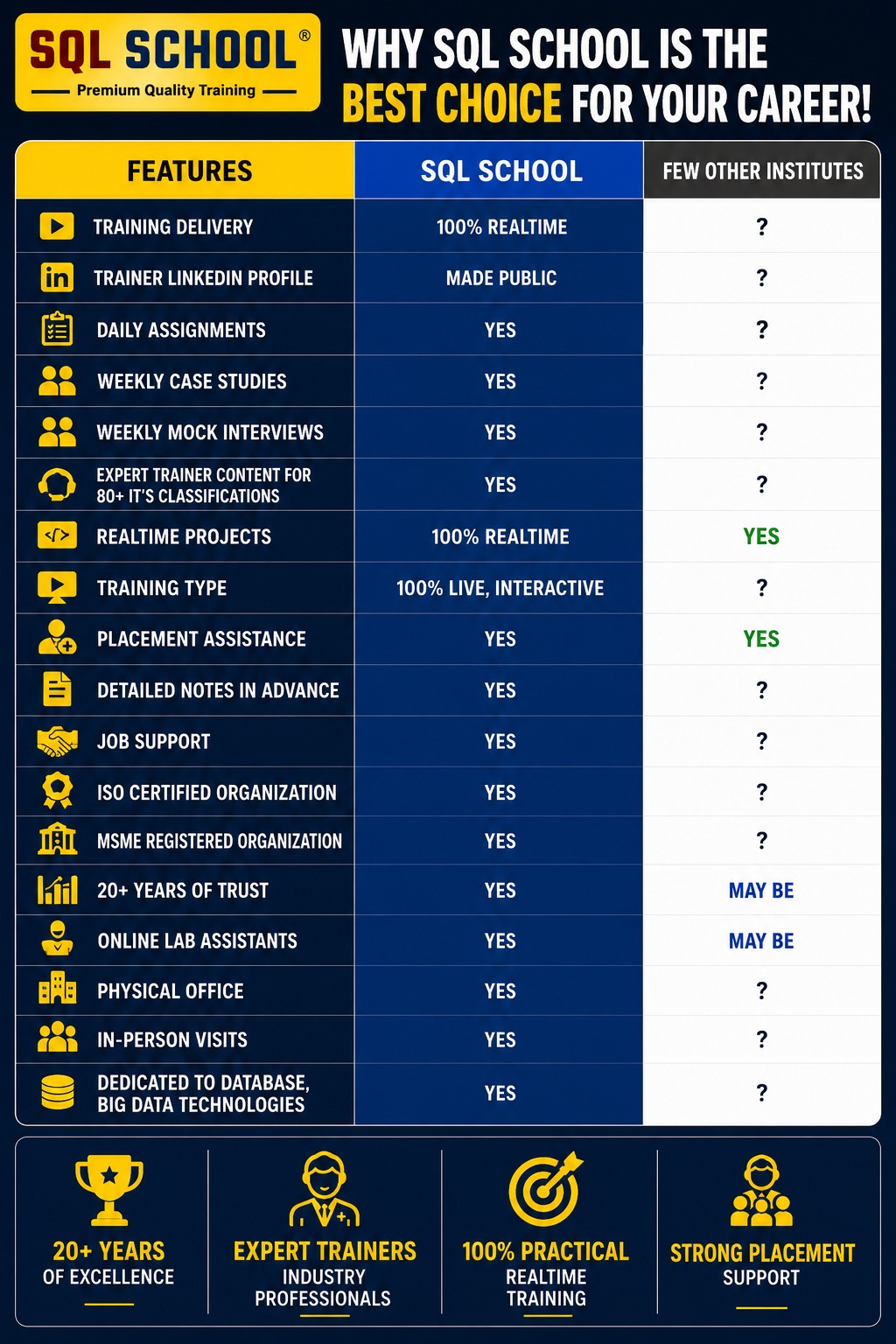
- Every session is practical, step-by-step with concept-wise FAQs
- 100% results with consistent on-time practice and daily tasks
- Trainer with 20+ years of real-world SQL & Azure expertise
- Concept-wise task submissions reviewed before next class
- Placement support with top MNC partners including Accenture, TCS, HCL, Tech Mahindra, and more
- Both LIVE Online and Self-Paced options to suit working professionals and freshers
SQL SCHOOL vs Other Institutes
Why Choose SQL School
- 100% Real-Time and Practical
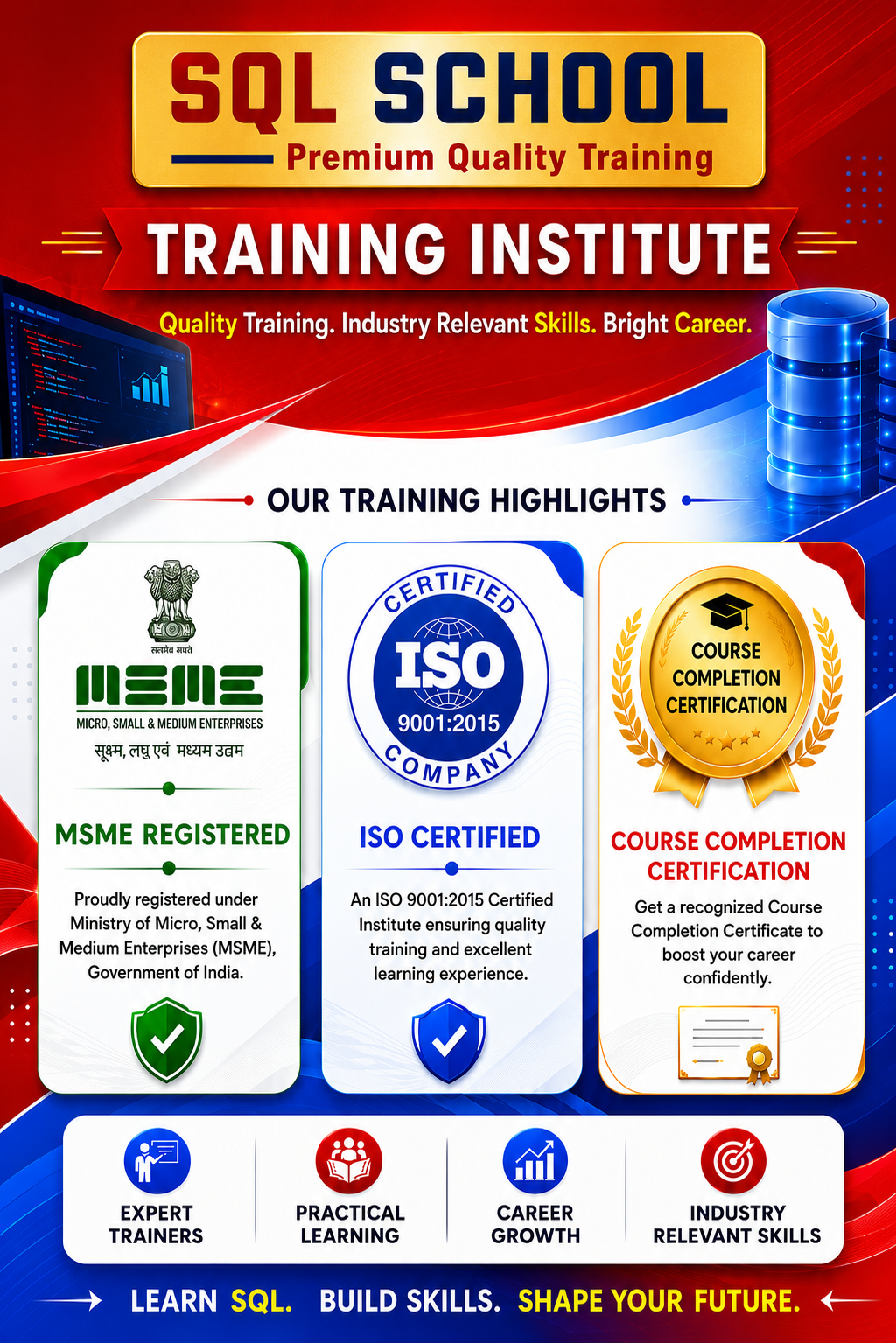
- ISO 9001:2008 Certified
- Concept wise FAQs
- TWO Real-time Case Studies, One Project
- Weekly Mock Interviews
- 24/7 LIVE Server Access

- Realtime Project FAQs
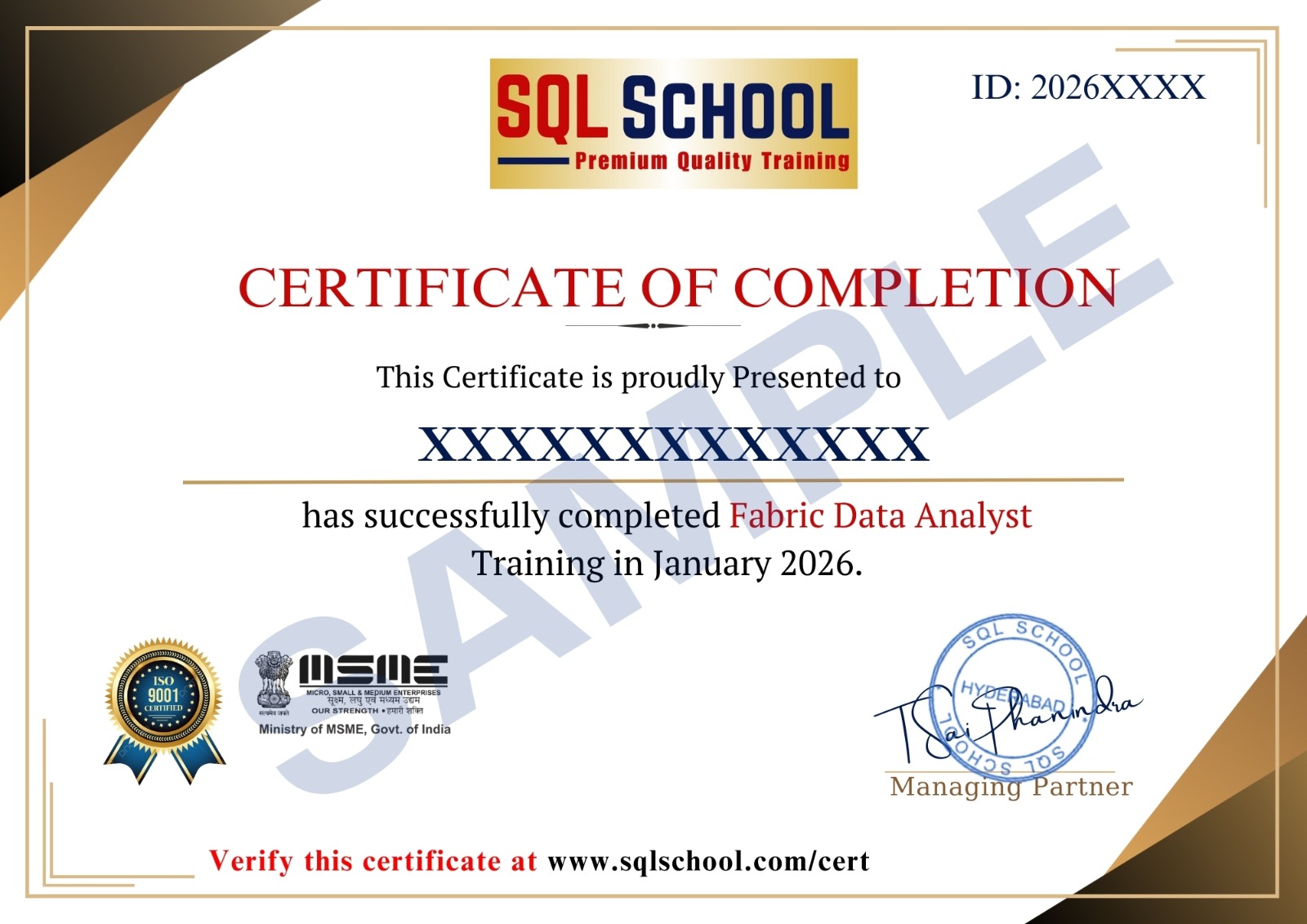
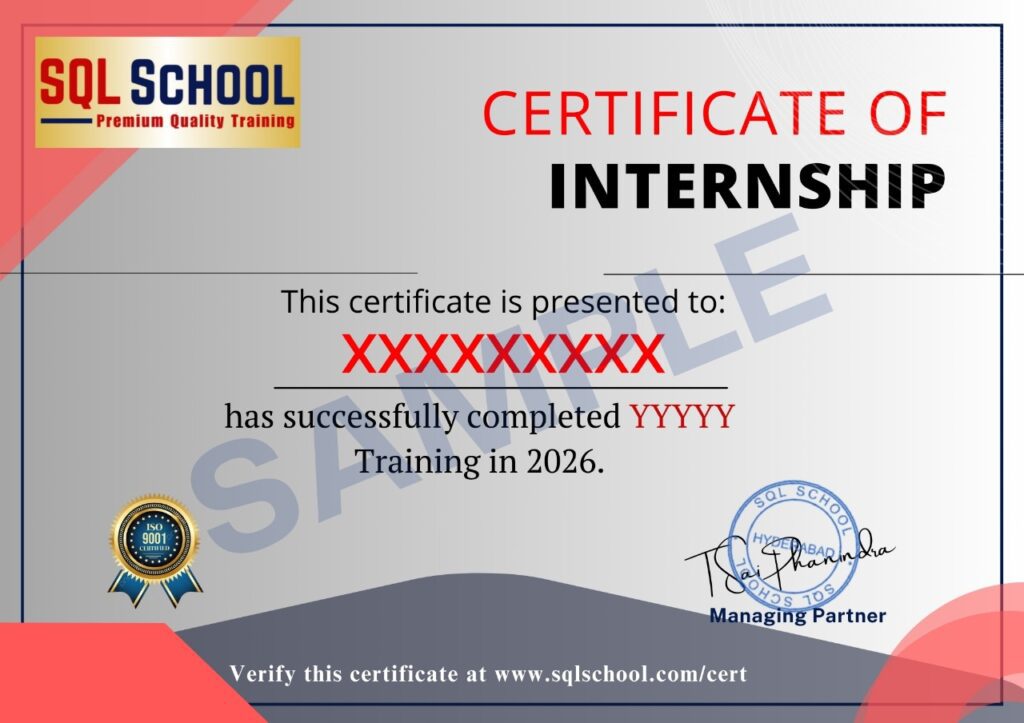
- Course Completion Certificate
- Placement Assistance
- Job Support
- Realtime Project Solution
- MS Certification Guidance