No. Python is taught from the fundamentals — print statements, variables, operators, data types, lists, dictionaries, loops, and decision making.
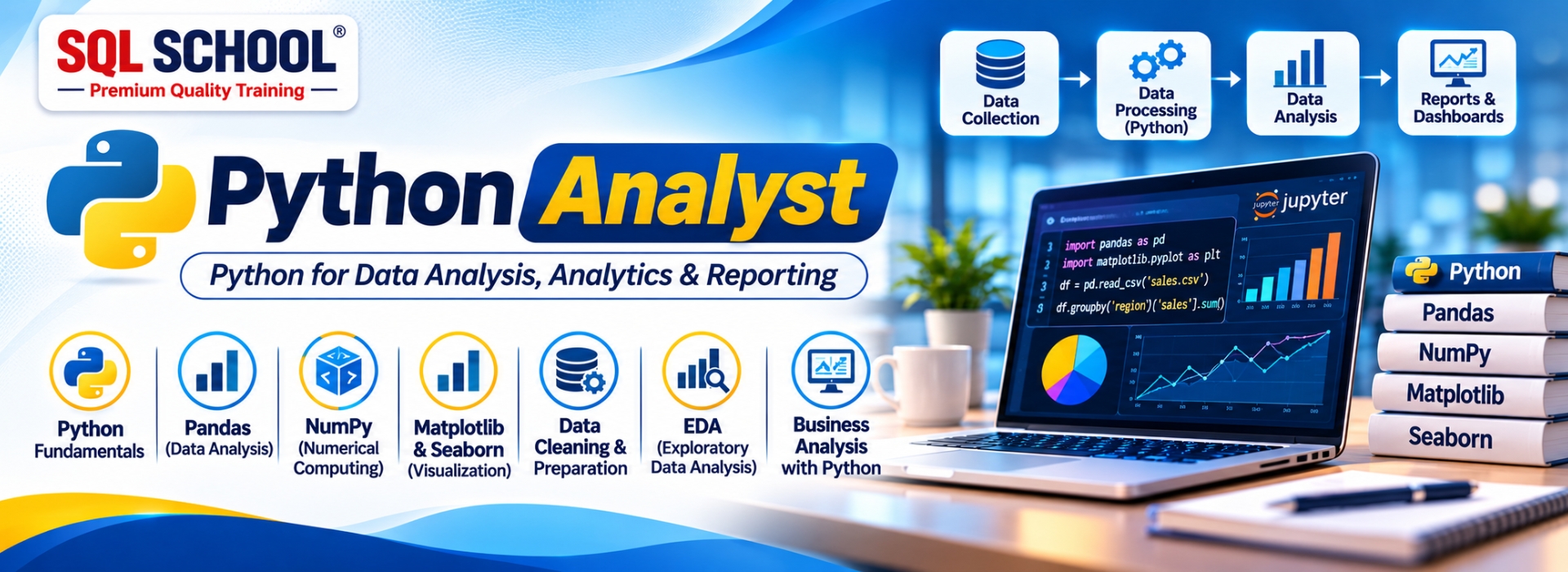
Python is a versatile, beginner-friendly language used in software development, data analysis, AI, automation, and web apps. With powerful libraries like Pandas, Django, and TensorFlow, plus strong community support, mastering Python opens career opportunities in data science, AI, and full-stack development.
Training Highlights
✅ Python Funda, PVM, Data Types
✅ Advanced Data Analytics with Python
✅ Pandas, NumPy for Data Wrangling
✅ API Integration & Data Automation
✅ Python for Data Visualization ()
✅ Matplotlib, Seaborn, Plotly
✅ Python Programming, Expressions
✅ Machine Learning with Python
✅ AI Integrations, ML Ops
✅ 1:1 Mentorship, Interview Guidance
Modules We Learn:
✅ Plan A: Python Analytics
✅ Plan B: Python Analytics + Python Programming
Course Duration: 6 Weeks
Python Analyst
Course Contents:
Module 1 : Python Analytics Detailed Curriculum
Ch 1: Python Intro, Installations
- Python Introduction, Python Versions
- Python Realtime Usage, Job Roles
- Python Installations: CLI, Anaconda
Ch 2: Python Basics, Notebooks
- Python Notebooks, Jupyter IDE
- Python print(), Examples
- Python display(), Examples
- Multi Line display
Ch 3: Python Execution Architecture
- Python Execution Architecture
- Compiler, Byte Code & Interpreter
- cPython, Python Virtual Machine
- Python Syntax, RunTime Errors
Ch 4: Python Variables
- Variable Declarations, Rules
- Multi Value Variables, Type Casting
- Common Values, Multi Value Variables
Ch 5: Python Operators
- Athematic, String, Compare Operators
- Bit, Comparison, Logical Operators
- Binary, Membership, Format, Index Operators
Ch 6: Python Data Types
- Numeric, String, Sequence Data Types
- Type Casting, String Operators
- Variables with Conditions, Data Type Detection
Ch 7: Python Lists
- Python Lists, List Items, Slicing, Indexing Options
- Length & Type, Empty Lists, Append, List Edits
- Type Verification, list() Constructor, Out Of Range
Ch 8: Python Dictionaries
- Creating & Using Dictionaries, Indexing Dictionaries
- Edit Key Values, Lists inside Dictionaries
- Delete & Clear Functions, Unknown Values, Remove All
Ch 9: Python Tuples
- Python Tuples, Defining, Indexing Tuples
- Length(), Type(), Edit Tuples using Lists
- Mixed Values in Tuples, Range and Slicing
Ch 10: Python Control Statements
- If..Else Conditions, Variables & Expressions
- if..elif..else Conditions, Range Values
- Shorthand If, Composite Conditions, Negation Operators
Ch 11: Python Loops
- For Loop Concept, Iterators and Range Function
- Nested Loops, Conditional Loops & Exit
- While Loop, Break, Continue, Paas Concepts
Ch 12: Python Functions
- Defining Functions, Execution / Invoke Options
- Multi Function Arguments, Parameters
- *args, keyword arguments, List Arguments, Returns
Ch 13: Python Lamda Functions
- Inline Functions, Anonymous Functions in Python
- Condition Checks with lambda, filter() Function
- List Items, reduce() and functools
Ch 14: Pandas Dataframes – 1
- Python Dataframes, DataFrame() Function
- Dataframes from Values, Variables
- Slicing Dataframes, Basic Operations
- Indexing, Sorting, Column Filtering
Ch 15: Pandas Dataframes – 2
- Dataframe Concat, Merge (Join)
- Data Cleansing, Replace & Loops
- Identify & Remove Duplicates
- Date, Time Functions, Calendar Generation
Ch 16: NumPy
- NumPy Array Creation Functions
- 1D, 2D, 3D Array Indexing and Slicing
- Reshaping Arrays, Statistical Functions
- Filter with Boolean Indexing
Ch 17: Python SQL DB Access
- SQL DB Access with Python
- pyodbc module, sql functions
- SQL DB Cursor Connections
- Filters, Aggregations with SQL
Ch 18: Python File Handling
- Python File Operations, File Reads, Writes
- File Attributes & Write & Append Modes
- File Open, Close, Loops & Split
Ch 19: Python Regular Expressions
- Python RegEx Module
- Findall, search, split, sub
- Match Object, span, string, group options
Module 2 : Real-time Project
Real-Time Project: Banking / Finance Analytics Case Study
Project Overview
This real-time case study brings together the core Python Analytics skills covered throughout the course. Learners apply Python programming, file and data handling, Pandas and NumPy dataframe operations, SQL database connectivity, and data transformation techniques in a practical Banking / Finance data analysis scenario.
Project Workflow
- Step 1: Understand the Data
- Review source structure
- Understand columns and data types
- Understand the business context
- Step 2: Ingest & Prepare
- Load data from files
- Connect to SQL data sources
- Import data into Python dataframes
- Step 3: Clean the Data
- Handle null values
- Identify and remove duplicates
- Perform data type conversions
- Correct inconsistent values
- Step 4: Transform & Combine
- Apply data filters
- Perform dataframe joins
- Use merge() and concat()
- Apply calculated transformations
- Step 5: Analyze
- Apply aggregations
- Use conditional expressions
- Implement Python functions
- Apply date and time logic
- Step 6: Validate & Present
- Cross-check analysis results
- Validate transformed datasets
- Prepare analysis-ready outputs
Skills Demonstrated in the Project
- Python programming fundamentals and control flow
- Pandas / NumPy dataframe handling
- File handling and SQL database connectivity
- Data cleaning, null handling and duplicate management
- Data joins, merges, concatenation and transformations
- Date/time processing, reusable functions and analytical logic
What is the Python Training course?
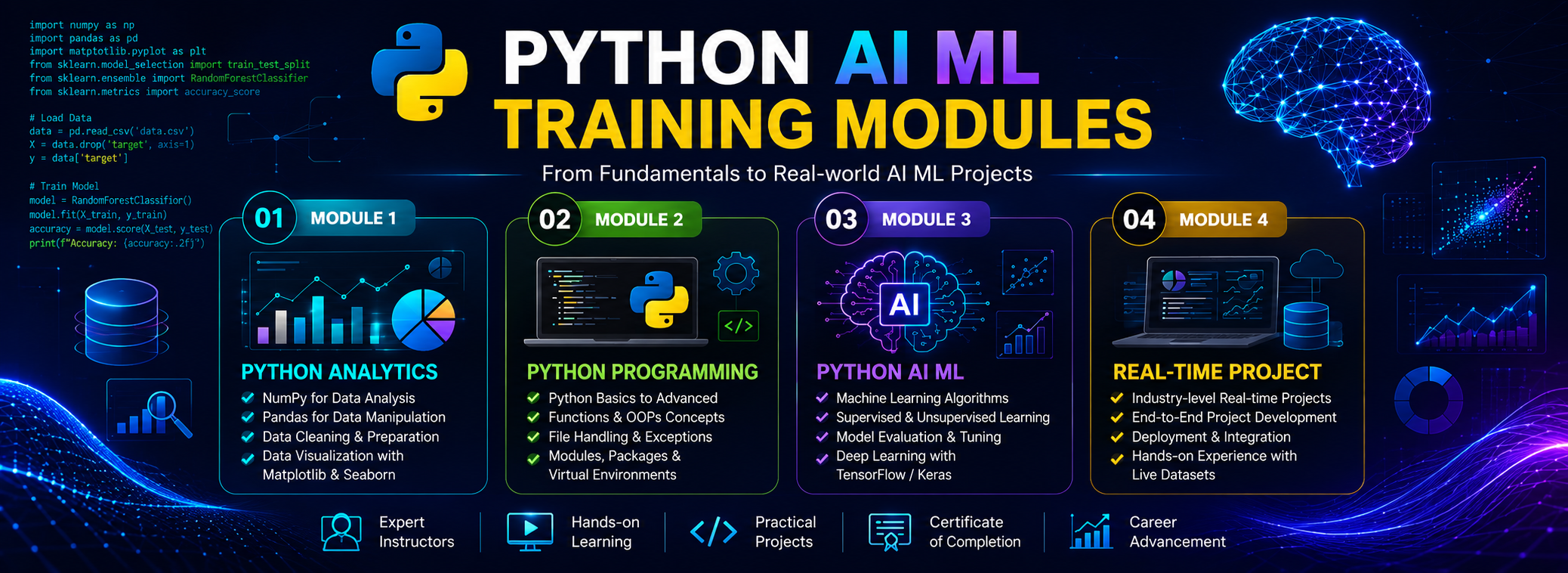
This course teaches complete Python from basics to advanced including Python Concepts, Python Programming, Data Analytics, AI, Machine Learning, NLP, and real-time project development.
Who can join the Python course?
Anyone — freshers, non-IT learners, Data Analysts, Python Developers, Data Scientists, and professionals starting from scratch. The training begins from basics of data, databases, and analysis.
What are the Python Training Plans?
The course is carefully curated with below module:
Plan A: Python Concepts (Ch 1–18 | 4 Weeks)
Plan B: Python Concepts + Python Programming (Ch 1–28 | 6 Weeks)
Plan C: Python Concepts + Programming + Python AI–ML (Ch 1–40 | 9 Weeks)
What Python basics will I learn in this course?
Python versions, Python architecture, PVM, byte code, installation, Jupyter Notebooks, variables, operators, data types, lists, tuples, dictionaries, IF/ELSE, loops, and file handling.
Do you teach Data Analytics using Python?
Yes. Pandas DataFrames, null checks, merges, joins, transformations, cleaning, replacing, deduplication, type conversions, plotting, and NumPy usage are covered.
Will I learn SQL database access from Python?
Yes. pyodbc connections, SQL cursor operations, DDL/DML queries, aggregations, and Pandas + SQL integration are included.
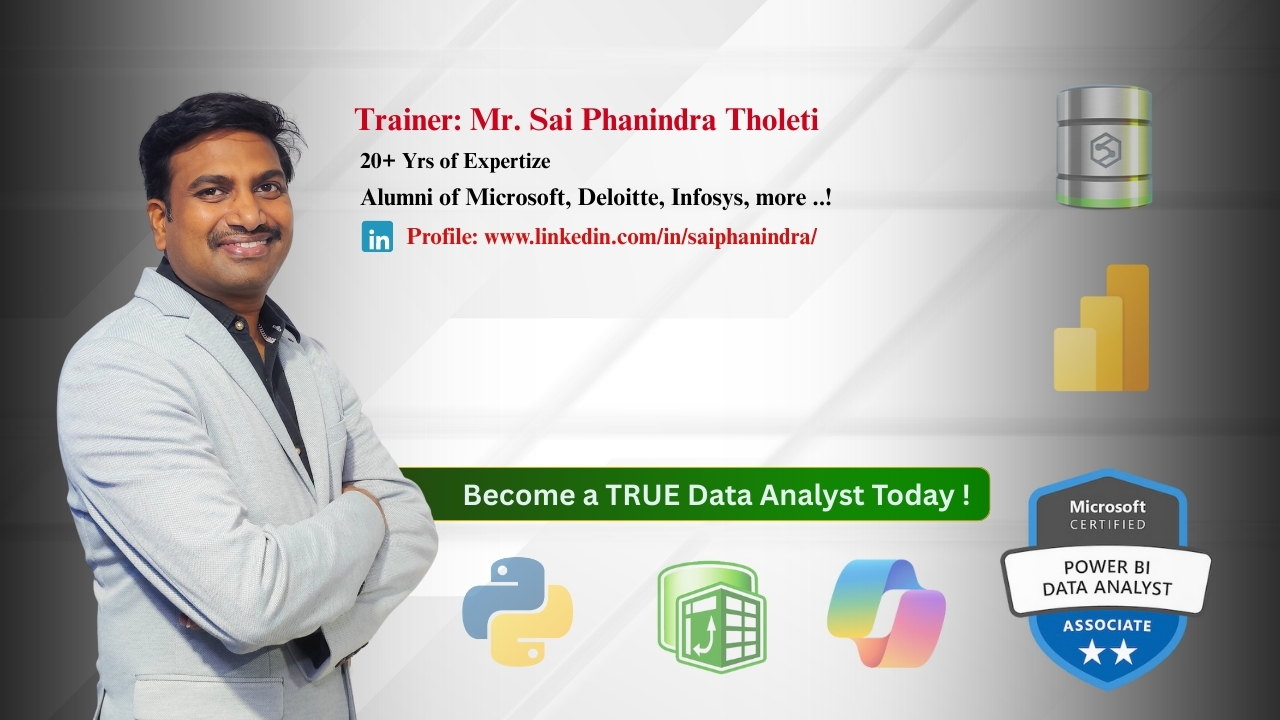
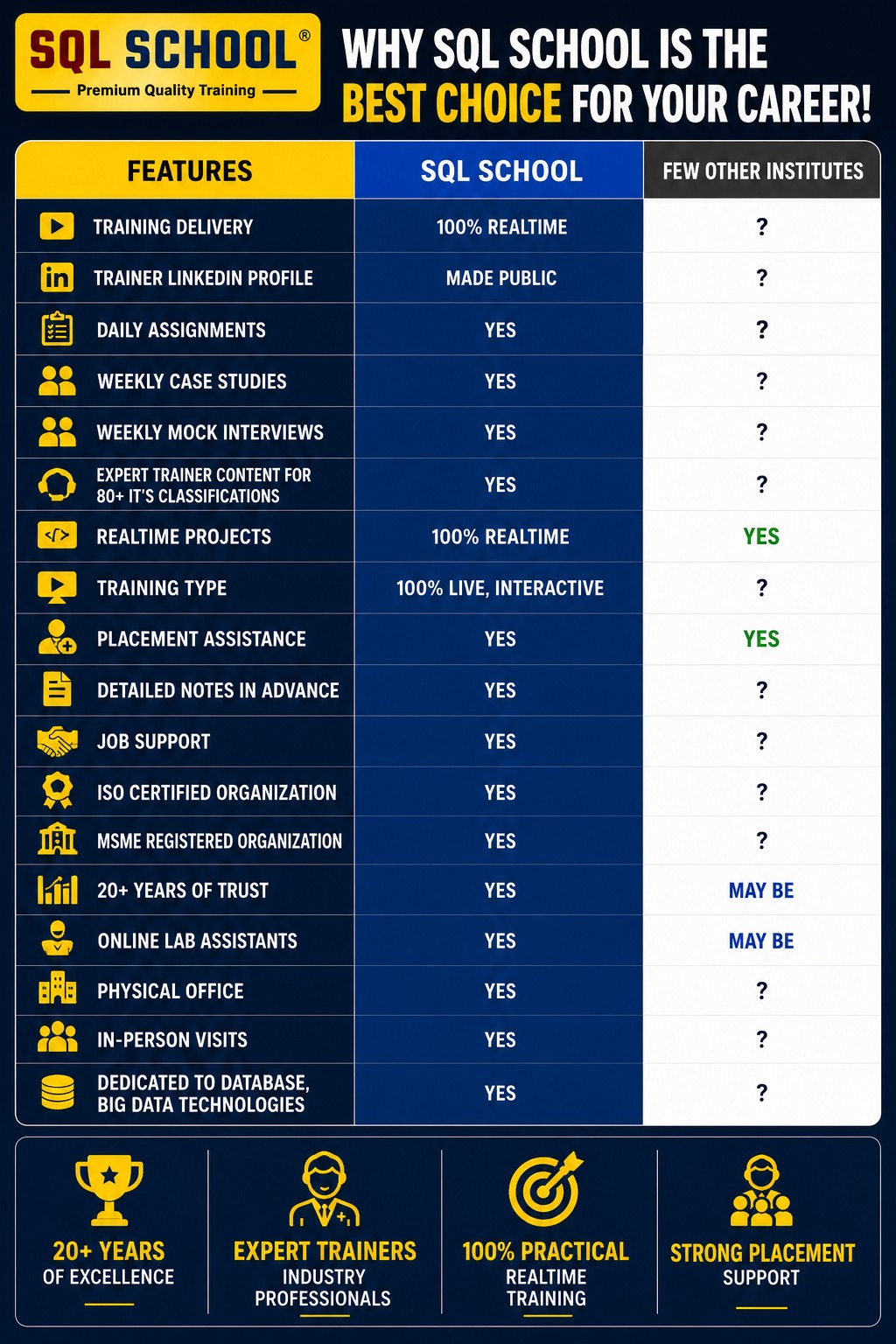
SQL SCHOOL vs Other Institutes
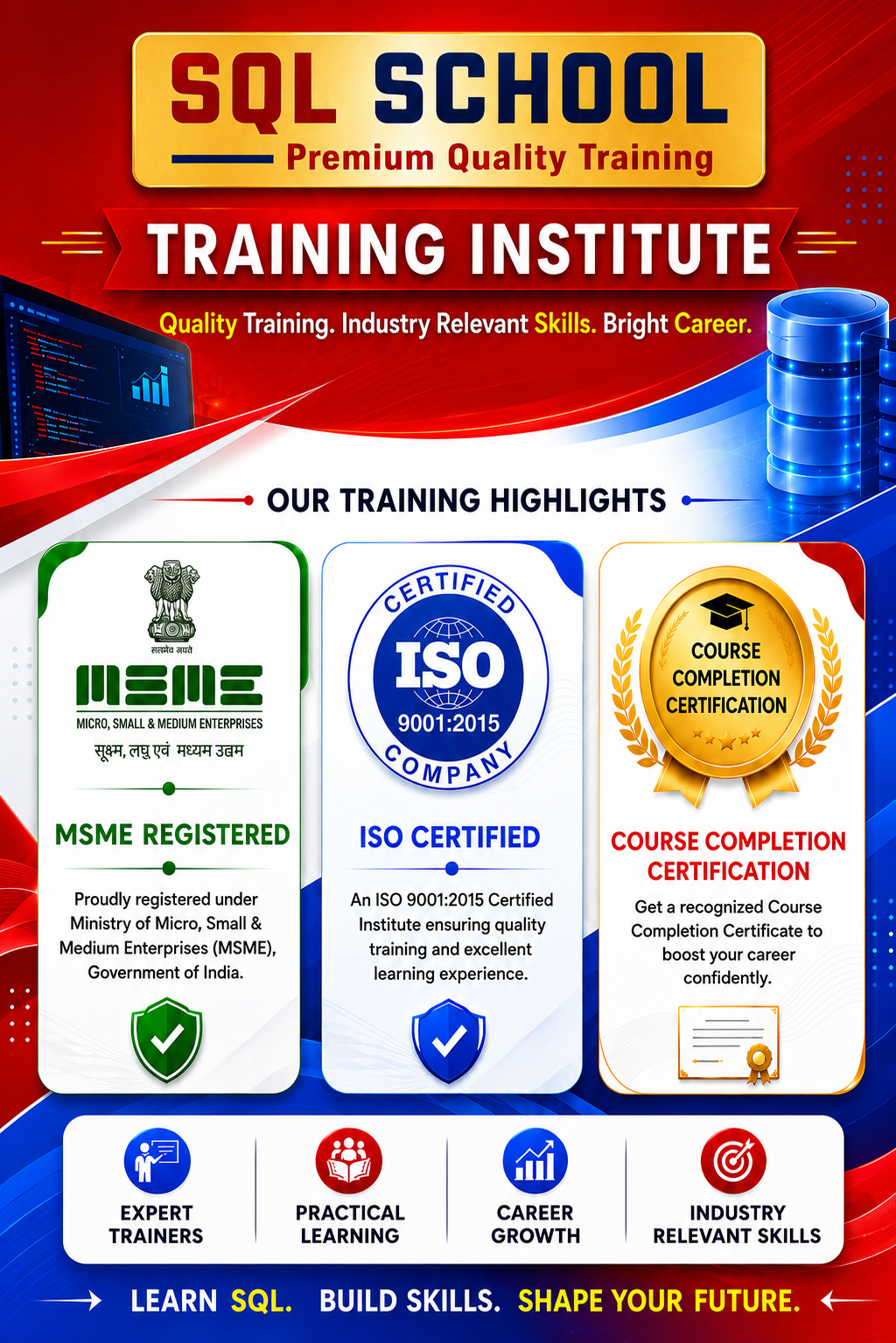
Why Choose SQL School
- 100% Real-Time and Practical
- ISO 9001:2008 Certified
- Concept wise FAQs
- TWO Real-time Case Studies, One Project
- Weekly Mock Interviews
- 24/7 LIVE Server Access

- Realtime Project FAQs
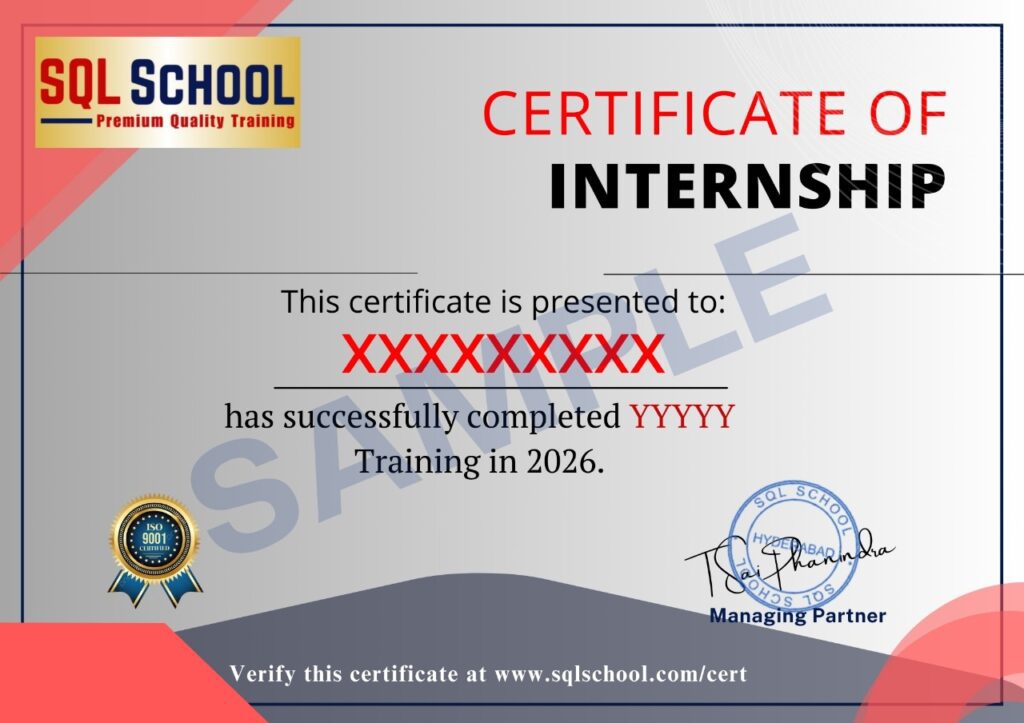
- Course Completion Certificate
- Placement Assistance
- Job Support
- Realtime Project Solution
- MS Certification Guidance