Microsoft Cloud Engineer Training 2026: Master Azure, Databricks, Fabric & Real-Time Projects
Introduction: Transform Your IT Career with Microsoft Cloud Technologies
The world of data engineering and cloud computing is evolving rapidly. Organizations are moving from traditional database environments to modern cloud-based platforms to manage data, automate workflows, and build scalable data solutions.
Microsoft Azure, Azure Databricks, and Microsoft Fabric are among the technologies used to develop modern cloud data engineering solutions.
For professionals who want to build a career in cloud computing, data engineering, or Microsoft technologies, learning these platforms can open the door to exciting technical opportunities.
Why Microsoft Cloud Engineering Is a Valuable Skill in 2026
Cloud computing has become an important part of enterprise technology infrastructure.
Businesses need professionals who can manage cloud environments, integrate data from multiple sources, develop data pipelines, and support analytics solutions.
Microsoft cloud technologies provide tools for data ingestion, transformation, storage, processing, and analytics.
Learning these technologies can help you develop skills in:
- Cloud data integration and migration.
- Data pipeline development.
- Enterprise data warehouse solutions.
- Distributed data processing.
- Cloud-based data transformation.
- Data lake and lakehouse architecture.
- Data engineering automation.
- Modern analytics and AI data preparation.
With the right technical foundation and practical project experience, learners can explore career opportunities in cloud and data engineering.
What Makes Microsoft Cloud Engineer Training a Complete Learning Program?
Microsoft Cloud Engineer Training focuses on the technologies required to understand and develop modern cloud data solutions.
The program combines database fundamentals with cloud-based data engineering tools to provide a structured learning experience.
Learners explore how data is extracted from different sources, stored in cloud environments, transformed using data engineering technologies, and prepared for analytics.
The course includes:
- Microsoft SQL Server and T-SQL
- Azure Data Factory
- Azure Synapse Data Warehouse
- Azure Data Lake Storage
- Python and PySpark
- Azure Databricks
- Microsoft Fabric Data Factory
- Microsoft Fabric Warehouse
- Microsoft Fabric Lakehouse
- Data Migration and Mirroring
- Real-Time Data Engineering Projects
Explore the Microsoft Cloud Engineer Course Curriculum
Module 1: SQL Server Fundamentals to Advanced Database Development
Build a strong database foundation before moving into cloud data engineering.
Topics covered:
- SQL Server installation and configuration.
- Database architecture.
- Tables, schemas, and database objects.
- SQL queries and filtering.
- Joins and subqueries.
- Common Table Expressions.
- Views and stored procedures.
- Functions and temporary tables.
- Advanced T-SQL.
- Query optimization and performance tuning.
This module helps learners understand how enterprise databases store, process, and manage data.
Module 2: Azure Data Engineering and Cloud Integration
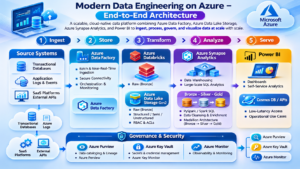
Learn how Microsoft Azure supports modern data engineering workflows.
Topics covered:
- Introduction to Microsoft Azure.
- Azure Data Factory.
- Azure Synapse Data Warehouse.
- Azure Data Lake Storage.
- Data ingestion and transformation.
- Pipeline development.
- Data movement and integration.
- Cloud-based ETL workflows.
- Pipeline scheduling and monitoring.
Learners understand how to build data integration workflows that move data from source systems into cloud-based destinations.
Module 3: Cloud Data Storage, IoT, and Workflow Automation
Explore Azure services used for data storage, integration, and workflow automation.
Topics covered:
- Azure Data Lake Storage.
- Cloud data storage architecture.
- Azure IoT fundamentals.
- Event-based data processing concepts.
- Azure Logic Apps.
- Workflow automation.
- Data integration across systems.
- Cloud data processing fundamentals.
This module introduces learners to the concepts involved in connecting data sources and managing data in cloud environments.
Module 4: Python, PySpark, and Distributed Data Processing
Develop practical skills in Python and Spark for data engineering.
Topics covered:
- Python fundamentals.
- Data structures and functions.
- Python-based ETL.
- Introduction to Apache Spark.
- Spark architecture.
- PySpark DataFrames.
- Data cleansing and transformation.
- Distributed data processing.
- Databricks notebooks.
- Data pipeline development.
This module helps learners understand how to process and transform large datasets using distributed computing technologies.
Module 5: Azure Databricks and Modern Data Engineering
Learn how Azure Databricks can be used to develop and manage data engineering workflows.
Topics covered:
- Azure Databricks fundamentals.
- Workspace and notebook concepts.
- Data ingestion.
- Data transformation using PySpark.
- Spark SQL.
- Delta Lake fundamentals.
- Data processing workflows.
- Data pipeline development.
- Data engineering best practices.
Learners gain exposure to tools and techniques used in modern cloud-based data processing.
Module 6: Microsoft Fabric Data Factory and Warehouse Development
Discover how Microsoft Fabric supports enterprise data integration and analytics.
Topics covered:
- Microsoft Fabric architecture.
- Fabric workspace.
- Fabric Data Factory.
- Data pipelines.
- Data ingestion.
- Fabric Warehouse.
- SQL-based data transformation.
- Data warehouse concepts.
- Pipeline scheduling and monitoring.
This module introduces learners to the process of building data integration and warehouse solutions using Microsoft Fabric.
Module 7: Fabric Lakehouse, OneLake, and Dataflows
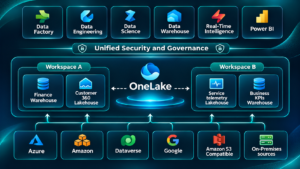
Understand the concepts behind modern lakehouse architecture.
Topics covered:
- Microsoft Fabric Lakehouse.
- OneLake fundamentals.
- Dataflows.
- Data transformation.
- Data organization.
- Delta Lake concepts.
- Data ingestion.
- Lakehouse architecture.
- Data preparation for analytics.
Learners explore how data can be organized and transformed for analytics and reporting.
Module 8: Fabric PySpark, Data Migration, and Mirroring
Explore additional data engineering concepts using Microsoft Fabric.
Topics covered:
- Fabric notebooks.
- PySpark data processing.
- Data transformation workflows.
- Data migration fundamentals.
- Data mirroring concepts.
- Data integration.
- Cloud data modernization.
- Data processing and validation.
This module introduces learners to techniques used in modern data platform development and migration.
Build Industry-Relevant Skills Through Real-Time Data Engineering Projects
Learning cloud technologies becomes more effective when learners understand how to apply them to practical business scenarios.
The course includes project-based learning to help learners connect technical concepts with real-world data engineering workflows.
Project 1: E-Commerce Intelligence Data Pipeline
Develop a data pipeline for an e-commerce business using SQL Server and cloud data engineering technologies.
Project implementation:
- Load customer, product, and sales datasets.
- Ingest data into cloud storage.
- Develop data pipelines.
- Apply data cleansing and transformation.
- Organize processed data.
- Prepare datasets for analytics and reporting.
Project outcome: Understand how to develop an end-to-end data pipeline for a business analytics scenario.
Project 2: Financial Data Processing and Data Quality Solution
Develop a data processing workflow for financial transaction datasets.
Project implementation:
- Ingest financial transaction data.
- Validate source records.
- Identify duplicate data.
- Apply transformation rules.
- Process datasets using Python and PySpark.
- Prepare clean data for analytics.
Project outcome: Learn practical data quality, transformation, and processing techniques.
Project 3: Microsoft Fabric Retail Lakehouse
Build a retail data engineering solution using Microsoft Fabric.
Project implementation:
- Ingest retail datasets.
- Store data in a Fabric Lakehouse.
- Develop notebooks.
- Transform data using PySpark.
- Organize processed data.
- Prepare analytics-ready datasets.
Project outcome: Understand how Microsoft Fabric Lakehouse can be used to develop modern data engineering workflows.
Project 4: Cloud Data Migration and Modernization
Understand how data can be migrated from traditional database systems into modern cloud platforms.
Project implementation:
- Analyze source database structures.
- Identify migration requirements.
- Prepare source data.
- Perform data migration.
- Validate migrated datasets.
- Understand migration challenges.
Project outcome: Gain an understanding of cloud data migration and modernization workflows.
Who Should Enroll in Microsoft Cloud Engineer Training?
Freshers Planning a Career in Cloud and Data Engineering
Freshers who want to enter the IT industry can develop foundational knowledge of SQL, cloud platforms, and data engineering technologies.
SQL Developers Moving Toward Cloud Technologies
SQL Developers can expand their skills by learning Azure, Databricks, and Microsoft Fabric.
Data Analysts Exploring Data Engineering
Data Analysts who want to understand how data is ingested, transformed, and stored can explore cloud data engineering as a potential career direction.
ETL Developers Upgrading Their Technical Skills
ETL Developers can learn modern cloud-based integration and transformation tools.
Experienced IT Professionals Seeking Technical Growth
Professionals working in databases, BI, analytics, or software development can explore Microsoft cloud technologies to expand their technical knowledge.
Career Transition Candidates
Candidates planning to transition into cloud data engineering can use this program to develop practical skills and project experience.
Career Paths You Can Explore After Microsoft Cloud Engineer Training
After developing the required technical skills and practical experience, learners may explore career opportunities such as:
- Microsoft Cloud Engineer
- Azure Data Engineer
- Microsoft Fabric Data Engineer
- Azure Databricks Developer
- Data Engineer
- Cloud Data Developer
- ETL Developer
- Data Integration Developer
- BI and Data Engineering Developer
Career opportunities depend on technical skills, project experience, interview performance, and employer requirements.
Why Choose SQL School Training Institute in Hyderabad?
SQL School Training Institute focuses on practical learning and technical skill development across database, cloud, and data engineering technologies.
Practical Learning Approach
Learn course concepts through hands-on exercises, practical demonstrations, and implementation-based training.
Real-Time Project Exposure
Understand how SQL, Azure, Databricks, and Microsoft Fabric can be used in data engineering solutions.
Experienced Trainer
Learn from Mr. Sai Phanindra, Founder & Trainer, with extensive experience in database and Microsoft technologies.
Structured Course Delivery
Learn technologies step by step, from database fundamentals to cloud data engineering concepts.
Assignments and Exercises
Practice technical concepts through assignments and practical exercises.
Interview Preparation
Develop technical knowledge through scenario-based discussions and project-related interview preparation.
Career Assistance
Receive resume guidance, interview preparation, and 100% placement assistance.
Take the Next Step Toward Your Cloud Data Engineering Career
Microsoft cloud technologies are transforming the way organizations manage, process, and analyze data.
Learning SQL Server, Azure Data Factory, Azure Databricks, Python, PySpark, and Microsoft Fabric can help you develop the technical foundation needed to understand modern cloud data platforms.
If you want to become a Microsoft Cloud Engineer, Azure Data Engineer, or Microsoft Fabric Data Engineer, start building your technical knowledge with structured training and practical project experience.
Join Microsoft Cloud Engineer Training 2026 at SQL School Training Institute and learn cloud technologies through hands-on training and real-time projects.
Enroll Now and Attend a Free Demo Class
SQL School Training Institute – Hyderabad
📞 Contact: +91 9666440801 / +91 9951440801
🌐 Website: https://sqlschool.com/
📍 Hyderabad, Telangana, India
Learn SQL. Master Azure. Build with Databricks. Develop with Microsoft Fabric.
Start your Microsoft Cloud Engineer learning journey with SQL School today!
#MicrosoftCloudEngineer #MicrosoftCloudEngineerTraining #AzureDataEngineer #MicrosoftFabric #AzureDatabricks #CloudComputing #DataEngineering #AzureTraining #RealTimeProjects #SQLSchool #HyderabadTraining #MicrosoftCloudTraining

