Fabric Data Engineer Training: Build Modern Data Engineering Skills with Microsoft Fabric
Data is growing rapidly across applications, databases, cloud platforms, business systems, and digital services. Organizations need professionals who can bring this data together, process it efficiently, and make it ready for analytics and business decisions.
This is where Microsoft Fabric Data Engineering is becoming an important skill for modern data professionals.
Fabric Data Engineer Training helps learners understand how to build complete data solutions using technologies such as Microsoft Fabric, OneLake, Lakehouse, Data Factory, Spark, PySpark, SQL, Delta Lake, Data Warehouse, and Power BI.
Instead of learning each technology separately, learners can understand how these components work together in a real-world data engineering environment.
What Is Fabric Data Engineering?
Fabric Data Engineering is the process of collecting, storing, transforming, organizing, and preparing data for analytics using Microsoft Fabric.
A typical data engineering environment may receive information from:
- SQL Server databases
- Cloud databases
- Excel and CSV files
- Business applications
- APIs
- Enterprise systems
- Streaming platforms
The data engineer’s job is to create a reliable path from these source systems to an environment where analysts, data scientists, and business users can consume the data.
A simplified workflow looks like:
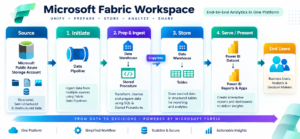
Source Data → Ingestion → OneLake → Lakehouse → Transformation → Curated Data → Analytics
This end-to-end approach is one of the major areas covered in practical Microsoft Fabric Data Engineer Training.
Why Is Microsoft Fabric Important for Data Engineers?
Data engineering is no longer limited to writing SQL queries or creating traditional ETL packages.
Modern data engineers may need to work with:
- Cloud data platforms
- Data lakes
- Lakehouses
- Distributed processing
- Streaming data
- Python
- Spark
- Data pipelines
- Data warehouses
- Business intelligence
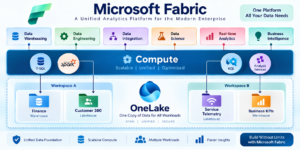
Microsoft Fabric brings several of these capabilities together in a unified analytics environment.
This gives learners an opportunity to understand the complete data lifecycle, from ingestion to reporting.
What Will You Learn in Fabric Data Engineer Training?
A good Fabric training program should go beyond demonstrations and explain how technologies are used in real projects.
1. Microsoft Fabric Fundamentals
Start by understanding the Fabric ecosystem and how its different workloads fit together.
Topics include:
- Fabric workspace
- Fabric architecture
- Workspaces and items
- Data engineering concepts
- Fabric workloads
- Data lifecycle
The objective is to understand where each Fabric component fits into a data project.
2. OneLake – The Foundation of Fabric
OneLake is a central part of Microsoft Fabric’s data architecture.
Instead of maintaining disconnected data repositories for different workloads, organizations can use OneLake as a unified data lake environment.
A Fabric Data Engineer should understand:
- OneLake concepts
- Data organization
- Workspaces
- Lakehouse storage
- Data access
- Data discovery
- Data integration
Understanding OneLake provides a foundation for working with the rest of the Fabric platform.
3. Fabric Lakehouse
The Lakehouse is one of the most important concepts for a Fabric Data Engineer.
It brings together characteristics of a data lake and analytical data processing.
A typical Lakehouse implementation can involve:
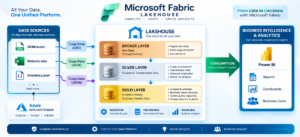
Raw Data → Bronze → Silver → Gold
Bronze Layer
Contains the incoming or raw data.
Silver Layer
Contains cleaned and transformed information.
Gold Layer
Contains business-ready datasets designed for analytics.
This approach helps data engineers organize data systematically and create reusable data pipelines.
4. Data Ingestion with Fabric Data Factory
Getting data into the platform is one of the first responsibilities of a data engineer.
Fabric provides data integration capabilities that can be used to build automated ingestion workflows.
Training can cover:
- Data pipelines
- Connectors
- Copy activities
- Pipeline parameters
- Scheduling
- Data movement
- Dataflows Gen2
- Incremental loading
For example, a pipeline can extract customer information from SQL Server, load it into a Fabric Lakehouse, and trigger subsequent transformation processes.
5. SQL for Fabric Data Engineering
SQL remains an important skill even in modern cloud data engineering.
Fabric professionals may use SQL for:
- Data exploration
- Filtering
- Joins
- Aggregations
- Data validation
- Transformations
- Analytical queries
- Warehouse development
Professionals with a strong SQL and T-SQL background can use that foundation while learning newer Fabric technologies.
6. Python and PySpark
Large datasets often require distributed processing.
Apache Spark provides a framework for processing large volumes of data, while PySpark allows engineers to use Python with Spark.
Fabric Data Engineer Training can introduce:
- Python fundamentals
- PySpark DataFrames
- Spark transformations
- Spark actions
- Joins
- Aggregations
- Filtering
- Spark SQL
- Data cleansing
- Large-scale data processing
This combination gives learners practical exposure to modern data processing techniques.
7. Delta Lake and Data Management
Modern lakehouse environments require reliable ways to manage data.
Delta-based tables can support data engineering scenarios involving:
- Structured data
- Updates
- Data quality
- Incremental processing
- Schema management
- Reliable analytical datasets
Understanding how Delta tables work within a Lakehouse is an important part of becoming a practical Fabric Data Engineer.
8. Fabric Data Warehouse
Not every analytical workload needs to be handled in exactly the same way.
Fabric also provides data warehouse capabilities for structured analytical workloads.
Training can cover:
- Warehouse concepts
- Tables
- Views
- SQL queries
- Data loading
- Data transformation
- Data modeling
- Analytical workloads
This allows learners to understand when a Lakehouse approach and when a Warehouse approach may be appropriate for a particular requirement.
9. Data Transformation and Orchestration
A data engineer is responsible not only for moving data but also for creating a dependable processing workflow.
For example:
SQL Server → Pipeline → Lakehouse → Spark Transformation → Curated Tables → Warehouse → Power BI
Training should explain how to build, schedule, monitor, and troubleshoot such workflows.
This is where practical exercises become especially valuable.
Who Should Learn Fabric Data Engineering?
Fabric Data Engineer Training can be useful for professionals from different technical backgrounds.
SQL Developers
SQL Developers can extend their existing database skills into cloud and lakehouse technologies.
ETL Developers
ETL professionals can learn modern pipeline, Spark, and cloud-based data engineering approaches.
Azure Data Engineers
Azure professionals can add Microsoft Fabric skills to their existing cloud data engineering knowledge.
Power BI Professionals
Power BI professionals can learn how the data is collected, transformed, and prepared before it reaches the reporting layer.
Database Professionals
DBAs and database developers can explore modern data platforms and analytical architectures.
Freshers and Job Seekers
Learners starting a career in data engineering can build foundational knowledge through structured, hands-on training.
Career Opportunities After Fabric Data Engineer Training
Learning Microsoft Fabric can help professionals build skills relevant to several data-focused roles.
Possible career paths include:
- Fabric Data Engineer
- Data Engineer
- Azure Data Engineer
- Cloud Data Engineer
- ETL Developer
- Data Warehouse Developer
- Analytics Engineer
- BI Data Engineer
- Data Platform Engineer
The actual role and responsibilities depend on the organization’s technology stack and the candidate’s overall experience.
Fabric Data Engineer Certification Preparation
Certification can provide a structured learning target for professionals preparing for Microsoft Fabric roles.
However, certification preparation should not be limited to memorizing concepts.
A practical learning path should combine:
Concepts + Hands-On Practice + Projects + SQL + Spark + Data Pipelines + Interview Preparation
This combination can provide a broader understanding of how Fabric is used in real-world data engineering.
Why Choose SQL School for Fabric Data Engineer Training?
At SQL School Training Institute – Hyderabad, the training approach focuses on practical and scenario-based learning.
Training Highlights
✅ 20 Years of Trust
✅ 100% Practical Training
✅ Step-by-Step Learning
✅ Real-Time Projects
✅ Scenario-Based Training
✅ 100% Placement Assistance
The focus is to help learners understand the technology through practical workflows and real-world project scenarios
Frequently Asked Questions
Is Fabric Data Engineering suitable for beginners?
Yes. Beginners can start with the fundamentals and gradually move toward SQL, pipelines, Lakehouse, Spark, and advanced data engineering concepts.
Do I need SQL knowledge?
SQL is highly useful for Fabric Data Engineering. Learners with existing SQL knowledge may find several concepts easier to understand.
Do I need Python?
Python is valuable for modern data engineering, particularly when working with Spark and PySpark.
Is Microsoft Fabric only for Power BI professionals?
No. Fabric covers several workloads, including data engineering, data integration, data warehousing, analytics, and real-time intelligence.
Conclusion
The future of data engineering is moving toward platforms that can handle data integration, storage, transformation, analytics, and real-time workloads together.
Microsoft Fabric Data Engineer Training provides an opportunity to learn these concepts through technologies such as OneLake, Lakehouse, Data Factory, SQL, Spark, PySpark, Delta Lake, Data Warehouse, and Real-Time Intelligence.
Whether you are a SQL Developer, ETL Developer, Azure Data Engineer, Power BI professional, database professional, fresher, or job seeker, learning Fabric can help you expand your data engineering skill set.
Fabric Data Engineer Training: https://sqlschool.com/fabric-data-engineer-training/
Build your skills. Work on real projects. Learn modern data engineering with Microsoft Fabric.
Connect With SQL School
Trainer: Mr. Sai Phanindra
Reach Us: +91 9666440801 | +91 9951440801
Website: www.sqlschool.com
Reach us for a Free Demo and explore Fabric Data Engineer Training.
#FabricDataEngineer#FabricDataEngineering#MicrosoftFabric#MicrosoftFabricTraining#DataEngineering#DataEngineer#FabricTraining#OneLake#FabricLakehouse
#DataFactory#PySpark#ApacheSpark#DataPipelines#AzureDataEngineer#CloudDataEngineering#DataEngineeringCareer#DataEngineerTraining#MicrosoftAzure
#Lakehouse#SQLSchool