Cloud Data Architect Training: From Data Foundations to Modern Cloud Architecture
Data has become one of the most important assets for modern organizations. Businesses collect information from applications, databases, APIs, IoT devices, websites, cloud platforms, and enterprise systems.
As data volumes continue to grow, organizations need more than databases and data pipelines. They need scalable, secure, reliable, and well-designed cloud data architectures.
This is where a Cloud Data Architect plays an important role.
A Cloud Data Architect designs the overall structure of a cloud-based data environment—from data sources and ingestion to storage, processing, analytics, security, governance, and business intelligence.
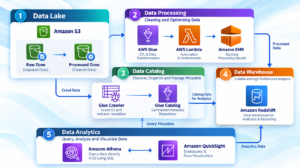
Cloud data architecture commonly brings together services for cloud storage, data lakes, data warehouses, ETL/ELT, streaming, processing, governance, and analytics across platforms such as AWS, Microsoft Azure, and Google Cloud.
What Is a Cloud Data Architect?
A Cloud Data Architect is responsible for designing and guiding the architecture of an organization’s data platform in the cloud.
The role involves understanding business requirements and translating them into technical architecture.
A Cloud Data Architect may work with:
- Databases
- Data lakes
- Data warehouses
- Lakehouses
- ETL and ELT pipelines
- Cloud storage
- Big data platforms
- Real-time streaming
- Data governance
- Data security
- Data integration
- Business intelligence
- AI and machine learning platforms
The objective is to create a data environment that is scalable, secure, reliable, high-performing, maintainable, and cost-conscious.
Why Is Cloud Data Architecture Important?
Traditional on-premises data environments can become difficult to scale when data volumes, users, applications, and analytics requirements increase.
Cloud platforms provide organizations with flexible infrastructure and managed services for building modern data platforms.
Cloud Data Architecture helps organizations address areas such as:
- Growing data volumes
- Multiple data sources
- Cloud migration
- Data integration
- Real-time analytics
- Business intelligence
- AI and machine learning
- Data security
- Data governance
- High availability
- Disaster recovery
- Performance optimization
- Cost management
Modern cloud data training commonly covers data lakes, data warehouses, streaming, cloud processing, governance, and architecture patterns.
From Database Foundations to Cloud Data Architecture
A successful Cloud Data Architect needs to understand more than cloud services.
The architect must know:
How data is generated → How it is stored → How it is optimized → How it moves to the cloud → How it is transformed → How it is modeled → How it is analyzed → How AI can be integrated
This training follows that complete journey.
The learning path
MSSQL & T-SQL → Performance Tuning → Azure ETL & DWH → AI → Snowflake → dbt → Cortex AI → Data Modeling → Power BI → Copilot
This approach helps learners understand how different technologies can work together to create a modern enterprise data platform.
1. Master the Data Foundation with MSSQL & T-SQL
Every strong data architecture begins with a solid understanding of databases.
The training starts with Microsoft SQL Server and T-SQL, helping learners understand how enterprise data is stored, queried, managed, and optimized.
Key areas include:
- MSSQL fundamentals
- Advanced SQL queries
- T-SQL programming
- Joins
- Subqueries
- CTEs
- Views
- Stored Procedures
- Functions
- Temporary Tables
- Transactions
- Error Handling
- Query Optimization
A Cloud Data Architect needs to understand the database layer before designing the larger cloud data ecosystem.
2. Turn Slow Queries into High-Performance Data Workloads
Architecture is not only about selecting cloud services.
Performance matters.
Poorly designed queries can affect applications, reports, ETL processes, and downstream analytics.
The training therefore includes T-SQL Performance Tuning to help learners understand how SQL workloads behave.
Performance concepts include:
- Query execution plans
- Indexing
- Clustered and non-clustered indexes
- Query optimization
- Statistics
- Execution plan analysis
- Blocking
- Deadlocks
- Performance bottlenecks
- Query rewriting
- Database performance monitoring
This foundation helps professionals make better architectural decisions when moving workloads from traditional databases to cloud environments.
3. Build Cloud ETL & Data Warehouse Solutions with Azure
Once the database foundation is established, the learning journey moves into Azure Cloud ETL and Data Warehousing.
Modern enterprises need to bring data from multiple systems into centralized analytical platforms.
A typical architecture can look like:
MSSQL → Azure ETL → Cloud Storage → Data Warehouse → Data Modeling → Power BI
Azure-focused learning includes:
- Cloud ETL concepts
- Data integration
- Data pipelines
- Data ingestion
- Data transformation
- Incremental loading
- Data warehouse concepts
- Cloud data architecture
- Source-to-target mapping
- Batch data processing
- Data migration concept
4. Add AI to the Modern Data Architecture
Cloud data platforms are increasingly being connected with AI capabilities.
AI can help organizations move beyond traditional reporting toward:
- Intelligent analytics
- Natural-language interaction
- Automated insights
- Predictive analytics
- Data-assisted decision making
- AI-powered applications
For a Cloud Data Architect, understanding where AI fits within the data architecture is becoming increasingly important.
The training introduces AI concepts alongside cloud data technologies so learners can understand how data platforms can support modern AI workloads.
5. Build Modern Cloud Data Solutions with Snowflake
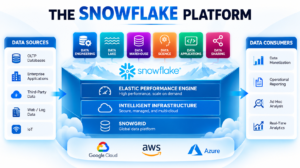
Snowflake has become an important cloud data platform for organizations building scalable analytical environments.
The training introduces Snowflake Cloud as part of the modern data architecture journey.
Key areas can include:
- Snowflake architecture
- Databases and schemas
- Tables and views
- Data loading
- SQL in Snowflake
- Data transformation
- Warehousing concepts
- Cloud data workloads
- Performance considerations
- Secure data access
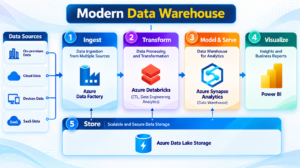
Snowflake can become part of a broader architecture connecting operational databases, ETL processes, transformation frameworks, analytics, and BI.
6. Transform Data Efficiently with dbt
Modern data platforms require reliable and maintainable transformation processes.
dbt (data build tool) focuses on transforming data within analytical data platforms using SQL-based workflows.
With dbt, learners can understand concepts such as:
- SQL-based transformations
- Data models
- Dependencies
- Testing
- Documentation
- Reusable transformations
- Data quality
- Transformation workflows
A simplified modern data flow can be:
Source Data → Snowflake → dbt Transformations → Data Models → BI
This helps bridge the gap between raw cloud data and business-ready datasets.
7. Explore AI with Cortex AI
The training also introduces Cortex AI as part of the Snowflake ecosystem.
This provides an opportunity to understand how AI capabilities can be incorporated into cloud data platforms.
Potential applications include:
- AI-assisted data analysis
- Natural-language interaction with data
- Intelligent data workflows
- AI-powered insights
- Generative AI use cases
The goal is to understand AI not as an isolated technology, but as another capability that can be connected to enterprise data.
8. Design the Blueprint with Data Modeling
Data Modeling is at the heart of good data architecture.
Before building a data warehouse or analytical platform, professionals need to understand how data should be organized.
Important concepts include:
- Entities
- Attributes
- Relationships
- Primary Keys
- Foreign Keys
- Normalization
- Denormalization
- Fact Tables
- Dimension Tables
- Star Schema
- Snowflake Schema
- Data Warehouse Modeling
A well-designed model can make data easier to query, understand, maintain, and analyze.
9. Convert Data into Business Insights with Power BI
A data architecture ultimately needs to deliver business value.
Power BI provides the analytics and visualization layer that can turn prepared data into interactive reports and dashboards.
The training connects the data architecture with business intelligence through:
- Power BI
- Data visualization
- Data modeling
- Reports
- Dashboards
- KPIs
- Business analytics
- Data-driven decision making
A typical architecture can be:
MSSQL / Snowflake → ETL / dbt → Data Model → Power BI → Business Insights
10. Work Smarter with Copilot
Modern Microsoft data environments are increasingly incorporating Copilot and AI-assisted capabilities.
Understanding how Copilot can support data and analytics workflows helps professionals explore modern approaches to:
- Data analysis
- Report development
- Natural-language queries
- Productivity
- Insight generation
- AI-assisted analytics
The focus is on understanding how AI assistance can fit into the broader data and BI workflow.
Real-Time Cloud Data Architecture Projects
Practical projects can help learners understand how cloud technologies work together.
Project 1: Retail Data Platform
Design a complete platform for:
- Customers
- Products
- Orders
- Inventory
- Payments
- Sales analytics
Project 2: Banking Data Platform
Build architecture covering:
- Transaction data
- Customer data
- Fraud analytics
- Data security
- Governance
- Reporting
Project 3: E-Commerce Lakehouse
Build:
SQL Database → Cloud Storage → ETL → Spark/Databricks → Lakehouse → BI
Project 4: Real-Time IoT Platform
Build:
IoT Devices → Streaming → Cloud Storage → Stream Processing → Analytics Dashboard
These projects provide practical exposure to architecture decisions, data flows, security, processing, and analytics.
Tools Covered in Cloud Data Architect Training
The training focuses on a combination of database, cloud, data platform, transformation, AI, and analytics technologies.
Database Technologies
- Microsoft SQL Server
- T-SQL
Cloud Technologies
- Microsoft Azure
- Azure Cloud ETL
- Azure Data Warehouse
Modern Cloud Data Platform
- Snowflake
Data Transformation
- dbt
AI Technologies
- Cortex AI
- Copilot
Analytics
- Power BI
Architecture
- Data Modeling
What Skills Will You Build?
By completing this learning path, professionals can develop skills across multiple layers of modern data architecture.
Database Skills
- SQL development
- T-SQL programming
- Query optimization
- Performance tuning
Cloud Data Skills
- Cloud ETL
- Data integration
- Data warehousing
- Cloud data architecture
Modern Data Platform Skills
- Snowflake
- dbt
- Cloud-based analytics
AI Skills
- Cortex AI
- AI-enabled data workflows
- Copilot-assisted analytics
Analytics Skills
- Power BI
- Data visualization
- Business reporting
- Analytical data models
Architecture Skills
- Data modeling
- End-to-end data flow
- Data platform integration
- Enterprise data architecture concepts
Who Should Learn Cloud Data Architect Training?
This training can be useful for professionals looking to expand from individual technologies into broader data architecture.
Suitable for:
- SQL Developers
- MSSQL Developers
- SQL DBAs
- Data Engineers
- ETL Developers
- Azure Data Engineers
- Snowflake Developers
- BI Developers
- Power BI Developers
- Data Analysts with technical experience
- Cloud Professionals
- Technical Leads
- IT Professionals
Career Opportunities in Cloud Data Architecture
Cloud Data Architecture combines several high-value technology areas, allowing professionals to explore different career paths depending on their experience and specialization.
Possible roles include:
- Cloud Data Architect
- Data Architect
- Cloud Data Engineer
- Azure Data Engineer
- Data Warehouse Architect
- Data Platform Architect
- Snowflake Developer
- Data Engineer
- ETL Developer
- BI Developer
- Power BI Developer
- Data Analytics Architect
- Data Solution Architect
The exact role and responsibilities depend on the organization’s technology environment and the professional’s experience.
Cloud Data Architect Job Roles
Cloud Data Architect
Designs cloud-based data platforms and defines architecture standards, technology choices, security, scalability, and data integration patterns.
Data Architect
Designs enterprise data structures, models, databases, warehouses, data flows, and governance frameworks.
Data Platform Architect
Focuses on designing the underlying platform that supports data engineering, analytics, BI, and AI workloads.
Cloud Data Engineer
Builds and maintains data pipelines, ingestion processes, transformations, and cloud data infrastructure.
Solutions Architect
Designs broader technology solutions that may combine applications, cloud infrastructure, databases, networking, security, and data platforms.
Enterprise Data Architect
Works at an organization-wide level to define data architecture standards, governance, integration patterns, and long-term data strategies.
Data Migration Architect
Designs strategies for moving databases, applications, and data platforms from on-premises environments to cloud environments.
Frequently Asked Questions About Cloud Data Architect Training
Is SQL required for Cloud Data Architect Training?
Yes. SQL is an important foundation because Cloud Data Architects work with databases, data warehouses, analytical platforms, and data models.
Can beginners learn Cloud Data Architecture?
Yes, but learners with a foundation in SQL, databases, cloud, or data engineering may find the advanced architecture concepts easier to understand.
Do I need Python?
Python is highly useful for automation, data engineering, APIs, Spark, PySpark, and cloud data workflows.
Which cloud platform should I learn?
You can begin with AWS, Microsoft Azure, or Google Cloud. After developing strong fundamentals in one platform, you can expand your knowledge to other cloud ecosystems.
Why Choose SQL School for Cloud Data Architect Training?
SQL School Training Institute – Hyderabad focuses on practical, step-by-step technology learning.
For Cloud Data Architecture, learners can build knowledge across:
SQL → Databases → Data Engineering → Cloud → Data Lakes → Data Warehouses → Databricks → Lakehouse → Security → Governance → Real-Time Projects → Architecture & Interview Preparation
The learning approach can help professionals connect individual technologies into complete, real-world data solutions.
Key Learning Areas
- SQL & Database Foundations
- Cloud Data Architecture
- Data Engineering
- ETL & ELT
- Data Security
- Real-Time Data
- End-to-End Projects
- Resume Guidance
- Interview Preparation
Conclusion
Cloud Data Architect skills are essential for building scalable, secure, and intelligent modern data platforms. Master SQL, Azure, Snowflake, dbt, Power BI, AI, and Data Modeling to build strong end-to-end expertise. Practical projects help transform technical knowledge into real-world data architecture skills.
Start your Cloud Data Architect journey with SQL School Training Institute – Hyderabad.
Cloud Data Architect Training: https://sqlschool.com/data-architect-training/
Start Your Cloud Data Architect Journey
Master the complete data journey—from Databases & Data Engineering to Cloud, Data Warehousing, AI, Security, and Analytics.
Build practical skills to design and manage modern, scalable cloud data architectures.
Start your Cloud Data Architect journey with SQL School Training Institute – Hyderabad.
📞 +91 9666440801 | +91 9951440801
🌐 sqlschool.com
👨🏫 Mr. Sai Phanindra – Founder & Trainer
#CloudDataArchitect #CloudDataArchitecture #DataArchitecture #AzureData #AzureDataEngineering #Snowflake #DBT #CortexAI #PowerBI #DataModeling #DataEngineering #CloudComputing #DataWarehouse #DataAnalytics #ArtificialIntelligence #MicrosoftAzure #SQLTraining #SQLSchool #DataCareer #CloudCareer