
DP-300 Certification: Complete Guide to Becoming an Azure Database Administrator Associate
Introduction to DP-300 Certification
Microsoft DP-300 is a professional certification exam designed for database administrators who work with Microsoft SQL Server and Azure SQL services. It focuses on managing, securing, monitoring, optimizing, and maintaining database environments across cloud, on-premises, and hybrid infrastructures.
The DP-300 certification is associated with the Microsoft Certified: Azure Database Administrator Associate credential. It is suitable for SQL Server Database Administrators (DBAs), Azure database administrators, SQL developers who want to move into administration, and IT professionals interested in cloud database management.
As organizations increasingly adopt cloud technologies, professionals with practical knowledge of Azure SQL Database, SQL Server on Azure Virtual Machines, security, performance optimization, and disaster recovery can develop valuable database administration skills.
What Is the Microsoft DP-300 Certification?
The DP-300 exam, titled Administering Microsoft Azure SQL Solutions, evaluates your ability to manage relational database infrastructure using Microsoft SQL Server and Azure SQL services.
The certification focuses on real-world administrative responsibilities rather than SQL query writing alone. Candidates need to understand database deployment, access control, monitoring, performance optimization, automation, backup, and recovery.
The exam covers several database platforms, including:
- Azure SQL Database
- Azure SQL Managed Instance
- SQL Server on Azure Virtual Machines
- SQL Server on-premises
For aspiring database administrators, preparing for DP-300 provides a structured way to build knowledge of modern database management and cloud administration.
Why Is DP-300 Certification Important?
Organizations depend on databases to support business applications, financial systems, e-commerce platforms, reporting solutions, and enterprise applications. Database administrators help ensure that these systems remain secure, available, and efficient.
The DP-300 certification helps professionals develop knowledge in the following areas:
- Cloud database administration: Understand how to deploy and manage Azure SQL services.
- Database security: Configure authentication, authorization, encryption, and access controls.
- Performance tuning: Identify inefficient queries and optimize database performance.
- High availability: Plan solutions that reduce downtime and improve service reliability.
- Backup and recovery: Develop strategies to protect data and recover from failures.
- Automation: Simplify repetitive administration tasks using appropriate tools and scripts.
These skills are useful for professionals working with enterprise databases, cloud migrations, and hybrid database environments.
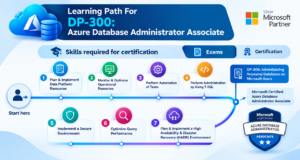
DP-300 Exam Details
Before beginning your preparation, review the current Microsoft exam information.
- Exam code: DP-300
- Exam title: Administering Microsoft Azure SQL Solutions
- Certification: Microsoft Certified: Azure Database Administrator Associate
- Exam format: Microsoft determines the question formats and delivery options.
- Passing score: 700 out of 1,000
- Preparation approach: Microsoft Learn resources, practice assessments, and hands-on laboratory exercises.
Exam objectives, pricing, scheduling options, and question formats may change. Always check Microsoft’s official DP-300 study guide before registering.
DP-300 Exam Syllabus and Key Topics
A successful preparation plan should cover database deployment, security, performance, automation, and disaster recovery. The following areas provide a useful overview of the skills candidates need to develop.
1. Plan and Implement Database Resources
This area focuses on selecting and deploying appropriate database solutions for business requirements.
Important topics include:
- Choosing between Azure SQL Database, Azure SQL Managed Instance, and SQL Server on Azure Virtual Machines.
- Understanding deployment models and service capabilities.
- Planning database migration strategies.
- Configuring database resources and workloads.
- Understanding compute, storage, and scalability requirements.
Example: A company wants to migrate an application database from an on-premises SQL Server to Azure. A database administrator must evaluate compatibility, downtime requirements, security, and the most appropriate Azure SQL deployment option.
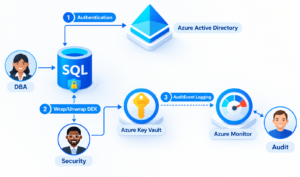
2. Implement Database Security
Database security protects sensitive information from unauthorized access and misuse.
Key topics include:
- Microsoft Entra authentication and SQL authentication concepts.
- Database users, logins, roles, and permissions.
- Role-based access control.
- Encryption for data at rest and in transit.
- Auditing and security monitoring.
- Microsoft Defender for SQL capabilities.
Practical scenario: A finance application contains confidential customer information. The administrator must ensure that finance employees can access the required tables while other employees cannot view restricted data.
3. Monitor and Optimize Database Performance
Performance optimization is an important responsibility for database administrators. Slow queries, resource limitations, inefficient indexes, and blocking can affect application performance.
Important topics include:
- Query execution plans.
- Index design and maintenance.
- Query Store.
- Performance monitoring and troubleshooting.
- Resource utilization and workload analysis.
- Identifying blocking, deadlocks, and inefficient queries.
- Monitoring Azure SQL performance metrics.
Example: An e-commerce application takes several seconds to display customer orders. The DBA investigates the query execution plan, checks indexing, reviews query performance, and identifies opportunities to improve response time.
4. Configure and Manage Database Automation
Automation helps administrators reduce repetitive work and maintain consistent database operations.
Key topics include:
- Automating administrative tasks.
- Scheduling database maintenance.
- Monitoring recurring jobs.
- Using scripts and supported automation tools.
- Configuring automated operational processes.
- Managing alerts and notifications.
Practical scenario: A business requires daily database health checks and regular maintenance activities. The administrator develops an automated process to reduce manual intervention and improve operational consistency.
5. Plan High Availability and Disaster Recovery
High availability and disaster recovery help organizations protect databases against infrastructure failures, accidental changes, and unexpected service interruptions.
Important topics include:
- Backup and restore strategies.
- Recovery Point Objective (RPO) and Recovery Time Objective (RTO).
- High-availability configurations.
- Failover and recovery planning.
- Geo-replication and failover groups where supported.
- Business continuity requirements.
- Testing disaster recovery procedures.
Example: An online shopping platform cannot afford prolonged database downtime during a major sale. The administrator designs an appropriate availability and recovery strategy, validates backup policies, and tests recovery procedures.
Practical Example: Monitoring an Azure SQL Database
Hands-on practice is essential when preparing for DP-300. Consider a scenario in which an organization hosts its customer database in Azure SQL Database and wants to identify performance problems.
A database administrator could follow this process:
- Open the Azure portal and select the required SQL database.
- Review the available performance metrics and resource utilization.
- Investigate slow-running queries using supported monitoring tools and Query Store.
- Examine execution plans and indexing opportunities.
- Apply appropriate query or configuration improvements.
- Compare performance before and after the changes.
- Verify that the improvement does not negatively affect other workloads.
This example demonstrates how database administration combines technical analysis, performance monitoring, and controlled implementation.
How to Prepare for the DP-300 Exam
A structured study plan can help you prepare for the exam while developing practical database administration skills.
Step 1: Strengthen Your SQL Server Fundamentals
Start with relational database concepts, T-SQL, database objects, indexes, transactions, permissions, and backup and restore operations.
A strong SQL Server foundation makes it easier to understand Azure SQL administration.
Step 2: Learn Azure SQL Services
Understand the differences between Azure SQL Database, Azure SQL Managed Instance, and SQL Server on Azure Virtual Machines.
Focus on deployment choices, management responsibilities, compatibility, and operational requirements.
Step 3: Practice Security and Performance Tuning
Work through practical exercises involving database permissions, authentication, query execution plans, indexing, Query Store, and performance troubleshooting.
Focus on understanding why a solution works, not simply memorizing exam answers.
Step 4: Practice Backup, Recovery, and High Availability
Study recovery objectives, backup policies, restore options, failover strategies, and disaster recovery planning.
Use practice scenarios to evaluate the most appropriate approach for different business requirements.
Step 5: Review the Official Exam Objectives
Use the current Microsoft DP-300 study guide to identify knowledge gaps. Complete relevant Microsoft Learn modules and practice assessments before scheduling the exam.
Preparation tip: Spend time in a hands-on environment. Practical exercises help connect certification concepts with the decisions database administrators make in real projects.
Career Opportunities After DP-300
DP-300 preparation can support professionals who want to develop skills for roles involving cloud and relational database administration.
Potential career paths include:
- SQL Server Database Administrator
- Azure Database Administrator
- Cloud Database Administrator
- Database Operations Engineer
- SQL Server Performance Tuning Specialist
- Database Migration Specialist
Actual responsibilities depend on the organization, experience level, and technical environment. Certification alone does not guarantee employment or a particular salary, so combine exam preparation with hands-on practice and relevant project experience.
Who Should Learn DP-300?
DP-300 is particularly relevant for:
- SQL Server DBAs who want to expand into Azure.
- Database administrators responsible for cloud or hybrid environments.
- IT professionals interested in Azure database administration.
- Experienced SQL developers who want to understand database operations.
- Database professionals preparing for the Azure Database Administrator Associate certification.
Beginners may benefit from learning SQL Server and database administration fundamentals before moving into advanced Azure database topics.
Common DP-300 Preparation Mistakes to Avoid
Avoid these common mistakes while preparing for the exam:
- Studying theory without practicing database administration tasks.
- Memorizing answers without understanding the underlying concepts.
- Ignoring security and access management.
- Overlooking backup, recovery, and high-availability scenarios.
- Confusing the capabilities and management responsibilities of different Azure SQL services.
- Using outdated exam objectives instead of the current Microsoft study guide.
A combination of conceptual learning, practical exercises, and exam-focused revision is more effective than relying on memorization alone.
Conclusion
The Microsoft DP-300 certification is a valuable learning path for database professionals who want to develop their skills in Azure SQL and SQL Server administration. Its key areas include database deployment, security, performance optimization, automation, high availability, and disaster recovery.
Whether you are an experienced SQL Server DBA moving toward cloud technologies or a database professional building Azure administration skills, consistent preparation and hands-on practice can help you develop the knowledge needed for modern database environments.
Start by reviewing the official exam objectives, strengthening your SQL Server fundamentals, and practicing database administration scenarios. With a structured learning plan, you can work toward the Azure Database Administrator Associate certification while improving your practical database management capabilities.
Learn DP-300 and Azure Database Administration with SQL School
At SQL School Training Institute, Hyderabad, build your database knowledge through practical, interactive training and guided learning.
Our training approach focuses on SQL concepts, database administration, real-world scenarios, exercises, and interview preparation to help learners strengthen their technical skills.
Get in touch with SQL School:
- Phone: +91 9666440801
- Phone: +91 9951440801
- Website: https://sqlschool.com/
Contact SQL School to learn about relevant SQL Server and Azure database training options and take the next step in your database administration career.
#DP300 #AzureDatabaseAdministrator #AzureSQL #MicrosoftAzure #SQLServerDBA #DatabaseAdministration #AzureSQLDatabase #DP300Certification #CloudComputing #SQLSchool