
Become a Microsoft Fabric Data Engineer in 2026: A Complete Career Roadmap
Introduction: Step Into the Future of Data Engineering
The world of data is evolving rapidly, and organizations are increasingly looking for professionals who can build reliable, scalable, and efficient data solutions. From processing massive datasets to developing automated data pipelines, Data Engineers play a critical role in helping businesses transform raw data into meaningful insights.
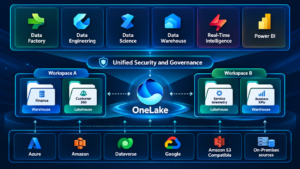
Microsoft Fabric is a unified analytics platform that brings together data engineering, data integration, data warehousing, real-time intelligence, and business intelligence capabilities.
With the growing adoption of cloud-based data platforms, learning Microsoft Fabric Data Engineering can be a valuable step for professionals who want to build or advance their careers in the data industry.
What Makes Microsoft Fabric a Powerful Data Engineering Platform?
Microsoft Fabric is a comprehensive analytics platform designed to simplify the development and management of data solutions.
It combines multiple data services into a unified environment, allowing organizations to ingest, process, store, transform, and analyze data.
Microsoft Fabric includes several important capabilities:
- Data Factory for data integration and orchestration.
- Data Engineering for Spark-based data processing.
- OneLake for unified data storage.
- Lakehouse for organizing and managing data.
- Data Warehouse for SQL-based analytics.
- Power BI for business intelligence and reporting.
- Real-Time Intelligence for streaming data scenarios.
These capabilities allow Data Engineers to develop end-to-end data solutions within a single analytics platform.
Understanding the Role of a Microsoft Fabric Data Engineer
A Microsoft Fabric Data Engineer is responsible for designing, developing, and maintaining data processing solutions using Microsoft Fabric and related technologies.
The primary objective is to transform raw data from different sources into reliable, structured, and analytics-ready datasets.
Key Responsibilities in Modern Data Engineering
A Microsoft Fabric Data Engineer typically performs the following activities:
- Collecting data from databases, files, APIs, and cloud platforms.
- Developing automated data ingestion pipelines.
- Cleaning and transforming raw datasets.
- Processing large datasets using Python and PySpark.
- Organizing data using Lakehouse architecture.
- Managing Delta tables and data storage.
- Implementing data quality checks.
- Monitoring and troubleshooting data pipelines.
- Preparing datasets for Power BI reports and business analytics.
Essential Technical Skills for Microsoft Fabric Data Engineering
To develop strong Data Engineering skills, learners should understand database technologies, programming, cloud platforms, and data processing concepts.
SQL and T-SQL: The Foundation of Data Processing
SQL is an essential skill for professionals working with databases and data engineering solutions.
Important topics include:
- SQL queries and subqueries.
- Joins and aggregations.
- Common Table Expressions.
- Window functions.
- Stored procedures.
- Data manipulation.
- Query optimization fundamentals.
SQL helps Data Engineers retrieve, validate, and transform data from relational databases.
Python: Build Programming Skills for Data Engineering
Python is widely used for data processing, automation, and developing data engineering workflows.
Learn the following concepts:
- Python fundamentals.
- Variables and data types.
- Functions and modules.
- Lists, dictionaries, and tuples.
- Conditional statements and loops.
- File handling.
- Exception handling.
- Data processing libraries.
Python provides the programming foundation required to work with data processing tools such as PySpark.
PySpark: Process Large Datasets Efficiently
Apache Spark is a distributed processing engine used to handle large volumes of data.
PySpark enables Data Engineers to develop Spark-based applications using Python.
Important topics include:
- Spark architecture.
- DataFrames.
- Data transformations.
- Filtering and aggregations.
- Joins.
- Data partitioning.
- Reading and writing data.
- Performance optimization fundamentals.
Microsoft Fabric Data Factory: Automate Data Integration
Microsoft Fabric Data Factory provides capabilities to move data between different sources and orchestrate data workflows.
Learn how to develop and manage:
- Data pipelines.
- Copy Data activities.
- Dataflows Gen2.
- Pipeline scheduling.
- Pipeline parameters.
- Source and destination connections.
- Pipeline monitoring.
Lakehouse and OneLake: Organize Data for Analytics
A Lakehouse combines data lake storage with capabilities for managing structured data.
OneLake provides a unified storage foundation for Microsoft Fabric.
Data Engineers should learn how to:
- Create and manage a Lakehouse.
- Ingest files and datasets.
- Create and manage Delta tables.
- Query data using SQL.
- Process data using notebooks.
- Organize data for analytics.
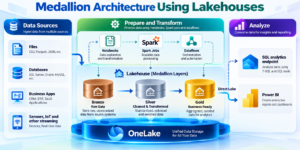
Building Modern Data Solutions with Medallion Architecture
Medallion Architecture is a common approach to organizing data into layers based on its level of processing and quality.
Bronze Layer: Store Raw Data
The Bronze Layer stores raw data ingested from source systems.
Examples include:
- Customer data.
- Sales transactions.
- Product information.
- Financial records.
- Log files.
Silver Layer: Clean and Transform Data
The Silver Layer contains cleaned, validated, and transformed data.
Common activities include:
- Removing duplicate records.
- Handling missing values.
- Standardizing data formats.
- Validating data quality.
- Applying business transformation rules.
Gold Layer: Prepare Business-Ready Data
The Gold Layer contains curated datasets designed for reporting and analytics.
These datasets can support:
- Business dashboards.
- Sales analysis.
- Financial reporting.
- Customer analytics.
- Power BI reports.
Microsoft Fabric Data Engineer Learning Roadmap for 2026
A structured learning approach can help learners develop the skills required for practical data engineering work.
Step 1: Master Database and SQL Fundamentals
Start with relational database concepts, SQL queries, joins, aggregations, and data manipulation.
Step 2: Develop Python Programming Skills
Learn Python fundamentals and practice processing datasets using programming techniques.
Step 3: Understand Cloud Data Engineering
Explore cloud storage, data integration, data processing, and cloud-based data workflows.
Step 4: Learn Microsoft Fabric Components
Understand OneLake, Lakehouse, Data Factory, notebooks, and Delta Lake.
Step 5: Practice PySpark Data Processing
Develop data transformation logic and process datasets using Spark DataFrames.
Step 6: Build End-to-End Data Engineering Projects
Apply your technical knowledge to real-world business scenarios.
Step 7: Prepare for Technical Interviews
Practice SQL queries, Python programming, PySpark, Microsoft Fabric concepts, and scenario-based interview questions.
Real-Time Project Experience: Apply Your Skills to Business Scenarios
Practical project experience helps learners understand how data engineering technologies work together to solve business problems.
Project 1: E-Commerce Intelligence Pipeline
Business Scenario: An e-commerce organization wants to analyze customer purchases, product sales, and revenue trends.
Project implementation:
- Ingest customer, product, and transaction data.
- Store raw datasets in the Bronze Layer.
- Clean and transform data using PySpark.
- Create structured datasets in the Silver Layer.
- Prepare business-ready data in the Gold Layer.
- Enable Power BI reporting and analytics.
Project 2: Financial Data Quality Solution
Business Scenario: A financial organization needs to process transaction data and identify data quality issues.
Project implementation:
- Load financial transaction datasets.
- Identify missing and duplicate records.
- Apply data validation rules.
- Transform datasets using Python and PySpark.
- Store validated data in Delta tables.
- Prepare curated data for financial analysis.
Career Opportunities After Learning Microsoft Fabric Data Engineering
Developing Microsoft Fabric Data Engineering skills can help learners explore career opportunities in modern data platforms.
Potential job roles include:
- Microsoft Fabric Data Engineer.
- Azure Data Engineer.
- Cloud Data Engineer.
- Data Engineer.
- ETL Developer.
- Data Integration Engineer.
- Data Platform Engineer.
Career opportunities depend on technical skills, practical experience, interview performance, and employer requirements.
Who Should Learn Microsoft Fabric Data Engineering?
Microsoft Fabric Data Engineering can be suitable for learners from different educational and professional backgrounds.
Freshers Looking to Enter the IT Industry
Freshers can develop foundational skills in SQL, Python, cloud technologies, and Microsoft Fabric to prepare for entry-level data engineering opportunities.
Experienced IT Professionals Looking to Upskill
Professionals working in databases, development, BI, ETL, or cloud technologies can expand their knowledge by learning Microsoft Fabric.
SQL Developers Planning a Career Transition
SQL Developers can extend their existing database knowledge by learning Python, PySpark, data pipelines, and Lakehouse architecture.
Data Analysts Exploring Data Engineering
Data Analysts can learn data ingestion, transformation, automation, and cloud data processing to expand their technical skill set.
Career Gap Candidates Returning to IT
Candidates returning to the IT industry can refresh their technical knowledge and develop practical experience through structured learning and project work.
Microsoft Fabric Data Engineer Certification Preparation
Certification preparation can help learners organize their study and evaluate their understanding of Microsoft Fabric technologies.
Microsoft provides official learning resources for Fabric Data Engineering, including learning content and certification preparation.
Learners should review the current official Microsoft certification page to understand the latest exam details, objectives, and availability before registering.
Why Choose SQL School for Microsoft Fabric Data Engineer Training?
At SQL School Training Institute, learners can develop practical Data Engineering skills through structured training and hands-on learning.
Training Highlights
- 100% Hands-On Training.
- Real-Time Data Engineering Projects.
- Step-by-Step Practical Learning.
- SQL and T-SQL Fundamentals.
- Python and PySpark.
- Microsoft Fabric Data Engineering.
- Lakehouse and Data Pipeline Development.
- Scenario-Based Interview Preparation.
- Resume Guidance.
- 100% Placement Assistance.
Our training approach focuses on helping learners understand technologies, develop practical skills, and prepare for real-world data engineering scenarios.
Take the Next Step Toward Your Data Engineering Career
Data Engineering continues to evolve with cloud platforms, data automation, distributed processing, and modern analytics technologies.
Learning Microsoft Fabric Data Engineering in 2026 can help you develop technical skills and explore career opportunities in the data industry.
Whether you are a fresher, an experienced IT professional, a SQL Developer, or a Data Analyst looking to upskill, developing practical Microsoft Fabric skills can be an important step toward your career goals.
Ready to Build Your Future in Data Engineering?
Master Microsoft Fabric with 100% Hands-On Training, Real-Time Projects, and Practical Industry-Oriented Experience at SQL School Training Institute.
🚀 Learn SQL, Python, PySpark, Lakehouse, and Data Pipelines.
🎯 Get practical experience and prepare for exciting Data Engineering career opportunities.
📞 Call / WhatsApp: +91 96664 40801 | +91 99514 40801
🌐 Website: https://sqlschool.com/
Register Today for Your Free Demo and Take the First Step Toward Your Microsoft Fabric Data Engineer Career!

