
SQL DBA Roles and Responsibilities: The Complete Guide
All applications, dashboards and reports that a company uses are built on top of a database, and someone needs to make sure that their database is fast, safe and always available. That’s the SQL DBA. Database Administrator (DBA) roles and responsibilities in SQL are crucial for any IT leader looking to create dependable systems and for anyone aiming to pursue a career in database administration. This guide will explain in detail what the role entails, the skills it requires, and how it is crucial for organizations of all sizes.
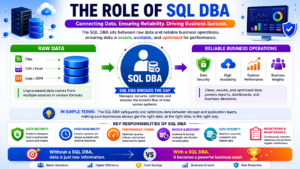
Who Is a SQL DBA?
The SQL Database Administrator (or SQL DBA – if using MySQL, PostgreSQL, or Oracle) is the individual who specializes in the health of the SQL Server (or MySQL / PostgreSQL / Oracle) environments of an organization. The DBA makes sure the engine is efficient, secure and never loses data as developers write queries, and applications use it. The SQL DBA roles and responsibility is typically divided among a single individual in small organizations or into three distinct roles in larger organizations: performance, security, and architecture.
Core SQL DBA Roles and Responsibilities
A database administrator’s daily tasks include installation, protection, tuning and governance. Here is the set of SQL DBA roles and responsibilities that is seen in every industry serious breakdown of SQL DBA roles and responsibilities.
Installation and Configuration
DBAs install SQL Server instances, configure memory, storage and network parameters and create databases based on workload. This is because if you get this foundation right, there is no problem occurring later in performance.
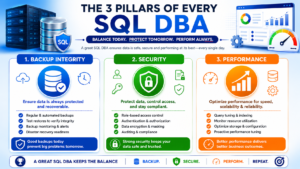
Back Up & Recovery Planning
One of the most important SQL DBA tasks and responsibilities is to ensure the ability to restore data whenever it is required. DBAs plan backups (full, differential, log), test recoveries on a regular basis, and set recovery point and recovery time objectives.
Track and optimize performance.Monitor and tune performance.
DBAs monitor query execution plans, indexing strategy, wait statistics, and server resource consumption and fine-tune configurations to ensure applications perform quickly as data increases.
Security and Access Management
Granting least-privilege access, managing logins and roles, enabling encryption, and auditing activity are key elements of the job — and it’s all about a way to ensure sensitive data isn’t breached or misused.
High Availability / Disaster Recovery
Clustering, Always On Availability Groups, replication, and failover plans ensure that systems are up and running in the event of a hardware failure or regional outage.
Patching and Upgrades
DBAs apply service packs, cumulative updates and version upgrades carefully, testing on staging environments to ensure that the components do not affect the production environment.
Capacity Planning
Another lesser known and yet important SQL DBA role and responsibility is predicting storage, CPU, and memory requirements before they grow is a way to ensure predictable infrastructure costs.
Documentation and Compliance
Runbooks, data retention policies and compliance documentation (GDPR, HIPAA, SOC 2) allow the organization to go through audits and to quickly respond to incidents.
Operational
Database server installation, configuration, patching and routine maintenance.
Protective
Preventing loss of data or data breach by making backups, securing, encrypting and disaster recovery.
Performance
Monitor and tune indexes, queries and resources in order to keep systems performing efficiently when under load.
Strategic
Planning, architecture decisions and reporting for compliance purposes for leadership.
Key Features of the SQL DBA Role
In addition to the list of tasks, there are some elements that make the implementation of SQL DBA roles and responsibilities unique:
- On-call rotations are widespread and databases don’t work on weekends.
- Collaboration across multiple functions with developers, infrastructure and security teams.
- A combination of proactive (tuning, planning) and reactive (incident response) work.
- Good understanding of Azure monitoring tools, Redgate, Azure Data Studio and SSMS.
- Increasing overlap with Azure SQL, AWS RDS and Google Cloud SQL.
Why SQL DBA Roles and Responsibilities Matter
With so many value to any business these days, data is one of the most valuable resources, so that the database layer should be reliable. Good SQL DBA roles and responsibilities directly translate to less downtime, minimal loss of expensive data and responsive applications that customers rely on. Disciplined DBA practice can save a mid-sized company thousands of dollars per hour in lost revenue and reputation during an unplanned outage — which is why it’s so important to practice DBA discipline.
In addition to uptime, DBAs can be the final line of defence against data breaches. Security incidents are frequently the result of misconfigurations, or failure to patch, and the diligence required in the everyday role of SQL DBA extends well beyond a company’s risk posture and regulatory footing.
Here’s a quick fact: Unplanned downtime of a database system is one of the three main reasons for significant IT outages, as revealed from industry surveys again and again, highlighting the critical importance of SQL DBA roles and responsibilities for business continuity.
Advantages of Strong SQL DBA Practices
- Advantage
- Reliable backups
- Proactive tuning
- Strong access control
- High availability design
- Capacity forecasting
Business Impact
- Rapid ransomware, hardware or human error recovery
- Reduced infrastructure expenditures and quick applications.
- Low risk of breach and simpler compliance audits.
- Very low downtime in the event of failure or maintenance.
- Anticipated expenditure rather than emergency expenditure.
Fewer emergency escalations, smooth audits and more confident product launches are amongst the benefits of companies who invest in mature SQL DBA roles and responsibilities and consider the data layer as an asset to be managed and maintained rather than an afterthought.
The skills required for the job position.
- A solid foundation of T-SQL and query optimization skills
- Understanding of backup/recovery models and HA/DR architecture
- Some knowledge of monitoring tools and performance counters
- Scripting skills for Automation (PowerShell, Python or Bash)
- Understanding of cloud database services.
- Good communication for incident reports and stakeholder updates.
These skills are generally listed in the job description along with SQL DBA skills and responsibilities when employers are recruiting for the position because they are technical skills and operational judgment go hand in hand.
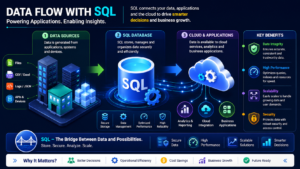
Student Internships, Careers, and Certifications
The majority of DBAs begin their careers as database developers or junior administrators, and eventually move into a senior DBA position, perhaps a database architect, or a position as a data platform manager. Employers seek evidence of your practical knowledge of SQL DBA roles and responsibilities, which can be gained through certifications like Microsoft’s Azure Database Administrator Associate, Oracle Certified Professional, or AWS Database Specialty, and can be a catalyst for promotion to senior or lead roles.
Frequently Asked Questions
What does a SQL DBA do?
The basics of all SQL DBA roles and responsibilities, keeping databases available, secure, backed up and performing well.
Is SQL DBA a good career choice?
Yes — demand is still robust as more companies rely on data, and the job is a sure shot into architecture and cloud data platform leadership.
Should SQL DBAs be familiar with platforms in the cloud?
Increasingly yes. Working with Azure SQL, AWS RDS or Google Cloud SQL has become commonplace among modern SQL DBA skills.
What are the differences between SQL DBA and database developer?
The DB developer concentrates on the design and development of the application’s database, including writing queries and stored procedures and designing the schema. The DBA concentrates on maintaining the underlying server in a secure, backed up, and efficient state. One individual can assume both types of SQL DBA roles and responsibilities in smaller teams.
What is the maximum number of databases that one SQL DBA can manage?
It’s highly dependent on automation and monitoring tooling — a single DBA could have a few large, complex production databases to deal with, or hundreds of smaller ones, depending on the amount of automated tools that are used for various routine tasks.
SQL DBA Tools used everyday?
Common tools are SQL Server Management Studio (SSMS), Azure Data Studio, Redgate SQL Toolbelt, monitoring tools such as SolarWinds or Redgate Monitor, and script languages like PowerShell to automate repetitive SQL DBA tasks and responsibilities.
Are we heading towards the automation or end of the SQL DBA job?
It has streamlined a lot of repetitive and manual work, but it hasn’t taken the place of the job, instead driving it toward higher-value jobs, such as architecture, security strategy and cloud cost optimization.
Which are the certifications that will help a SQL DBA land a job?
Microsoft’s Azure Database Administrator Associate, Oracle Certified Professional (OCP), and AWS Certified Database – Specialty are well-known and demonstrate a foundation knowledge of the major SQL DBA functions and duties to employers.
What is the average salary for a SQL DBA?
The salary range for DBAs is determined by various factors such as location, industry, and experience. However, DBAs with cloud computing and performance tuning skills tend to earn more than general DBAs because they are responsible for overseeing a wider range of work.