Databricks Engineer Course – Complete Guide to Building a Successful Data Engineering Career in 2026
Databricks has become one of the most in-demand technologies in the Data Engineering, Analytics, and AI ecosystem. Organizations worldwide are adopting Databricks to build scalable data pipelines, real-time analytics solutions, AI applications, and modern Lakehouse architectures. As cloud adoption continues to grow, the demand for skilled Databricks Engineers is increasing rapidly across industries.
What is Databricks?
Databricks is a unified Data and AI platform founded by the original creators of Apache Spark. It combines Data Engineering, Data Warehousing, Analytics, Machine Learning, and AI workloads into a single platform. Databricks enables organizations to process massive volumes of data efficiently using the Lakehouse architecture.
The platform is widely used across:
- Banking & Financial Services
- Healthcare
- E-Commerce
- Telecommunications
- Manufacturing
- Retail
- Insurance
- AI & Machine Learning Projects
Why Learn Databricks?
Modern organizations generate terabytes and petabytes of data daily. Traditional data platforms often struggle with scalability and performance.
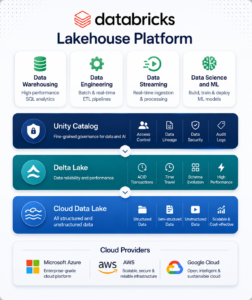
Databricks solves these challenges by offering:
✅ Distributed Data Processing
✅ High-Speed ETL Pipelines
✅ Real-Time Streaming Analytics
✅ Lakehouse Architecture
✅ Machine Learning Integration
✅ Cloud-Native Scalability
✅ AI & Generative AI Capabilities
✅ Unified Data Governance
These capabilities make Databricks one of the most sought-after skills for Data Engineers and Cloud Professionals.
Databricks Engineer Course Overview
This course is designed to make learners industry-ready by covering Databricks from beginner to advanced levels.
Module 1: Apache Spark Fundamentals
Topics Covered:
- Spark Architecture
- Spark Core
- Spark SQL
- Spark DataFrames
- Spark Transformations
- Spark Actions
- RDD Concepts
- Performance Optimization
Module 2: Databricks Platform
Topics Covered:
- Workspace Setup
- Clusters
- Notebooks
- Jobs
- Repos
- Dashboards
- Workspace Management
Module 3: Delta Lake
Topics Covered:
- Delta Tables
- ACID Transactions
- Time Travel
- Schema Enforcement
- Schema Evolution
- MERGE Operations
- Data Versioning
Delta Lake is the foundation of the Databricks Lakehouse and provides reliability, governance, and performance improvements for modern data platforms.
Module 4: PySpark Programming
Topics Covered:
- Python Basics
- DataFrames
- Functions
- UDFs
- ETL Development
- Error Handling
- Data Transformations
Module 5: Data Engineering Pipelines
Topics Covered:
- Batch Processing
- Streaming Pipelines
- Auto Loader
- ETL Design
- ELT Design
- Data Validation
- Pipeline Automation
Module 6: Unity Catalog
Topics Covered:
- Data Governance
- Security
- Catalog Management
- Data Lineage
- Permissions
- Access Control
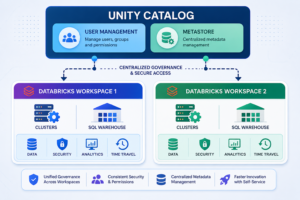
Unity Catalog is a key governance framework used in enterprise Databricks environments.
Module 7: Real-Time Data Processing
Topics Covered:
- Structured Streaming
- Event Processing
- Streaming Analytics
- Kafka Integration
- Streaming ETL
Module 8: Databricks SQL
Topics Covered:
- SQL Warehouses
- Advanced SQL Queries
- Views
- Delta Tables
- Query Optimization
- Reporting
Module 9: Real-Time Projects
Projects Include:
- E-Commerce Analytics
- Banking Data Pipeline
- Healthcare ETL Framework
- Retail Sales Analytics
- IoT Data Processing
Tools Covered in Databricks Engineer Course
Core Tools
- Apache Spark
- Spark SQL
- PySpark
- Delta Lake
- Databricks Workspace
- Databricks SQL
- Unity Catalog
Cloud Integrations
- Azure Data Lake Storage (ADLS)
- Azure Databricks
- AWS S3
- AWS Databricks
- Google Cloud Storage
DevOps & Engineering Tools
- Git
- GitHub
- Azure DevOps
- CI/CD Pipelines
Data Integration Tools
- Azure Data Factory
- Kafka
- Event Hub
AI & Machine Learning
- MLflow
- Databricks AI Tools
- Model Serving
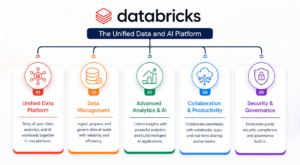
Databricks is increasingly being used for AI, analytics, and data engineering on a single platform.
Advantages of Learning Databricks
High Market Demand
Thousands of organizations are adopting Databricks for data modernization initiatives.
Better Salary Packages
Databricks Engineers often command premium salaries due to the specialized skill set.
Cloud Career Growth
Databricks integrates with:
- Microsoft Azure
- AWS
- Google Cloud
Future-Proof Technology
Databricks continues to expand into AI, GenAI, and advanced analytics platforms.
Global Opportunities
Databricks skills are recognized worldwide.
Career Opportunities After Databricks Training
After completing the Databricks Engineer Course, learners can apply for:
- Databricks Engineer
- Data Engineer
- Big Data Engineer
- Cloud Data Engineer
- Spark Developer
- ETL Developer
- Data Platform Engineer
- Analytics Engineer
- Azure Data Engineer
- AWS Data Engineer
Future Scope of Databricks
The future of Databricks looks extremely promising because it sits at the intersection of:
- Data Engineering
- Analytics
- Artificial Intelligence
- Machine Learning
- Generative AI
Industry trends indicate increasing adoption of Lakehouse architectures, Delta Lake, AI-powered analytics, and cloud-native platforms. Databricks continues to invest heavily in Data Intelligence and AI capabilities, making it a strategic skill for future technology professionals.
Databricks Certifications
Popular certifications include:
Databricks Certified Data Engineer Associate
Validates foundational data engineering skills using the Databricks platform.
Azure Databricks Data Engineer Associate
Focuses on building and maintaining data engineering solutions on Azure Databricks.
Frequently Asked Questions (FAQs)
Is Databricks difficult to learn?
No. If you have basic SQL knowledge, you can gradually learn Spark, PySpark, and Databricks concepts.
Do I need coding experience?
Basic Python knowledge is helpful but not mandatory for beginners.
Is Databricks better than traditional ETL tools?
Databricks offers better scalability, distributed processing, and cloud-native capabilities for large-scale data workloads.
What is the difference between Spark and Databricks?
Apache Spark is the processing engine, while Databricks is the enterprise platform built around Spark with additional capabilities like Delta Lake, governance, AI, and collaboration tools.
Can I get a job after learning Databricks?
Yes. Databricks skills are highly valued in Data Engineering, Cloud Engineering, and Analytics roles.
Which cloud platforms support Databricks?
- Microsoft Azure
- Amazon AWS
- Google Cloud Platform
Conclusion
Databricks has emerged as one of the most powerful platforms for modern Data Engineering, Analytics, and AI workloads. By mastering Apache Spark, Delta Lake, PySpark, Unity Catalog, and Lakehouse Architecture, professionals can build highly scalable enterprise-grade data solutions and unlock exciting career opportunities in the rapidly growing cloud and AI industry. Whether you are a fresher or an experienced IT professional, learning Databricks can significantly accelerate your career growth in 2026 and beyond.
#Databricks#DatabricksEngineer#DatabricksTraining#DatabricksCourse#DatabricksCertification#AzureDatabricks#DatabricksSQL#DatabricksJobs#LearnDatabricks
#DatabricksCommunity
Trainer: Mr. Sai Phanindra
With 20+ Years of
technical expertise exclusively on SQL & Database Technologies, I assure you 100% Practical, Step by Step Classes.
Linkdin Profile: www.linkedin.com/in/saiphanindra/
Contact No: +91 9030040801 or +91 9666640801