SQL DBA Course in 2026: The Ultimate Career Guide for Future Database Administrators
In today’s data-driven world, businesses rely heavily on databases to store, manage, and analyze critical information. A SQL Database Administrator (SQL DBA) plays a vital role in ensuring database performance, security, and availability. A structured SQL DBA Course equips learners with the skills required to manage modern database systems like Microsoft SQL Server efficiently.
What is SQL DBA?
A SQL DBA (Database Administrator) is responsible for installing, configuring, securing, and maintaining databases. They ensure data integrity, performance tuning, high availability, and backup management across systems.
With the rapid growth of data across industries like IT, healthcare, and finance, SQL DBA professionals are in high demand.
Why Learn SQL DBA?
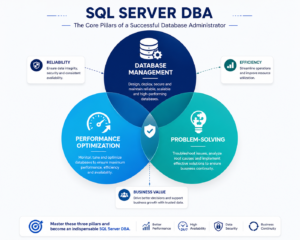
- High Demand Career – Organizations rely on DBAs for data management and security
- Data Security & Integrity – Protect sensitive business data
- Performance Optimization – Ensure fast query execution
- Cloud Integration – Work with Azure & cloud databases
- Multiple Career Roles – DBA, Data Engineer, Database Architect
SQL DBA training prepares you for real-world database challenges and enterprise environments.
Key Features of SQL DBA Course
A standard SQL DBA course includes:
1. Hands-on Training
- Real-time projects and lab sessions
- Industry-based case studies
2. Certification-Oriented Curriculum
- Covers Microsoft certification topics (DP-300)
- Prepares for real job roles
3. Flexible Learning
- Online & classroom options
- Self-paced + instructor-led sessions
4. Career Support
- Resume building
- Mock interviews
- Placement assistance
5. Lifetime Learning Access
- Recorded sessions & materials
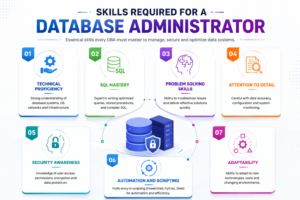
Tools Used in SQL DBA
SQL DBA professionals work with various tools:
Core Tools
- SQL Server Management Studio (SSMS)
- SQL Server Profiler
- Database Engine Tuning Advisor
Monitoring Tools
- Performance Monitor
- Dynamic Management Views (DMVs)
ETL Tools
- SQL Server Integration Services (SSIS)
- Talend / Pentaho
Cloud Tools
- Azure SQL Database
- Azure Data Studio
These tools help in performance tuning, monitoring, automation, and data migration.
Components of SQL DBA Course
A complete SQL DBA course is divided into key components:
1. Database Architecture
- Understanding SQL Server structure
- Data files, log files, filegroups
2. Installation & Configuration
- SQL Server setup
- Instance configuration
- Server tuning
3. Security Management
- Authentication (Windows & SQL)
- Roles & permissions
4. Backup & Recovery
- Full, differential, and log backups
- Disaster recovery strategies
5. Performance Tuning
- Indexing
- Query optimization
6. High Availability (HA)
- Log shipping
- Replication
- Clustering
7. Automation
- SQL Server Agent
- Job scheduling
Roles & Responsibilities of SQL DBA
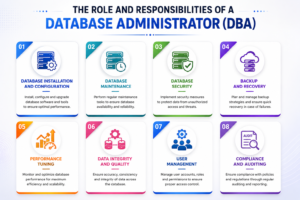
Key Responsibilities:
- Database installation & configuration
- Performance monitoring & tuning
- Data backup & recovery management
- Security implementation
- Troubleshooting database issues
- Managing high availability systems
A DBA is responsible for maintaining database systems, ensuring performance, and securing data.
Advantages of Learning SQL DBA
Benefits:
- High-paying job opportunities
- Strong career growth in IT industry
- Demand across industries (Finance, Healthcare, E-commerce)
- Improves analytical & problem-solving skills
- Easy career switch for non-IT professionals
- Opportunities in Cloud (Azure, AWS)
SQL DBA skills are highly valuable as organizations increasingly depend on data systems.
What You Will Learn in SQL DBA Course
Learning Outcomes:
- Create and manage databases
- Perform backup & disaster recovery
- Optimize queries and improve performance
- Manage users, roles & permissions
- Handle real-time database scenarios
These skills prepare you for real-world DBA roles and certifications.
Frequently Asked Questions (FAQs)
What is a SQL DBA?
A SQL DBA (Database Administrator) is responsible for managing, maintaining, securing, and optimizing databases. They ensure data availability, performance, and security in an organization.
Who should take a SQL DBA course?
This course is ideal for:
- Fresh graduates (B.Tech, B.Sc, BCA, MCA)
- IT professionals looking to switch careers
- System administrators
- Anyone interested in database management
What tools are covered in SQL DBA training?
Common tools include:
- SQL Server Management Studio (SSMS)
- SQL Server Profiler
- Database Engine Tuning Advisor
- SSIS (Integration Services)
What job roles can I get after completing SQL DBA training?
After completing the course, you can apply for roles like:
- SQL DBA
- Database Administrator
- Database Engineer
- Production Support Engineer
Is SQL DBA a good career in 2026?
Yes, SQL DBA continues to be a high-demand career due to the growing reliance on data across industries like finance, healthcare, e-commerce, and IT services.
Conclusion
The SQL DBA Course is a powerful career path for anyone looking to enter the world of data and database management. With the growing importance of data in every industry, SQL DBAs are highly (in-demand) professionals.
By mastering tools, concepts, and real-time projects, you can build a successful career as a Database Administrator and unlock high-paying job opportunities in the IT industry.
SQL DBA Training Course: https://sqlschool.com/sql-dba-training/
#SQLDBA #SQLDBACourse #DatabaseAdministrator #SQLServer #ITCareers #TechJobs #LearnSQL #CareerGrowth #DataCareers #FutureSkills
Trainer: Mr. Sai Phanindra
With 20+ Years
of technical expertise exclusively on SQL & Database Technologies, I assure you 100% Practical, Step by Step Classes.
Linkdin Profile: www.linkedin.com/in/saiphanindra/
Contact No: +91 9030040801 or +91 9666640801
