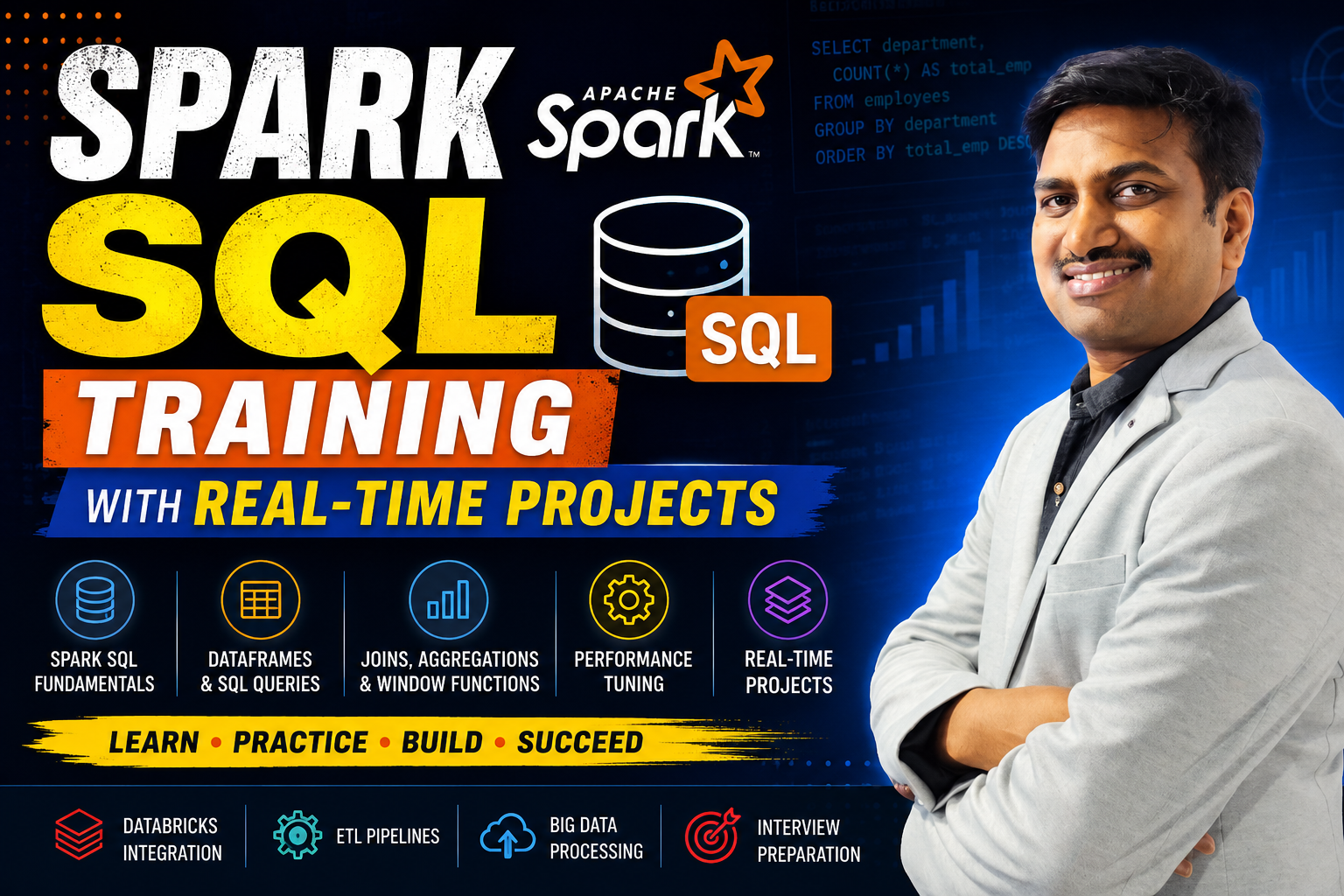
Master Spark SQL with SQL School through 100% practical, hands-on training designed for aspiring Data Engineers and Big Data professionals. Learn Spark SQL, DataFrames, Joins, Delta Lake, Hive, ETL Pipelines, and Databricks with real-time projects and industry use cases. Build job-ready skills in Big Data Analytics, Data Warehousing, and Cloud Data Platforms with expert step-by-step guidance.


#SPARKSQL
Spark SQL Training Course Contents:
Spark SQL Course
Ch 1: Big Data & Spark SQL Introduction
- What is Big Data?
- Limitations of Traditional Databases
- Hadoop vs Spark
- Spark SQL Architecture
- Industry Use Cases
Ch 2: Apache Spark Architecture
- Driver Program
- Executors
- Cluster Manager
- DAG & Lazy Evaluation
- Spark Session
Ch 3: Environment Setup
- Spark Installation
- Databricks Setup
- Cluster Creation
- Spark UI
- Notebook Usage
Ch 3: Spark SQL Basics – 1
- Catalog Concept
- Catalog Creation
- Spark Databases
- DB Operations
- Table Creations
- Data Insertions
Ch 4: Spark SQL Basics
- DDL Operations
- ALTER Operations
- Table ALTER
- Database ALTER
- Table DROP
- Database DROP
- Other DDLs
Ch 5: Spark SQL Basics
- Temporary Views
- SELECT Statements
- WHERE Clause
- DISTINCT
- ORDER BY
- LIMIT
Ch 6: Filtering & Conditional Logic
- AND/OR
- BETWEEN
- IN Operator
- CASE WHEN
- NULL Handling
Ch 7: String Functions
- CONCAT
- SUBSTRING
- UPPER/LOWER
- TRIM
- REGEXP Functions
Ch 8: Numeric Functions
- ROUND
- CEIL/FLOOR
- ABS
- POWER
- SQRT
Ch 9: Date & Time Functions
- CURRENT_DATE
- DATE_ADD
- DATEDIFF
- MONTH/YEAR
- Timestamp Formatting
Ch 10: Aggregations
- COUNT SUM
- AVG GROUP BY
- HAVING Clause
Ch 11: Joins – Part 1
- INNER JOIN
- LEFT JOIN
- RIGHT JOIN
- FULL OUTER JOIN
Ch 12: Joins – Part 2
- Broadcast Join
- Self Join
- Join Optimization
- Handling Skew Data
Ch 13: Set Operators
- UNION
- INTERSECT
- EXCEPT
- Deduplication Concepts
Ch 14: Window Functions – Part 1
- ROW_NUMBER
- RANK
- DENSE_RANK
- PARTITION BY
- LEAD
- LAG
- Running Totals
- Moving Average
Ch 15: Understanding DataFrames
- Schema & Structure
- Creating DataFrames
- Reading CSV/JSON/Parquet
- DataFrame Operations
Ch 16: Working with Nested Data
- Struct Type
- Array Type
- Map Type
- Explode Function
Ch 17: Handling Semi-Structured Data
- JSON Processing
- Schema Inference
- Nested File Queries
Ch 18: Parquet & Delta Lake
- Parquet Basics
- Delta Lake
- ACID Transactions
- Time Travel
- Managed Tables
- External Tables
Ch 19: Performance Optimization
- Caching
- Partitioning
- Repartition vs Coalesce
- Catalyst Optimizer
- Tungsten Engine
- Execution Plans
Ch 20: Spark SQL with Hive
- Hive Metastore
- Managed Tables
- External Tables
Ch 21: Spark SQL with Delta Tables
- MERGE
- UPSERTS
- SCD Concepts
- Deletes & Updates
Ch 22: Error Handling & Debugging
- Common Errors
- Log Analysis
- Performance Troubleshooting
Ch 23: Real-Time Industry Use Cases
- Banking
- Healthcare
- Telecom
Ch 24: Interview Preparation & Career Guidance
- Interview Questions
- Resume Preparation
- Career Roadmap
- Mock Interviews
- Bonus Features Included
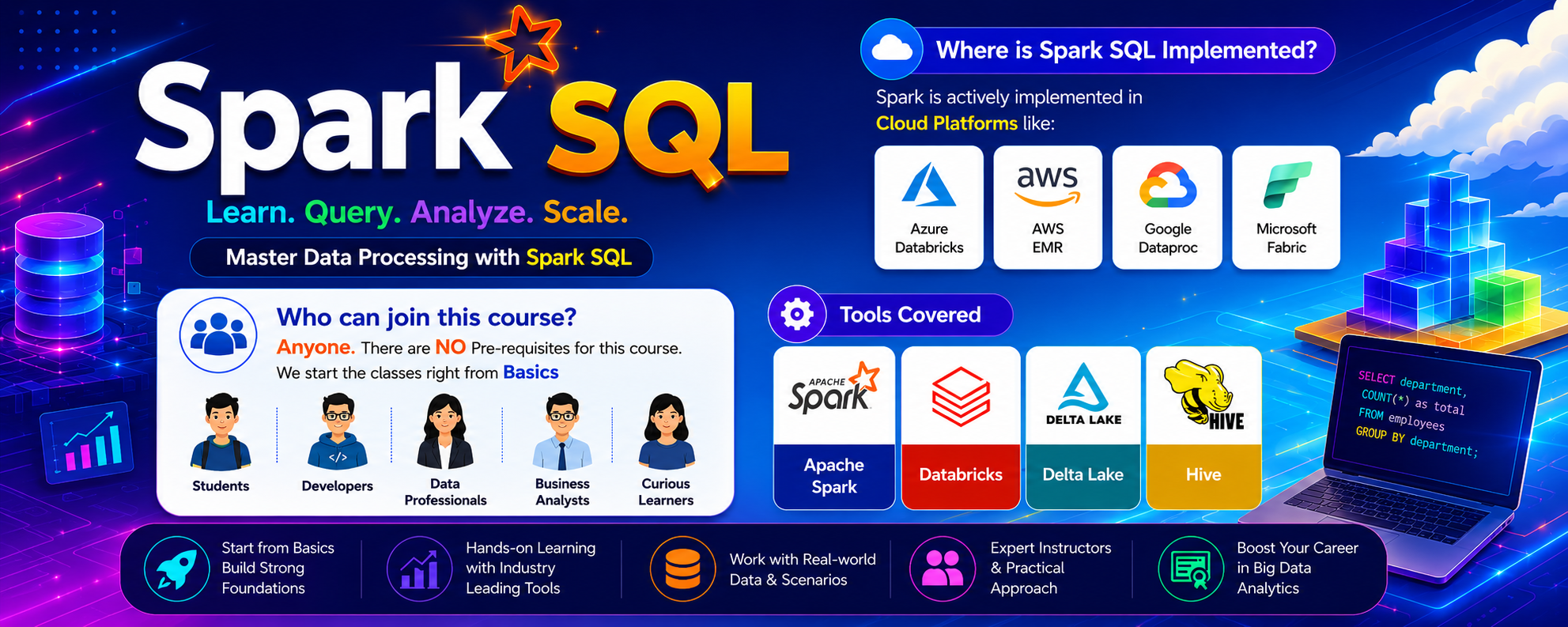
Tools Covered
- Apache Spark
- Databricks
- Delta Lake
- Hive
1. What is Spark SQL and where is it used?
Spark SQL is a module within Apache Spark used for processing structured and semi-structured data. It is widely used for Big Data Analytics, ETL Pipelines, Data Warehousing, and Real-time Data Processing.
2. Do I need any prior knowledge to join the Spark SQL course?
No. The course is designed for beginners, and there are no prerequisites. Training starts from the basics and gradually moves to advanced concepts.
3. What tools and technologies are covered in the training?
The course covers Apache Spark, Databricks, Delta Lake, and Hive. Students also learn DataFrames, SQL functions, joins, window functions, performance optimization, and real-time industry use cases.
4. What are the system requirements for practicing Spark SQL?
Students can use any operating system with at least 8 GB RAM and any processor. Installation guidance is provided step by step during the training.
5. Does the course include interview preparation and real-time projects?
Yes. The training includes interview questions, resume preparation, mock interviews, career guidance, and real-time industry use cases from Banking, Healthcare, and Telecom domains.
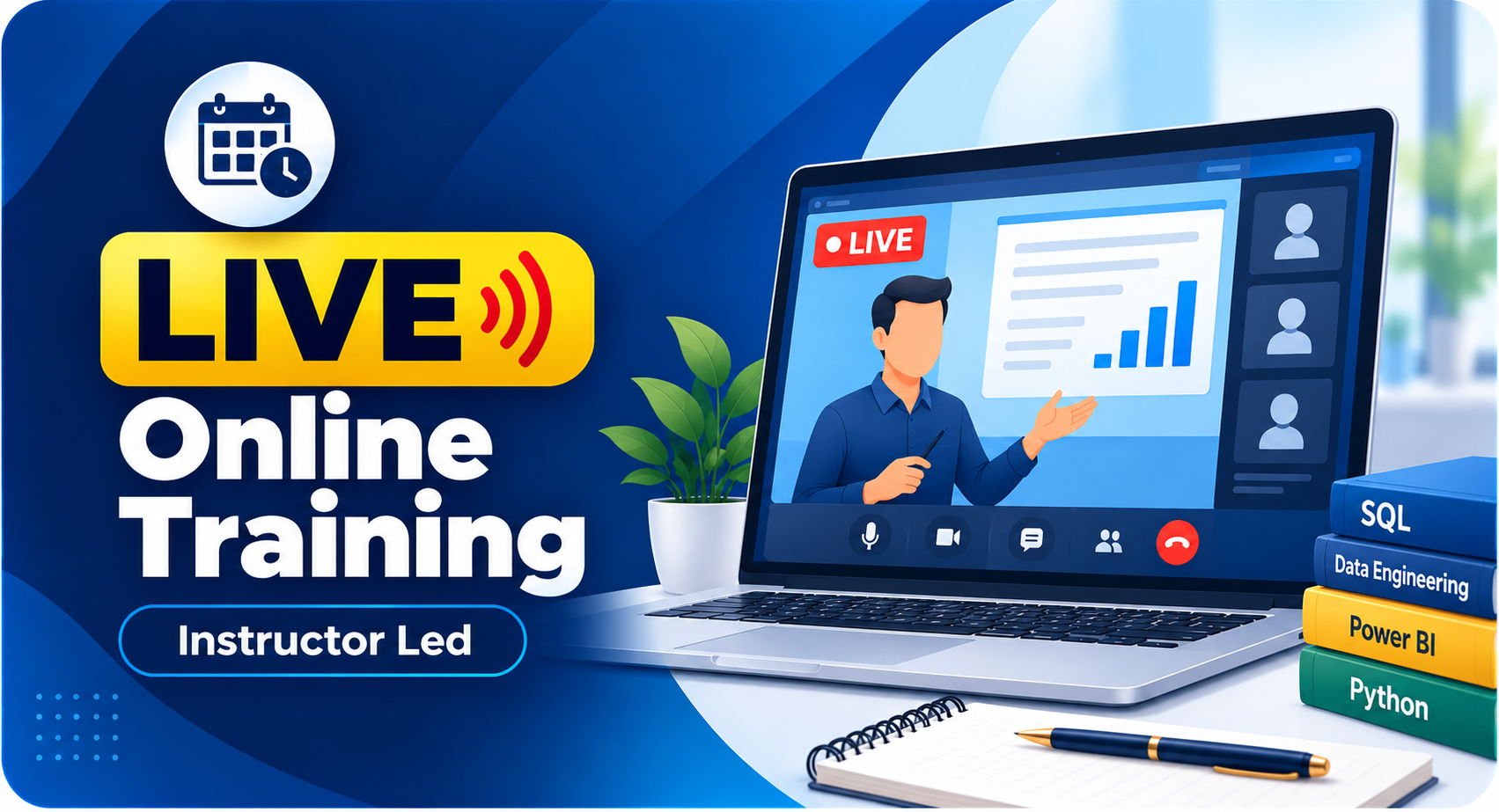
Training Modes





Why Choose SQL School
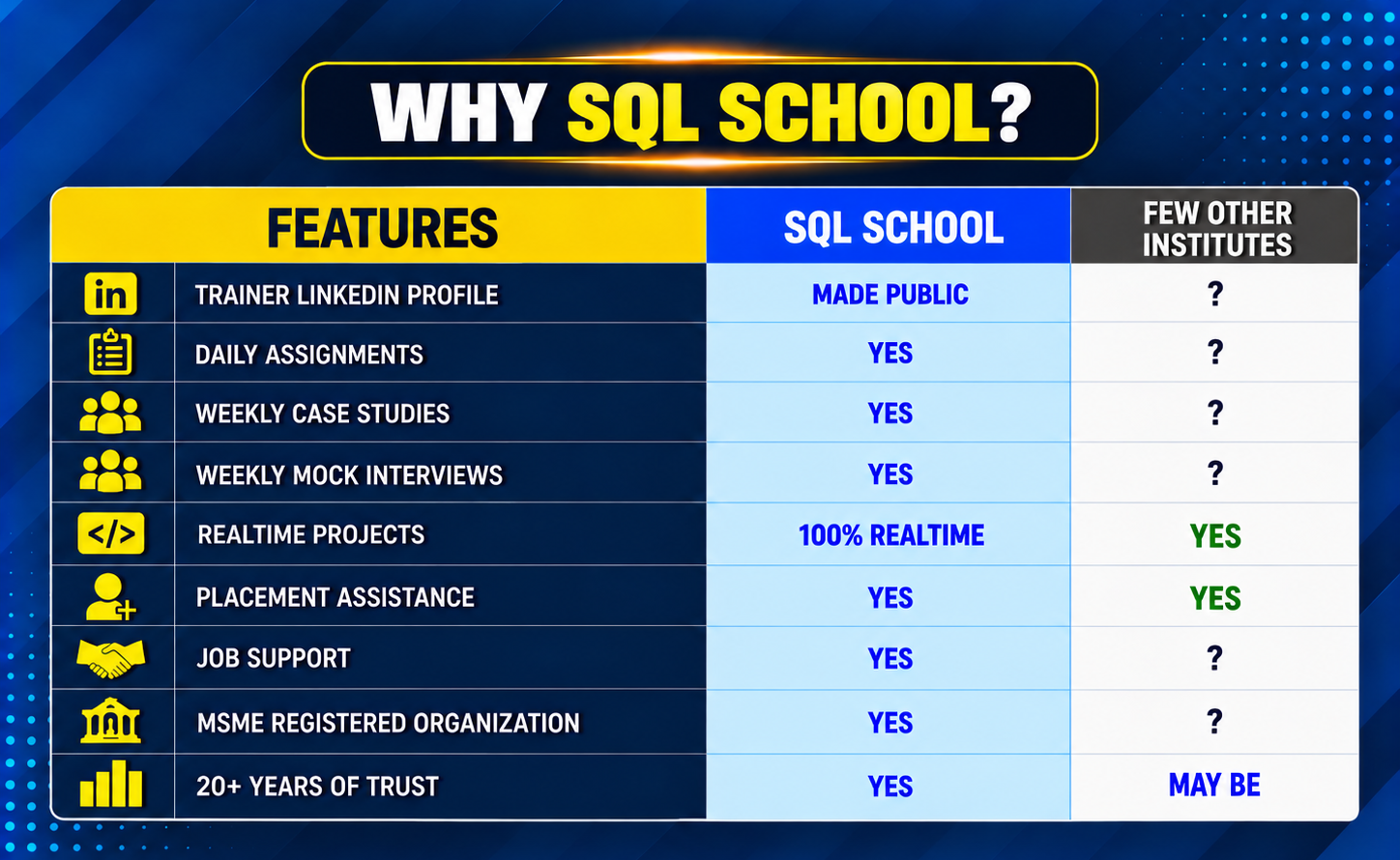
- 100% Real-Time and Practical
- ISO 9001:2008 Certified
- Concept wise FAQs
- TWO Real-time Case Studies, One Project
- Weekly Mock Interviews
- 24/7 LIVE Server Access

- Realtime Project FAQs
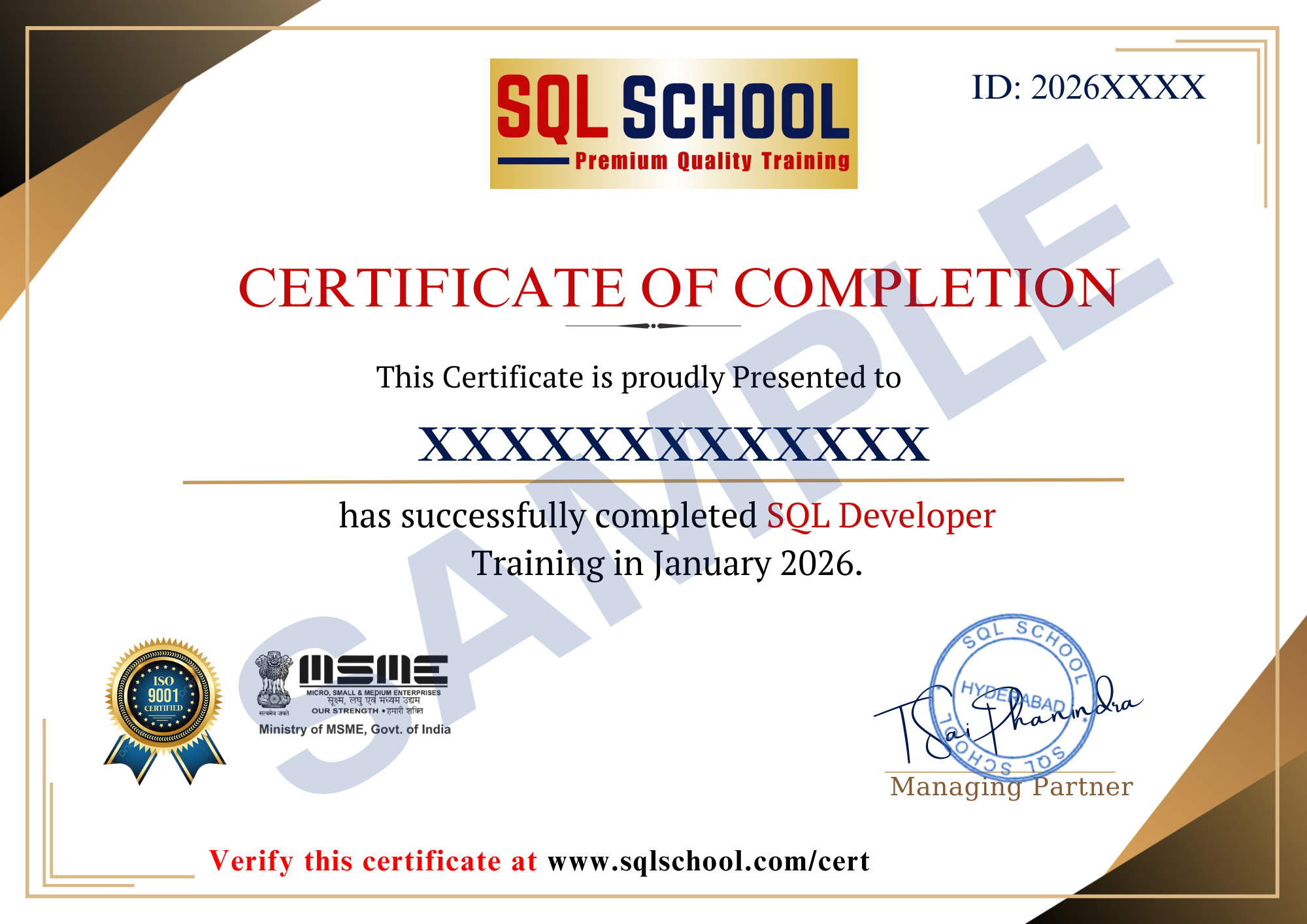
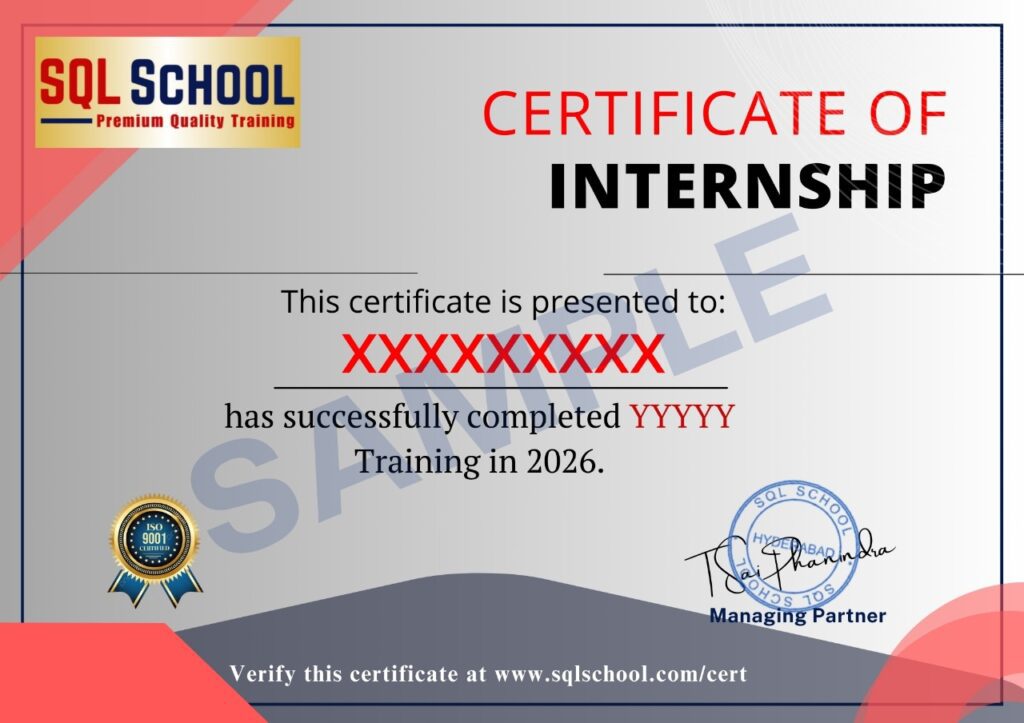
- Course Completion Certificate
- Placement Assistance
- Job Support
- Realtime Project Solution
- MS Certification Guidance