
Databricks Course in 2026: The Ultimate Career Guide for Modern Data Engineers
The world of data is evolving rapidly. Organizations are no longer looking for separate platforms for data storage, analytics, machine learning, and artificial intelligence. Instead, they need a unified solution capable of handling everything from raw data ingestion to AI-powered insights.
This is where Databricks stands out.
Developed by the creators of Apache Spark, Databricks has become one of the most powerful platforms for Data Engineering, Data Analytics, Machine Learning, and Generative AI. Today, companies across banking, healthcare, retail, manufacturing, telecommunications, and technology sectors rely on Databricks to process massive datasets and generate actionable business insights.
As organizations continue investing in cloud technologies and AI initiatives, professionals with Databricks expertise are becoming highly sought after in the global job market.
What Makes Databricks Different?
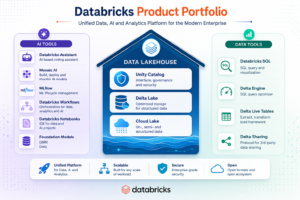
Unlike traditional data platforms that require multiple tools for different purposes, Databricks provides a unified environment where teams can:
- Store data
- Process data
- Analyze data
- Build machine learning models
- Develop AI applications
- Manage governance and security
This unified approach significantly reduces complexity while increasing productivity and scalability.
Organizations using Databricks often experience faster development cycles, lower infrastructure costs, and improved collaboration between business and technical teams.
Why Databricks is Dominating the Data Industry
Over the last few years, the demand for Databricks professionals has increased dramatically.
Several factors contribute to its growing popularity:
Enterprise Adoption
Many Fortune 500 companies have adopted Databricks as their primary data platform due to its flexibility and performance.
AI Revolution
As Artificial Intelligence becomes a business necessity, Databricks has positioned itself at the center of AI innovation by integrating machine learning, Generative AI, and Large Language Models (LLMs).
Cloud Transformation
Organizations migrating from traditional on-premises systems to cloud platforms often choose Databricks because it works seamlessly across Azure, AWS, and Google Cloud.
Lakehouse Architecture
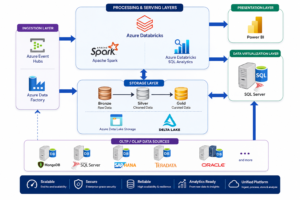
Databricks introduced the revolutionary Lakehouse Architecture, combining the best capabilities of Data Lakes and Data Warehouses into a single platform.
Core Features of Databricks
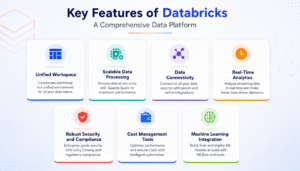
Lakehouse Architecture
The Lakehouse model eliminates the need for separate storage and analytics platforms.
Benefits include:
- Centralized data management
- Better query performance
- Reduced storage costs
- Improved data reliability
- Simplified architecture
Apache Spark Engine
Apache Spark powers Databricks and enables distributed processing across large datasets.
Key advantages include:
- High-speed processing
- Parallel computing
- Scalability
- Real-time analytics
- Big data processing
Delta Lake
Delta Lake is one of Databricks’ most valuable innovations.
Features include:
- ACID Transactions
- Data Versioning
- Schema Enforcement
- Time Travel
- Data Quality Controls
Delta Lake ensures reliable and consistent data processing even in large-scale enterprise environments.
Unity Catalog
Modern organizations require strong governance and security.
Unity Catalog provides:
- Centralized data governance
- Access control management
- Data lineage tracking
- Audit capabilities
- Compliance management
Databricks SQL
Databricks SQL allows analysts to work with data using familiar SQL syntax.
Capabilities include:
- Interactive dashboards
- Data visualization
- Reporting
- Business intelligence
- Ad-hoc analysis
AI & Machine Learning Integration
Databricks has become a leading platform for AI initiatives.
Organizations can build:
- Machine Learning Models
- Predictive Analytics Solutions
- Generative AI Applications
- Chatbots
- Recommendation Engines
- RAG Applications
Important Tools Covered in a Databricks Course
A comprehensive Databricks Training Program should include the following technologies:
Databricks Workspace
Central development environment.
Databricks Notebooks
Supports collaborative development using:
- Python
- SQL
- Scala
- R
PySpark
The most important framework for large-scale data transformations.
Delta Lake
Reliable storage layer for modern data architectures.
Unity Catalog
Enterprise-grade governance platform.
Auto Loader
Automates large-scale data ingestion processes.
Delta Live Tables (DLT)
Simplifies ETL pipeline creation and maintenance.
MLflow
Used for machine learning lifecycle management.
Databricks SQL
Enterprise reporting and analytics platform.
Structured Streaming
Supports real-time data processing and analytics.
Skills You Gain from a Databricks Course
By completing a professional Databricks course, learners typically acquire skills in:
Data Engineering
- ETL Development
- Data Pipelines
- Workflow Automation
Big Data Processing
- Apache Spark
- Distributed Computing
- Performance Optimization
Programming
- Python
- SQL
- PySpark
Cloud Technologies
- Azure Databricks
- AWS Databricks
- Google Cloud Databricks
Data Modeling
- Lakehouse Design
- Data Architecture
- Data Governance
Artificial Intelligence
- MLflow
- Machine Learning
- Generative AI Integration
Why Databricks Skills Are Highly Valued in 2026
The data industry is experiencing a major shift.
Companies now need professionals who can:
- Handle massive data volumes
- Build scalable pipelines
- Work with cloud technologies
- Support AI initiatives
- Create real-time analytics solutions
Databricks professionals possess all these capabilities.
As a result, organizations actively hire:
- Databricks Developers
- Data Engineers
- Analytics Engineers
- Cloud Engineers
- Machine Learning Engineers
- Data Platform Architects
This makes Databricks one of the most future-proof technologies available today.
Career Opportunities After Learning Databricks
Learning Databricks opens doors to several high-growth career paths.
Databricks Developer
Build enterprise-grade ETL pipelines and transformations.
Azure Data Engineer
Design and maintain cloud-based data solutions.
Big Data Engineer
Work with distributed processing systems and large-scale datasets.
Analytics Engineer
Bridge the gap between business intelligence and data engineering.
Machine Learning Engineer
Develop AI and predictive analytics solutions.
Data Architect
Design scalable enterprise data platforms.
Who Should Enroll in a Databricks Course?
This course is ideal for:
- SQL Developers
- ETL Developers
- Azure Professionals
- Data Analysts
- Data Engineers
- BI Developers
- Software Engineers
- Cloud Engineers
- Database Administrators
- Fresh Graduates aspiring to enter Data Engineering
Why Choose SQL School for Databricks Training?
At SQL School, learners receive practical, project-oriented training designed to meet current industry requirements.
Course Highlights
✅ Spark SQL & PySpark
✅ Delta Lake & Lakehouse Architecture
✅ Unity Catalog & Governance
✅ Auto Loader & Delta Live Tables
✅ Real-Time Data Engineering Projects
✅ Azure Databricks Integration
✅ Interview Preparation
✅ Resume Building Assistance
✅ Certification Guidance
✅ Industry Mentorship by Experienced Professionals
Frequently Asked Questions (FAQs)
Is Databricks suitable for beginners?
Yes. Beginners with basic SQL knowledge can start learning Databricks effectively.
Do I need Python before learning Databricks?
Python is highly recommended because PySpark is widely used in real-world projects.
Is Databricks only for Data Engineers?
No. It is also used by Data Analysts, Data Scientists, Machine Learning Engineers, and Cloud Architects.
Which cloud platform uses Databricks?
Databricks is available on:
- Microsoft Azure
- Amazon AWS
- Google Cloud Platform (GCP)
What certification should I pursue?
Popular certifications include:
- Databricks Data Engineer Associate
- Databricks Data Engineer Professional
Is Databricks a good career choice in 2026?
Absolutely. Databricks sits at the intersection of Data Engineering, Cloud Computing, Analytics, and Artificial Intelligence, making it one of the most valuable skills in today’s technology landscape.
Conclusion
Databricks is not simply another data platform—it represents the future of modern data ecosystems. By combining big data processing, analytics, machine learning, governance, and AI into a single environment, Databricks enables organizations to innovate faster and make smarter decisions.
For professionals looking to build a successful career in Data Engineering, Cloud Analytics, or Artificial Intelligence, learning Databricks is one of the smartest investments they can make in 2026.
With increasing enterprise adoption, strong job demand, and continuous innovation, Databricks is poised to remain a dominant technology for years to come.
Databricks Training Course: https://sqlschool.com/databricks-training/
#Databricks #DatabricksTraining #DatabricksCourse #AzureDatabricks #DataEngineering #DataEngineer #ApacheSpark #PySpark #DeltaLake #LakehouseArchitecture #BigData #CloudComputing #DataAnalytics #MachineLearning #ArtificialIntelligence #GenerativeAI #AnalyticsEngineer #AzureDataEngineer #DatabricksCertification #LearnDatabricks #DataCareer #TechCareer #ITTraining #FutureSkills #SQLSchool
Trainer: Mr. Sai Phanindra
With 20+ Years of
technical expertise exclusively on SQL & Database Technologies, I assure you 100% Practical, Step by Step Classes.
Linkdin Profile: www.linkedin.com/in/saiphanindra/
Contact No: +91 9030040801 or +91 9666440801
