Build a Successful Career in ETL Administration with Real-Time Industry Skills
In today’s digital world, organizations generate massive volumes of data every second. However, collecting data is only the beginning. Businesses need reliable systems to move, transform, validate, and load data into data warehouses and reporting platforms. This is where ETL Administration becomes one of the most critical roles in modern data ecosystems.
The ETL Admin Course at SQL School is designed to help students, working professionals, database administrators, and support engineers gain practical expertise in managing enterprise ETL environments. This course focuses on real-world administration activities, monitoring, troubleshooting, scheduling, deployment, and production support that organizations expect from ETL professionals.
What is ETL Administration?
ETL Administration is the process of managing and maintaining ETL (Extract, Transform, Load) environments that move data between various systems.
An ETL Administrator ensures that:
- Data pipelines run successfully
- Scheduled jobs execute on time
- Production systems remain stable
- Data warehouse loads are completed accurately
- Failures are identified and resolved quickly
- Business reports receive timely data
Unlike ETL Developers who build data pipelines, ETL Administrators focus on operational excellence, monitoring, deployment, scheduling, support, and performance optimization.
Why ETL Administration Matters in Modern Organizations
Every industry depends on data-driven decision-making.
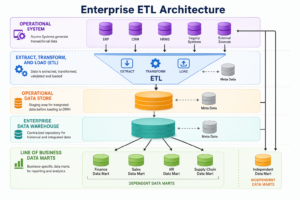
Organizations use ETL processes to move data from:
- Banking Applications
- ERP Systems
- CRM Platforms
- Healthcare Systems
- E-Commerce Websites
- Financial Applications
- Cloud Platforms
- IoT Devices
When ETL processes fail, businesses may experience:
- Missing reports
- Incorrect dashboards
- Delayed analytics
- Revenue-impacting decisions
- Compliance issues
ETL Administrators play a crucial role in ensuring business continuity and data reliability.
ETL Admin – A Hidden Hero of Data Engineering
Most companies invest heavily in Data Warehouses, Data Lakes, Azure Data Factory, Databricks, Informatica, SSIS, and Cloud Platforms.
However, these systems require continuous administration and monitoring.
An ETL Administrator acts as:
✔ Data Operations Specialist
✔ Production Support Engineer
✔ Batch Monitoring Expert
✔ Deployment Coordinator
✔ Performance Analyst
✔ Incident Management Professional
Without ETL Administration, even the best ETL solution can fail in production.
Key Features of ETL Admin Training
1. Complete ETL Lifecycle Understanding
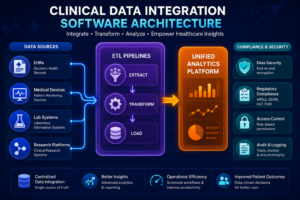
Learn how enterprise data flows from source systems to analytical platforms.
Topics Covered:
- ETL Concepts
- Data Warehousing
- Data Lakes
- Data Marts
- Data Integration Architecture
- Batch Processing
- Enterprise ETL Workflows
2. SQL Server for ETL Administrators
Every ETL professional must understand databases.
You will learn:
- SQL Server Administration Basics
- Database Architecture
- SQL Queries
- Stored Procedures
- Database Monitoring
- Backup & Recovery
- Performance Analysis
3. SSIS Administration
SQL Server Integration Services (SSIS) remains one of the most widely used ETL platforms in enterprises.
Topics include:
- SSIS Architecture
- SSIS Catalog Administration
- Package Deployment
- Environment Configuration
- Logging & Auditing
- Package Monitoring
- Security Management
- Troubleshooting Failed Packages
4. ETL Job Monitoring
Monitoring is one of the primary responsibilities of ETL Administrators.
Learn how to:
- Monitor ETL Jobs
- Analyze Failures
- Generate Alerts
- Review Execution Logs
- Validate Data Loads
- Track SLA Compliance
- Handle Production Issues
5. Enterprise Scheduling Tools
Most ETL jobs run through scheduling platforms.
Learn industry-standard tools such as:
- SQL Server Agent
- Control-M
- Autosys
- Windows Scheduler
- Cron Jobs
- Enterprise Workload Automation Tools
6. Production Support Activities
Real-world ETL Admin roles involve supporting live production systems.
Topics include:
- Incident Management
- Ticket Handling
- Escalation Procedures
- Root Cause Analysis
- Change Management
- Release Management
- Deployment Validation
7. ETL Performance Optimization
Poorly performing ETL jobs can impact business operations.
Learn:
- ETL Performance Tuning
- Resource Utilization Monitoring
- Query Optimization
- Batch Window Management
- Execution Time Analysis
- Bottleneck Identification
8. Real-Time Project Experience
Students gain hands-on exposure through practical scenarios such as:
- ETL Monitoring Dashboard
- Production Failure Resolution
- Data Validation Frameworks
- Batch Scheduling Implementation
- Incident Handling Simulation
Tools Covered in ETL Admin Course
Microsoft SSIS
Enterprise-grade ETL platform used for data extraction, transformation, and loading.
Informatica PowerCenter
Widely adopted ETL solution used across banking, insurance, telecom, and healthcare industries.
Azure Data Factory
Cloud-native data integration service used in modern data engineering projects.
Databricks
Advanced data engineering and analytics platform used for large-scale data processing.
Control-M
Industry-leading enterprise scheduling and workload automation platform.
Autosys
Popular job scheduling and automation solution used in production environments.
SQL Server Agent
Microsoft scheduling framework for ETL package execution and database automation.
Career Opportunities After ETL Admin Training
After completing this course, you can apply for positions such as:
Entry-Level Roles
- ETL Support Engineer
- Production Support Analyst
- Data Operations Associate
- SQL Support Engineer
Mid-Level Roles
- ETL Administrator
- SSIS Administrator
- Informatica Administrator
- Batch Support Engineer
Advanced Roles
- Data Operations Lead
- Data Platform Administrator
- ETL Operations Manager
- Data Engineering Support Lead
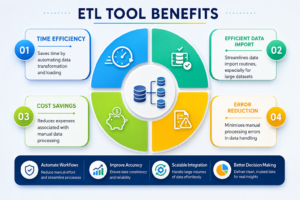
Benefits of Learning ETL Administration
High Demand Across Industries
Organizations continuously require ETL professionals to support critical data systems.
Faster Career Growth
ETL Administration provides exposure to enterprise-level data operations.
Excellent Foundation for Data Engineering
Many successful Data Engineers begin their careers in ETL Support and Administration.
Exposure to Real-Time Environments
Gain experience working with live production systems used by global organizations.
Strong Job Stability
Data platforms operate 24/7, making ETL Administration a consistently valuable skill.
Why Choose SQL School for ETL Admin Training?
Industry-Experienced Trainers
Learn from professionals with 20+ years of industry experience.
Practical-Oriented Training
Focus on real-time production scenarios rather than theory alone.
Project-Based Learning
Work on enterprise-level ETL administration use cases.
Interview Preparation
Receive guidance on:
- Resume Building
- Interview Questions
- Production Support Scenarios
- Troubleshooting Cases
Flexible Learning Options
Available through:
- Online Classes
- Classroom Training
- Weekend Batches
- Corporate Programs
Frequently Asked Questions (FAQs)
Is ETL Administration a good career choice?
Yes. ETL Administration offers excellent opportunities in Data Warehousing, Data Engineering, Production Support, and Cloud Data Platforms.
Who should join this course?
- Fresh Graduates
- SQL Developers
- Database Administrators
- Support Engineers
- ETL Developers
- Data Engineers
Do I need coding knowledge?
Basic SQL knowledge is sufficient. Advanced programming is not mandatory.
What tools will I learn?
You will gain exposure to SSIS, SQL Server, Azure Data Factory, Informatica, Scheduling Tools, Monitoring Tools, and Production Support Frameworks.
Will this course help me become a Data Engineer?
Absolutely. ETL Administration provides a strong operational foundation for Azure Data Engineering, Databricks, Snowflake, and Microsoft Fabric careers.
Is project experience included?
Yes. SQL School provides practical exercises and real-time project exposure.
Why ETL Administration Skills Are Future-Proof
As organizations migrate to cloud platforms such as Azure, AWS, Snowflake, Databricks, and Microsoft Fabric, the need for ETL monitoring, orchestration, scheduling, and operational support continues to grow.
The tools may evolve, but the need for skilled professionals who can manage and support enterprise data pipelines remains constant.
Conclusion
ETL Administration is one of the most practical and rewarding career paths in the data industry. It offers exposure to enterprise systems, production environments, cloud platforms, and data engineering operations.
If you want to build expertise in ETL Monitoring, SSIS Administration, Scheduling Tools, Production Support, and Data Operations, SQL School’s ETL Admin Course provides the skills, projects, and industry exposure needed to succeed.
ETL Admin Training Course: https://sqlschool.com/etl-admin-training/
#ETLAdmin #ETLAdministrator #ETLTraining #ETLCourse #SSISTraining #ProductionSupport #DataWarehouse #DataEngineering #SQLServer #ControlM #Autosys #AzureDataFactory #Databricks #DataOps #SQLSchool #ETLSupport #DataIntegration #DataPlatform #CloudDataEngineering #CareerInDataEngineering
Trainer: Mr. Sai Phanindra
With 20+ Years of
technical expertise exclusively on SQL & Database Technologies, I assure you 100% Practical, Step by Step Classes.
Linkdin Profile: www.linkedin.com/in/saiphanindra/
Contact No: +91 9030040801 or +91 9666440801
