#AI 901

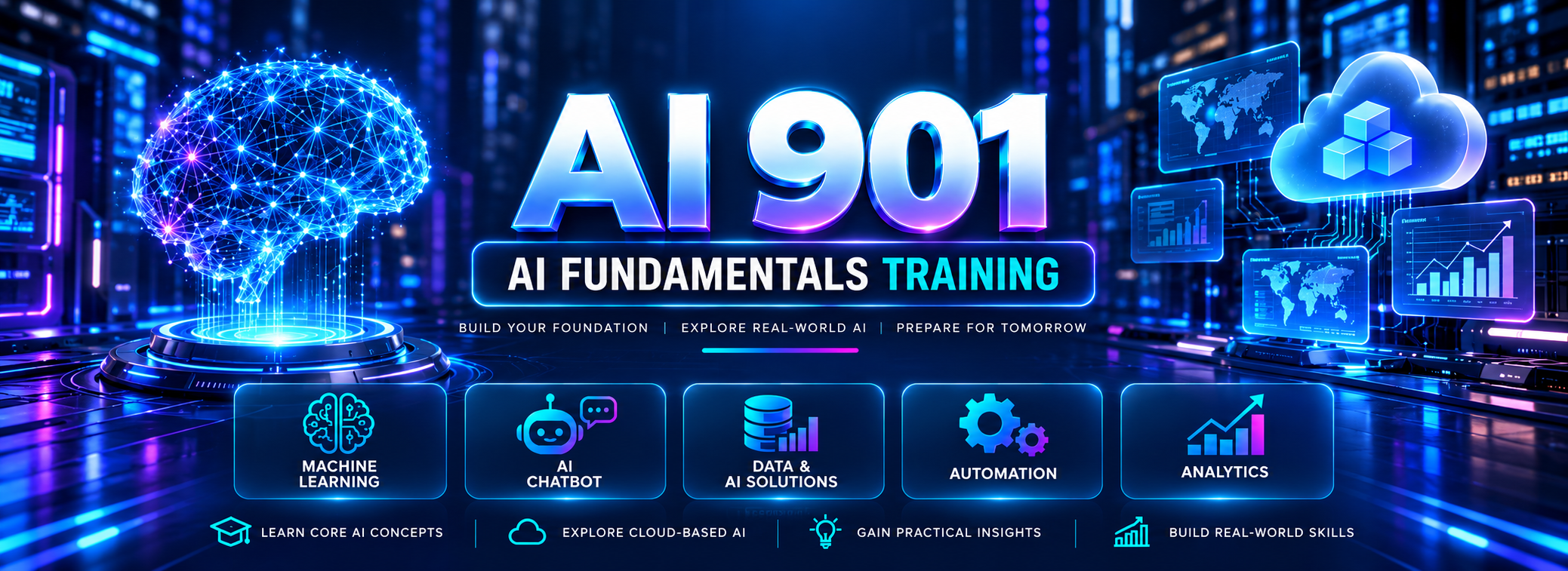
Master the fundamentals of Artificial Intelligence with AI-901 training at SQL School. Explore Machine Learning, Generative AI, Natural Language Processing, Computer Vision, and Azure AI services. Gain practical knowledge through hands-on exercises and real-world AI applications. Build essential AI skills, understand intelligent automation, and prepare for exciting career opportunities in the AI-driven world.

Training Highlights

✅ LIVE Interactive Training
✅ AI & Responsible AI Fundamentals
✅ Microsoft Foundry Hands-on Training
✅ Generative AI & Prompt Engineering
✅ Build AI Applications with Python
✅ AI Agents & Intelligent Solutions
✅ Real-Time Projects & Practical Labs
✅ AI-901 Certification & Interview Preparation

Modules We learn

✅ Module 1: AI Foundations & Responsible AI
✅ Module 2: Generative AI & Prompt Engineering
✅ Module 3: AI Agents & Language Solutions
✅ Module 4: Speech, Vision & Information Extraction
✅ Module 5: Practical Integ ration & Certification Preparation
✅ Module 6: Interview & Career Preparation
AI 901 Course Contents:

Module 1: AI Foundations & Responsible AI

Chapter 01: Introduction to Artificial Intelligence

  • AI vs ML vs Deep Learning vs Generative AI; everyday AI use cases; predictive vs generative
    models.
  • Compare outputs from a generative AI model using different business questions.
  • Learner questions, quick recap and knowledge check.

Chapter 02: Responsible AI & Model Fundamentals

  • Fairness, reliability, safety, privacy, inclusion, transparency, accountability; tokens, parameters,
    context windows.
  • Test ambiguous prompts, identify biased or unreliable responses, improve prompts.
  • Learner questions, quick recap and knowledge check.

Chapter 3: AI Workloads & Capabilities

  • NLP, sentiment analysis, entity extraction, key phrases, summarization; speech, vision,
    multimodal AI.
  • Analyze sample customer feedback and extract sentiment, entities and summaries.
  • Learner questions, quick recap and knowledge check.

Chapter 4: Introduction to Microsoft Foundry

  • Foundry portal, projects, model catalog, deployments, endpoints, APIs, authentication.
  • Explore a Foundry project, compare available models, and test a model in the playground.
  • Learner questions, quick recap and knowledge check.

Module learning outcome: Understand AI concepts, responsible AI principles and the basic Microsoft
Foundry environment.

Module 2: Generative AI & Prompt Engineering

Chapter 05: Generative AI & Foundation Models

  • LLMs, foundation models, inference, temperature, tokens and context windows.
  • Compare model responses by changing prompts and supported parameters.
  • Learner questions, quick recap and knowledge check.

Chapter 06: Prompt Engineering Techniques

  • System and user prompts, role instructions, few-shot prompting, grounding, structured output.
  • Create prompts for FAQ responses, customer support and JSON generation.
  • Learner questions, quick recap and knowledge check.

Chapter 07: Build a Generative AI App with Python

  • Foundry SDK, endpoints, credentials, API requests and responses.
  • Create a basic Python application that submits a prompt and displays an AI response.
  • Learner questions, quick recap and knowledge check.

THEORY + PRACTICAL
Chapter 08: Evaluate & Improve AI Responses

  • Response relevance, accuracy, hallucinations, safety, prompt evaluation.
  • Test a set of prompts and revise instructions to improve answer quality.
  • Learner questions, quick recap and knowledge check.

Module learning outcome: Build a simple Python-powered generative AI application and improve its
responses through prompting and evaluation.

Module 3: AI Agents & Language Solutions

Ch 09: AI-901 Sample Questions – Part 1

  • Review AI concepts, Responsible AI, model capabilities and foundational terminology.
  • Solve and discuss 8–10 scenario-based practice questions.
  • Learner questions, quick recap and knowledge check.

Ch 10: AI-901 Sample Questions – Part 2

  • Review Foundry concepts, model deployment, prompting and application development.
  • Solve 8–10 implementation-oriented practice questions and review answers.
  • Learner questions, quick recap and knowledge check.

Ch 11: Build an AI Agent using Microsoft Foundry

  • Agent architecture, instructions, tools, workflows, use cases and limitations.
  • Create and test a single AI agent for a student course enquiry scenario.
  • Learner questions, quick recap and knowledge check.

Ch 12: Text Analytics & Natural Language AI

  • Sentiment analysis, named entities, key phrases, text classification and summarization.
  • Build a lightweight Python text-analysis flow using an available model or service.
  • Learner questions, quick recap and knowledge check.

Module learning outcome:
Strengthen exam readiness and create a basic AI agent and language-analysis workflow.

Module 4: Speech, Vision & Information Extraction

Chapter 13: Speech AI Solutions

  • Speech-to-text, text-to-speech, speech recognition, synthesis and multimodal speech.
  • Convert a short audio recording to text and generate synthesized speech.
  • Learner questions, quick recap and knowledge check.

Chapter 14: Computer Vision & Multimodal AI

  • Image interpretation, image analysis, vision-language models and limitations.
  • Upload a sample image and extract descriptive information using a vision-capable model.
  • Learner questions, quick recap and knowledge check.

Chapter 15: AI Image Generation
THEORY + PRACTICAL

  • Text-to-image generation, prompt specificity, model capabilities, accuracy and responsible use.
  • Generate images from descriptive prompts and compare results.
  • Learner questions, quick recap and knowledge check.

Chapter 16: Content Understanding & Document AI

  • Document extraction, structured information, forms, images, audio and video.
  • Extract fields such as invoice number, date, vendor and amount into JSON using an available
    extraction tool.
  • Learner questions, quick recap and knowledge check.

Module learning outcome:
Demonstrate how AI processes text, speech, images and business documents.

Module 5: Practical Integration & Certification Preparation

Chapter 17: Python Integration with Foundry

  • SDK and API integration, authentication, error handling, model calls.
  • Build a Python script to receive user input and return a model-generated response.
  • Learner questions, quick recap and knowledge check.

Chapter 18: Real-Time Project: AI Student Assistant

  • Solution architecture, agent instructions, FAQ workflow, structured responses.
  • Configure a simple AI assistant to answer questions about courses, schedules and training modes.
  • Learner questions, quick recap and knowledge check.

Chapter 19: Responsible Deployment & Solution Review

  • Security, privacy, model selection, evaluation, operational cost considerations.
  • Review the student assistant, test incorrect inputs, improve safety and response quality.
  • Learner questions, quick recap and knowledge check.

Chapter 20: AI-901 Final Assessment & Certification Preparation

  • Exam skills review, common mistakes, scenario-based reasoning and revision strategy.
  • Complete a short mock assessment and review incorrect answers interactively.
  • Learner questions, quick recap and knowledge check.
  • Integrate core skills into a small working solution and prepare for the AI-901 certification exam.

Module 6: Interview & Career Preparation

  •  End-to-End Real-Time Projects & Solutions
  • 100% Hands-on Practical Sessions
  • Interview Preparation
  • Assignments & Practice Labs
  • 100% Practical • No Unnecessary Theory
  • Learn Like You’re Working in a Real Company

What is AI-901 Microsoft Azure AI Fundamentals Training?

AI-901 Microsoft Azure AI Fundamentals Training introduces learners to Artificial Intelligence, Machine Learning, Generative AI, Responsible AI, and Microsoft Foundry. The course focuses on developing foundational AI skills through practical exercises, real-world scenarios, and preparation for the AI-901 certification exam.

Who can join the AI-901 training course?

This course is suitable for students, freshers, software developers, data professionals, IT administrators, cloud learners, and working professionals who want to start their careers in Artificial Intelligence. It is particularly useful for beginners interested in learning how AI solutions are developed using Microsoft Azure.

What are the prerequisites for AI-901 training?

Basic knowledge of Python programming and Microsoft Azure is recommended. The training introduces AI fundamentals before progressing to practical exercises involving Microsoft Foundry, Generative AI, and Python integration.

What topics are covered in the AI-901 course?

The training includes 20 chapters organized into five modules covering AI fundamentals, Responsible AI, Microsoft Foundry, Generative AI, Prompt Engineering, AI Agents, Natural Language Processing, Speech AI, Computer Vision, Document Intelligence, Python integration, and certification preparation.

Does the AI-901 training include hands-on practical sessions and real-time projects?

Yes. SQL School provides theory and practical training with guided exercises, assignments, and hands-on activities. Learners practice building Generative AI applications using Python, working with Microsoft Foundry, analyzing text and images, and developing a practical AI Student Assistant project that answers course-related enquiries.

What is the duration of the AI-901 training, and what learning modes are available?

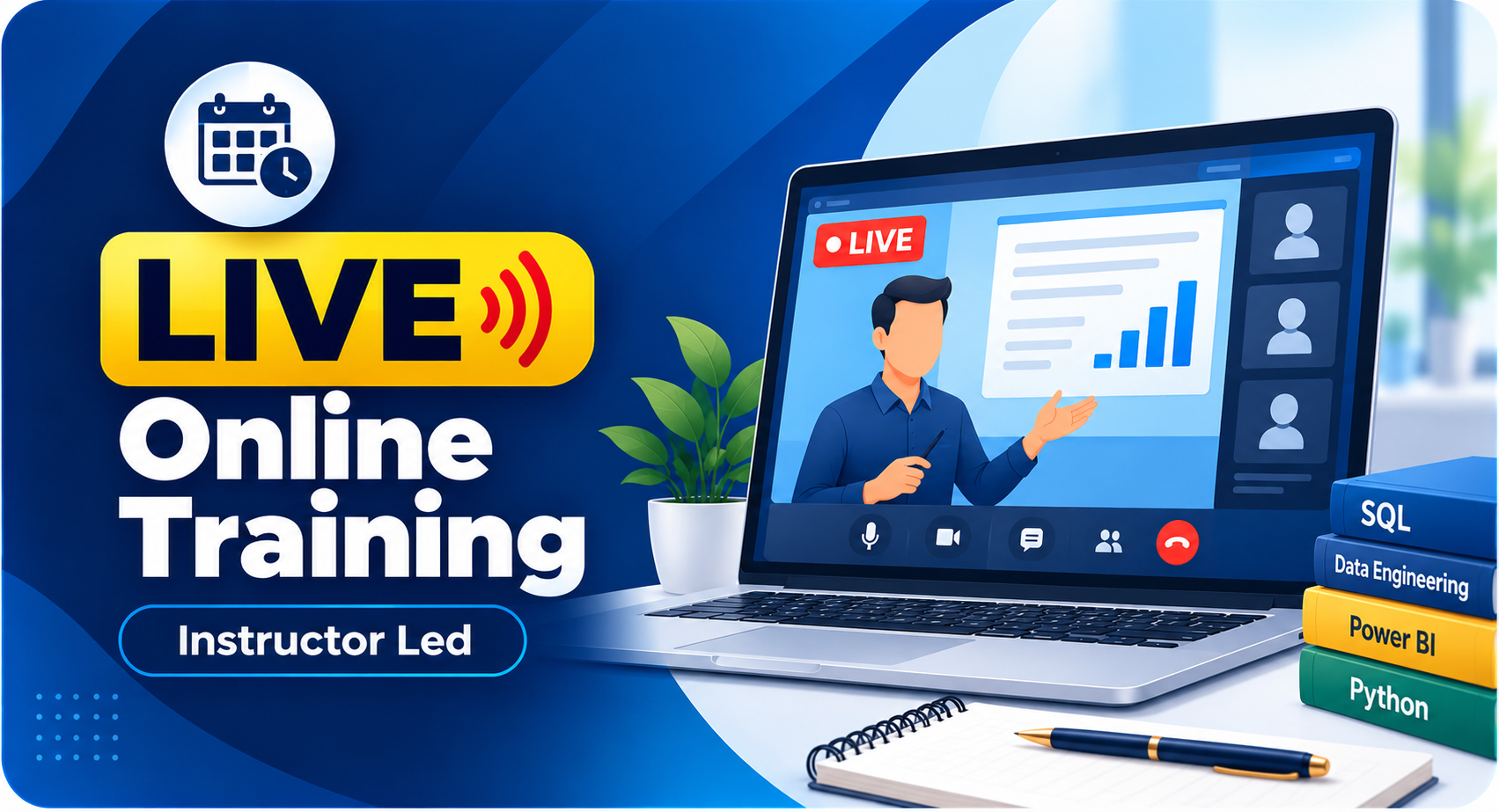
SQL School offers 1-month LIVE Online Instructor-Led Training and Self-Paced Video Learning. The LIVE training combines interactive explanations, demonstrations, practical activities, and knowledge checks to help students understand AI concepts and prepare for certification.

Does SQL School provide AI-901 certification exam preparation?

Yes. The course includes dedicated AI-901 sample questions, scenario-based practice, certification skills review, mock assessments, and explanations of commonly misunderstood concepts. The training focuses on two certification skill areas: Identify AI Concepts and Capabilities (40–45%) and Implement AI Solutions Using Microsoft Foundry (55–60%), as specified in the course PDF. Certification is awarded by Microsoft upon successfully passing the applicable exam.

Demo Videos

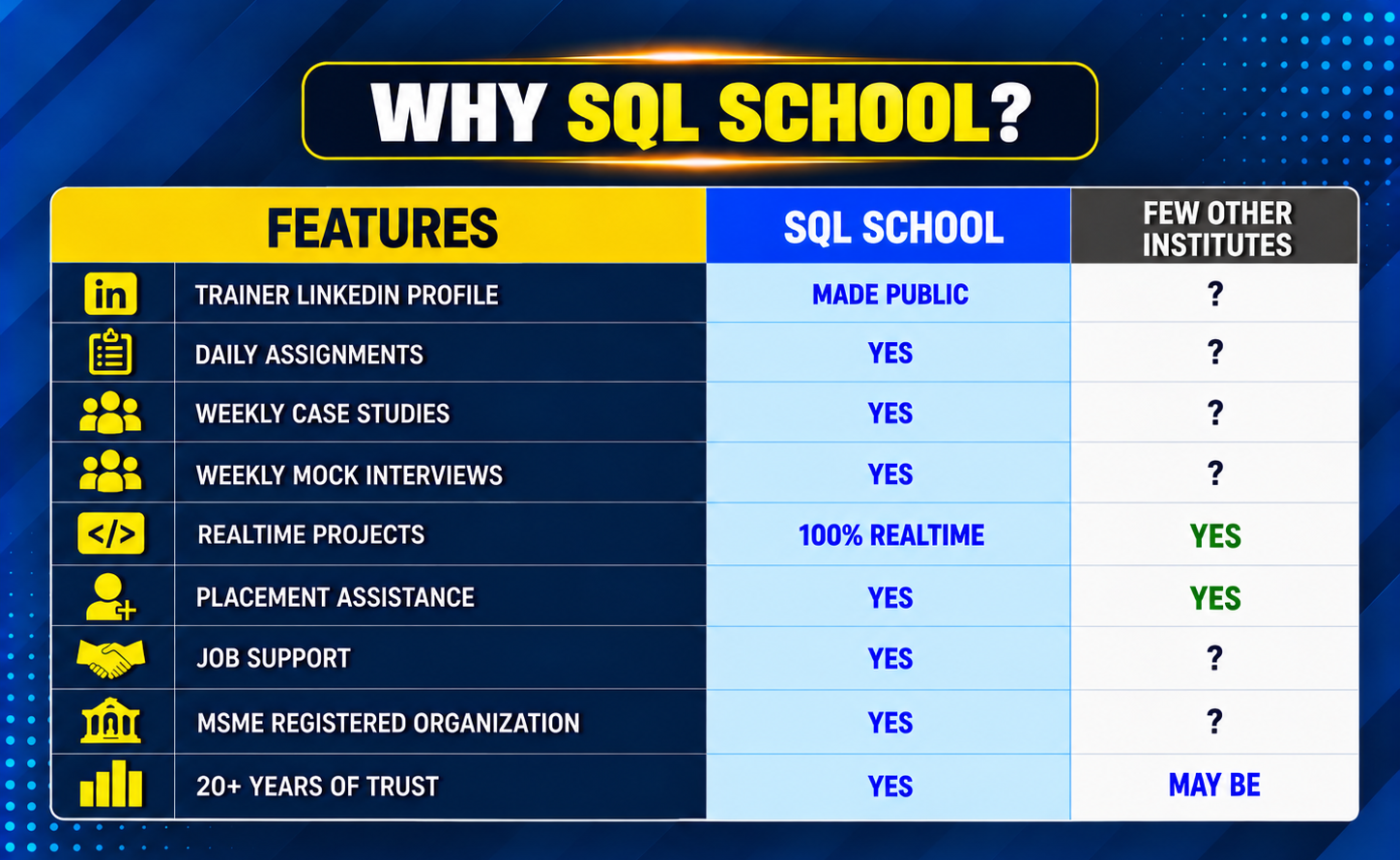
Why SQL SCHOOL?

Training Modes

Why Choose SQL School

  • 100% Real-Time and Practical
  • ISO 9001:2008 Certified
  • Concept wise FAQs
  • TWO Real-time Case Studies, One Project
  • Weekly Mock Interviews
  • 24/7 LIVE Server Access
A man smiling and giving a thumbs up while holding a notebook.
  • Realtime Project FAQs
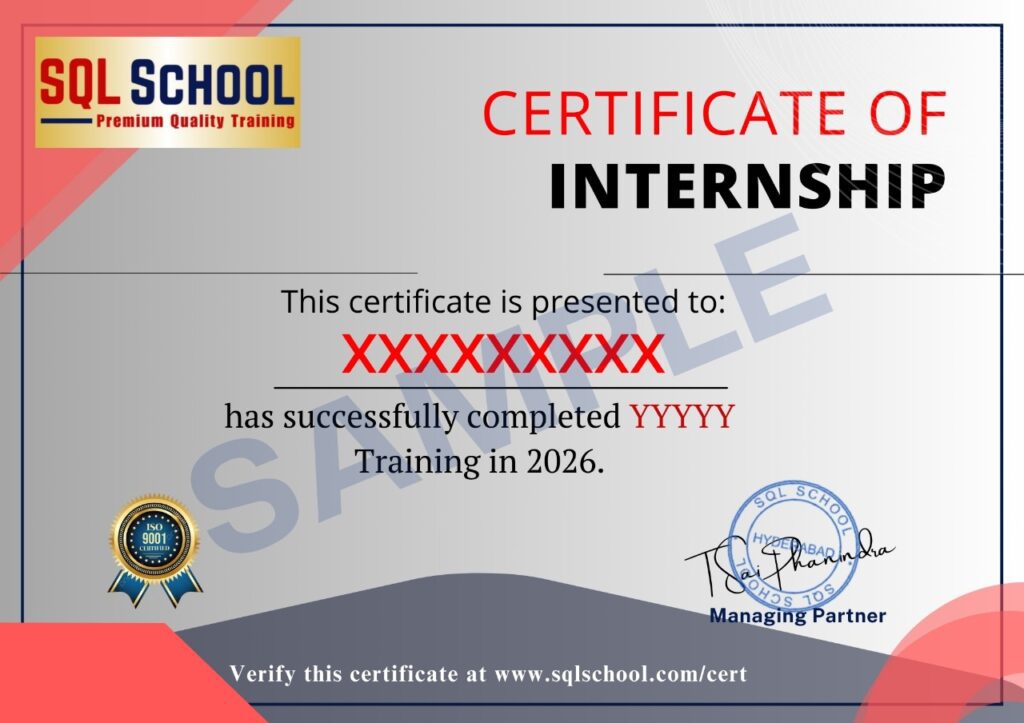
  • Course Completion Certificate
  • Placement Assistance
  • Job Support
  • Realtime Project Solution
  • MS Certification Guidance

SQL School Azure Data Engineer training certificate of completion issued in January 2026 with verification ID
Verified by MonsterInsights