Preparing for a Databricks Interview? Study These 10 Critical Questions | Level1
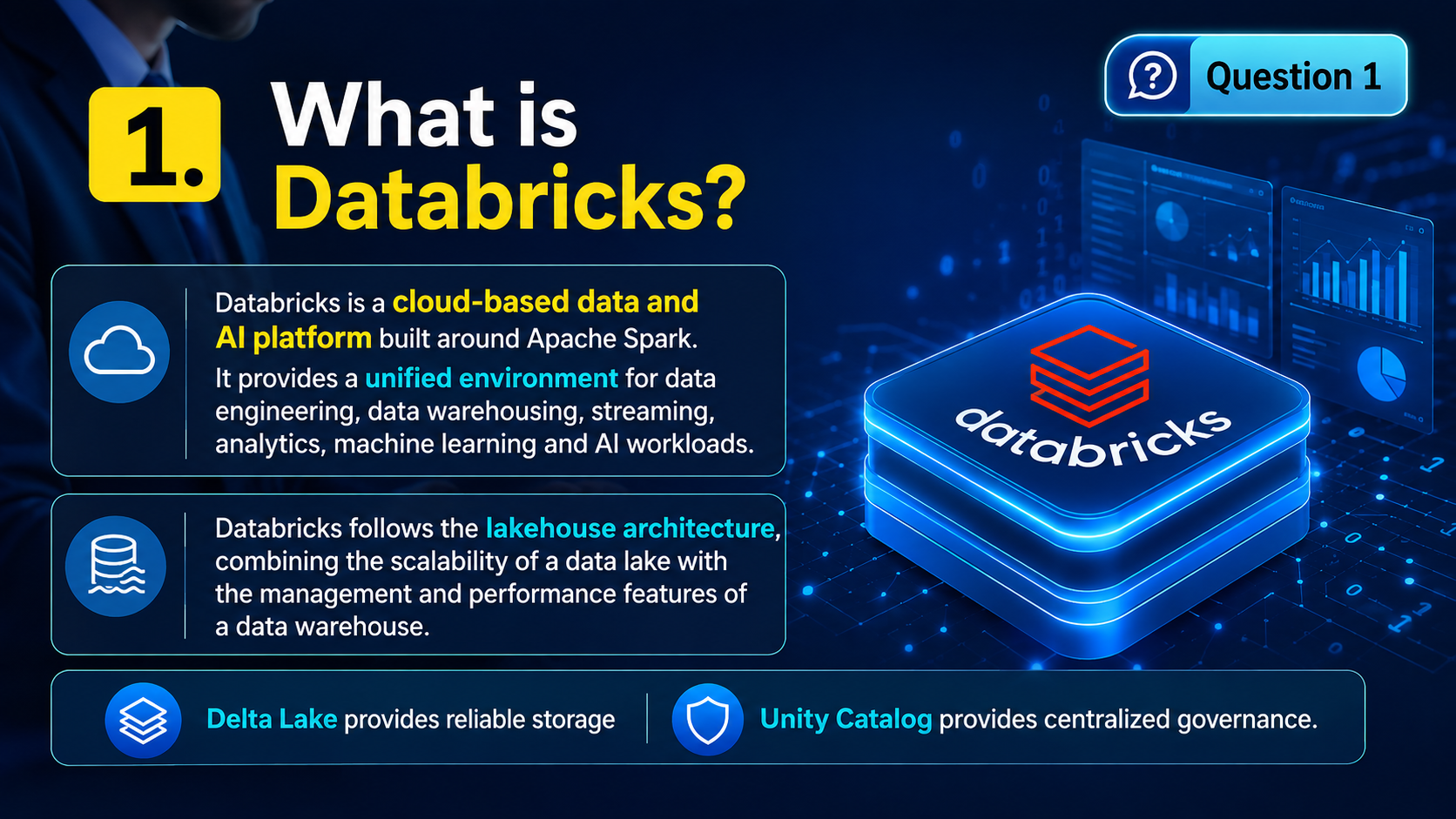
- What is Databricks?
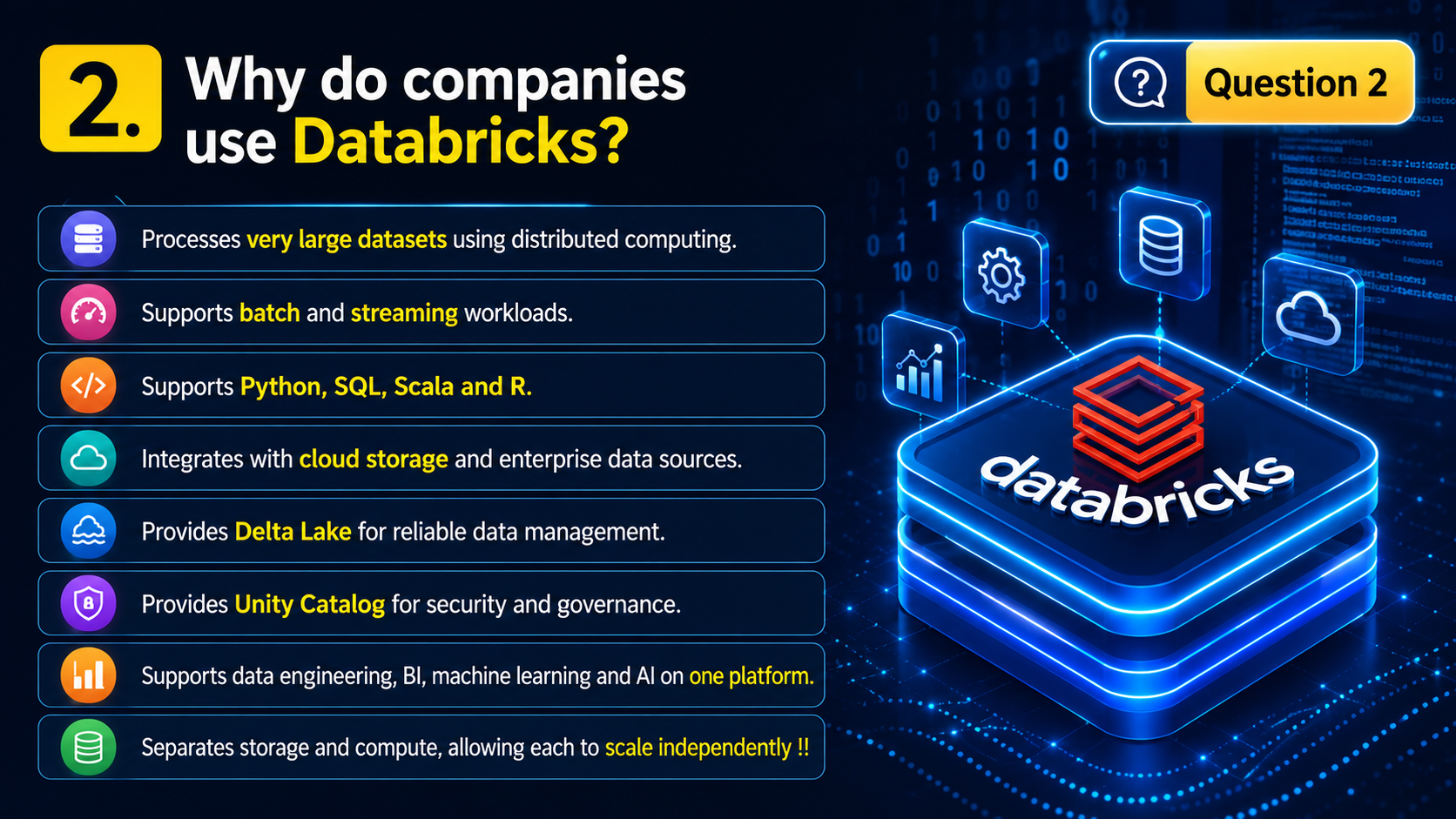
- Why do companies use Databricks?
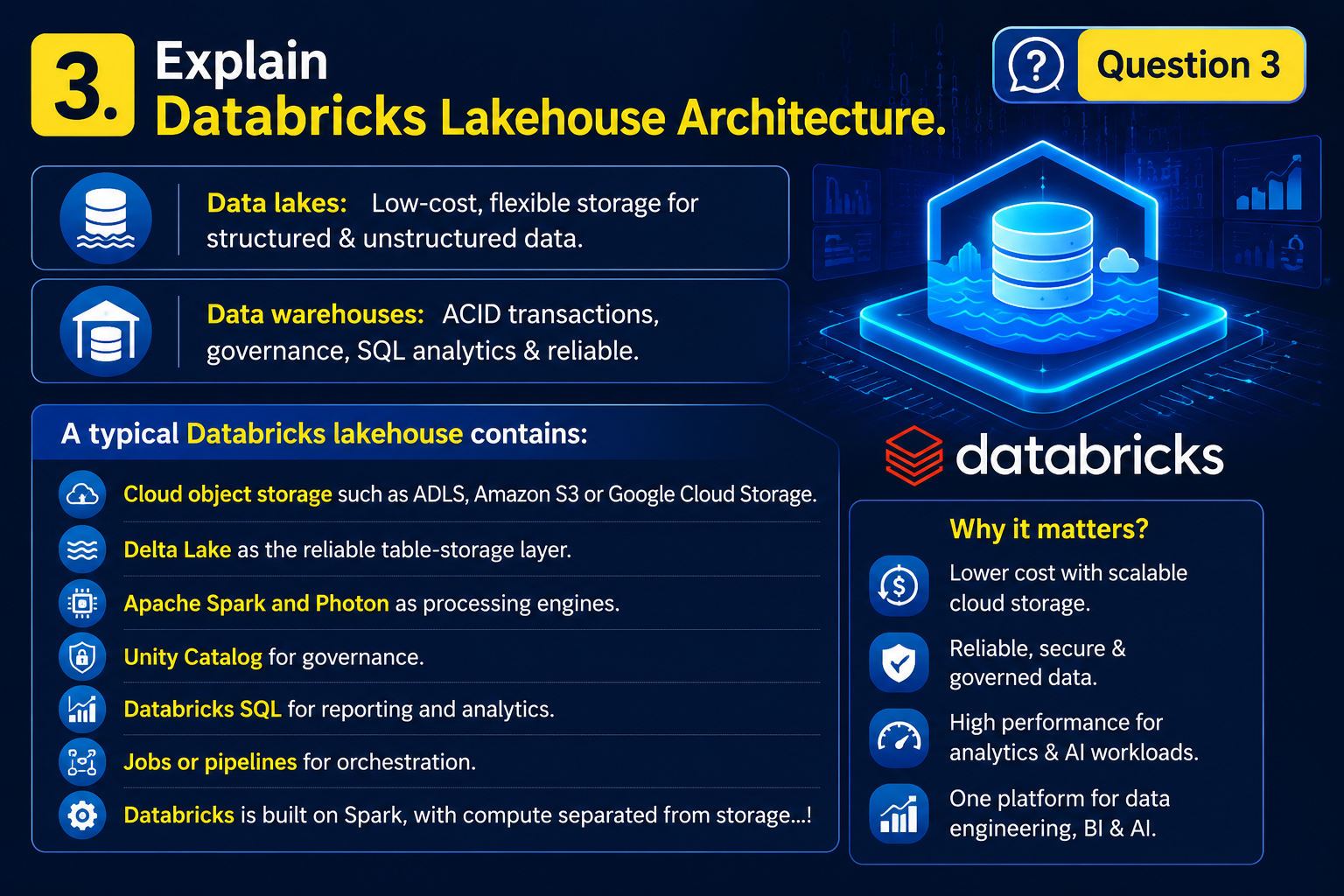
- Explain Databricks Lakehouse Architecture.
- Explain Databricks Lakehouse Architecture.
- Explain Databricks Lakehouse Architecture.
- What is a Databricks Workspace?
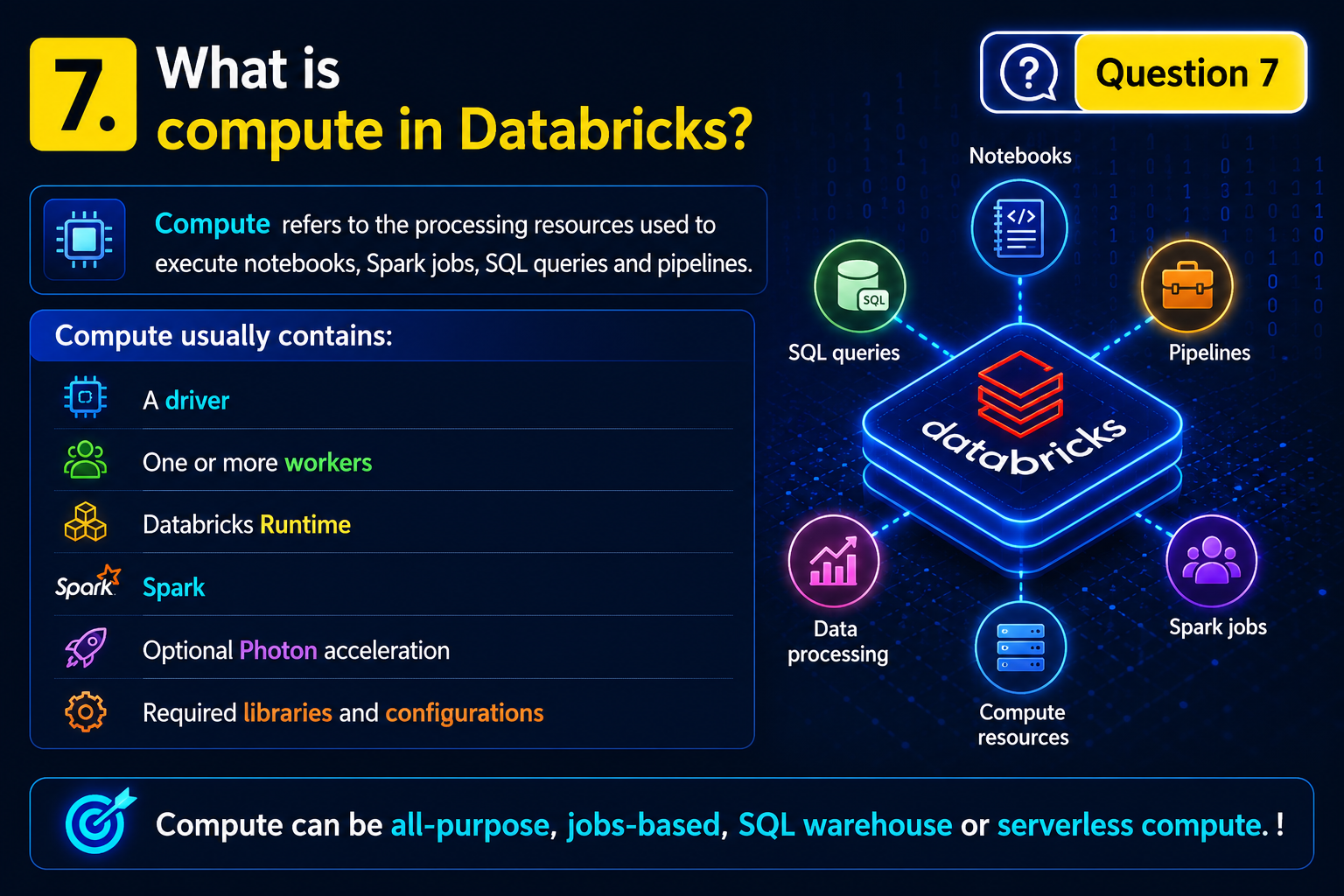
- What is compute in Databricks?
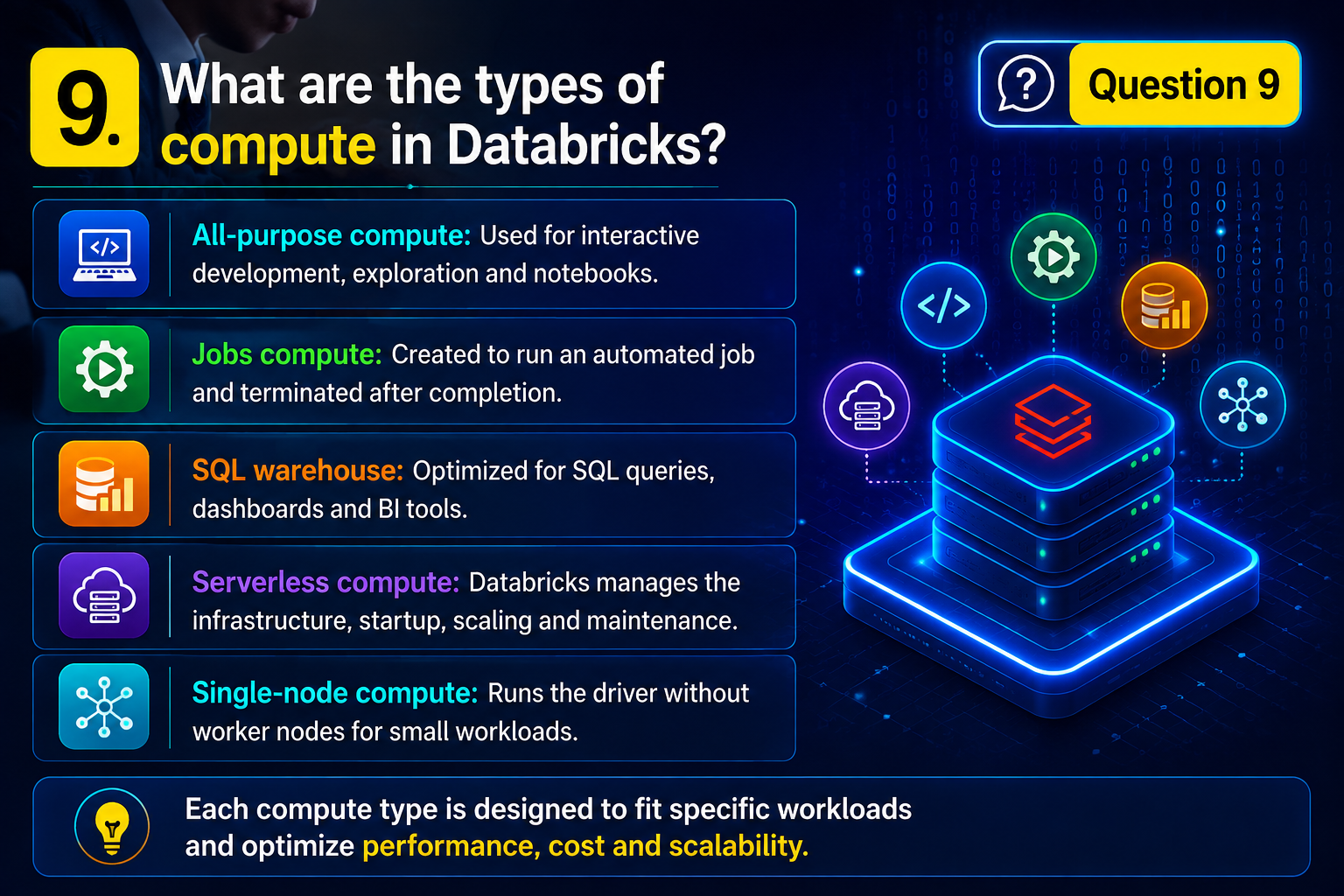
- What are the types of compute in Databricks?
- What are the types of compute in Databricks?
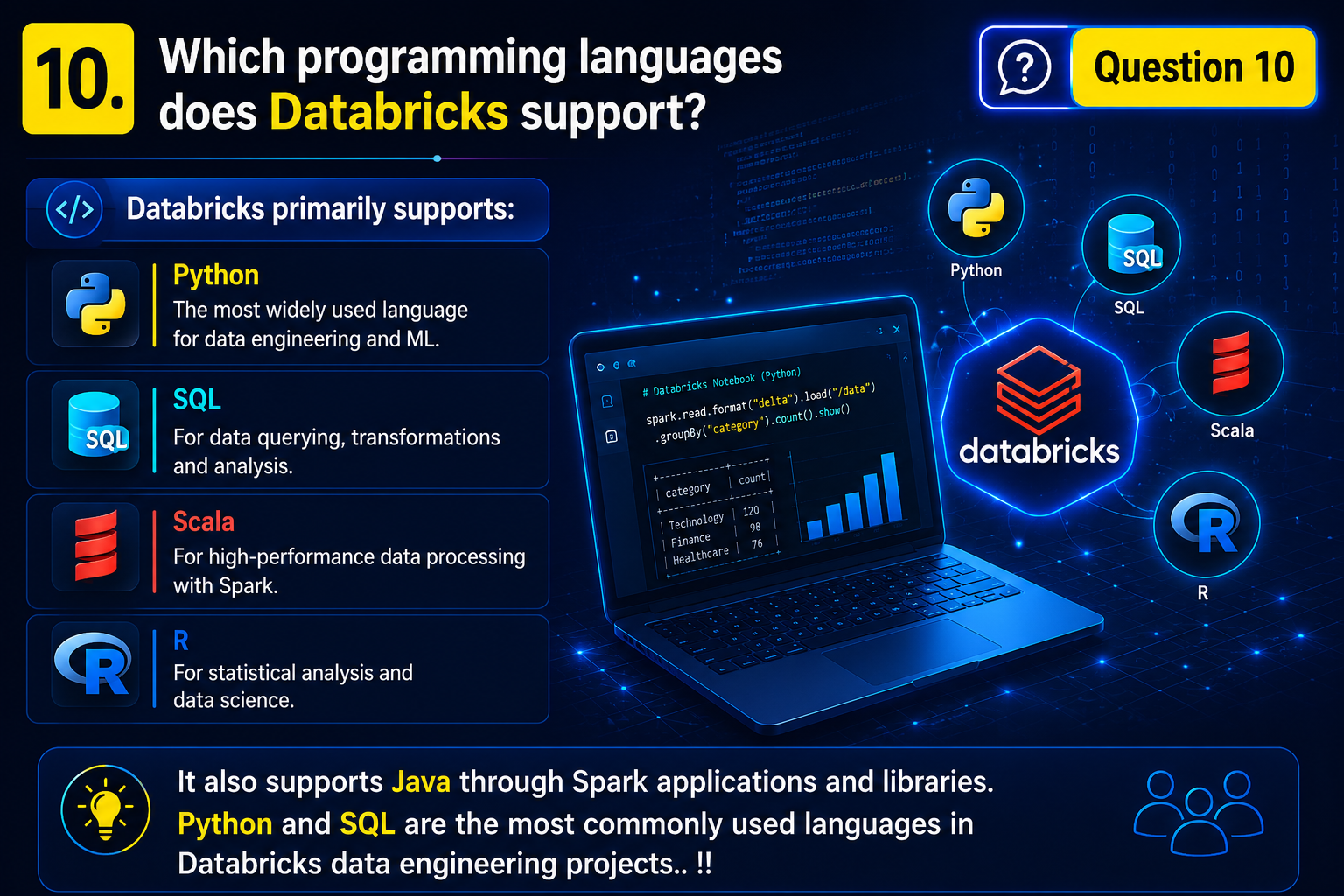
- Which programming languages does Databricks support?
First 10 Databricks Interview Questions and Answers
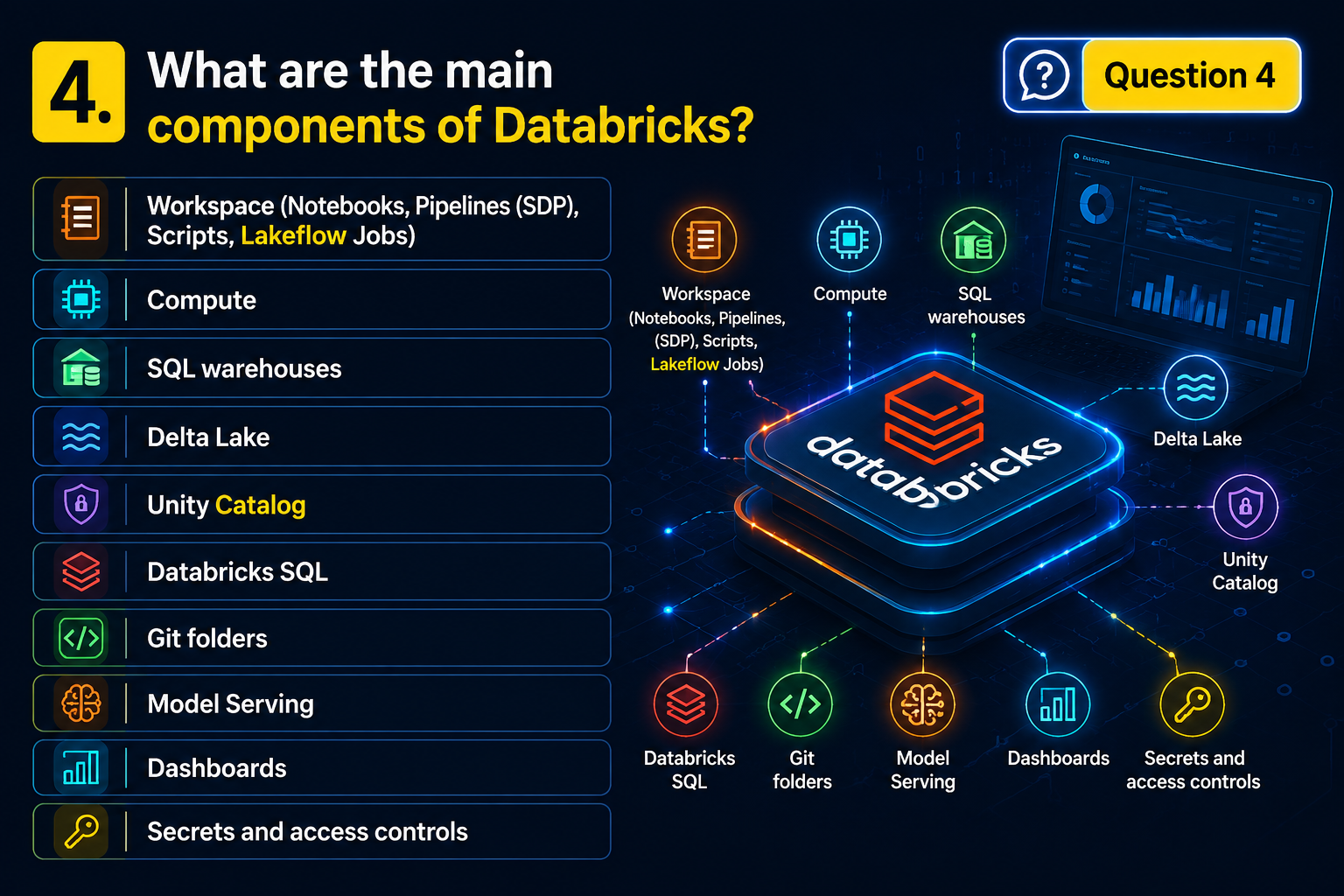
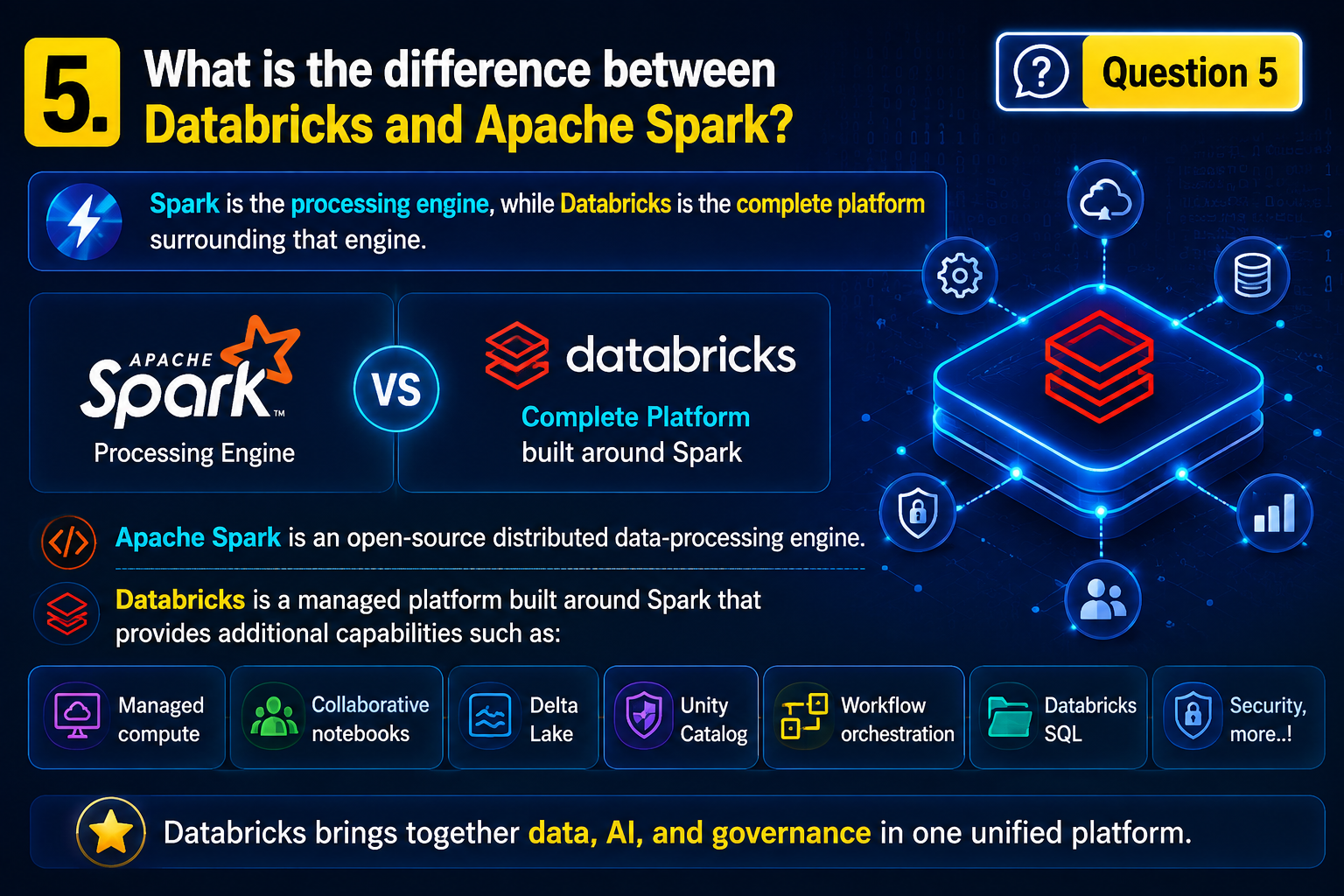
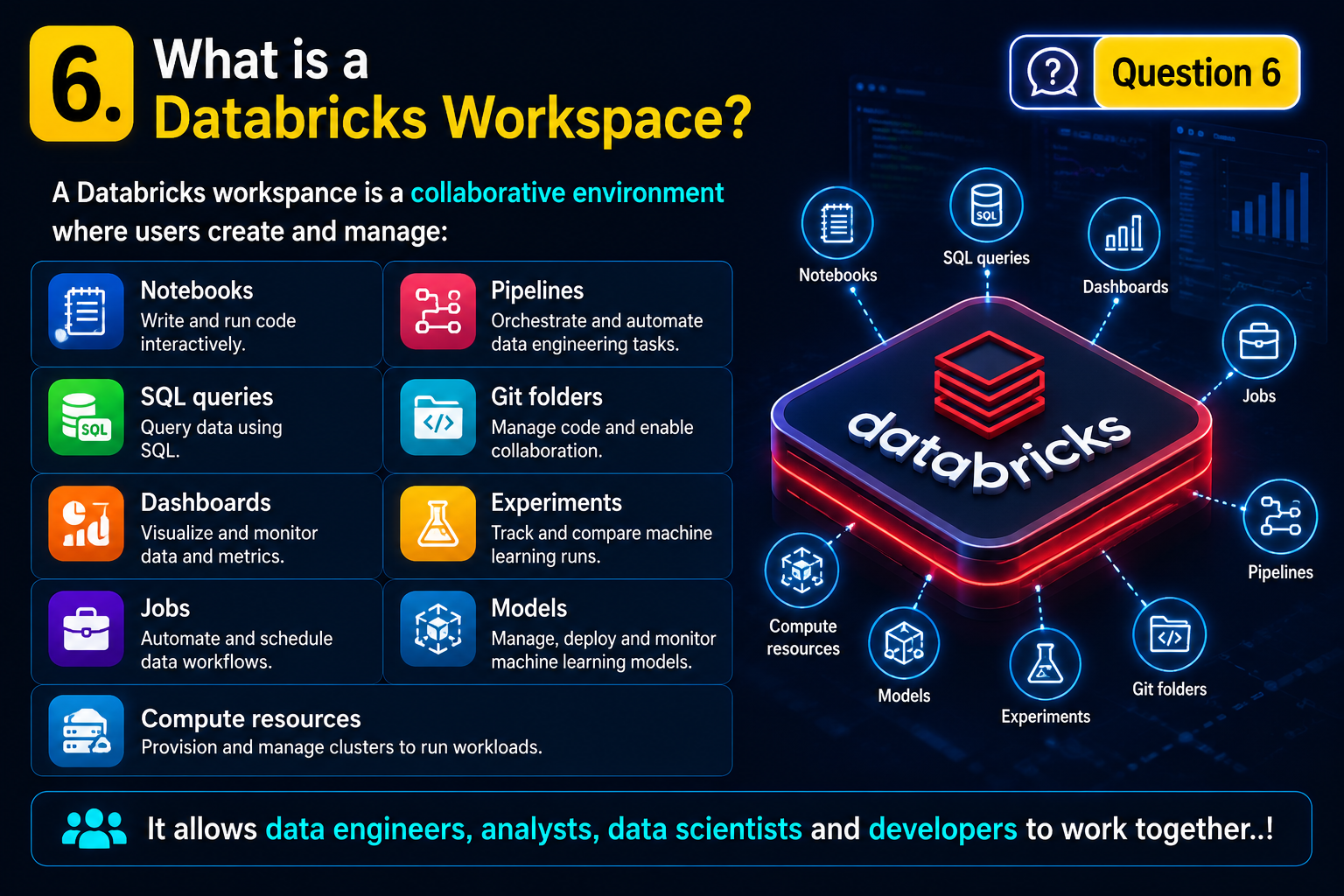
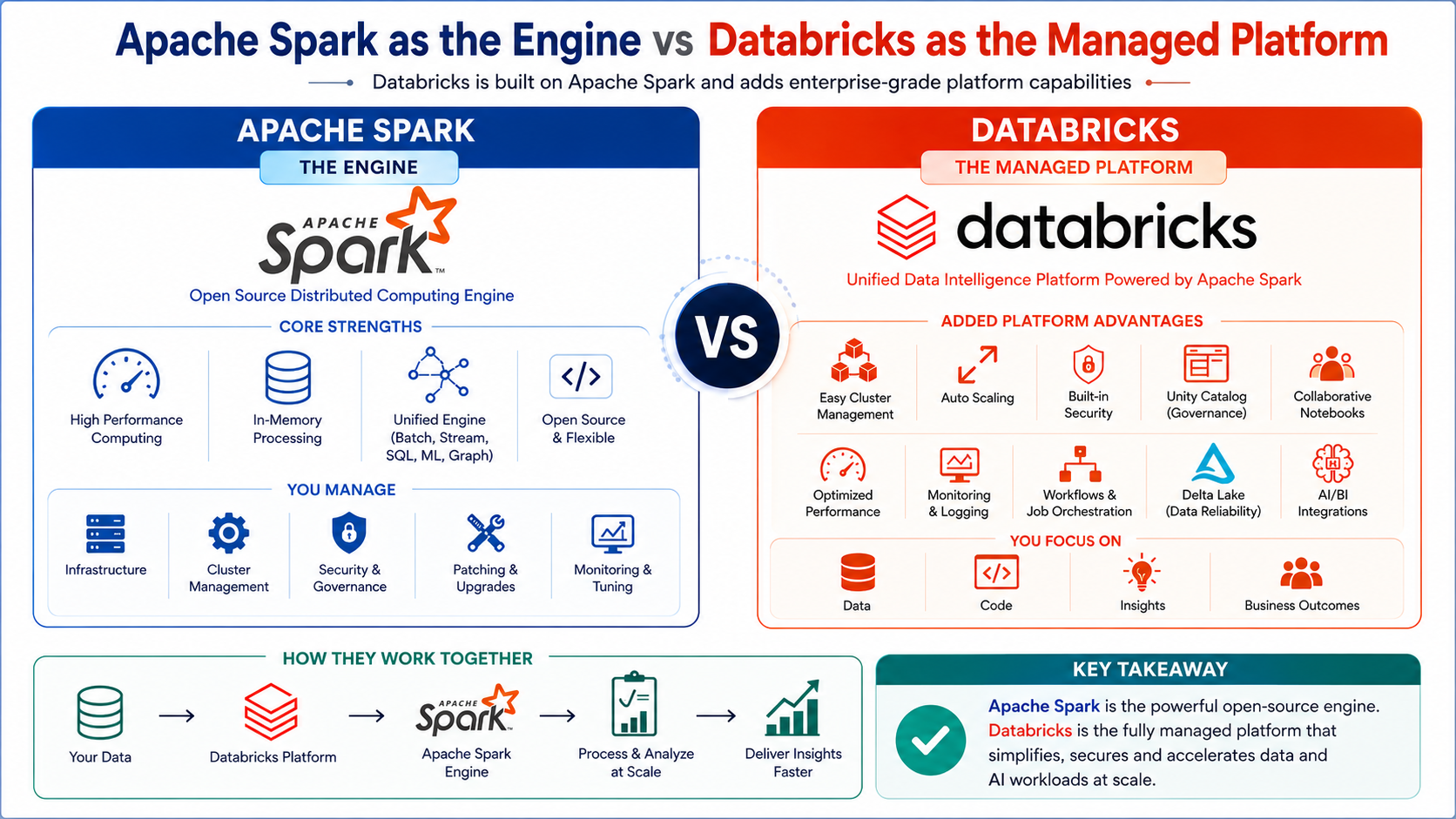
Key Features of Databricks
- Single workspace for data engineering, BI, machine learning and AI.
- Any transaction that requires ACID properties and reliable data management will be performed on top of cloud storage in Delta Lake.
- Centralized governance, security and access control with Unity Catalog.
- Separation of storage and compute — independent, cost-efficient scaling: The separation of storage and compute resources allows you to scale independently without worrying about costs.
- High-level support for multiple languages: Python, SQL, Scala, R, and Java
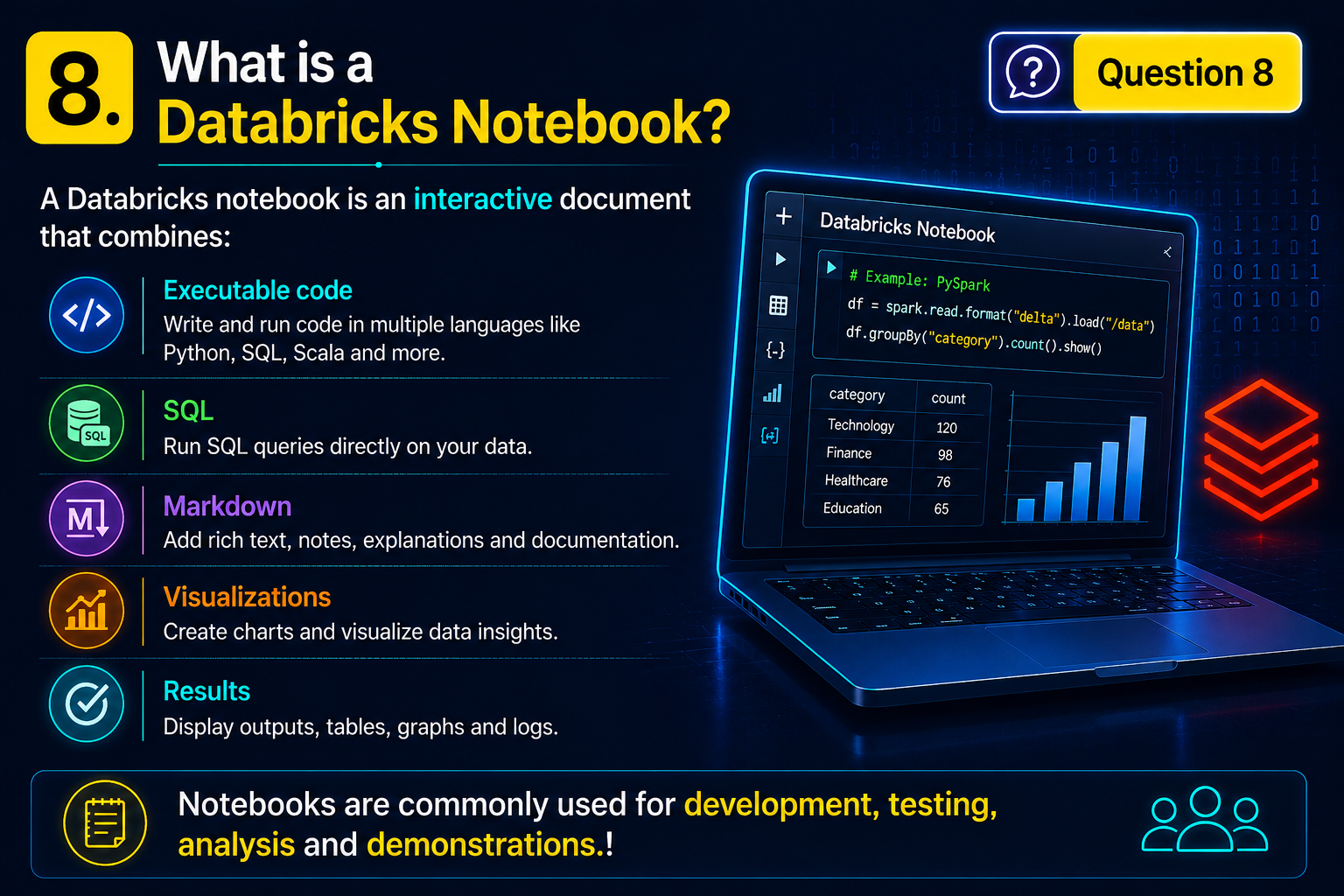
- Collaborative notebooks is the real-time collaboration between engineers, analysts, and data scientists.
- All-purpose Compute, Jobs Compute, SQL Warehouse Compute and Serverless Compute
This is the best way to prepare for Databricks Interview Questions.
The most effective approach to prepare for Databricks interview questions is to take a mix of concept revision and hands-on practice. Take time to run notebooks in an actual Databricks workspace, create simple Delta Lake tables, and play with Databricks permissions in Unity Catalog. In addition to rewriting core Spark concepts as you do in the interview, like partitioning, caching, and joins, are a few areas that interviewers will likely tie into Databricks questions. Your answers will be much more confident when you use mock interviews and scenario-based practice in which you explain ‘why’ a component exists as well as ‘what’ it does.
Conclusion
With the adoption of the lakehouse model by companies, Databricks interview questions can no longer be recognized just in niche big data jobs, but they also appear in Azure Data Engineer, Azure Data Analyst, and Azure Business Intelligence interviews. Once you understand what Databricks is, how it’s architected and the 10 questions listed above, you’ll be ready to tackle most interview scenarios with confidence. For structured, hands-on training that provides deeper insight into Databricks, PySpark, Unity Catalog, and real-time project applications, SQL School’s Azure Databricks training program’s hands-on approach is designed to get you to job-ready.