The Modern Data Revolution: Why Azure and Snowflake Are Leading the Future
Every organization today is becoming a data-driven organization.
From banking transactions and healthcare records to e-commerce purchases and IoT sensor streams, businesses generate massive amounts of data every second. The challenge is no longer collecting data—it’s storing, processing, securing, and transforming that data into actionable insights.
This is where Microsoft Azure and Snowflake have emerged as two of the most powerful data platforms in the world.
While Azure offers a complete ecosystem for cloud computing, analytics, AI, and data engineering, Snowflake focuses on delivering a highly scalable and fully managed cloud data platform designed specifically for modern analytics.
The question many professionals and organizations ask is:
Should you choose Azure or Snowflake?
Let’s explore both platforms from a business, technical, and career perspective.
What is Azure?
Microsoft Azure is one of the world’s largest cloud platforms that provides hundreds of services for:
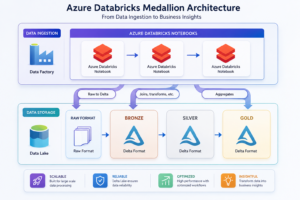
- Data Engineering
- Data Warehousing
- Artificial Intelligence
- Machine Learning
- Business Intelligence
- Security
- Application Development
- DevOps
Azure is not a single product.
Instead, it is a complete ecosystem where different services work together to build enterprise-grade data platforms.
Key Azure Data Engineering Services
Data Storage
- Azure Data Lake Storage (ADLS)
- Azure SQL Database
- Azure Blob Storage
Data Integration
- Azure Data Factory (ADF)
- Azure Logic Apps
- Azure Functions
Analytics & Processing
- Azure Synapse Analytics
- Azure Databricks
- Spark Pools
Real-Time Analytics
- Azure Event Hub
- Azure IoT Hub
- Azure Stream Analytics
Reporting
- Power BI
Security
- Azure Key Vault
- Azure Active Directory
Azure Data Engineering typically combines many of these services into one integrated solution.
What is Snowflake?
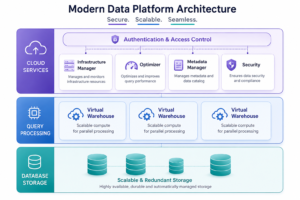
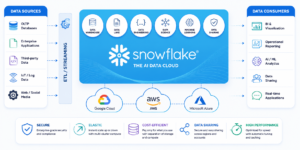
Snowflake is a cloud-native Data Cloud platform built specifically for data storage, analytics, AI workloads, and secure data sharing.
Unlike traditional data warehouses, Snowflake was designed from the ground up for the cloud.
Its biggest innovation is:
Separation of Storage and Compute
This allows organizations to scale storage and compute independently.
As a result:
- Faster analytics
- Better performance
- Lower operational effort
- Simplified administration
Snowflake runs on:
- Microsoft Azure
- Amazon AWS
- Google Cloud Platform
making it a truly multi-cloud solution.
Azure vs Snowflake: Understanding the Core Philosophy
Think of Azure as a complete city.
Inside Azure you have:
- Roads
- Airports
- Offices
- Security Systems
- Utilities
- Transportation
Everything is available within the same ecosystem.
Snowflake, on the other hand, is like a luxury smart building built specifically for analytics and data management.
It does fewer things than Azure—but it performs those tasks exceptionally well.
Architecture Comparison: Azure vs Snowflake
Azure Architecture
Source Systems
↓
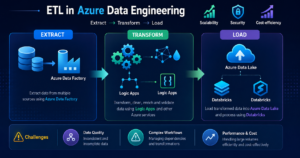
Azure Data Factory
↓
Azure Data Lake
↓
Azure Databricks / Synapse
↓
Power BI
Azure provides complete control over:
- Data Ingestion
- Storage
- Transformation
- Analytics
- Visualization
Snowflake Architecture
Data Sources
↓
Snowpipe
↓
Storage Layer
↓
Virtual Warehouses
↓
Analytics / AI / BI
Snowflake focuses on simplicity and automation.
Most infrastructure management tasks are handled automatically.
Key Components Comparison
| Capability | Azure | Snowflake |
|---|---|---|
| ETL | Azure Data Factory | Snowpipe |
| Data Warehouse | Synapse Analytics | Snowflake Warehouse |
| Data Lake | ADLS | External/Internal Storage |
| Big Data | Azure Databricks | Snowpark |
| AI | Azure OpenAI, AI Studio | Cortex AI |
| Visualization | Power BI | Power BI, Tableau |
| Streaming | Event Hub | Snowpipe Streaming |
| Governance | Purview, Key Vault | Built-In Governance |
| Cloud Support | Azure | Azure, AWS, GCP |
Data Engineering Tools in Azure
Azure Data Factory (ADF)
Azure Data Factory acts as the backbone of data integration.
Features:
- Pipeline Automation
- Scheduling
- Incremental Loads
- Data Migration
- Monitoring
Best for:
- Enterprise ETL Projects
- Hybrid Data Integration
Azure Databricks
One of the most popular Big Data processing platforms.
Features:
- Spark SQL
- Python
- PySpark
- Delta Lake
- Auto Loader
- Unity Catalog
Ideal for:
- Large Scale Data Processing
- Real-Time Analytics
- AI Projects
Azure Synapse Analytics
A unified analytics service combining:
- SQL Warehousing
- Data Integration
- Spark Analytics
Benefits:
- Enterprise Reporting
- Large Scale Analytics
- Power BI Integration
Data Engineering Tools in Snowflake
Snowpipe
Automates continuous data ingestion.
Advantages:
- Real-Time Data Loading
- Event-Based Processing
- Low Maintenance
Virtual Warehouses
Dedicated compute clusters.
Benefits:
- Independent Scaling
- Performance Isolation
- Auto Suspend
- Auto Resume
Time Travel
Allows querying previous versions of data.
Advantages:
- Easy Recovery
- Auditing
- Troubleshooting
Zero-Copy Cloning
Create instant copies of databases without consuming additional storage.
Perfect for:
- Development
- Testing
- Sandbox Environments
Cortex AI
Snowflake’s next-generation AI platform.
Capabilities:
- Generative AI
- NLP Processing
- Semantic Search
- AI-Powered Analytics
Cortex AI has become one of Snowflake’s strongest differentiators in 2026.
Performance and Scalability
Azure
Azure provides tremendous flexibility.
Organizations can independently scale:
- Databricks Clusters
- Synapse Pools
- Data Factory Integration Runtime
- Data Lake Storage
Ideal for enterprises with highly customized workloads.
Snowflake
Snowflake automatically handles:
- Scaling
- Optimization
- Resource Management
This reduces operational overhead significantly.
Organizations can focus more on analytics rather than infrastructure management.
AI and Machine Learning Capabilities
Azure AI Ecosystem
Microsoft has aggressively invested in AI.
Key Services:
- Azure OpenAI
- Azure Machine Learning
- Microsoft Fabric Copilot
- Cognitive Services
Advantages:
- Enterprise AI Development
- Custom AI Models
- Advanced Data Science
Snowflake Cortex AI
Snowflake brings AI directly into the data platform.
Benefits:
- No Data Movement
- Faster AI Adoption
- Simplified Model Integration
Ideal for organizations seeking AI-driven analytics without managing complex AI infrastructure.
Career Perspective: Which Platform Should You Learn?
Choose Azure If You Want To Become:
- Azure Data Engineer
- Azure Architect
- Azure Administrator
- Microsoft Fabric Engineer
- Cloud Solution Architect
Choose Snowflake If You Want To Become:
- Snowflake Developer
- Snowflake Data Engineer
- Snowflake Architect
- Analytics Consultant
- Cloud Data Specialist
FAQs
Is Azure better than Snowflake?
Not necessarily. Azure offers a complete cloud ecosystem, while Snowflake specializes in cloud data warehousing and analytics.
Can Snowflake run on Azure?
Yes. Snowflake is available on Microsoft Azure, AWS, and Google Cloud.
Which has more job opportunities?
Azure currently has broader opportunities due to its wider ecosystem. Snowflake roles, however, often command premium salaries.
Should beginners learn Azure or Snowflake first?
Most beginners start with Azure Data Engineering fundamentals and then expand into Snowflake.
Conclusion: Azure vs Snowflake
If your organization is deeply invested in Microsoft technologies and requires a complete cloud ecosystem, Azure is the ideal choice.
If your organization wants a highly scalable, fully managed, multi-cloud analytics platform with minimal administration, Snowflake is the ideal choice.
For aspiring Data Engineers, mastering both technologies provides a significant competitive advantage and opens doors to some of the highest-paying cloud data roles in 2026.
Azure VS Snowflake Notes: Download Here
#AzureVsSnowflake #Azure #Snowflake #DataEngineering #CloudComputing #AzureDataFactory #AzureSynapse #AzureDatabricks #DataLake #DataWarehouse #BigData #ETL #ELT #PowerBI #DataAnalytics #CloudDataPlatform #DataEngineer #MicrosoftAzure #SnowflakeDataEngineer #SQLSchool
Trainer: Mr. Sai Phanindra
With 20+ Years of
technical expertise exclusively on SQL & Database Technologies, I assure you 100% Practical, Step by Step Classes.
Linkdin Profile: www.linkedin.com/in/saiphanindra/
Contact No: +91 9030040801 or +91 9666640801