
This exam is an opportunity to demonstrate your knowledge of core data concepts and related Microsoft Azure data services. As a candidate for this exam, you should have familiarity with Exam DP-900’s self-paced or instructor-led learning material
Training Highlights
✅ Microsoft DP-900 Exam Preparation
✅ Beginner-Friendly – No Prior Azure Experience Required
✅ Hands-on Azure Portal & Practical Labs
✅ Azure SQL, Cosmos DB & Data Lake Fundamentals
✅ Azure Synapse Analytics & Microsoft Fabric Overview
✅ Real-world Cloud Data Use Cases & Industry Best Practices
✅ Mock Tests, Interview Preparation & Certification Guidance
Modules We Learn
✅Module 1: Cloud Concepts
✅Module 2: Core Azure Services
✅Module 3: Azure Solutions and Management Tools
✅Module 4: Azure Storage
✅Module 5: Azure Security, Privacy, Compliance and Trust
✅Module 6: Azure Pricing and Support
✅Module 7: Azure Data Fundamentals
✅Module 8: DP 900 Exam Guidance
DP 900 Course Contents:
Module 1: Core Data Concepts (25–30%)
Ch 1: Introduction to Data
- Understanding data
- Importance of data in IT systems
- Introduction to databases
- Data Management Systems
- On-premises versus cloud databases
- Data Stack Job Roles
Ch 2: Microsoft Azure Fundamentals
- Cloud service models
- IaaS, PaaS and SaaS
- Azure Storage Services
- Azure Cloud Resources
- Database & File Storage
- Data Processing Concepts
- Azure Subscription
Ch 3: Azure Data Services –
- Azure SQL
- Azure SQL Database
- Azure SQL Managed Instance
- Azure SQL VM
- Open-source databases in Azure
- Azure Cosmos DB
- Azure Storage
Ch 4: Azure Data Services – 2
- Azure Data Factory
- Azure Databricks
- Azure Stream Analytics
- Azure Data Explorer
- Microsoft Purview
- Microsoft Foundry
Ch 5: Database Concepts
- Introduction to data workloads
- Understanding transactional workloads
- Online Transaction Processing (OLTP)
- ACID properties in transactional databases
- Understanding analytical workloads
- Online Analytical Processing (OLAP)
- Differences between OLTP and OLAP systems
Module 2: Identify considerations for relational data on Azure (20–25%)
Ch 6: Azure SQL Server
- Azure SQL Services
- Azure SQL Server Deployments
- Azure Logical Server
- Azure SQL Database
Ch 7: Azure SQL Concepts – 1
- Data Definition Language (DDL)
- Data Modification Language (DML)
- Data Query Language (DQL)
- Data Control Language (DCL)
Ch 8: Azure SQL Concepts – 2
- Schemas & Realtime Usage
- Relational Data Storage
- Primary Key, Foreign Key
- Normalization
Ch 9: Azure SQL Concepts – 3
- Object Storage Concepts
- Database Objects
- Views, Procedures
- Functions, Indexes
- Logins & Users
- GRANT, DENY
- WITH GRANT, REVOKE
Ch 10: Azure SQL DB Licensing
- Single Database
- Per Database Licensing
- DTU Licensing
- VCore Licensing
- Hyperscale Concepts
- Elastic Pools
Ch 11: Azure Virtual Machines
- Azure VM Deployments
- Azure VM Configurations
- Processor, Memory
- Logical Server Vs VM
- VM Connections
Ch 12: Azure Managed Instance
- Azure MI Concepts
- Managed Instance Config
- Managed Instance Connections
- Processor, Memory
- Logical Server Vs MI
- Virtual Machine Vs MI
Module 3: Non-Relational Data on Azure (15–20%)
Ch 13: Azure Storage Account
- Azure Storage Account
- Azure Data Lake Storage Account
- Containers, Folders, Files
- Semi-structured Data
- Unstructured Data
- JSON, XML, Parquet, csv
- Hot, Cold, Cool Access Tiers
- Blob Types & Realtime Use
Ch 14: Azure Tables
- Structured Data Sources
- Azure Storage Tables
- Entities & Properties
- Row Key, Partition Key
- OData Queries
Ch 15: Azure ETL Services
- Azure Data Factory
- ADF Concepts, Architecture
- Azure Databricks
- Databricks Concepts
- Data Ingestion Pipelines
- ADF Vs Databricks
Ch 16: Azure Cosmos DB
- NoSQL Database
- Azure Cosmos DB Config
- Cosmos DB Endpoints
- Basic Operations
- Handling JSON Data
Ch 17: Open-Source Databases
- Azure services for open-source DB
- Azure Database for MySQL
- Azure Database for PostgreSQL
- PostgreSQL Flexible Server
- Advantages
Module 4: Analytics Workload on Fabric & Power BI (25–30%)
Ch 18: Microsoft Fabric – 1
- Fabric Components
- Fabric One Lake
- Fabric Warehouse Creation
- Warehouse Operations
Ch 19: Microsoft Fabric – 2
- Fabric Lakehouse Creation
- Fabric Notebooks
- OneLake Shortcuts
- Fabric Stream House
- KQL Databases
Ch 20: Microsoft Fabric – 3
- Mirroring Concept
- DB Mirroring in Fabric
- Read and Write Operations
- Mirror Configurations
- Mirror Monitor
Ch 21: Microsoft Fabric – 4
- Creating Data Models
- Star, Snowflake
- Semantic Data Models
- Relational Modeling
- Analytic Components
- Power BI
Ch 22: DP 900 Certification Preparation
- Domain-wise Revision
- Azure service Identification Questions
- Scenario-Based MCQs
- Microsoft Learn practice Assessments
- Detailed Answer Explanations
Ch 23: DP 900 Mock Examination & Certification Readiness
- Timed mock tests
- Performance Analysis
- Weak-area Review
- Certification Registration Guidance
- Final Exam Preparation Checklist
Ch 24: DP 900 Exam Samples
- Previous Exam Papers
- Exam Tips
- Exam Recommendations
- Resume Tips & Tricks
What is the DP-900 certification exam?
DP-900 (Microsoft Azure Data Fundamentals) is an entry-level Microsoft certification that validates your knowledge of core data concepts and Azure data services — including relational data, non-relational data, and analytics workloads on Azure.
Who should take the DP-900 exam?
- Freshers entering the data/cloud domain
- IT professionals exploring Azure data services
- Business analysts, developers, or DBAs starting their cloud journey
- Anyone with no prior Azure experience — beginner-friendly!
What are the prerequisites for DP-900?
There are no mandatory prerequisites. Basic familiarity with data concepts is helpful, but all topics are covered from scratch. No coding experience is required.
What topics are covered in the DP-900 exam?
The exam covers 4 major areas:
- Core Data Concepts (25–30%)
- Relational Data on Azure (20–25%)
- Non-Relational Data on Azure (15–20%)
- Analytics Workloads on Azure (25–30%) — including Power BI, Azure Synapse, and Microsoft Fabric
Can DP-900 help me get a job or advance my career?
Yes! DP-900 is a strong foundation cert that adds credibility to your profile. It also prepares you for higher-level Azure certifications like DP-300 (Azure Database Administrator) and DP-700/DP-800 (Microsoft Fabric Engineer).
What training modes does SQL School offer for DP-900?
SQL School offers two modes:
- LIVE Online Training — Instructor-led, interactive, with step-by-step guidance and assignments
- Self-Paced Videos — On-demand, practical videos with concept-wise assignments
Both follow the same curriculum. Trainer support available for doubts & reviews.
How long does it take to prepare for DP-900?
With focused study, most candidates can prepare in 2–4 weeks. SQL School’s structured training covers all exam objectives with hands-on practice, making preparation faster and more effective.
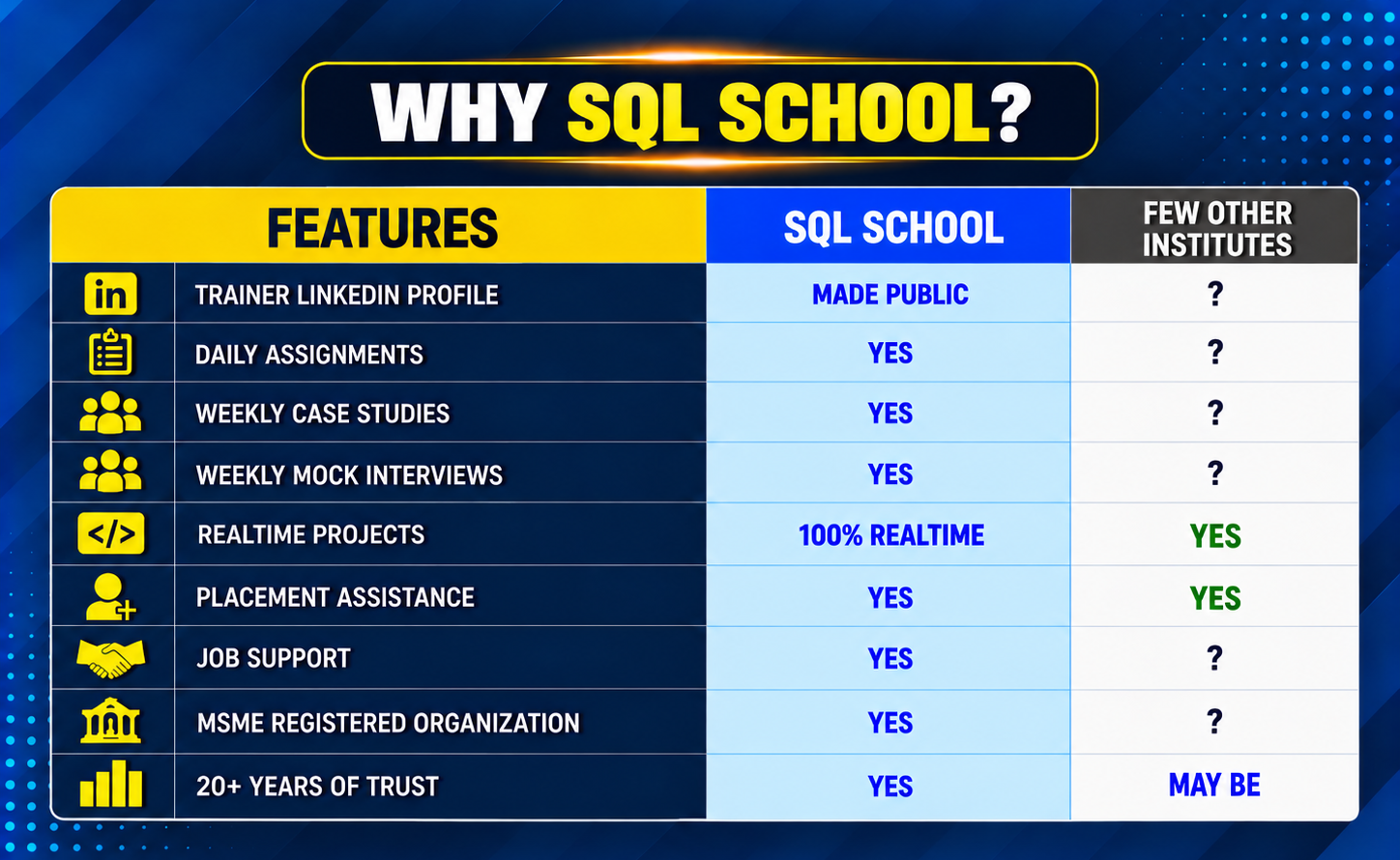
Why choose SQL School for DP-900 training?
- 100% Real-Time and Practical
- ISO 9001:2008 Certified
- Concept wise FAQs
- TWO Real-time Case Studies, One Project
- Weekly Mock Interviews
- 24/7 LIVE Server Access
- Placement Assistance
- Realtime Project FAQs
Demo Videos
Training Modes





Why Choose SQL School
- 100% Real-Time and Practical
- ISO 9001:2008 Certified
- Concept wise FAQs
- TWO Real-time Case Studies, One Project
- Weekly Mock Interviews
- 24/7 LIVE Server Access

- Realtime Project FAQs
- Course Completion Certificate
- Placement Assistance
- Job Support
- Realtime Project Solution
- MS Certification Guidance