Training Highlights

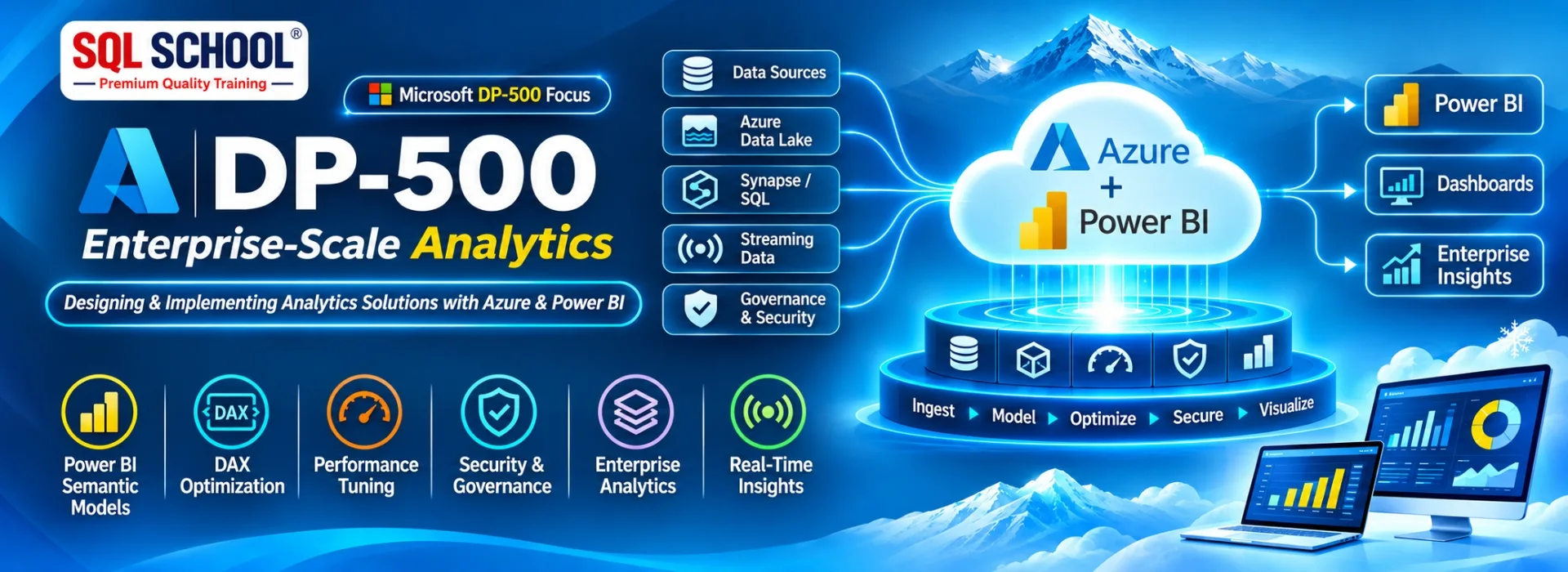
✅ Implementing & Managing an Analytics Environment
✅ Querying & Transforming Data Using Power BI and Azure Synapse Analytics
✅ Designing & Developing Advanced Data Models
✅ Creating Interactive Reports & Dashboards
✅ Advanced DAX, Power Query & Data Visualization
✅ Implementing Row-Level Security (RLS) & Data Governance
✅ Optimizing Power BI Performance & Semantic Models
✅ Deploying, Managing & Maintaining Analytics Solutions

Modules We Learn: 

✅ Module 1: Enterprise-Scale Analytics Environment (Azure & Power BI)
✅ Module 2: Data Querying & Transformation (Power Query, SQL, Azure Synapse)
✅ Module 3: Enterprise Data Modeling (Star Schema, DAX, Semantic Models)
✅ Module 4: Power BI Administration, Security & Governance (RLS, Gateways, Deployment Pipelines)
✅ Module 5: Advanced Analytics, Performance Optimization & Real-Time Projects

Which Azure Databricks feature provides centralized data governance and access control?

A. Delta Lake
B. Unity Catalog
C. Auto Loader
D. Lakeflow Jobs

Which feature incrementally ingests new files from cloud storage?

A. Delta Sharing
B. SQL Warehouse
C. Auto Loader
D. Delta Live Tables

Which Azure Databricks feature is used to schedule and orchestrate data pipelines?

A. Unity Catalog
B. Delta Sharing
C. Lakeflow Jobs
D. SQL Editor

Which technology processes real-time data streams in Azure Databricks?

A. Spark Structured Streaming
B. Azure Data Studio
C. Delta Sharing
D. Unity Catalog

Which feature enables secure data sharing across organizations without copying datasets?

A. Auto Loader
B. Delta Sharing
C. Lakeflow Jobs
D. SQL Warehouse

Microsoft SQL Training FAQ's

What is Microsoft SQL Job Role?

A Microsoft SQL Developer / Admin is responsible for designing, developing, managing, and securing databases using Microsoft SQL Server (T-SQL). The role involves writing SQL queries, stored procedures, triggers, and functions, managing indexes, views, and transactions, and ensuring the security, performance, and availability of SQL databases. SQL professionals work closely with application developers, DBAs, and analysts to build and support data-driven applications and solutions.

What are the Job Roles of a Microsoft SQL Professional?

💼 Top Job Roles:

1️⃣ Design and create relational database structures
2️⃣ Develop T-SQL code: queries, procedures, functions, triggers
3️⃣ Ensure data integrity and implement constraints
4️⃣ Tune queries and optimize database performance
5️⃣ Manage backups, restores, and high availability
6️⃣ Secure databases with roles, permissions, and encryptions and more..!

What does our Microsoft SQL Training course contains?

The course is carefully curated with below module:
👉🏻Module 1: MSSQL & TSQL Queries
👉🏻Module 2: TSQL Programming
👉🏻Module 3: Query Tuning
👉🏻Module 4: Azure SQL Dev

Who can join this course?

  • Freshers aiming for a career in database development or administration

  • Developers seeking expertise in SQL Server backend development

  • DBAs looking to upskill in performance tuning and security

  • ETL professionals working with SQL as a data source

  • Anyone interested in mastering SQL Server and T-SQL

No prior coding experience is required. All concepts are taught from scratch

What training modes are available?

Option 1:        LIVE Online Training  (100% Interactive, step by step, assignments)

Option 2:        Self Paced Videos (100% practical, step by step with concept wise assignments)

You may choose any one of these options, same curriculum!

I (Trainer) shall be available for doubts and clarifications, assignment check and review.

Why should I choose SQL School for Microsoft SQL training?

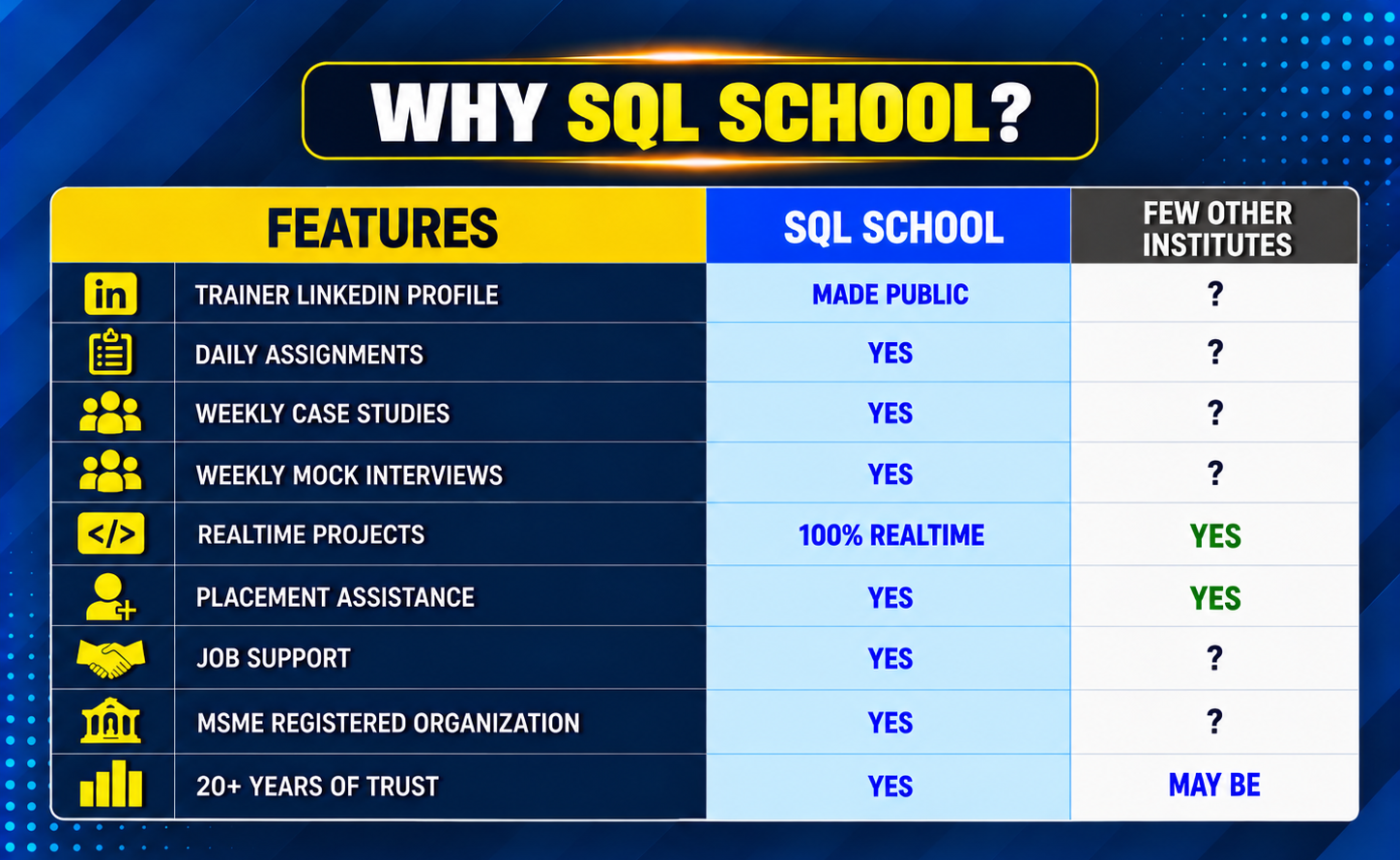
👉🏻 Every session is Practical, Step by Step with Concept wise FAQs !!

👉🏻 100% results with on-time practice.  Daily Tasks for every session.

👉🏻 Concept wise tasks be submitted before next class for Job Waiters / Starters.

👉🏻 Concept wise tasks due for submission by Weekends for Working Professionals.

Demo Videos

Why SQL SCHOOL?

Training Modes

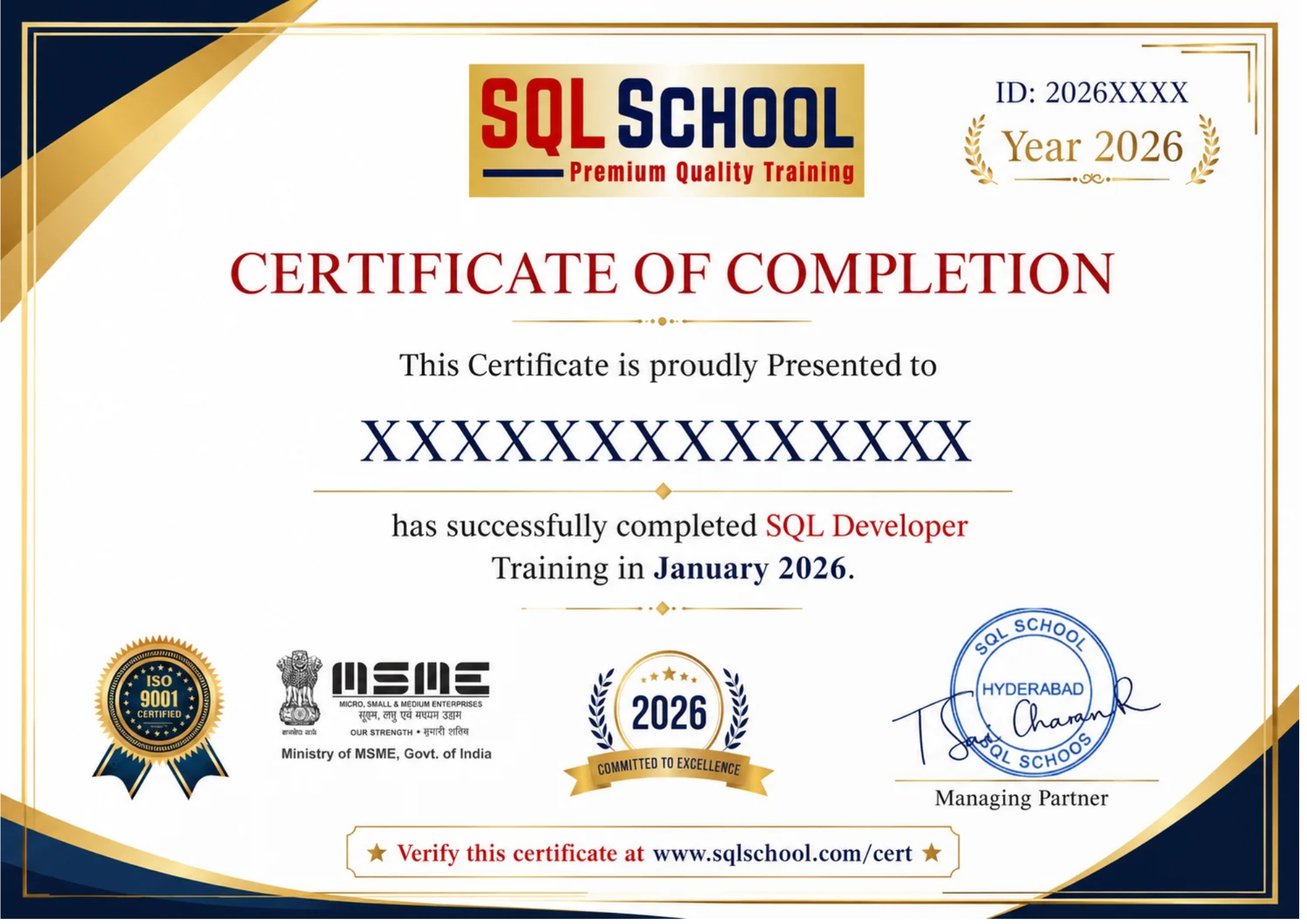
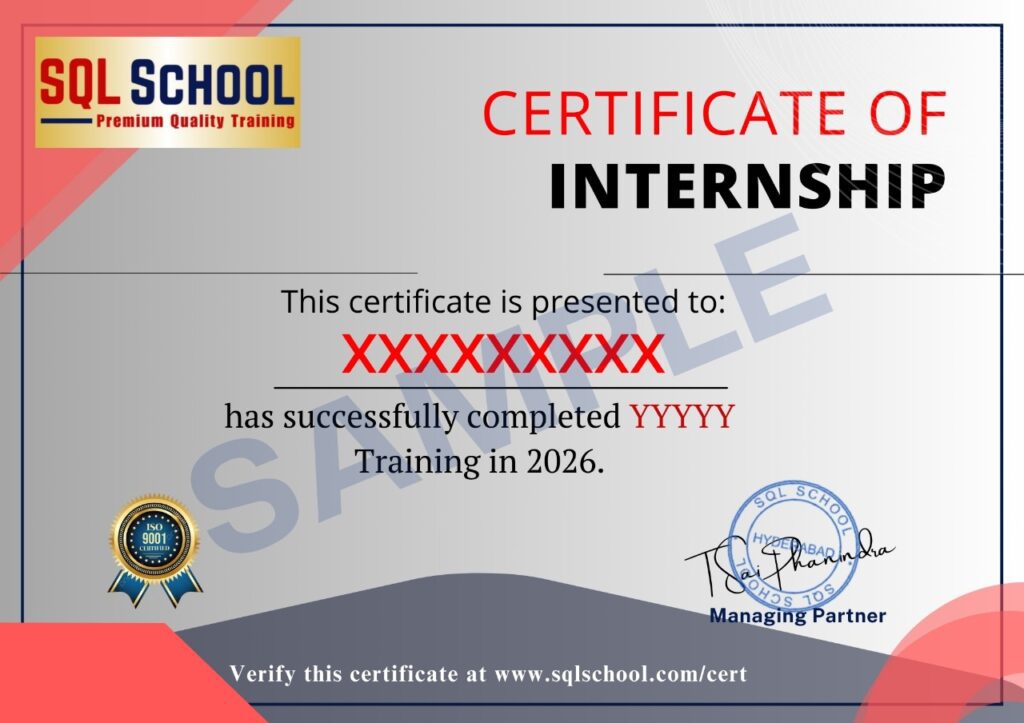
SQL Developer Training Certificate from SQL School recognizing completion of SQL programming, database development, T-SQL queries, stored procedures, functions, and database management training.