No. Python is taught from the fundamentals — print statements, variables, operators, data types, lists, dictionaries, loops, and decision making.
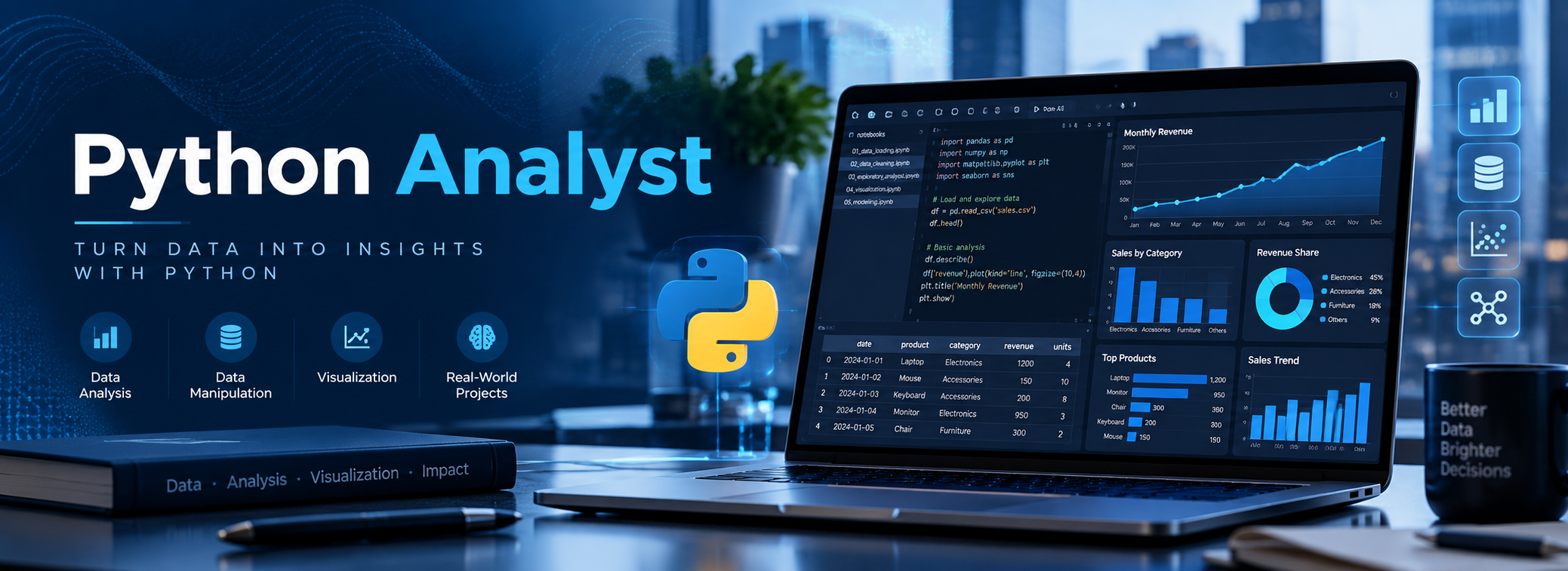
A Python Analyst uses Python programming to analyze, visualize, and interpret data for business insights. They work with libraries like Pandas, NumPy, Matplotlib, and Seaborn to handle and explore datasets efficiently. They collaborate with teams to translate raw data into actionable strategies and reports. This role is in high demand across sectors like finance, healthcare, e-commerce, and tech.
Training Highlights
✅ Hands-On Coding Practice
✅ Real-Time Banking / Finance Case Study
✅ Python Fundamentals to Advanced Analytics
✅ Pandas & NumPy Data Handling
✅ SQL Database Integration
✅ Data Cleaning, Transformation & Analysis
✅ AI-Assisted Debugging
✅ Job-Oriented, Career-Relevant Skills
Modules We learn
✅ Module 1: Python Analytics
✅ Module 2: Real-time Project
Python Analyst
Course Contents:
Module 1 : Python Analytics
Chapter 1: Python Introduction
- Python introduction
- Python versions
- Python job roles
- Role of Python in data projects
Chapter 2: Python Architecture
- Python architecture
- PVM: Python Virtual Machine
- Compiler and byte code
- Execution process
- Python implementations
Chapter 3: Python Installations
- Python installation
- Anaconda installation
- Python IDE and usage
- Jupyter Notebooks
Chapter 4: Python Print Statement
- Python print statement
- Using print()
- Testing case sensitivity
- Single-line and multi-line output
- Working with single quotations
- Debugging with AI assistants
Chapter 5: Python Variables
- Python variables
- Assigning values
- Purpose and naming rules
- Reading variable values
- Multiple variables and print()
Chapter 6: Python Operators & String Literals
- Arithmetic operators
- Python string literals
- Single and double quotes
- Formatted strings (f-strings)
- Comparison and indexing operators
Chapter 7: Python Data Types
- Python data types
- Integer, float and string data types
- Type casting
- Type identification
- Multiple-value assignments
Chapter 8: Python Lists
- Creating Python lists
- Printing list items
- List slicing
- Length and type
- Empty lists and append
- Loops and list updates
Chapter 9: Python Dictionaries
- Python dictionaries
- Indexing dictionaries
- Editing key values
- Lists inside dictionaries
- Delete and clear operations
Chapter 10: Python Tuples
- Defining and indexing tuples
- len() and type()
- Mixed values in tuples
- Tuple reassignment / overwriting concepts
Chapter 11: IF…ELSE Conditions
- if / else conditions
- if / elif / else and shorthand if
- Composite conditions
- Indentation and pass statement
- in and negation operators
- Range-based conditions
Chapter 12: Python Loops
- for loops
- for loop with range
- for loop with sequence values
- while loop and exit conditions
- Nested loops
- Control statements
- break, continue and pass
Chapter 13: Python File Handling
- File handling activities
- Open, read, write and close files
- Appending and overwriting
- Using os and path.exists
- File read/write methods
Chapter 14: Python DataFrames
- DataFrame creation
- Pandas DataFrames
- DataFrames from a single list
- DataFrames from dictionaries
- Displaying DataFrames and list items
- Identifying and replacing nulls; NumPy usage
Chapter 15: Python SQL Database Access
- SQL database access with Python
- Pandas DataFrame integration
- pyodbc module and SQL functions
- SQL database cursor connections
- SQL query execution: DDL and DML
- Filters and aggregations with SQL
- DataFrame usage with SQL
Chapter 16: DataFrame Transformations – I
- DataFrame transformations
- Concat and append concepts
- Merge function
- Joining multiple DataFrames
- Data type checks and conversions
- Loops with DataFrames
Chapter 17: DataFrame Transformations – II
- Pandas data cleaning
- Replace and transform columns
- Data discovery and column fill
- Identify and remove duplicates
- dropna() and fillna() functions
Chapter 18: DataFrame Transformations – III
- Python functions for date and time
- now() function
- Date and time functions
- Calendar data generation
Chapter 19: Python Functions & Lambda
- Python functions and usage
- Function parameters
- Default and list parameters
- Python lambda functions
- Recursive functions and usage
- Return and output with lambda
Chapter 20: Python Classes, Objects & OOP
- Class variables and instances
- Built-in class attributes
- Objects and constructors
- self variable / modifiers
- Python garbage collection
- Hierarchical inheritance
- Multilevel, multiple and hybrid inheritance
- Overloading and overriding
- Polymorphism and abstraction
Chapter 21: Regular Expressions
- Regular expression patterns
- Literals and repetition cases
- Groups and grouping
- Common expressions such as \w+, ^ and \s
- re.split()
- re.match()
- re.search() and re.findall() for text
Module 2 : Real-time Project
Real-time Case Study: Banking / Finance Data Analysis
The curriculum concludes with a real-time case study that brings together the core Python analytics skills covered
throughout the course. Learners apply programming, file/data handling, dataframe operations, SQL connectivity and
transformation techniques in a practical data-analysis scenario.
What is the Python Training course?
This course teaches complete Python from basics to advanced including Python Concepts, Python Programming, Data Analytics, AI, Machine Learning, NLP, and real-time project development.
Who can join the Python course?
Anyone — freshers, non-IT learners, Data Analysts, Python Developers, Data Scientists, and professionals starting from scratch. The training begins from basics of data, databases, and analysis.
What are the Python Training Plans?
The course is carefully curated with below module:
Plan A: Python Concepts (Ch 1–18 | 4 Weeks)
Plan B: Python Concepts + Python Programming (Ch 1–28 | 6 Weeks)
Plan C: Python Concepts + Programming + Python AI–ML (Ch 1–40 | 9 Weeks)
What Python basics will I learn in this course?
Python versions, Python architecture, PVM, byte code, installation, Jupyter Notebooks, variables, operators, data types, lists, tuples, dictionaries, IF/ELSE, loops, and file handling.
Do you teach Data Analytics using Python?
Yes. Pandas DataFrames, null checks, merges, joins, transformations, cleaning, replacing, deduplication, type conversions, plotting, and NumPy usage are covered.
Will I learn SQL database access from Python?
Yes. pyodbc connections, SQL cursor operations, DDL/DML queries, aggregations, and Pandas + SQL integration are included.
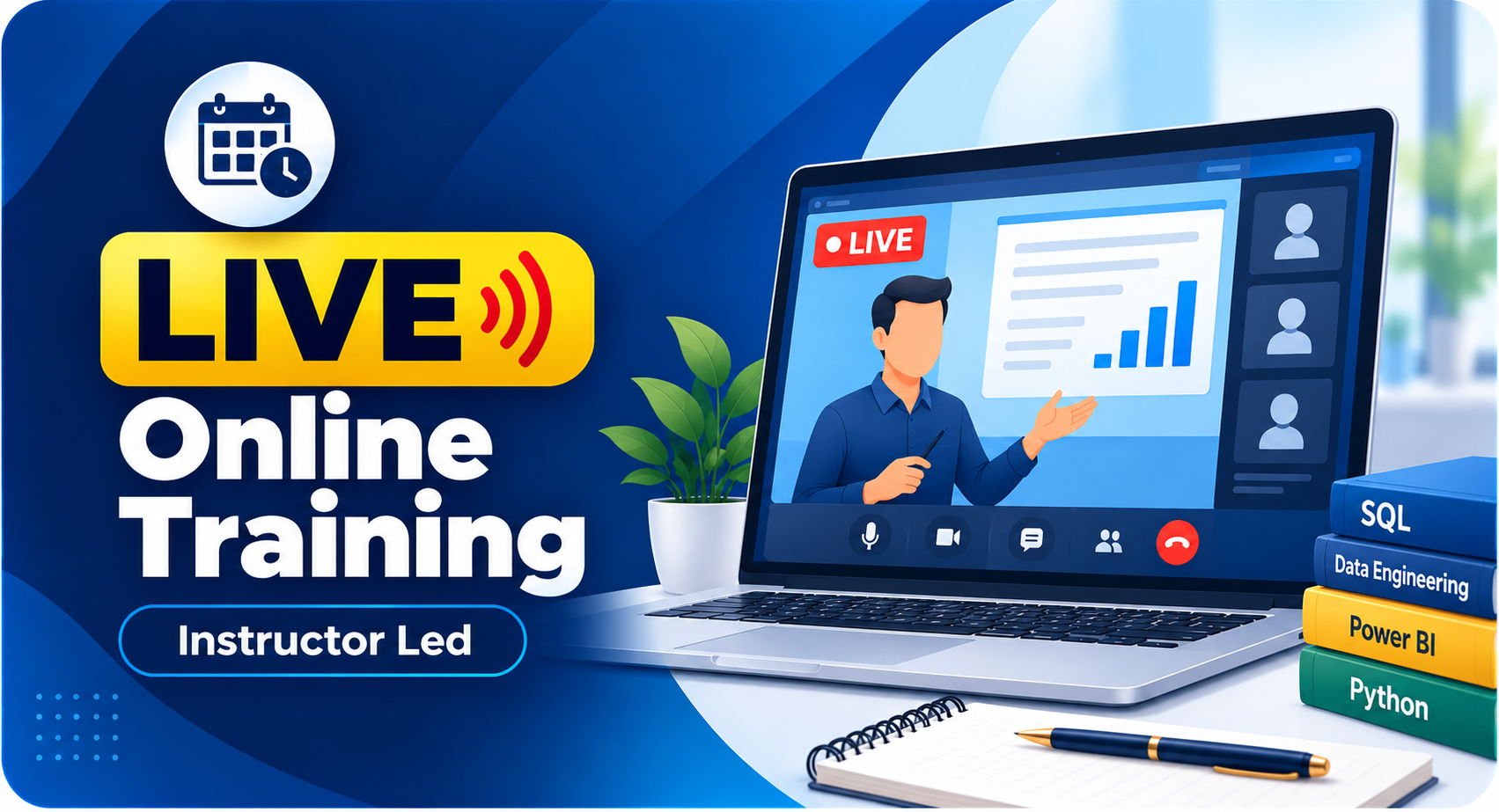
Training Modes






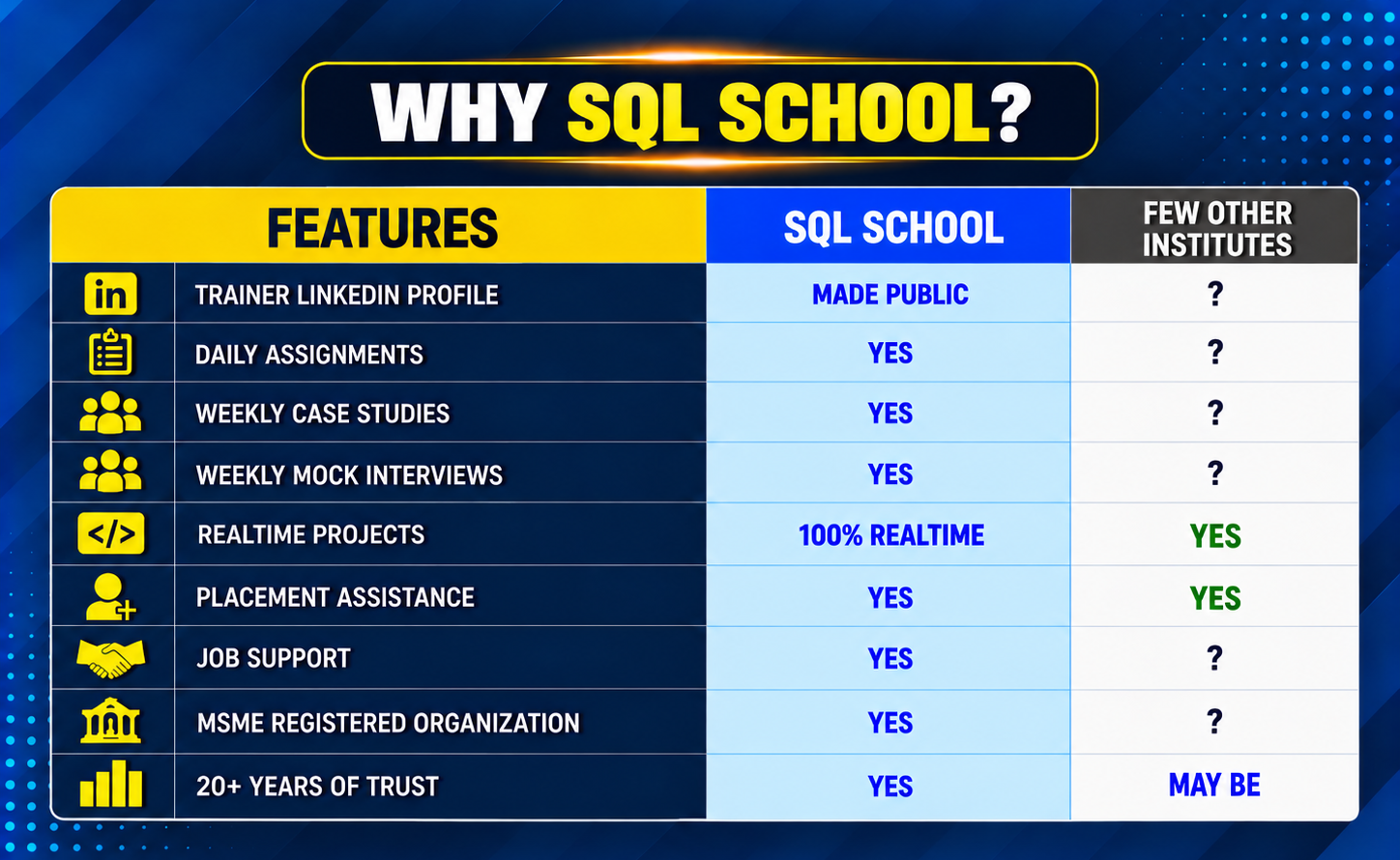
Why Choose SQL School
- 100% Real-Time and Practical
- ISO 9001:2008 Certified
- Concept wise FAQs
- TWO Real-time Case Studies, One Project
- Weekly Mock Interviews
- 24/7 LIVE Server Access

- Realtime Project FAQs
- Course Completion Certificate
- Placement Assistance
- Job Support
- Realtime Project Solution
- MS Certification Guidance