
Boost Your Career with SQL Developer Skills
Structured Query Language (SQL) is one of the most important technologies in today’s data‑driven world. Whether you’re aspiring to be a database professional, data analyst, backend developer, or quality engineer, mastering SQL and becoming an SQL Developer can significantly enhance your career prospects. In this blog, we’ll dive deep into what an SQL Developer course is, why it’s important, its core features, and the key advantages of learning this skill in 2026.
What is an SQL Developer Course?
An SQL Developer Course is a structured program designed to teach you how to efficiently work with relational databases using Structured Query Language (SQL). A comprehensive course will cover everything from basic SQL syntax and query writing to advanced topics like database design, performance tuning, stored procedures, data modeling, and real‑world projects.
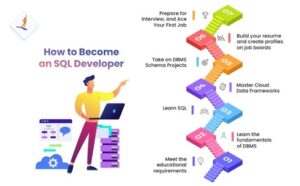
Why is Learning SQL Important?
High Industry Demand
With the rise of data-driven decision-making, SQL Developers are in high demand across industries like IT, healthcare, finance, and retail.
Foundation for Advanced Roles
SQL is the backbone for roles such as Data Analyst, Business Intelligence Developer, Database Administrator, and Data Engineer.
Efficient Data Handling
SQL allows you to manipulate and analyze large datasets efficiently, enabling faster business insights.
Problem-Solving & Logical Thinking
Working with SQL enhances analytical skills and logical thinking, which are crucial in technology and business roles.
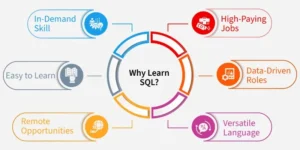
Importance of Learning SQL Developer Skills
High Demand Across Industries
With data being central to decision‑making, SQL Developers are in demand in sectors such as tech, finance, healthcare, and e‑commerce.
Foundation for Other Roles
SQL lays the groundwork for roles like Data Analyst, BI Developer, Database Administrator, and Data Engineer.
Critical for Data Manipulation
Being able to read, write, and optimize queries enables you to interact with business data efficiently, making you a valuable asset to any team.
Enhanced Problem‑Solving and Logical Thinking
Working with data structures, queries, and databases enhances analytical and logical problem‑solving skills crucial in IT roles.

Key Features of an SQL Developer Course
1. Comprehensive SQL Training
Learn essential SQL commands such as SELECT, INSERT, UPDATE, DELETE, JOINs, and advanced clauses that help you manipulate and retrieve data from databases.
2. Database Management & Design Modules
Understand how to design efficient database schemas, manage tables and relationships, and ensure proper normalization important skills for any SQL Developer
3. Real‑World Projects and Labs
Practical exercises and hands‑on labs give you experience with real datasets and server environments, preparing you for industry‑level tasks.
4. Performance & Query Optimization
Learn how to write efficient queries and employ indexing and tuning techniques so databases perform well under heavy load.
5. Career‑Focused Certification
Earn a certification that strengthens your resume and signals job‑readiness to recruiters and hiring managers.
6. Support for SQL Tools
Training often includes working with tools like SQL Server Management Studio (SSMS), Oracle SQL Developer, MySQL Workbench, etc., giving you tool‑specific expertise.
Who Should Take an SQL Developer Course?
- Beginners looking to start a career in IT or data
- Graduates seeking roles in database development or analytics
- Professionals transitioning into data-driven careers
- Developers wanting to enhance database skills
Frequently Asked Questions (FAQs)
1. What is SQL, and why is it important?
SQL (Structured Query Language) is the standard language for interacting with relational databases. It is important because it allows professionals to efficiently store, manage, and analyze data, which is critical for decision-making in every industry.
2. Who can take an SQL Developer course?
Anyone interested in data, IT, or software development can enroll. This includes beginners, graduates, professionals shifting to data roles, and developers wanting to enhance database skills.
3. How long does it take to complete an SQL Developer course?
Course duration varies, but most comprehensive courses take 6–12 weeks with hands-on projects and practice exercises. Intensive programs may range from 4–8 weeks.
4. Do I need prior programming experience?
No prior programming knowledge is required. SQL is beginner-friendly and focuses on logical query writing, making it accessible even to non-programmers.
5. What tools will I learn in an SQL Developer course?
You will typically learn SQL Server Management Studio (SSMS), Oracle SQL Developer, MySQL Workbench, and other popular database tools used in the industry.
Conclusion:
A professional SQL Developer course is more than just learning a programming language—it’s a career investment. With hands-on training, industry-aligned projects, and certification, you can build a strong foundation in database management and become a highly sought-after SQL professional.
Learning SQL not only improves your technical abilities but also enhances your problem-solving skills, making you a key contributor to any organization’s success.
Start your journey to becoming a SQL Developer today and unlock new career opportunities in the growing field of data management.
SQL Developer Curriculum: https://sqlschool.com/wp-content/uploads/2025/12/SQL-Server-TSQL-Training.pdf
SQL Developer Training: https://sqlschool.com/sql-server-training/
#SQLDeveloperCourse #LearnSQL #DatabaseManagement #SQLTraining #TechCareers #DataCareers #ITTraining #Upskill
Trainer: Mr. Sai Phanindra
With 19+ Years of
technical expertise exclusively on SQL & Database Technologies, I assure you 100% Practical, Step by Step Classes.
Linkdin Profile: www.linkedin.com/in/saiphanindra/
Contact No: +91 9030040801 or +91 9666640801