- 4.7


- 5.0
Official Learning Partner

#Bigdata Analyst Course Training
- ✅Introduction to Data Analysis
- ✅Data Visualization & Insights
- ✅SQL & Relational Databases
- ✅Data Cleaning & processing
- ✅Statistical Foundations
- ✅Python for Data Analytics
50000 + 4.7 ★★★★☆ 🕜60 Days
Students Enrolled Ratings Duration
Students Enrolled Ratings Duration
Big Data Analyst Course Schedules
Big Data Analytics
Training Course Contents:
Module 1: Microsoft Fabric Training Content
Ch 1 : Fabrics Introduction
- Big Data Analytics with Azure
- Products and Services in Analytics
- Microsoft Fabric – One Umbrella
- Microsoft Fabric – Advantages
- Unified Data Foundation
- AI Powered Capabilities
- OneLake: Storage
- Synapse: Engineering, Warehouse
- Synapse: Data Science, Analytics
- Power BI: Business Intelligence
- Action platform; Data Activator
- Governance; Purview
Ch 2 : Fabric Licenses, Capacity
- Fabric Workspace : Licensing
- Fabric Components & Tenant
- Organizational Licenses
- Capacity, PPU and SKUs
- Individual Licenses: Free, Pro
- SKU Types: Azure & Office 365
- Fabric Workspace : Activation
- GUI: Walk Thru Options
- Data Factory, Synapse Options
- Power BI & Streaming Objects
- Creating Fabric Capacity
- Pause / Resume Capacity
Ch 3: Lakehouse Concepts
- What is Lakehouse?
- How to configure LakeHouse?
- Lakehouse Explorer Tool
- Interacting with Lakehouse Items
- Pipelines and Notebooks
- Spark Jobs and Dataflows Gen 2
- Using Lakehouse Explorer
- Main View and Ribbon Area
- Table Section, File Section
- Data Load Options to Lakehouse
- SyMS and Unidenfied Area
- Landing Zone, Data Processing
Ch 4: Data Loads with Lakehouse
- Large Scale Data Analytics
- Onelake Metastore & Use
- Workspace & LakeHouse
- Lakehouse Explorer: Tables, Files
- File Upload : Header, Data Types
- Explorer Shortcuts in Lakehouse
- File Data Load to Tables
- SQL Queries in Tables
- Lakehouse to SQL Endpoint
- Transaction Audit: _delta_log
- Aggregations, Visual Queries
- Reports and Data Models
Ch 5: Fabric Data Factory – 1
- Fabric Data Factory & ETL
- Data Ingestions & Orchestrations
- Dataflows and Pipeline Options
- AI Based Transformations
- Data Flows: Low Code Interface
- Power Query : Advantages
- Pipeline Design: Copy Data
- Compute and Optimizations
- Connections & Datasets
- Pipeline Activity: Options
- Column Mapping & ETL
- Canvas : Debug & Monitoring
Ch 6: Fabric Data Factory – 2
- Fabric Studio: Copy Data Activity
- Copy Assistant : Usage Options
- Connections & Linked Services
- serialization/deserialization
- compression/decompression
- Colum Mapping & Conversions
- Activity Timeouts, Retries
- Secure Input / Output Options
- Column Mapping & Settings
- Fabric Pipelines: Copy Methods
- Existing Pipeline Edits, Publish
- Pipeline Monitor & Logging
Ch 7: Fabric Data Factory – 3
- Fabric Studio: Data Flow Activity
- Spark Clusters : Automations
- Spark Cluster Debugging
- Spark Cluster Sizing, Capacity
- Lakehouse Table: ETL Process
- ADLS File Connectors
- Power Query Transformations
- Power Query Profiling
- In-Memory Processing, M Lang
- Data Flow Optimizations
- Partition Options & Tuning
- Broadcast Options & Tuning
Ch 8: Fabrics & Spark Clusters
- Apache Spark Configurations
- Data Engineering/Science
- Sark Compute & Capacity
- Node Family Settings
- Memory Optimized
- Transaction Optimized
- Runtime Versions, Scaling
- Notebooks, Concurrency
- Python Libraries in Spark
- Dataframes & Realtime Use
- Spark SQL Queries & Data Loads
- Data Visualizations & Spark
Ch 9: Fabric Notebooks
- Spark Jobs for ETL
- Spark Dataframes for ETL
- Inferring & Explicit Schema
- sql.types
- sql.functions
- Filter, Group Data Frames
- Dataframe Storage, Partition
- Spark Catalog : Objects
- TempView in Spark Catalog
- Spark SQL API & Visualizations
- Graphic Packages: PyPlot
- Big Data Analytics with Spark
Ch 10: Synapse Warehouse – 1
- Fabric Datawarehouse
- DWH Creation Options
- Sensivity Settings
- Warehouse Compute
- SSMS Connections
- ADS Connections
- Table Creations
- Warehouse Sample
- Data Load Options
- Warehouse Query Options
- Data Aggregations
- Data Analytics
Ch 11: Synapse Warehouse – 2
- Fabric Security Options
- Warehouse Security Model
- Warehouse Access Model
- Fabric Workspace Roles
- Item Permissions
- Object Level Security
- Sharing Warehouse
- SQL Permissions
- Read, Connect
- SQL endpoint data
- ReadAll & Build
- Grant, Revoke, Deny
Ch 12: Synapse Warehouse – 3
- Zero Copy Clone in DWH
- Table Clone in Synapse
- Table Clone Inheritance
- Create Table As Clone
- Table Cloning Scenarios
- Cloning : Limitations
- Warehouse Performance
- Statistics : Creation, Use
- Leverage Stats in DWH
- In-Memory & SSD Cache
- Disk Cache, Important DMVs
- Cold Cache & Management
Ch 13: Synapse Realtime Analytics
- Realtime Analytics in Fabric
- Streaming & Time Series Data
- Capture, Transform & Route
- Ingest, Load and Stream
- Data Integration At Scale
- Creating KQL Databases
- KQL Tables, Queries
- BLOB Data Ingestions
- Data Loads & Fabric Studio
- Command Viewer Options
- Partiaial Data Preview
- Data Exploration
Ch 14: OneLake Concepts
- Unified Data Lake in Fabric
- Warehouse and Lakehouse
- One Lake Workspace Management
- Azure HD Insight : Security
- DFS API and Connections
- Fabric Workloads & Tuning
- Onelake File Explorer
- One Copy of Data, Data Engines
- Compute and Analytics
- Uni Management & Governance
- Creating Lakehouse with Onelake
- Data Loads with Lakehouse
Ch 15: Microsoft Fabric with Power BI
- Using Power BI with Fabric
- OneLake Connections with Power BI
- Power BI Desktop with Fabric
- Power BI Desktop with OneLake
- Power BI Desktop with LakeHouse
- Power BI Desktop with Synapse
- Power BI Cloud with OneLake
- Power BI Datasets (LIVE)
- Power BI Datamarts and Usage
- Dashboards with Fabric Metrics
- Unified Data Foundation : OneLake
- End to end Implementation Plan
Module 2: Azure Data Engineer Training Content
Part 1: Azure Data Factory, Synapse Analytics
Chapter 1: Cloud Basics, Azure SQL
- Cloud Introduction and Azure Basics
- Azure Implementation: IaaS, PaaS, SaaS
- Azure Data Engineer: Job Roles
- Azure Storage Components
- Azure ETL & Streaming Components
- Need for Azure Data Factory (ADF)
- Need for Azure Synapse Analytics
- Azure Resources and Resource Types
- Azure Account, Subscription (Free)
- Azure SQL Server [Logical Server]
- Firewall Rules and Azure Services
- Azure SQL Database Deployment
- Azure SQL Pool Deployment
- Compute: DTU Versus DWU
- Test Connections from SSMS
Chapter 2: Synapse SQL Pools (DWH)
- Dedicated SQL Pools in Azure
- Data Warehouse with Synapse
- Massively Parallel Processing (MPP)
- Control Nodes and Compute Nodes
- DMS: Data Movement Service
- Start/Resume/Pause & Scaling
- SQL Pool Config @ TSQL Scripts
- Start/Resume/Pause, Scaling Options
- Table Creations @ TSQL Scripts
- Table Partitions: Left & Right
- Distributions: Round Robin, Hash
- Distributions: Replicate and Usage
- Auto Indexing & Column Store
- Planning for Big Data Loads
- Need for ADF: Azure Data Factory
Chapter 3: Azure Data Factory, Pipelines
- Azure Data Factory (ADF) Concepts
- ADF Pipelines : Architecture
- Integration Runtime (IR) & Use
- Linked Services and Datasets
- Pipeline Activities: Copy Data Tool
- DIU : Data Integration Units
- DTU Vs DWUs Vs DIU
- ADF Pipeline with Copy Data Tool
- Azure SQL DB to Synapse Data Loads
- Multi Tables Data Loads with ADF
- Bulk Insert, Data Copy Methods
- ETL Staging: Storage Account
- Staging Container Connections
- DIU Allocations & Publish
- ETL Pipeline Monitoring, Runs
Chapter 4: OnPremise Data Loads, Upsert
- Copy Data Tool : Incremental Loads
- On-Premise Data Sources with Azure
- Self Hosted Integration Runtime (IR)
- Access Keys, Remote Linked Service
- Synapse SQL Pool (DW), OnPremise
- ETL Staging with Storage Account
- Copy Method: Polybase – Tuning
- Polybase : Big Data Loads
- ETL Pipelines for Incremental Loads
- Business Keys For Table Upsert
- Pipeline Schedules with ADF
- ETL Logging with Storage Account
- Copy Method: UPSERT
- DIU, DOCP & Publish
- Manual Pipeline Executions in ADF
Chapter 5: File Incremental Loads in ADF
- Incremental Loads with Files (BLOB)
- ETL Schedules: Tumbling Window
- Execution Retry and Delay Options
- Binary Copy, Structural Data Loads
- Incremental Loads Verification Tests
- Incompatible Rows & Fault Tolerance
- Pipeline Compression & Tuning
- Pipeline Publish, Monitor Options
- Azure Monitor Resource : Metrics
- ADF Metrics and Pipeline Runs
- ADF: Pipeline Monitoring and Alerts
- Synapse: Storage Monitoring, Alerts
- Conditions, Signal Rules and Metrics
- Alerts & Action Groups: Emails
- Email Notifications with Azure
Chapter 6: ADF Data Flow – 1
- Data Flow Task, Data Flow Activity
- Transformations with Data Flow
- Spark Cluster For Debugging
- Cluster Node Configurations
- Spark Cluster Types & Sizing
- Transaction Optimized – Capacity
- Memory Optimized – Capacity
- Data Cleansing with ADF
- Data Orchestration with Data Flow
- SELECT Transformation & Options
- Conditional Split Transformation
- UNION, SELECT Transformation
- Spark Cluster For Pipeline Executions
- Pipeline Monitoring & Run IDs
- Adding Data Flow into Pipelines
Chapter 7: ADF Data Flow – 2
- ADF Pipelines For ETL Operations
- Data Flow Tasks, Activities in Synapse
- JOIN & EXISTS Transformations
- Aggregate & Group By Transformations
- Window Functions, Rank in Data Flow
- Rank / DenseRank / Row Number
- Derived Column Transformation
- Lookup, Surrogate Key, Parse
- Type Convert, Cast Transformations
- Reusing Data Flow Tasks in Synapse
- Pipeline Validations & Executions
- Inline Datasets, Schema Drift
- Data Deduplication with ADF
- DFT Optimization Techniques
- Data Flow Task – Staging, Logging
Chapter 8: Azure Synapse Analytics
- Azure Synapse Analytics Resource
- Azure Synapse Analytics Workspace
- Managed Resource Group, SQL Account
- Synapse Workspace & Synapse Studio
- Operations with Synapse Workspace
- ADLS Gen 2 Storage Account, Container
- Synapse Studio: Scripts & Pipelines
- Dedicated SQL Pools : Creation, Use
- Synapse Tables, Data Loads with TSQL
- COPY INTO Statements with T-SQL
- Row Terminator and Compressions
- T-SQL Queries and Aggregations
- Aggregation Data Loads in Synapse
- Creating Synapse Pipelines with TSQL
- Stored Procedure Activity & Triggers
Chapter 9: Synapse Analytics with Spark
- Synapse Pipelines: Performance Advantage
- Pivot Transformation For Normalization
- Generate Pivot Column, Aggregations
- Pivot Transformation & Pivot Setting
- Pivot Key Selection, Value and Nulls
- Pivoted Columns and Column Pattern
- Column Prefix, Help Graphic, Metadata
- Denormalized Data and Aggregations
- Apache Spark Pool in Azure Synapse
- Spark Cluster Nodes: Vcores, Memory
- Notebooks : Purpose, Usage Options
- Python Notebooks For Remote Access
- Creating Databases in Apache Spark Pool
- Data Loads from Dedicated SQL Pools
- PySpark Code for Data Operations, Writes
Chapter 10: Synapse Security & Parameters
- Azure Active Directory (AAD) Users, Groups
- IAM: Identity & Access Management
- Synapse Workspace Security with RBAC
- ADF Security: RBAC, Owner, Contributor
- Azure Synapse SQL Pool Security: Logins
- Creating SQL Logins & Users : master
- SQL Users in Azure SQL DB and SQL Pool
- Grant, Control, Revoke: Security Roles
- Parameters – Creation and Use in Pipelines
- Dynamic Connections with Credentials
- User Name and Password Connectivity
- Dynamic Dataset Configurations
- Pipeline Expressions with Parameters
- Resource Classes and Usage with SQL Pool
Chapter 11: Change Data Capture (CDC)
- Change Data Capture (CDC) Data Loads
- Incremental Loads with CDC Types
- SQL Server CDC : ETL Load Dates
- Pipeline Expression, Data Window
- JSON Parameters, Pipeline Scheduling
- ETL Optimization Techniques
- Serverless Pool in Azure Synapse
- Connections, Use with Serverless Pool
- Using Azure OpenDatasets in Synapse
- OPENROWSET and BULK Data Loads
- Working with Parquet Files in Synapse
- Python Notebooks (Pyspark) in Synapse
Part 2: Data Lake Storage, Stream Analytics
Chapter 1: Azure Fundamentals – Storage
- Azure Resources: Storage Components
- Storage Resources and Properties
- Resource Groups & Subscriptions
- Azure Storage : Files, Tables and ETL
- Azure Storage Account & Use
- Data Lake Storage Account (ADLS)
- Advanced Options: HNS Property
- Resource Location, Resource Group
- Azure Portal: Deployment Verifications
- Azure Portal: Deployment Verification
- Storage Account : Basic Properties
- Overview Page: Status, HNS State
- Azure Storage : Access Options
- Azure Storage Explorer Tool
- Explorer Tool : Configuration
Chapter 2: Azure Storage Operations
- BLOB: Binary Large Objects
- Storage Browser and Service Pages
- Storage Browser: Container Creation
- Storage Browser: Folder, File Uploads
- Service Page: Container Creation
- Service Page: Folder, File Uploads
- Container, Folder, File Properties
- Limitations with Storage Portal
- Azure Data Explorer Tool : Usage
- Contrainer: Creation, Properties
- File Uploads, Edits and Access URLs
- Azure Storage Explorer Tool Usage
- Azure Account Options in Explorer
- Directory Creation, File Operations
- Limitations with Explorer Tool
Chapter 3: Azure Storage Security, ACLs
- Azure Data Lake Storage Security Options
- Shared Access Keys: Primary, Secondary
- SAS Key Generation: Container, Tables
- SAS Key Permissions, Validation Options
- Access Keys: Account Level Permissions
- Azure Active Directory: Users, Groups
- Azure AD Security: RBAC, IAM, ACLs
- Owner Role, Contributor, Reader Role
- Azure Data Lake Storage Security
- ACL : Access Control Lists & Security
- Azure BLOB Storage Containers & ACLs
- Folder Level and File Level Security
- ACL Permissions: Read, Write, Execute
- Access Policy: Creation, Realtime Use
- rwacdl; Azure Principals, CORS
Chapter 4: SQL Database Migrations
- OnPremise SQL DB to Azure Migration
- SSMS Tool, SQL Database Installation
- Source Database Scripts & Validations
- BACPAC File Generation: SSMS Tool
- Table Selection & Advanced Options
- Azure Data Lake Storage, SSMS Access
- Azure Storage Container, BACPAC Files
- IAM and Account Key Authentication
- Azure SQL Server Creation From Portal
- Azure SQL Database Deployment
- DTU : Data Transaction Units, Pricing
- Azure Firewall Configuration, Security
- Azure SQL Database Imports (bacpac)
- Azure SQL Server with ADLS Containers
- Azure SQL DB Migrations, Verification
Chapter 5: Azure Tables & Replication
- Azure Tables – SchemaLess Design
- Azure Tables: Creation, Data Inserts
- Tables, Entities, Properties Concepts
- Structured, Relational Data Storage
- Azure Tables: GUI, Data Types
- Azure Tables: Big Data Imports
- Data Edits, Queries, Delete Operations
- Odata Options (REST API), End Points
- Azure Storage: Replications, DR Options
- LRS: Locally Redundant Storage
- GRS: Globally Redundant Storage
- ZRS: Zone Redundant Storage
- Replication Options and Advantages
- Replication Verification, Modifications
- Storage Endpoints, Failover Partner
Chapter 6: Azure Stream Analytics, IoT
- Azure Stream Analytics Real-time Use
- Real-time Data Processing, Events
- Ingest, Deliver & Analysis Operations
- Azure Stream Analytics Jobs Concept
- Understanding Input, Output Options
- SAQL Queries: Stream Analytics Jobs
- IoT: Internet Of Things, Real-time Data
- Need for IoT Hubs and Event Hubs
- Conditional Split Transformation
- Creating IoT Device for Data Inputs
- Creating Azure Stream Analytics Job
- Stream Analytics for Historical Data
- Azure SQL Database for ASA Jobs
- SAQL: Query Formatting, Validation
- Historical Data Upload, ASA Jobs
Chapter 7: Azure Event Hubs
- Azure Stream Analytics For API Data
- IoT Hubs, IoT Devices, Connection Strings
- Rasberry APP Connections with IoT Hub
- Azure Storage Account and Container
- Creating Azure Stream Analytics Job
- Configuring Input Aliases with IoT Hub
- Output Aliases with ADLS Gen 2
- SAQL Query, Job Executions; Monitoring
- Azure Event Hubs and Event Instances
- Event Hub Namespaces, Partition Counts
- Access Policies, Permissions & Defaults
- RootManageSharedAccessKey & Options
- Connection Strings & Event Service Bus
- Telco App : Executions & LIVE Data
- On-Premise App Integration, ASA Jobs
Chapter 8: Storage Architecture, Queues
- Azure Storage Account : Architecture
- Etag: Replication & Encryption Use
- BLOB Types: Block, Append & Page
- Access Tiers: Hot, Cool, Cold Types
- Archive Access Tier & Retention
- Legal Hold & Time Bound Access
- Pricing : HNS, Security, Encryption
- EndPoint URL & Read-Only Use
- Azure File Share Service (Files)
- Mounting Files From On-Premise
- SMB File Share : Hot, Optimized
- Azure Queue Service & Messages
- Message Queues : Operations
- Storage Explorer Tool with Shares
- Azure Storage Services: ETL Needs
Chapter 9: Monitoring & Key Vaults
- Azure Monitor, Metrics & Activity Logs
- Monitoring Azure Storage Namespaces
- Add KQL Metrics; Account, Blob and File
- Total Ingress and Egress Metrics: Charts
- Average Latency, Transaction Count
- Request Breakdowns, Signal Logic
- Azure Alerts & Conditions, Notifications
- Signal Logic Conditions and Emails
- Key Vaults Types: Standard & Premium
- Secret Page, Key Backups, Key Restores
- Azure Key Vaults – Name and Vault URI
- Inbuilt Managed Key and Azure Key Vault
- Key Vaults Types: Standard & Premium
- Secret Page, Key Backups, Key Restores
- Managed Identity with ETL Process
Real-time Project (End to End)
- Online Retail Database Data Source
- Azure Migrations and ETL Concepts
- Azure SQL Pool (Synapse DWH) Tables
- Apache Spark Pool : Databases, Tables
- Azure Data Lake Storage (ADLS Gen 2)
- Handling Unstructured Data in ADF
- End to End Workflows, Automations
- Azure Logic Apps: Automated Workflows
- Visual Designer & Prebuild Templates
- Server Less Integrations in Azure
- Workflow, Triggers and Actions
- Managed Connectors, Integrations
- ARM Template : Deployments
- ARM Templates : ADF, ADLS
- ADLS with Spark Databases
- Aggregations with Big Data Loads
- Parameterized ETL Sources
- Parameterization & Workflows
- Python Notebooks to Scala
- Azure SQL DB Connections
- ARM Templates & JSON
- Project Requirement
- Project Solution, FAQs
- Concept wise FAQs
- Resume Guidance
- Mock Interviews (1 to 1)
- DP 203 Certification Guidance
- DP 203 Sample Papers (Latest)
Part 3: Databricks, Spark, Python
Chapter 1: Azure Intro, Azure Databricks
- Azure Cloud : SaaS, PaaS, PaaS & IaaS
- Azure Cloud : Storage, ETL Resources
- Azure Databricks : Compute Resources
- Need for Azure Databricks (ADB)
- Azure Databricks : Purpose & Config
- Azure Databricks Service Creation
- Azure Databricks Components
- Azure Databricks Workspace, Usage
- Spark Cluster Configurations, Capacity
- Driver Nodes, Worker Nodes in Spark
- Cluster Types : Personal, Unrestricted
- CPU, Memory & IO Resources
- Virtual Machines (VM) for Clusters
- Databricks : Runtime & DBFS Storage
- DBFS : Files, Tables with Spark DB
Chapter 2: SparkDatabase, SQL Notebooks
- DBFS : File Uploads from ON-Premise
- Creating Spark Tables; Spark DB
- Data Explorer: HIVE Metastore
- Data Explorer: Spark Database, Tables
- Notebooks: SQL, Python and Scala
- Creating SQL Notebooks in Databricks
- Creating User Defined Spark Databases
- Connecting / Using Spark Databases
- Spark SQL : Big Data Loads
- Spark SQL : Database & Table List
- Spark SQL : Data Aggregations, Jobs
- Spark SQL : Data Analytics, Reports
- Analytics: X, Y Axis, Group By
- Notebooks : Export, Import, Clone
- Notebooks : Storage & Versions
Chapter 3: Python Intro, Data Loads
- Python : Introduction, Real-time Use
- Python For ETL and DWH
- Python For Azure: Data Engineer
- Python Data Frames & Purpose
- Python Dataframes – Pandas
- Python with Spark Integrations
- PySpark for DDL and ETL
- PySpark Versus SQL Notebooks
- Reading DBFS Data into Spark
- Creating Dataframes for ETL
- Temporary Views & Dataframes
- Spark Temp Views: Aggregations
- Spark Table Loads, HIVE Data
- write.format() & overwrite
- Parquet Tables with Spark DB
Chapter 4: PySpark with ADLS
- Azure Storage Account : Creation
- Azure Data Lake Storage : HNS
- Creating Containers in ADLS
- BLOB File Uploads / Generation
- Account Key : Access Key, SAS Key
- BLOB Access URL for Databricks
- WASBS URL for PySpark Notebook
- Generating PySpark Script
- PySpark Connection Variables
- Databricks : Data Import Scripts
- Config Options with ADLS, Spark
- config (), Session Context
- DataFrames with Temp Tables
- Escape Sequence with SparkSQL
- Data Explorer: HIVE & Spark DB
Chatper 5: PySpark Widgets
- Widgets : Notebook Parameters
- widget module : Text, Combo
- Dropdown, Multi Select Parameters
- dbutils help(), get() & remove()
- Dataframes, Spark SQL @ Variables
- Python Data Frames, Spark SQL
- Reading Parameters Values
- Parameters Versus Variables
- Using Parameters For Temp Tables
- Using Parameters for Spark Tables
- Data Storage and HIVE Metastore
- Reading Parameterized Data
- Format Strings with PySpark
- Dynamic Queries with Spark SQL
- Aggregations and f Strings
Chapter 6: Architecture, Workflows
- Driver Nodes, Worker Nodes, DBUs
- RDD : Resilent Data Distribution
- DAG : Directed Acyclic Graph
- Hadoop HDES and Spot Instance
- Cluster Manager, Master Node
- RDDS, Worker, Excecutor & Slave
- Hadoop HDES & Databricks Runtime
- Databricks Optimization Techniques
- Spot Instance, Photon Acceleration
- All Purpose Cluster, Job Cluster
- Databricks Jobs: Creation & Tasks
- Jobs with Parameters, Executions
- Task Dependency & Notifications
- Continuous & Manual Schedules
- Active Jobs, Recent Run Jobs, Monitor
Chapter 7: Databricks Security, Scala
- Azure Databricks Security Operations
- Azure Active Directory (Azure AD)
- AD Users and RBAC with IAM
- Owner, Contributor & Reader Roles
- Workspace Admin Permissions
- Notebook Permissions & Share
- Workflow Security, HTTP Path
- User Tokens & ServerName
- Scala : Differences with PySpark
- Scala : Variables Declaration, Usage
- SparkSQL with Scala Notebooks
- Temp Views with Scala Notebooks
- Aggregations with Scala Notebooks
- Visual Data Analytics with Scala
- PySpark to Scala Conversions
Chapter 8: Scala with ADLS, Azure SQL
- Data Imports with Azure SQL DB
- Using Scala for Big Data Loads
- Spark SQL Queries @ Temp Views
- Variables, display(), read()
- Scala Transformations, display()
- JSON, AVRO and DBFS Mounts
- azure.sas.container @ ADLS
- write.jdbc() & JVM
- JDBC Connection, DataframeWriter
- Data Extraction, SQLContext
- Spark Context and Spark Session
- SQLServerDriver with Scala
- ADLS with Scala Notebooks
- Parameters (Widgets) with Scala
- Compare Python with Scala
Chapter 9: DeltaLake Incr Loads, DWH
- Azure DeltaLake Implementation
- ACID Properties, Upsert Advantages
- Delta Engine Optimizations & Uses
- Pipeline Creation: JSON Files in DBFS
- Delta Tables Creation, Data Loads
- Spark Cluster Settings: Auto Optimize
- Auto Compact, Delta Table Optimize
- JSON Files, Delta Streaming Location
- Joins and Merge with Delta Tables
- Incremental Loads, Delta Tables
- Create & Use DWH with Databricks
- Upsert (Merge) with Spark Tables
- Big Data & Jupyter Notebooks
- Databricks with Data Factory (ADF)
- End to End Implementations
Azure Data Engineering with Power BI (For Power BI Registrations)
- Power BI with Synapse SQL Pool
- Power BI with Synapse Analytics
- Get Data: Storage Modes
- Direct Query, Performance Inspector
- Aggregated Data Analytics
- Data Gateways : Auto Refresh
- Power BI with ADLS : Record Query
- Power BI with ADLS : BLOB Data
- Power BI with Spark DB : JDBC
- Power BI with Spark DB : User Tken
- Power BI with Spark DB : LIVE Data
- Power BI with Spark DB : Refresh
- Azure Purview : Data Governance
- Unified SaaS for Multi Cloud
- Data Mapping and Resilence
- Automated Data Discovery
- Sensitive Data Labels : SQL Server
- Interactive Data Lineage
- Trusted Data Discovery in Azure
- Confidential Data & Trust
- DataCatalog, Data Estate Insights
- Azure Key Vaults, ADLS Security
- Azure Passwords, Keys, Certificates
- Azure Key Vaults – Name, Vault URI
- Managed Key & ETL Connections
Power BI : Realtime Project (Sales – Retail)
Phase 1 : Basic Report Design
- Project Requirement Analysis
- Requirement Gathering, FSA
- Report Design with Excel
- Basic Data Modelling
- Infographics, Histograms
- Analytics and Formating
Phase 2 : SME Level
- Report Design with SQL DB
- SQL Database : Joins, Views
- Dual Storage Mode, SQL Queries
- Data Modeling, Power Query
- Dynamic Connections, Azure DB
- Parameters and M Lang Scripts
Phase 3: Deployments (Cloud, Server)
- DAX Requriements, Analysis
- Cloud and Report Server
- Custom Visualizations
- 3party Visuals & REST API *
- Project FAQs and Solutions
- One – One Resume, Mock Interview
Module 3: Power BI Training Content
Part 1: Power BI Report Design
Ch 1: POWER BI INTRODUCTION
- Power BI : Introduction to Analytics
- Power BI Tools Suite, Advantages
- Power BI : Career Options, Plan
- Power BI Developer Job Role
- Microsoft Data Analyst Job Role
- Big Data Analyst Job Role
- Power BI Data Analyst (PL 300)
- Data Engineer*, Power BI (DP 500 *)
- Artificial Intelligence (AI) Visuals
- AI Enabled Power BI Features
- Course – Lab Plan with Design Tools
- Need for Power Query & DAX
- Power BI Licensing Types
- Power BI Cloud – Advantages
- Power BI Report Server Advantages
Ch 2: Basic Report Design
- Power BI Eco System: Architecture
- Data Sources & Types in Real-world
- Report Types: Interactive, Paginated
- Analytical Reports & Mobile Reports
- Data Sources : File, Database, Web
- Visualizations : Report Shapes
- Power BI Design Tools, Requirements
- Power BI Desktop Tool : Installation
- Desktop Interface: Overview, Canvas
- Get Data, Data View, Report View
- In-Memory Xvelocity Database
- Basic Visuals: Table, Tree Map
- Data Labels, Legend, Category
- Local Store: PBIX & PBIT Files
- Data Points and Tooltips
Ch 3: Visual Interaction, Visual Sync
- Visual Interaction with Data Points
- Disabling / Enabling Interactions
- Edit Interactions: Format Options
- Spotlight and Focus Mode
- Report Export to CSV, PDF
- Tooltip Options and Usage
- Working with Pages in PBI
- Rename, Duplicate, Hide Pages
- Slicer Visual : Real-time Usage
- Orientation, Selection Properties
- Slicer Settings : Tiles & Slider
- Single & Multi Select, Header
- Number, Text, Show Summary
- Date Slicer and Value Selections
- Slicer List, Dropdowns & Clear
Ch 4: Grouping & Hierarchies
- Grouping : Visuals with Pdf Sources
- List Grouping and Binning Options
- Grouping Static / Fixed Data Values
- Grouping Dynamic / Changing Data
- Bin Size and Bin Limits (Max, Min)
- Bin Count and Grouping Options
- Group with Bins & Clustering
- Group, Layer with Selection Pane
- Creating Hierarchies in Power BI
- Independent, Dependant Drill-Down
- Drill-Down with Interactive Reports
- Conditional Drilldowns, Data Points
- Drill Up Buttons and Operations
- Expand & Show Next Level
- Dynamic Data Drills Limitations
Ch 5: Filters & Bookmarks
- Filters : Types and Usage in Real-time
- Visual Filter, Page Filter, Report Filter
- Basic, Advanced and TOP N Filters
- Category and Summary Level Filters
- Data / Drill Options, DrillThru Filters
- Keep All Filters” Options in DrillThru
- CrossReport Filters, Include, Exclude
- Drill-thru Filters, Page Navigations
- Bookmarks : Report Navigations
- Buttons, Images with Actions
- Selection Pane, Actions, Text URLs
- Show Data and See Records
- Custom Tooltips, Table Visual
- Table Vs Matrix : Drill-downs
- Styles, Cell Properties, Databars
- Conditional Formatting, Divergent
Ch 6: Big Data Access, Visuals
- OLTP Databases, Big Data Sources
- Azure Database Access, Reports
- Import, Direct Query & Dual Mode
- Data Modeling: Do Not Summarize
- Data Modeling: Currency, Relations
- Power BI Archtiecture, Eco System
- Power BI Interface for Reports
- Stacked Chart, Clustered Chart
- Line Chart, Area Chart, Bar Chart
- 100% Stacked Bar & Column Chart
- Map Visuals: Tree, Filled, Bubble
- Small Multiples, Legends, Axis
- Cards, Funnel, Table, Matrix
- Scatter Chart : Play Axis, Labels
- Waterfall Chart, Multi Row Cards
Part 2: Power Query, Cloud (Service)
Ch 7: POWER QUERY LEVEL 1
- Power Query M Language Purpose
- Power Query Architecture and ETL
- Data Types, Literals and Values
- Power Query Transformation Types
- Table & Column Transformations
- Text & Number Transformations
- Date, Time and Structured Data
- let, source, in statements @ M Lang
- Get Data, Table Creations and Edit
- ETL Operations with Power Query
- Merge Transformations in Power BI
- Join Kinds: Inner, Outer & Apply
- Union All Transformation & Appends
- Power Query Editor, Step Edits
- Close & Apply Options. Report Design
Ch 8: POWER QUERY LEVEL 2
- Query Duplicate, Query Reference
- Group By and Advanced Options
- Aggregations with Power Query
- Transpose, Header Promotion
- Reverse Rows and Row Count
- Data Type Changes & Detection
- Replace Columns: Text, NonText
- Advanced Query Edit Options
- Replace Nulls: Fill Up, Fill Down
- Pivot, Unpivot Transformations
- Move Column and Split Column
- Date & Time Transformations
- Derive Year, Quarter, Month, Day
- Add Column : Query Expressions
- Query Step Inserts and Step Edits
Ch 9: POWER QUERY LEVEL 3
- Big Data Loads : Parameter Queries
- Creating Parameters in Power Query
- Parameter Data Types, Default Lists
- Static & Dynamic Lists: List Queries
- Convert Tables to Lists, Use Cases
- Linking Parameters to Queries
- Testing Parameters with Canvas
- Multi-Valued Parameter Lists
- Creating Lists in Power Query
- Converting Lists to Table Data
- Invoke Function, Type Conversions
- Function Query & Parameter List
- Columns From Examples, Indexes
- Conditional Columns, Expressions
- Disable / Enable Data Loads
Ch 10: POWER BI CLOUD – 1
- Power BI Cloud Components
- App Workspaces, Report Publish
- Reports & Related Datasets Cloud
- Creating New Reports in Cloud
- Report Publish, Report Uploads
- Report Edits and New Reports
- Report Actions: Downloads
- Dataset Usage Options in Cloud
- Dashboards Creation and Usage
- Pining Visuals and Report Pages
- Visual Pin Actions in Dashboards
- Dashboard & LIVE Interactions
- Media Tiles: Images, Custom Links
- Q & A Option with Dashboards
- Pin with Q & A; Standard Visuals
Ch 11: POWER BI CLOUD – 2
- Report Actions : Share, Subscribe
- Report Actions : Lineage, Embed
- Report Actions : Export Options
- Report Actions : Public User Access
- Dashboard Actions : Share, Subscribe
- Dashboard Actions : Themes, Lineage
- Dashboard Actions : Share, Subscribe
- Favorite, Insights, Embed Code
- Gateways Configuration, PBI Service
- Gateway Types, Cloud Connections
- Gateway Cluster, Add Data Sources
- Data Refresh : Manual, Scheduled
- Power Query Parameters, Gateways
- DataFlows, Power Query in Cloud
- Lineage, Share, Subscribe, Insights
- Performance Inspector& Gateways
Ch 12: POWER BI CLOUD – 3
- Workbooks : Excel Online & Pins
- Power BI Apps: Creation & Usage
- Power BI Segments, Content
- Navigation Screens, Audience
- App Publish, Verification & Edits
- Export, Share & Subscribe
- List View & Lineage View Options
- Power BI Scorecards: Realtime Use
- Paginated Reports – Design & Usage
- Power BI Report Builder Tool
- Microsoft Report Builder Tool
- Report Builder : Datasets, Charts
- Report Builder : Bar Charts, Fields
- Report Builder : Creating RDL Files
- Paginated Reports : Deployments
Part 3: DAX & Report Server
Ch 13: DAX Functions – Level 1
- DAX : Importance in Real-time
- DAX Data Types, Syntax Rules
- DAX Measures and Columns
- ROW Context and Filter Context
- Operators, Special Characters
- DAX Functions, Vertipaq Engine
- DAX Cheat Sheet : Expressions
- Data Analytics with DAX
- DAX Measures : Expressions
- ISBLANK, IF, IN, SUM
- SUMX, AVG, AVERAGEX
- Data Models: Fact, Dimensions
- Detecting Relations for DAX
- Star & Snowflake Schemas
- Data Modeling Options in DAX
Ch 14: DAX Functions – Level 2
- Quick Measures in Power BI
- Average and Filtered Average
- Running Totals, EARLIER( )
- RELATED, COUNTROWS
- CALCULATE Function Conditions
- ALL Members Scope & IN
- Account and Time Calculations
- Star Rating, DAX Expressions
- Data Modeling Options in DAX
- 1:1, 1:M and M:1 Relations
- Working with Facts & Measures
- Modeling : Missing Relations
- Relationships & Importance
- Modeling : Relation Management
- Modeling with Multiple Keys
Ch 15: DAX Functions – Level 3
- DAX : Variables and Expressions
- Dynamic Expressions, RETURN
- Current Value, Previous Value
- SELECTED VALUE, Joins
- FORMAT Function with DAX
- RELATED, Joins in DAX
- DAX Expressions with SQL DB
- Time Intelligence Functions
- Date Dimension : Generation
- CALENDAR(), DATESYTD()
- TOTALYTD, TOTALQTD
- TODAY, DATE, DAY with DAX
- SELECTEDVALUE, FORMAT
- Date, Time and Text Functions
Ch 16: DAX Functions – Level 4
- RLS: Row Level Security
- Data Models in Power BI Desktop
- DAX Roles Creation and Testing
- DAX Expressions & Operators
- PBIX Uploads: Power BI Cloud
- Dataset Security with DAX Roles
- Entity Sets and Slicing in DAX
- Dataflows with Power BI
- Analytical Reports – DAX Usage
- Creating Data Models with DAX
- Datasets in Excel and Dashboards
- Using Excel Analyzer in Power BI
- Power BI Data Source in Excel
- Connection Strings and Refresh
- Analytical Reports – Limitations
Ch 17: Power BI Report Server
- Power BI Report Server Config
- SQL Server Instance Verifications
- Report Server DB, Temp Database
- WebService & WebPortal URL
- Uploading Interactive Reports
- End User Report Share (pdf)
- Power BI Desktop RS Tool
- Interactive Reports: Report Server
- Mobile Reports : Design Options
- Mobile Reports : Grids, Elements
- Mobile Reports : Uploads, Edits
- Paginated Reports : Deployments
- Paginated Vs Interactive Reports
- Paginated Vs Analytical Reports
- Paginated Vs Mobile Reports
- Power BI Report Server Vs Cloud
Ch 18: Power BI Admin & AI
- Power BI Cloud Management
- Power BI Admin : Alerts
- Workspace Management, Users
- Security: Report, Dataset Levels
- Security: Dataset, App Levels
- Security: Workspace Options
- PBI Performance Inspector
- Power BI & Artificial Intelligence
- Power BI & CoPilot Add-Ins
- AI Visuals & Big Data Analytics
- Smart Narrative and Q & A
- Infographics, Icons and Labels
- Key Influencer Visual in Power BI
- Metrics Visual, Performance
- Paginated Reports Visual
Power BI : Realtime Project (Sales – Retail)
Phase 1 : Basic Report Design
- Project Requirement Analysis
- Requirement Gathering, FSA
- Report Design with Excel
- Basic Data Modelling
- Infographics, Histograms
- Analytics and Formating
Phase 2 : SME Level
- Report Design with SQL DB
- SQL Database : Joins, Views
- Dual Storage Mode, SQL Queries
- Data Modeling, Power Query
- Dynamic Connections, Azure DB
- Parameters and M Lang Scripts
Phase 3: Deployments (Cloud, Server)
- DAX Requriements, Analysis
- Cloud and Report Server
- Custom Visualizations
- 3party Visuals & REST API *
- Project FAQs and Solutions
- One – One Resume, Mock Interview
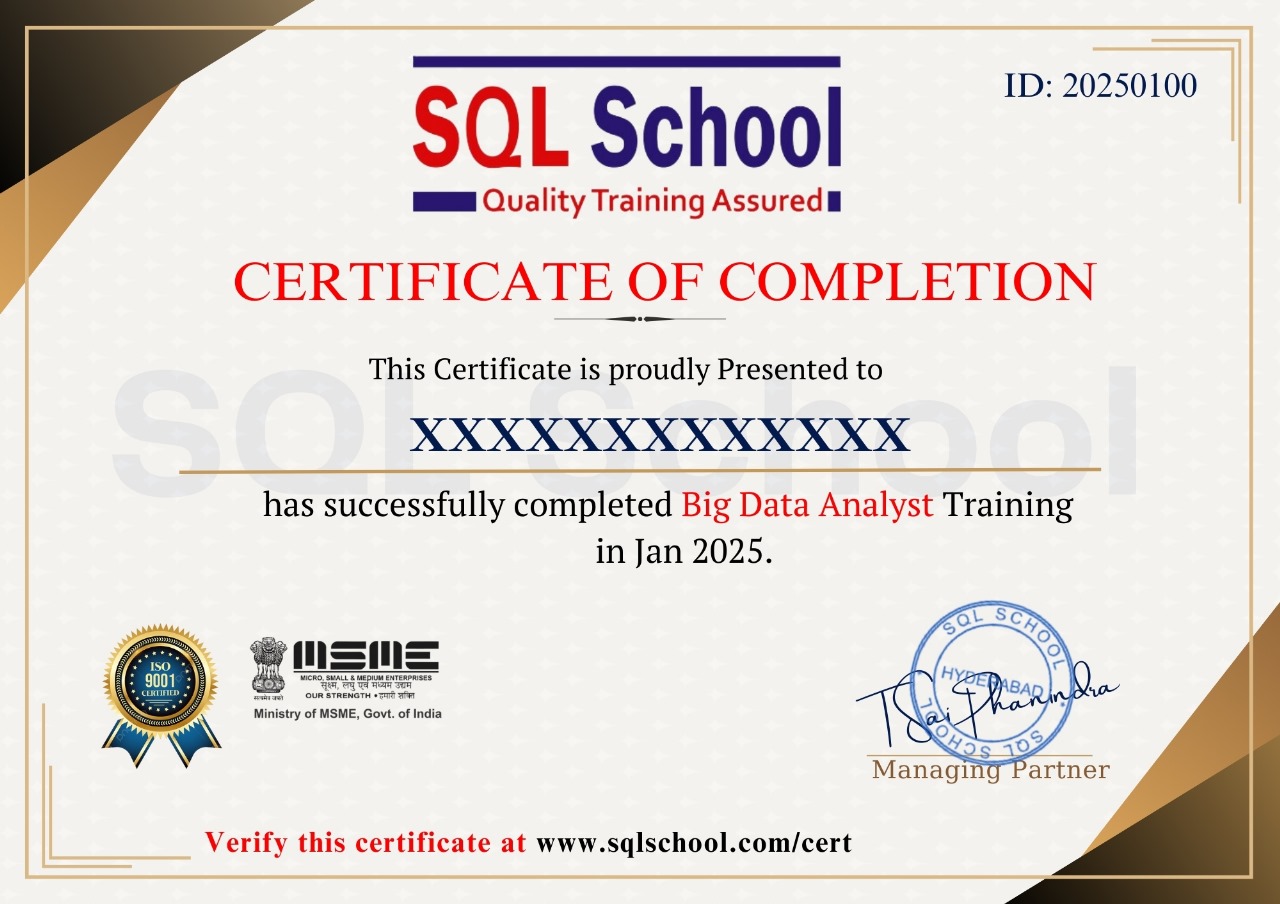
CERTIFICATE OF COMPLETION
SQL SCHOOL
24x7 LIVE Online Server (Lab) with Real-time Databases.
Course includes ONE Real-time Project.
Who is SQL School? How far you have been in the training services ?
SQL School is a registered training institute, established in February 2008 at Hyderabad, India. We offer Real-time trainings and projects including Job Support exclusively on Microsoft SQL Server, T-SQL, SQL Server DBA and MSBI (SSIS, SSAS, SSRS) Courses. All our training services are completely practical and real-time. CREDITS of SQL School Training Center
- We are Microsoft Partner. ID# 4338151
- ISO Certified Training Center
- Completely dedicated to Microsoft SQL Server
- All trainings delivered by our Certified Trainers only
- One of the few institutes consistently delivering the trainings for more than 20+ Years online as inhouse
- Real-time projects in
- Healthcare
- Banking
- Insurance
- Retail Sales
- Telecom
- ECommerce
I registered for the Demo but did not get any response?
Make sure you provide all the required information. Upon Approval, you should be receiving an email containing the information on how to join for the demo session. Approval process usually takes minutes to few hours. Please do monitor your spam emails also.
Why you need our Contact Number and Full Name for Demo/Training Registration?
This is to make sure we are connected to the authenticated / trusted attendees as we need to share our Bank Details / Other Payment Information once you are happy with our Training Procedure and demo session. Your contact information is maintained completely confidential as per our Privacy Policy. Payment Receipt(s) and Course Completion Certificate(s) would be furnished with the same details.
What is the Training Registration & Confirmation Process?
Upon submitting demo registration form and attending LIVE demo session, we need to receive your email confirmation on joining for the training. Only then, payment details would be sent and slot would be allocated subject to availability of seats. We have the required tools for ensuring interactivity and quality of our services.
Please Note: Slot Confirmation Subject to Availability Of Seats.
Will you provide the Software required for the Training and Practice?
Yes, during the free demo session itself.
How am I assured quality of the services?
We have been providing the Trainings – Online, Video and Classroom for the last 20+ years – effectively and efficiently for more than 100000 (1 lakh) students and professionals across USA, India, UK, Australia and other countries. We are dedicated to offer realtime and practical project oriented trainings exclusively on SQL Server and related technologies. We do provide 24×7 Lab and Assistance with Job Support – even after the course! To make sure you are gaining confidence on our trainings, participans are requested to attend for a free LIVE demo based on the schedules posted @ Register. Alternatively, participants may request for video demo by mailing us to contact@sqlschool.com Registration process to take place once you are happy with the demo session. Further, payments accepted in installments (via Paypal / Online Banking) to ensure trusted services from SQL School™
YES, We use Enterprise Edition Evaluation Editions (Full Version with complete feature support valid for SIX months) for our trainings. Software and Installation Guidance would be provided for T-SQL, SQL DBA and MSBI / DW courses.
Why Choose SQL School
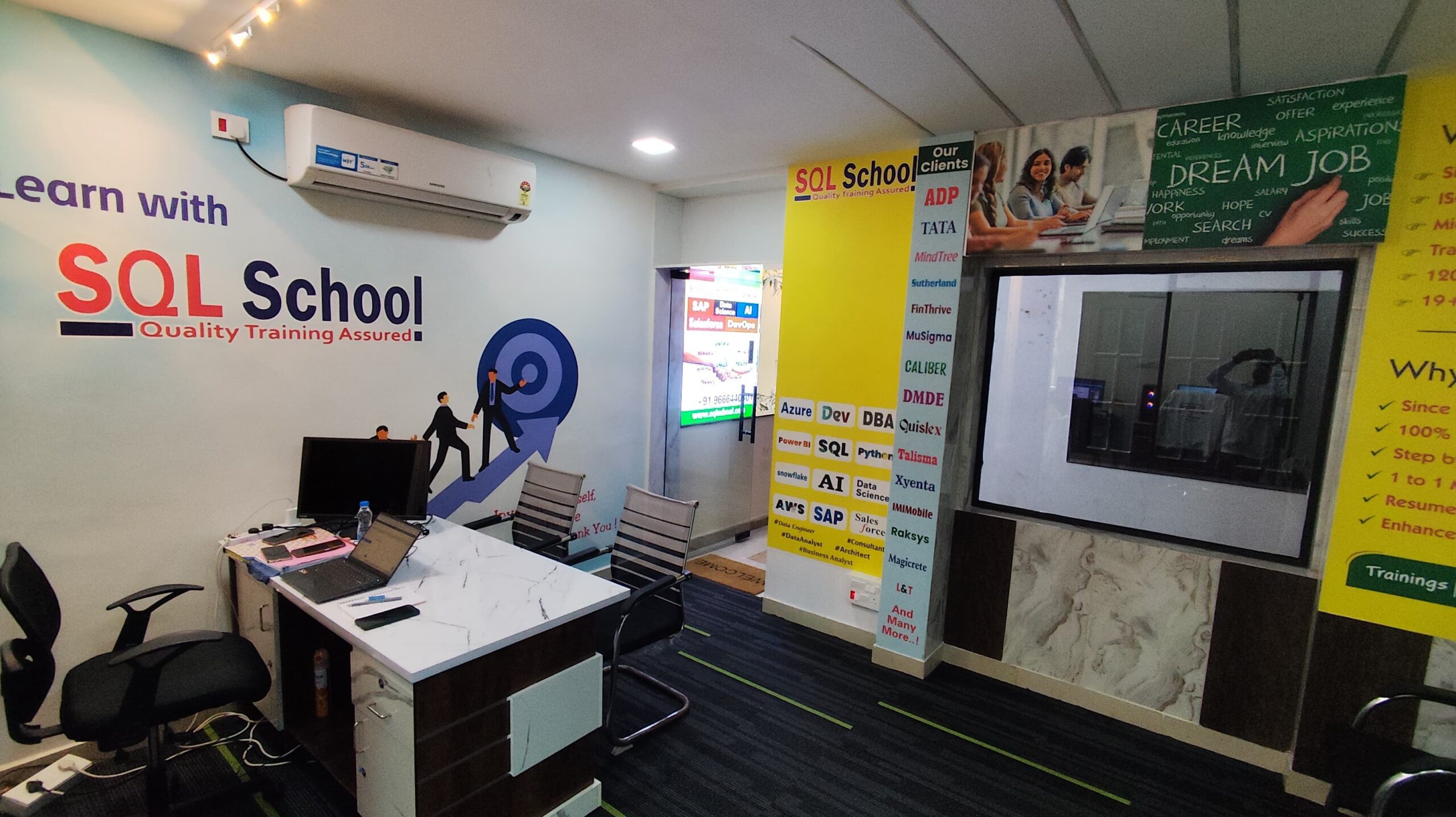
- 100% Real-Time and Practical
- ISO 9001:2008 Certified
- Weekly Mock Interviews
- 24/7 LIVE Server Access
- Realtime Project FAQs
- Course Completion Certificate
- Placement Assistance
- Job Support