Python Full Stack Course – Build Dynamic Web Applications from Scratch to Deployment
In today’s digital-first economy, every business needs powerful web applications. From startups to global enterprises, organizations rely on scalable, secure, and high-performing platforms. This demand has created massive opportunities for Python Full Stack Developers who can build complete web solutions from front-end interface to back-end logic and database integration.
If you want a future-proof tech career, a Python Full Stack Course is one of the smartest investments you can make.
What is Python Full Stack Development?
Python Full Stack Development means mastering both client-side (front-end) and server-side (back-end) technologies using Python as the core programming language.
A Python Full Stack Developer can:
Design interactive user interfaces
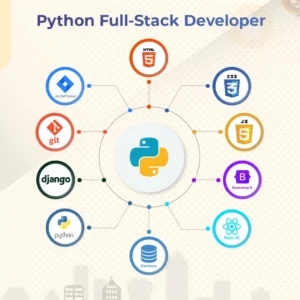
Build powerful backend logic using Django or Flask
Manage databases efficiently
Develop REST APIs
Deploy applications to cloud platforms
Instead of depending on multiple teams, full stack professionals handle the complete application lifecycle.
Why Python is the Ideal Language for Full Stack Development
Python is globally recognized for its:
Simple and readable syntax
Rapid development capability
Strong community support
Powerful frameworks like Django & Flask
Integration with AI, ML, and Data Science
Because Python is widely used in web development, automation, analytics, and cloud computing, learning Python full stack gives you long-term career flexibility.
Core Modules Covered in a Python Full Stack Course
A structured and industry-oriented Python Full Stack program includes:
Front-End Development
HTML5, CSS3
JavaScript fundamentals
Bootstrap for responsive design
React or modern UI libraries
Back-End Development
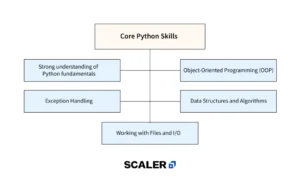
Python Programming (Core + Advanced)
Django / Flask Framework
RESTful API Development
Authentication & Security
Database Management
SQL (MySQL / PostgreSQL)
Database Design
Query Optimization
CRUD Operations
Deployment & Version Control
Git & GitHub
Docker basics
AWS / Cloud hosting
Application deployment
This complete stack ensures you are job-ready from day one.
Importance of Learning Python Full Stack
1. High Industry Demand
Companies prefer developers who understand the entire system architecture. Python full stack developers are highly valued because they reduce dependency across teams and accelerate project delivery.
2. End-to-End Development Skills
Instead of specializing in only front-end or back-end, you gain the ability to:
Build complete web apps
Debug issues across layers
Optimize performance
Ensure application security
This makes you a valuable asset in any IT organization.
3. Strong Career Stability
Full stack skills provide better job security because your expertise spans multiple technologies, reducing redundancy risk.
Advantages of a Python Full Stack Course
Faster Career Growth
With hands-on projects and real-world case studies, you gain practical exposure that recruiters look for. This improves placement opportunities and salary growth.
Higher Salary Packages
Full stack developers typically earn more than single-domain developers because they contribute across the entire development cycle.
Freelancing & Startup Opportunities
Python full stack skills allow you to:
Build your own SaaS applications
Create freelance projects
Develop custom websites for clients
Launch your own tech startup
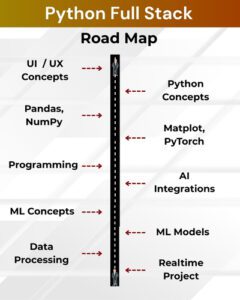
Real-Time Project Experience
A professional course includes real-world projects like:
E-commerce applications
Blog management systems
Admin dashboards
API-driven web applications
These projects strengthen your portfolio and boost interview confidence.
Future Scope of Python Full Stack Development
The future of web development is shifting toward:
Cloud-native applications
API-driven architectures
AI-integrated platforms
Scalable microservices
Python integrates smoothly with AI, Data Science, and DevOps ecosystems. This makes Python Full Stack Development one of the most future-ready skills in the tech industry.
Who Should Enroll in a Python Full Stack Course?
This course is ideal for:
Fresh graduates aiming for software development roles
Working professionals upgrading skills
Career switchers entering IT
Entrepreneurs building web products
Freelancers expanding service offerings
No matter your background, structured training can help you become a confident developer.
Why Choose Structured Python Full Stack Training?
A professional training program offers:
Step-by-step practical learning
Live coding sessions
Industry-based assignments
Resume & interview preparation
Mentorship support
This ensures you move from beginner to job-ready developer with confidence.
Frequently asked questions (FAQ’S)
1. What is a Python Full Stack Developer?
A Python Full Stack Developer is a professional who can build complete web applications using Python for backend development and technologies like HTML, CSS, JavaScript, and React for frontend development. They manage databases, APIs, and deployment processes as well.
2. Is Python Full Stack a good career in 2026 and beyond?
Yes. Python Full Stack Development is one of the most in-demand IT careers because companies need developers who can handle both frontend and backend tasks. With cloud, AI, and web technologies growing rapidly, full stack skills remain highly valuable.
3. What are the prerequisites to join a Python Full Stack course?
No advanced technical background is required. Basic computer knowledge is sufficient. Freshers, graduates, and working professionals can start learning Python Full Stack from scratch.
4. Which technologies are covered in a Python Full Stack course?
A comprehensive course typically covers:
Python Programming
Django or Flask Framework
HTML, CSS, JavaScript
React or modern frontend libraries
SQL and Database Management
Git, Deployment, and Cloud basics
5. How long does it take to become a Python Full Stack Developer?
With consistent learning and practical training, you can become job-ready within 4 to 6 months, depending on your learning pace and practice level.
Conclusion
In today’s competitive digital landscape, companies are looking for versatile developers who can handle both frontend creativity and backend logic with confidence. Python Full Stack Development empowers you with the ability to design, develop, test, and deploy complete web applications independently.
If your goal is to build scalable applications, unlock better career opportunities, and step into a future-ready tech role, enrolling in a Python Full Stack Course is a powerful move toward long-term professional success. 🚀
Python Full Stack Training: https://sqlschool.com/python-full-stack-training/
Python Full Stack Course Curriculum: https://sqlschool.com/wp-content/uploads/2026/02/Python_Full_Stack.pdf
#SQLSchool#ITTraining#ProfessionalTraining#RealTimeProjects#PythonTraining#DjangoDeveloper#FlaskDeveloper#LearnCoding#CodeYourFuture#SkillUpgrade
Trainer: Mr. Sai Phanindra
With 19+ Years of
technical expertise exclusively on SQL & Database Technologies, I assure you 100% Practical, Step by Step Classes.
Linkdin Profile: www.linkedin.com/in/saiphanindra/
Contact No: +91 9030040801 or +91 9666640801
