#Mern Full Stack
- ✅ Backend APIs using Express.js
- ✅ Server Logic with Node.js
- ✅ Data Storage in MongoDB
- ✅ Full JavaScript Development
- ✅ Routing & Middleware Integration
- ✅ RESTful API Development
- ✅ Frontend & Backend Connection
- ✅ Real-Time Functionality with Socket.io
- ✅ Deployment with Git & Cloud Platforms
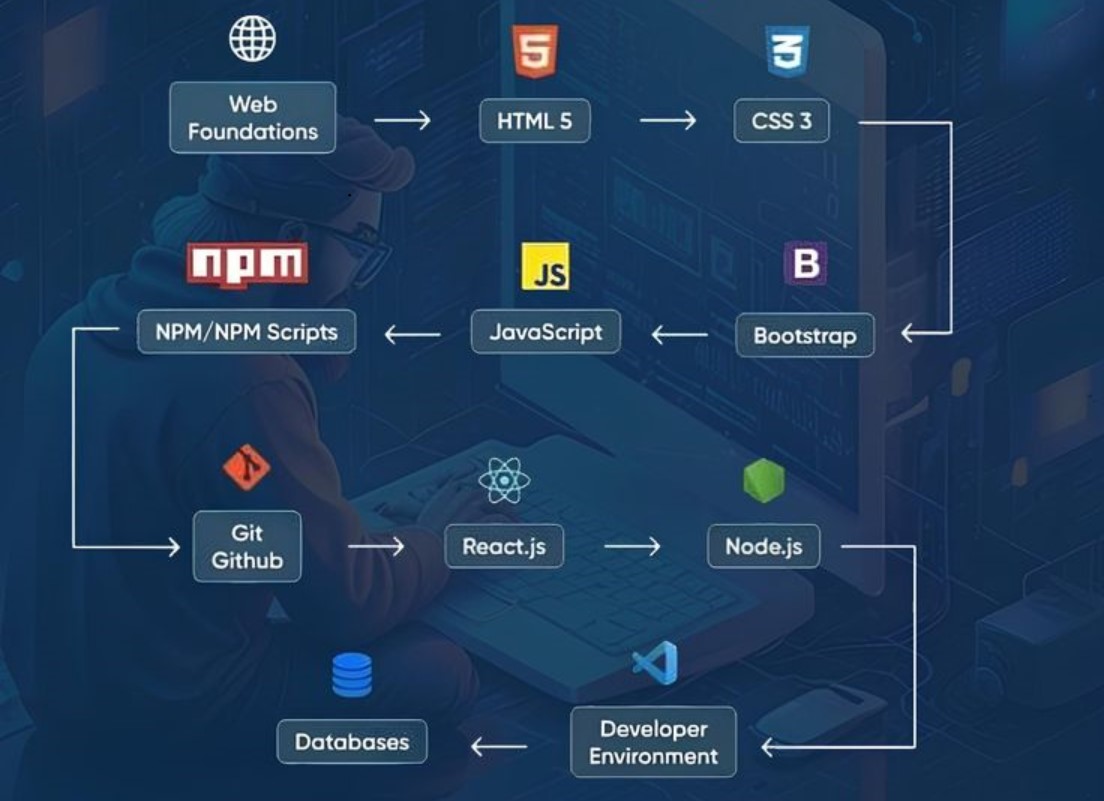
#MERN Full Stack Road Map
Module 1 : Python Analytics
Ch 1: Python Introduction
- Python Introduction
- Python Versions
- Python Job Roles
- Python for Data Analysts
- Python for Data Engineers
- Python for Data Scientists
- Python for Data Science Engineers
Ch 2: Python Architecture
- Python Architecture
- PVM: Python Virtual Machine
- Compiler
- Byte Code
- Execution Process
- Resource Allocations
- Python Implementations
Ch 3: Python Installations
- Python Introduction
- Python Installations
- Anaconda Installation
- Python IDE & Usage
- Jupyter Notebooks
Ch 4: Python Print Statement
- Python Print Statement
- print(), print()
- Testing Case Sensitivity
- Single Line print()
- Multi Line print()
- print() with single quotations
- Debug with AI (AI Assistants)
Ch 5: Python Variables
- Python Variables
- Assigning values
- Purpose & Rules
- Variable Value Reads
- Multiple Variables & Print()
Ch 6: Python Operators
- Athematic *& Multiplier Operators
- Python String Literals
- Single, Double Quotes
- Format Strings (f string)
- Comparison, Indexing Operators
Ch 7: Python Data Types
- Python Data Types
- Integer, Float, String Data Types
- Type Casting
- Type Identification
- Multi Value Assignments
- Python Built-In Classes (data types)
Ch 8: Python Lists
- Creating Python Lists
- Printing List Items
- Print List Slices
- Length & Type
- list() method
- Empty Lists, Append
- Loops, List Updates
Ch 9: Python Dictionaries
- Python Dictionary
- Creating, Indexing Dictionaries
- Edit / Overwrite Key Values
- Lists inside Dictionaries
- Delete & Clear
Ch 10: Python Tuples
- Python Tuples
- Defining, Indexing
- Length(), Type()
- Mixed Values in Tuples
- Overwriting Tuples
- Tuple Class, (( ))
Ch 11: Python IF..ELSE Condition
- If..Else conditions
- if..elif..else & Shorthand if
- composite conditions
- Indent, pass statement
- in & negation operators
- range conditions
Ch 12: Python Loops (For)
- Python For Loop
- For Loop @ Range
- For Loop @ Sequence Values
- Nested Loops
- Loop Control Statements
- Break, Continue, Paas
Ch 13: Python Loops (While)
- While Loop
- Termination Checks (Expressions)
- Variables, Logical Conditions
- Loop Conditions, Operators
- Exit Conditions
- iter() and Looping Options
Ch 14: Python Dataframes
- Dataframes: Creation
- Pandas Dataframes
- Dataframes From Single List
- Dataframes from Dictionary
- Display Dataframes, List Items
- Identify, Replace Nulls, NumPy
Ch 15: Python SQL DB Access
- SQL DB Access with Python
- import pandas.DataFrame
- pyodbc module, sql functions
- SQL DB Cursor Connections
- SQL Query Executions: DDL, DML
- Filters, Aggregations with SQL
- Dataframe Usage with SQL
Ch 16: Dataframe Transformations – 1
- Dataframe Transformations
- Concat & Append
- Merge Function
- Join with Multiple Dataframes
- Indexing Operations
- Data Type Checks, Conversions
- Loops with Dataframes
Ch 17: Dataframe Transformations – 2
- Pandas – Cleaning Data
- Replace, Transform Columns
- Data Discovery & Column Fill
- Identify & Remove Duplicates
- dropna(), fillna() Functions
- Data Plotting & matlib Lib
Ch 18: Python Functions & Lambda
- Python Functions & Usage
- Function Parameters
- Default & List Parameters
- Python Lambda Functions
- Recursive Functions, Usage
- Return & Print @ Lamdba
Ch 19: Python File Handling
- File Handling, Activities
- Loop, Write, Close Files
- Appending, Overwriting
- import os, path.exists
- f.open, f.write
- f.read, f.close
Realtime Case Study (Banking / Finance) For Data Analysis
Module 2 : Python Programming
Ch 19: Python Modules
- Import Python Modules
- Built In Modules & dir
- datetime module in Python
- Date Objections Creation
- strftime Method & Usage
- imports & datetime.now()
Ch 20: Python User Inputs & TRY
- Try Except, Exception Handling
- Raise an exception method
- TypeError, Scripting in Python
- Python User Inputs
- Python Index Numbers
- input() & raw_input()
Ch 21: Python Dictionary
- Dictionary Creation, Use
- Hashing, Copy, Update
- Deletion, Sorting
- Len(), Inbuilt Functions
- Variable Types – python List
- Cmp() List Method
- Python Dictionary Str(dict)
- Programming Concepts
- Loops and Sets
- Realtime Usage
Ch 22: Python Packages
- Package in Python
- Creating a package
- Package Imports, Modules
- Sub Packages Creation
- Sub Package Imports
- Popular Packages in Python
- NumPy & SciPy
- Libraries in Python
- Python Seaborn
- Python framework
Ch 23: Exception Handling
- Shell Script Commands
- OS operations in Python
- File System Shell Methods
- os – math – cmd -csv – random
- Numpy (numerical python)
- Pandas – sys – Matplotlib;
- Common RunTime Errors
- Python Custom Exception;
- Exception Handling
Ch 24: Python Class & Objects
- Class variables, Instances
- Built in Class Attributes
- Objects – Constructors
- Modifiers – Self Variable
- Python Garbage Collections
- Hierarchical Inheritance
- Multilevel, Multiple, Hybrid
- Overloading & OverRiding
- Polymorphism – Abstraction
Ch 25: Regular Expressions
- Regular Expression
- Regular Expression Patterns
- Literals – Repetition Cases
- Groups andGrouping
- w+ and ^ , \s Expressions
- split function
- Regular expression methods
- match() in Regular Expr
- search(), re.findall for Text
Ch 26: Multi-Threading
- Python Multi-Threading
- Thread Synchronization
- Multiprocessing
- Python Gil & Programming
- Thread Control Block (TCB)
- Stack Pointers & App Usage
- Program Counters in Realtime
- Thread State Concept
- Python Exception Handling
Ch 27: Python TKinter
- Tkinter GUI Program
- Components & Events
- Adding Controls inTkinter
- Entry, Text Widgets
- Radio & Check Buttons
- Tkinter Forms in Realtime
- List Boxes, Menu, ComboBox
- Mainloop () & Functions
Ch 28: Python Web & IoT Intro
- Python Web Frameworks
- Django : Advantages
- Web Framework
- MVC and MVT – Django
- Web Pages using python
- HTML5, CSS3 usage
- PYTHON Bottle & Pyramid
- Falcon ; smart_open in python
Realtime Project on Banking / Finance
Module 3: Python with AI – ML
Ch 29: Machine Learning Basics
- Machine Learning Funda
- Python ML in Realtime
- Pandas Extension in ML
- Machine Learning Ops
- Business to Data Conversions
- ML Algorithms in Realtime
Ch 30: Python ML Concepts
- Machine Learning (ML) Intro
- Supervised, Unsupervised
- Scikit-Learn Library
- Python Libraries for ML
- sklearn : Advantages & Uses
- sklearn : Functions, Use
Ch 31: Python Data Handling
- Data structures
- Lists, Tuples, Sets
- Dictionaries,
- Pandas Data Operations
- Data Visualizations
- Matplotlib & Seaborn
Ch 32: AI With Python Intro
- Artificial Intelligence
- Applications of AI
- AI Applicative Uses
- AI Usage with Python
- AI – Python Environment
- Python Libraries
- AI with Python in Realtime
Ch 33: Supervised Learning
- Linear & Logistic Regression
- Decision Trees
- Random Forests
- Support Vector Machines
- Neural Networks Basics
- Linear Regression Steps
- Linear Regression in AI-ML
Ch 34: Unsupervised Learning – 1
- Clustering & K-means
- DBSCAN & Realtime Usage
- Dimensionality Reduction
- K clustering hierarchical
- DBScan : Realtime Uses
- KMeans clustering Vs DBSCAN?
- PCA Vs t-SNE
Ch 35: Unsupervised Learning 2
- Unsupervised Learning
- Concepts and Scope
- Realtime Usage
- Dimensionality Reduction
- Component Analysis (PCA)
- PCA: Concept & Usage
Ch 36: Generalized Models
- GLM Concept in Python
- GLM in Regression
- Considerations for GLM
- Problem Solving Skills
- Python Libraries
- Python Extensions: GLM
Ch 37: Python Tree Models
- Decision Tree Models
- Decision Tree Working
- Model Works, Algorithms
- Random Forest Concept
- Random Forest Tree
- Random Forest Vs Knn
Ch 38: Big Data and ML
- Spark and Big Data
- Big Data with Python
- Spark with Python
- Spark with Big Data
- Spark Algorithms
- AI ML Libraries
Ch 39: Natural Lang” Processing
- NLP : Purpose, Usage
- NLP Applicative Uses
- NLP Vs Machine Learning
- NLP in Machine Learning
- Using NLP in AI – ML
- NLP code in Python?
Ch 40: AI in Real-World
- AI in Chatbots
- AI in Virtual Assistants
- AI Ethical Considerations
- AI Deployments (Flask)
- AI with FastAPI
- AI with Streamlit
- End to End Project Work
- Python AI
- Python ML
- Realtime Project
- Resume Guidance
- 1:1 mentorship
SQL SCHOOL
24x7 LIVE Online Server (Lab) with Real-time Databases.
Course includes ONE Real-time Project.
#Top Technologies



MERN Full Stack Training FAQs
What is MERN Job Role?
A MERN Full Stack Developer builds complete web applications using the MERN stack — MongoDB, Express.js, React, and Node.js. They handle both the frontend (React) and backend (Node + Express), along with database operations (MongoDB).
Key Tasks:
Design and develop user interfaces (UI) using React
Build server-side APIs and business logic with Node.js and Express
Manage and query data with MongoDB
Ensure app performance, security, and scalability
Integrate frontend and backend seamlessly
What are the Job Roles of an MERN Full Stack?
💼 Top Job Roles:
Job Roles of a MERN Full Stack
Frontend Development – Build dynamic UIs using React.js
Backend Development – Create APIs and server logic with Node.js & Express.js
Database Management – Design and manage data with MongoDB
Full-stack Integration – Connect frontend, backend, and database
App Deployment & Maintenance – Deploy, test, and maintain web apps and more..!
What does our MERN Full Stack Training course contains?
The course is carefully curated with below module:
👉🏻Module 1: Full Stack Basics
👉🏻Module 2: REACT.JS
👉🏻Module 3: MongoDB and Node.js
Who can join this course?
Freshers aiming for a career in web development
Students and graduates interested in full-stack programming
Developers wanting to upskill in React, Node.js, and MongoDB
IT professionals looking to become full-stack developers
Anyone with basic programming or web knowledge
No prior experience in full-stack is required — the course starts from basics.
What training modes are available?
Option 1: LIVE Online Training (100% Interactive, step by step, assignments)
Option 2: Self Paced Videos (100% practical, step by step with concept wise assignments)
You may choose any one of these options, same curriculum!
I (Trainer) shall be available for doubts and clarifications, assignment check and review.
Why should I choose SQL School for MERN Full Stack training?
👉🏻 Every session is Practical, Step by Step with Concept wise FAQs !!
👉🏻 100% results with on-time practice. Daily Tasks for every session.
👉🏻 Concept wise tasks be submitted before next class for Job Waiters / Starters.
👉🏻 Concept wise tasks due for submission by Weekends for Working Professionals.
Why Choose SQL School
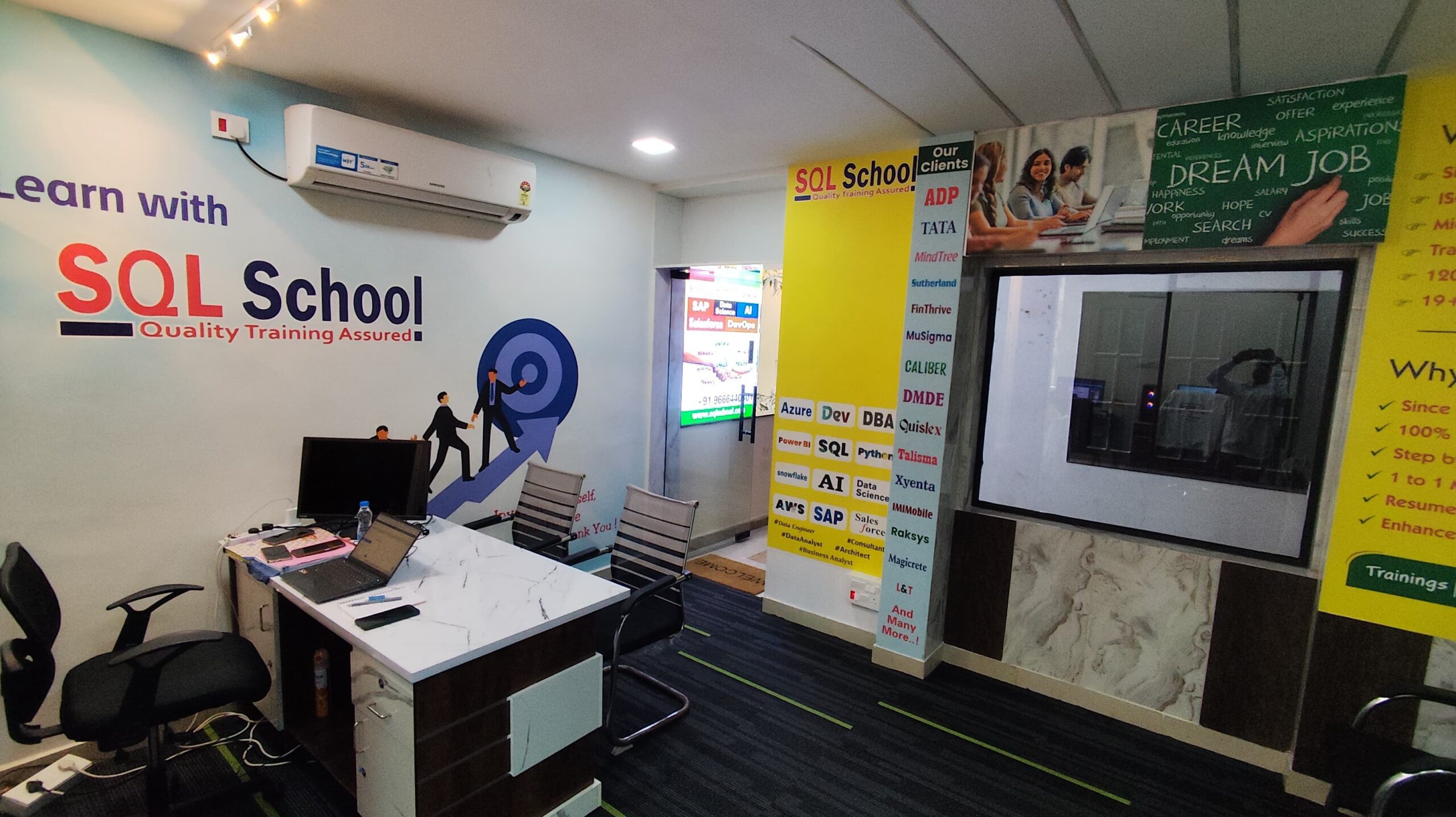
- 100% Real-Time and Practical
- ISO 9001:2008 Certified
- Weekly Mock Interviews
- 24/7 LIVE Server Access
- Realtime Project FAQs
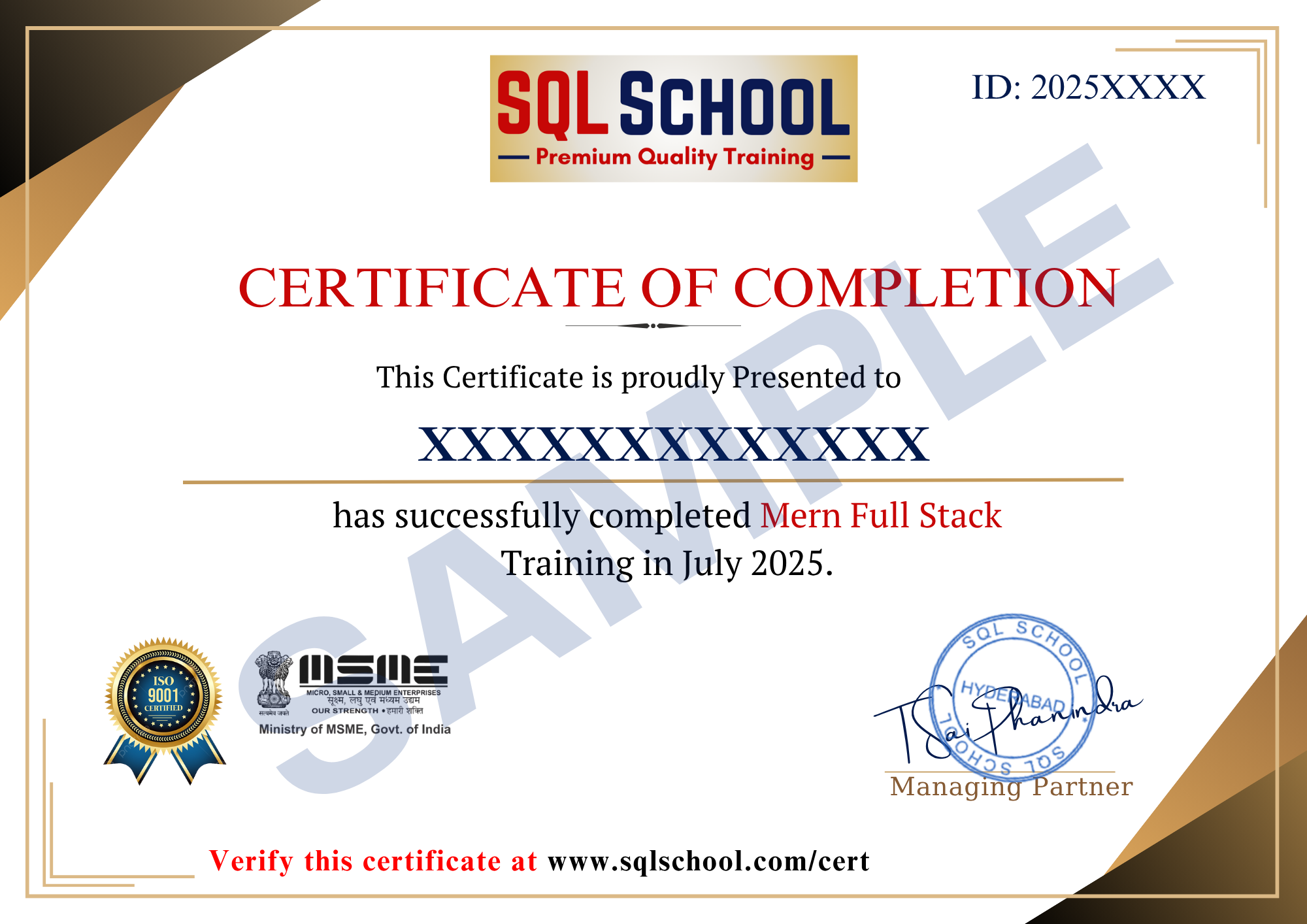
- Course Completion Certificate
- Placement Assistance
- Job Support