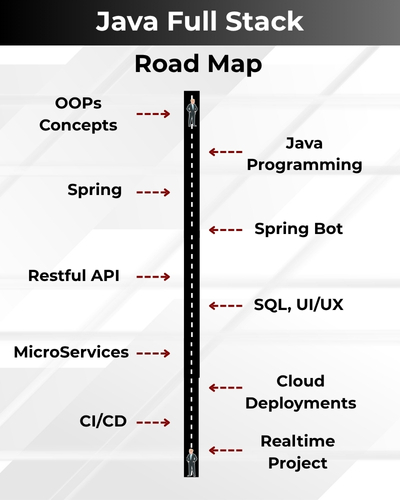
Java Full Stack Developer builds complete web applications using Java for backend and modern frameworks like React or Angular for frontend. Skilled across all layers — database, API, and UI — they play a key role in delivering scalable, enterprise-grade solutions and driving digital innovation.
✅ Core Java Programming
✅ Advanced Java Concepts (JDBC, Servlets, JSP)
✅ SQL + Java for Data Handling
✅ Spring & Spring Boot Frameworks
✅ RESTful APIs & Microservices
✅ Frontend Development with HTML, CSS, JavaScript
✅ React / Angular Integration
✅ Project Deployment on Cloud (AWS / Azure)
✅ Real-Time Full Stack Project
✅ 1:1 Mentorship, Resume & Interview Prep
Java Full Stack
Course Contents:
Core Java
Introduction Core Java
- Introduction to programming
- Introduction to java
- JDK installation
- Keywords, Identifiers, variables
- Operators
- Method/Functions
- Flow Control Statements
- Arrays
- Strings
- Interactive programs in java using Scanner
Object Oriented Programming System (OOPS)
- Classes and Objects
- Object creation
- Reference variable
- Global and local variables
- Constructors
- Inheritance***
- Method Overloading
- Method Overriding
- Abstract classes
- Interfaces
- Typecasting
- JVM architecture
- Polymorphism
- Abstraction
- Java packages
- Access Specifies
Java Built-in packages and API
- Overview of java API
- Object class
- String, String Buffer and String Builder
- Exception Handling
- Threads and multithreading
- Wrapper Classes
- Java Collection Frameworks
- File Handling
- Serialization
Adv. JAVA [J2EE]
Introduction to JAVA EE
- What is computer?
- What is an application?
- Types of application?
- What is standalone application?
- What is web application?
- What is network?
- What is internet?
- What is intranet?
- What is server?
- What is database?
- What is an API?
- What is J2EE?
- Types of API’s
- JAVA EE 3-tier architecture
- JAVA EE 2-tier
JDBC
- Steps to work with JDBC
- JDBC pre-requirements
- Installing MYSQL, DB server
- FIRST JDBC program
- What is a JAR file?
- About driver class
- How to load the driver class into the program
- .Types of Driver
- Db url
- What is url?
- Structure of dburl
- Driver Manager class
- About the get connection method
- Connection object
- Statement and prepared statement objects
- ExecuteQuery() and executeUpdate() methods
- How to handle the result set object
- How to process the result set object
- Why to close an object?
SERVLETS
Introduction
- What is web browser?
- What are web resources?
- Types of web resources
- What is web server?
- Installing of apache tomcat web server
About servlet
- Servlet introduction
- Creating the first servlet in web app
- Steps to create WAR file
- Build & Deployment process
- Web URL
- Web url structure.
- Query string.
- Difference between GET and POST.
Servlet Container
- About servlet containers & its advantages
- Request and response objects
- GetParameter() and getParameters() methods
- About XML
- About deployment descriptor(web.xml)
- OGeneric servlet
- HTTP Servlet
- Difference between Generic servlet and HTTP Servlet
- Servlet life cycle
- Redirect, Forward and Include
- Cookies
- Session
- Steps to create a session in the webapp
- Types of session
- Life cycle of session
- Application of session
JSP
Introduction
- How to create JSP
- Difference between Servlet and JSP
JSP Scripting Elements
- Scriptlet tag
- Expression tag
- Declaration tag
JSP implicit objects
- Request object
- Response object
- Config object
- Application object
- Session object
Exception handling in JSP
- About isErrorPage and errorPage
JStI
- Introduction
- JSTL core tags
- JSTL function tags
Frameworks
Frameworks
Hibernate
- Hibernate Overview
- Hibernate-ORM
- Hibernate Architecture
- Hibernate Environment Setup
- Hibernate Configuration
- Hibernate Session
- Hibernate Mapping Files
- Hibernate Mapping Types
- Hibernate Annotation
- Hibernate Query Language
Spring
Introduction
- Why spring
- Spring modulus
- Spring application
- Spring in eclipse
Spring IOC
- IOC container
- dependency injection
- constructor injection
- constructor injection-dependent object
- constructor injection with collection
- constructor injection with collection 2
- constructor injection with map
- constructor injection in inheritance been
- setter injection
- setter injection-dependent object
- setter injection with collection
- setter injection with collection 2
- setter injection with map
- injection with map 2
- constructor injection versus setter injection
- auto wiring
- factory method
Spring MVC
- MVC introduction
- multiple view pages
- multiple controllers
- model interface
- request Param annotation
- form tag library
- form text field
- form radio field
- form checkbox
- form drop-down list
- JDBCTemplate Example
- PreparedStatement
- MVC CRUD Example
- spring MVC Validation
Spring Boot & Rest API
- Spring Boot Introduction
- Spring Boot + Maven 一 Hello World Example
- Creating a RESTful Web Service Example
- Common Application Properties
- How to Change Default Tomcat Server Port
- How to Change Default Context Path
- How to Reload Changes Without Restarting the Server
- How to Create/Configure a Data Source
- How to Configure Multiple Data Source
- Spring Boot + Spring Security – RESTful Web Service with basic Authentication
- Spring Boot + Spring Security – RESTful Web Service with Database Authentication
- Spring Boot + Spring MVC + JSP Hello World Example
- Spring Boot – RESTful Web Service with POST Request in JSON Example
Web Services
Web Services
- Webservices Introduction
- What is Webservices
- Why Webservices
- Real Time Examples of Webservices
- Different Webservices
- SOAP
- REST
- About HTTPS
- Understanding SOAP & REST Webservices
- Requirement of Webservices
- Advantage of Webservices
- Understanding XML & JSON
- SOAP Webservice using Spring
- REST Webservice using Spring-REST
Tools
- Maven
- JUnit
- Log4J
- GitHub
- Jenkins
Empty section. Edit page to add content here.
Java Full Stack
Course Contents:
Core Java
Introduction Core Java
- Introduction to programming
- Introduction to java
- JDK installation
- Keywords, Identifiers, variables
- Operators
- Method/Functions
- Flow Control Statements
- Arrays
- Strings
- Interactive programs in java using Scanner
Object Oriented Programming System (OOPS)
- Classes and Objects
- Object creation
- Reference variable
- Global and local variables
- Constructors
- Inheritance***
- Method Overloading
- Method Overriding
- Abstract classes
- Interfaces
- Typecasting
- JVM architecture
- Polymorphism
- Abstraction
- Java packages
- Access Specifies
Java Built-in packages and API
- Overview of java API
- Object class
- String, String Buffer and String Builder
- Exception Handling
- Threads and multithreading
- Wrapper Classes
- Java Collection Frameworks
- File Handling
- Serialization
Adv. JAVA [J2EE]
Introduction to JAVA EE
- What is computer?
- What is an application?
- Types of application?
- What is standalone application?
- What is web application?
- What is network?
- What is internet?
- What is intranet?
- What is server?
- What is database?
- What is an API?
- What is J2EE?
- Types of API’s
- JAVA EE 3-tier architecture
- JAVA EE 2-tier
JDBC
- Steps to work with JDBC
- JDBC pre-requirements
- Installing MYSQL, DB server
- FIRST JDBC program
- What is a JAR file?
- About driver class
- How to load the driver class into the program
- .Types of Driver
- Db url
- What is url?
- Structure of dburl
- Driver Manager class
- About the get connection method
- Connection object
- Statement and prepared statement objects
- ExecuteQuery() and executeUpdate() methods
- How to handle the result set object
- How to process the result set object
- Why to close an object?
SERVLETS
Introduction
- What is web browser?
- What are web resources?
- Types of web resources
- What is web server?
- Installing of apache tomcat web server
About servlet
- Servlet introduction
- Creating the first servlet in web app
- Steps to create WAR file
- Build & Deployment process
- Web URL
- Web url structure.
- Query string.
- Difference between GET and POST.
Servlet Container
- About servlet containers & its advantages
- Request and response objects
- GetParameter() and getParameters() methods
- About XML
- About deployment descriptor(web.xml)
- OGeneric servlet
- HTTP Servlet
- Difference between Generic servlet and HTTP Servlet
- Servlet life cycle
- Redirect, Forward and Include
- Cookies
- Session
- Steps to create a session in the webapp
- Types of session
- Life cycle of session
- Application of session
JSP
Introduction
- How to create JSP
- Difference between Servlet and JSP
JSP Scripting Elements
- Scriptlet tag
- Expression tag
- Declaration tag
JSP implicit objects
- Request object
- Response object
- Config object
- Application object
- Session object
Exception handling in JSP
- About isErrorPage and errorPage
JStI
- Introduction
- JSTL core tags
- JSTL function tags
Frameworks
Frameworks
Hibernate
- Hibernate Overview
- Hibernate-ORM
- Hibernate Architecture
- Hibernate Environment Setup
- Hibernate Configuration
- Hibernate Session
- Hibernate Mapping Files
- Hibernate Mapping Types
- Hibernate Annotation
- Hibernate Query Language
Spring
Introduction
- Why spring
- Spring modulus
- Spring application
- Spring in eclipse
Spring IOC
- IOC container
- dependency injection
- constructor injection
- constructor injection-dependent object
- constructor injection with collection
- constructor injection with collection 2
- constructor injection with map
- constructor injection in inheritance been
- setter injection
- setter injection-dependent object
- setter injection with collection
- setter injection with collection 2
- setter injection with map
- injection with map 2
- constructor injection versus setter injection
- auto wiring
- factory method
Spring MVC
- MVC introduction
- multiple view pages
- multiple controllers
- model interface
- request Param annotation
- form tag library
- form text field
- form radio field
- form checkbox
- form drop-down list
- JDBCTemplate Example
- PreparedStatement
- MVC CRUD Example
- spring MVC Validation
Spring Boot & Rest API
- Spring Boot Introduction
- Spring Boot + Maven 一 Hello World Example
- Creating a RESTful Web Service Example
- Common Application Properties
- How to Change Default Tomcat Server Port
- How to Change Default Context Path
- How to Reload Changes Without Restarting the Server
- How to Create/Configure a Data Source
- How to Configure Multiple Data Source
- Spring Boot + Spring Security – RESTful Web Service with basic Authentication
- Spring Boot + Spring Security – RESTful Web Service with Database Authentication
- Spring Boot + Spring MVC + JSP Hello World Example
- Spring Boot – RESTful Web Service with POST Request in JSON Example
Web Services
Web Services
- Webservices Introduction
- What is Webservices
- Why Webservices
- Real Time Examples of Webservices
- Different Webservices
- SOAP
- REST
- About HTTPS
- Understanding SOAP & REST Webservices
- Requirement of Webservices
- Advantage of Webservices
- Understanding XML & JSON
- SOAP Webservice using Spring
- REST Webservice using Spring-REST
Tools
- Maven
- JUnit
- Log4J
- GitHub
- Jenkins
Placement Partners






















SQL SCHOOL
24x7 LIVE Online Server (Lab) with Real-time Databases.
Course includes ONE Real-time Project.
#Top Technologies


Why Choose SQL School
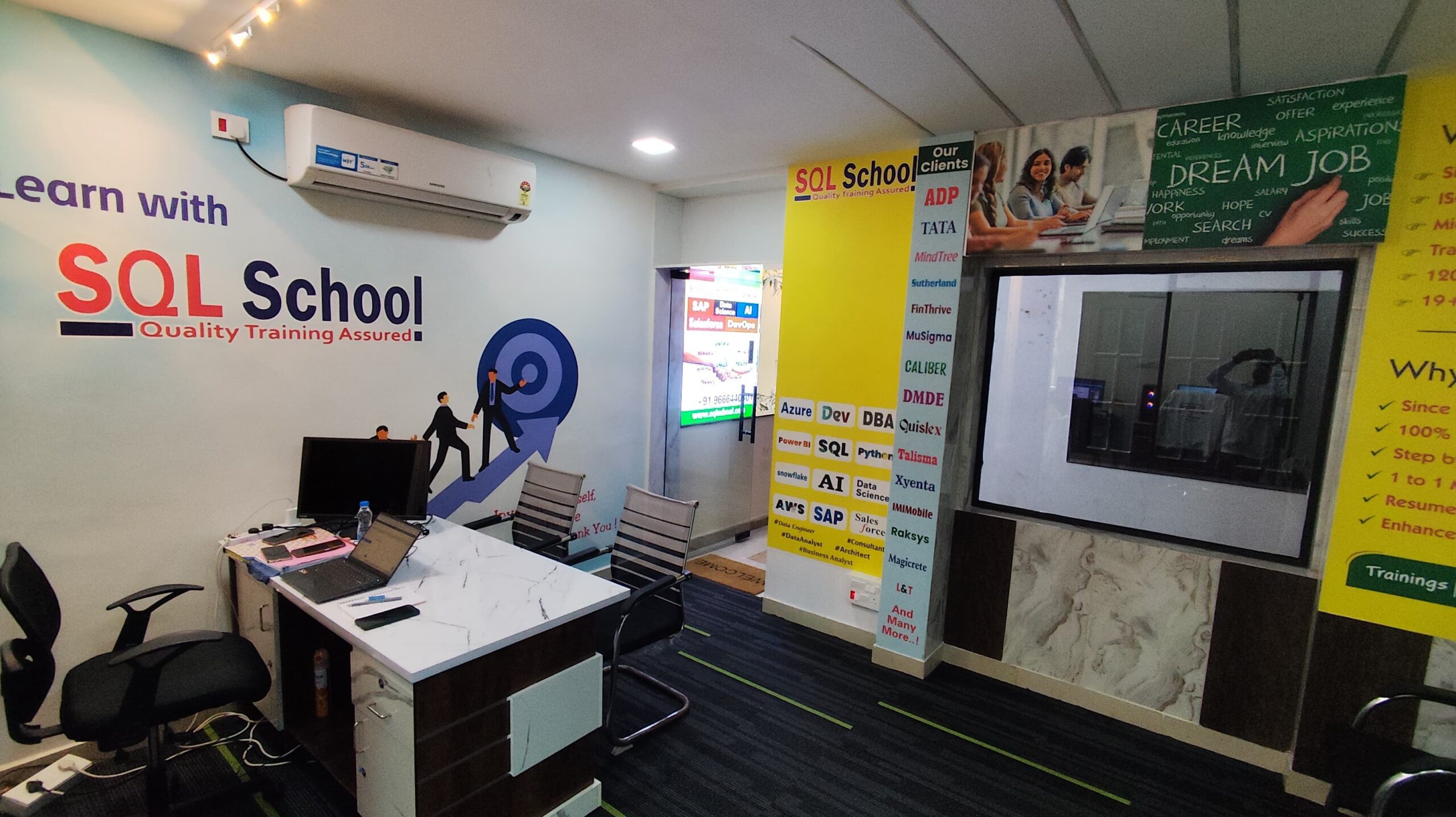
- 100% Real-Time and Practical
- ISO 9001:2008 Certified
- Weekly Mock Interviews
- 24/7 LIVE Server Access
- Realtime Project FAQs
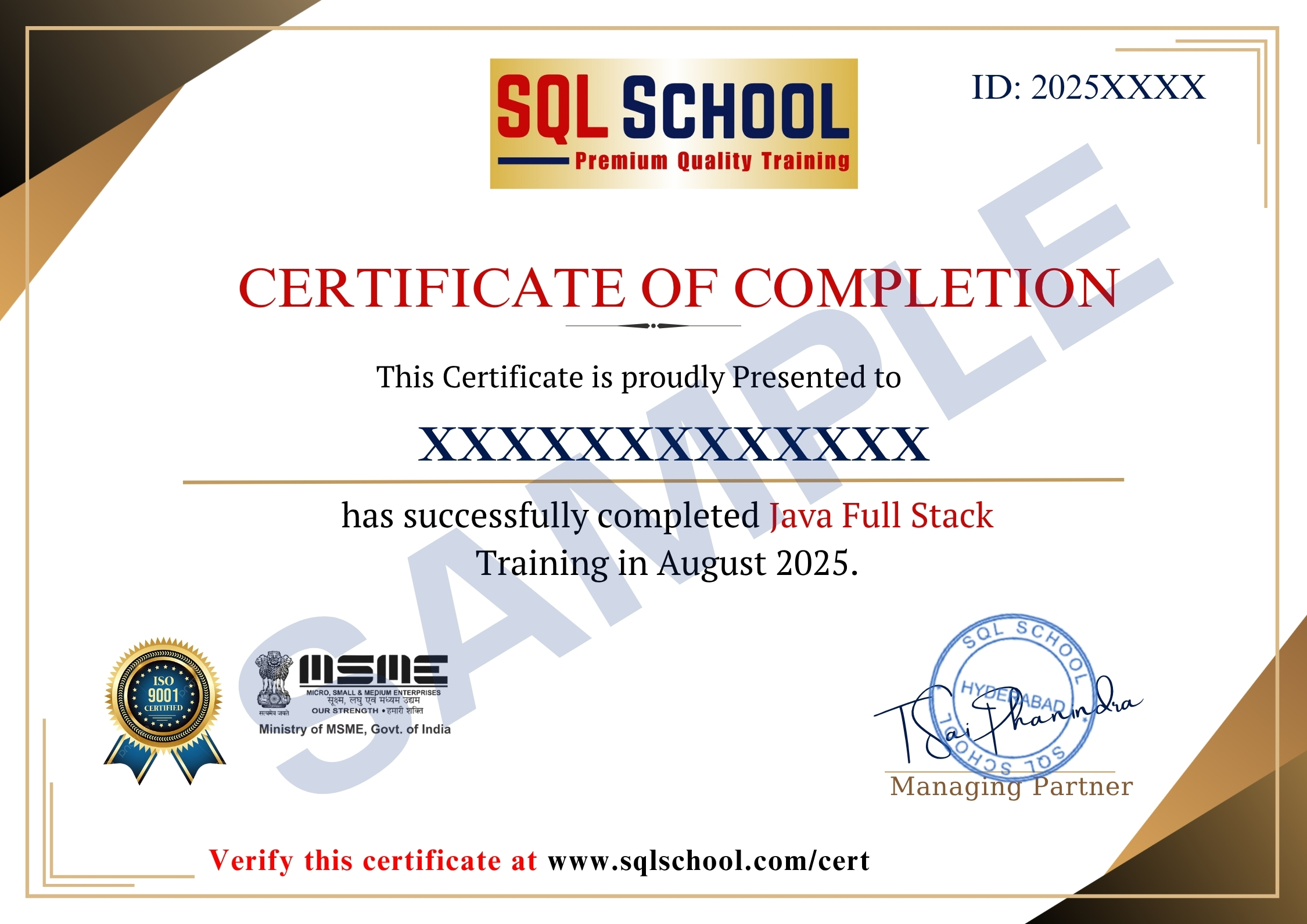
- Course Completion Certificate
- Placement Assistance
- Job Support