No. Basic understanding of computers is enough. Linux, AWS console, and ETL tools are taught step-by-step from basics.
AWS Data Engineering involves designing and building scalable data pipelines using Amazon Web Services. Engineers use tools like AWS Glue, Redshift, S3, and Lambda to process and transform large volumes of data. This role is in high demand and leads to careers in cloud data engineering, analytics, and big data architecture.
✅ AWS S3, Data Lake Architecture
✅ AWS Glue for ETL/ELT Pipelines
✅ Redshift: Data Warehousing, Analytics
✅ Kinesis for Real-Time Data Streaming
✅ EMR, PySpark for Big Data Process
✅ Lambda, AWS ETL, Automations
✅ IAM, KMS & Security Best Practices
✅ CI/CD Pipelines with AWS ETL
✅ End-to-End Real-Time Project
✅ 1:1 Mentorship, Interview Guidance
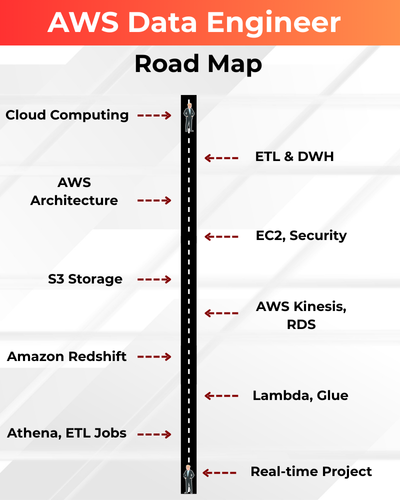
Module 1 : Linux
Ch 1: LINUX Introduction
- Client-Server Architecture
- GUI vs CLI
- Navigating through CLI
- Basic commands
- File System Hierarchy
- Help commands
Ch 2: File Hierarchy System
- Relative Path Concepts
- Absolute Path Concepts
- Common File Types
- Regular files
- Directories, Links
- Realtime Usage
Ch 3: File Management
- Create Files, Directories
- touch and mkdir
- Directory Operations
- Commands & Usage
- File Editing Options
- Text Editors (vim)
Ch 4: Basic User Management
- User Login Activity
- Viewing login records
- Local User Authentication
- /etc/passwd, /etc/shadow
- useradd, usermod, userdel
- Custom config & Profiles
Ch 5: Adv. File Management
- File and Directory Access
- Permissions Management
- chmod Realtime Usage
- Symbolic Mode
- Numeric Mode
- Configuring and using sudo
Ch 6: Variables
- Environment variables
- Shell variables
- Variable Substitution
- Command Substitution
- Using backticks & $
- Using LINUX in AWS
Module 2 : AWS Concepts
Ch 7: Cloud Computing
- Cloud Architecture & Use
- Cloud Computing Concepts
- Cloud Implementation Models
- Public, Private, and Hybrid
- AWS Cloud: Properties
- AWS Cloud: Advantages
- AWS Cloud: Usage Scope
Ch 8: AWS Concepts
- AWS Free Tier Account
- Account setup
- AWS Initial Configuration
- AWS Global Infrastructure
- Overview of Regions
- Availability Zones, Edges
Ch 9: Compute
- Creating EC2 Instances
- Instance types, AMIs
- Instance Launch Options
- Security Groups, Ports
- SSH Overview, Key Pairs
- Key pair creation and SSH
- Private vs Public vs Elastic IP
Ch 10: Security & IAM
- IAM Introduction
- Core IAM Architecture
- Managing Users & Groups
- Creating and managing IAM
- Group Policies, Inline Policies
- Difference and use cases
Ch 11: EC2 Instance Storage
- EBS : Elastic Block Store
- Managing EBS Volumes
- Volume Usage Options
- EBS Snapshots & Usage
- Cross-AZ, Replication
- EBS Encryption
- Amazon Machine Images
Ch 12: S3 Storage Service
- S3 Buckets and Objects
- S3 Usage Management
- S3 Versioning, Policies
- Access Control
- Static Website Hosting
- S3 Storage Classes
- Automation,EFS Concepts
Ch 13: Cloud Network & VPC
- Introduction to Networking
- CIDR : Notation, Usage
- Public, Private Subnets
- Subnet Creation Options
- Public and Private VPCs
- VPC setup & Configuration
Ch 14: Cost Management
- AWS Budgets Overview
- Budget Management
- Cost Management Tools
- AWS Cost Explorer
- Cost / Pricing Reports
- Real-time Strategies
Ch 15: CloudWatch
- Metrics
- Dashboards
- Alarms
- Logs
- Events (basics)
Ch 16: AWS Kinesis – 1
- Amazon Kinesis
- Realtime Data Streaming
- Amazon Kinesis Data streams
- Creating Data Stream
- Enhanced Fan-Out
- Lambda function & Kinesis
Ch 17: AWS Kinesis – 2
- Kinesis Firehose
- Data Firehose Stream
- Firehose – Transformations
- Firehose with Lambda
- ETL Implementations
- Data Streaming
Module 3: AWS Engineering (RDS, RedShift)
Ch 18: RDS DB Database – 1
- Database on EC2 instance
- Introduction to RDS
- RDS Networking and Subnet
- Create a VPC for RDS
- RDS Subnet Group
- Create an RDS Instance
- View an RDS Instance
Ch 19: RDS DB Database – 2
- RDS Usage in OLTP
- RDS Backups and Snapshots
- Restore RDS from Backup
- Share RDS Snapshots
- RDS Encryption in Transit
Ch 20: RDS DB Database – 3
- Authenticating to RDS
- Credentials, IAM
- Secrets Manager
- RDS Parameter Groups
- RDS Proxy, Multi-AZ RDS
- RDS Read Replicas
Ch 21: Amazon Redshift – 1
- Redshift overview
- Redshift Serverless
- Provisioned Cluster
- Architecture Overview
- Clusters & Nodes
- Create Redshift Cluster
- Access Redshift Cluster
- Query Editor, Node Types
Ch 22: Amazon Redshift – 2
- Storage, Resizing Methods
- Snapshots & Sharing
- Resizing Snapshots
- Redshift – VACCUM
- Load Data From S3
- Unload Data
- Federated Queries
- Redshift Spectrum
Ch 23: Amazon Redshift – 3
- AWS RedShift Security
- AWS RedShift Connections
- Authentication Types
- Optimization Options
- Data Load Operations
- Data Load Requirements
- Transformations with ELT
Ch 24: Amazon Redshift – 4
- Need for AWS Lamda
- Need for AWS Glue
- Need for AWS Athena
- AWS Redshift Tuning
- AWS RedShift Connections
Module 4: AWS Engineering (Lamdba, Athena)
Ch 25: Lambda Introduction
- What is serverless
- AWS Lambda Introduction
- AWS Lambda for Python
- AWS Lambda Python code
- Packages and Deployments
- AWS Lambda configuration
- AWS Lamda Settings
Ch 26: Lambda Implementation
- AWS Lambda Layers
- Python with Lamda
- Java with Lambda
- AWS Lambda – S3
- Event Notifications in AWS
- API Gateway, Aliases
- AWS Lambda – Snapstart
Ch 27: AWS Athena
- Athena overview
- Query data using Athena
- Federated Queries
- Performance and cost
- Workgroups
- Workgroups (Hands-on)
- Querying with Athena
Module 5: AWS Engineering (Glue, EMR, Spark)
Ch 28: AWS Glue – 1
- AWS Glue overview
- Need for AWS Glue
- AWS Glue Usage Scope
- Setting up Crawlers
- AWS Glue Costs
- AWS Budgets
Ch 29: AWS Glue – 2
- Stateful vs Stateless
- Stateless Data Ingesting
- Glue Transformations (ETL)
- Glue Data Quality
- Glue workflows
- Scheduling Crawlers & ETL
Ch 30: AWS Glue – 3
- Default Classifiers
- Custom Classifiers
- Glue Triggers
- Run the pipelines using CloudFormation
Ch 31: EMR & Spark
- EMR concepts
- EMR in AWS Big Data
- Spark Concepts
- PySpark & ETL
- PySpark & DWH
- End to End Integrations
Module 6: Realtime Projects
👉🏻 Banking Project / Finance
👉🏻 Ecommerce / Health Care / Telecom

What is AWS Data Engineering?
AWS Data Engineering focuses on designing, building, managing, and optimizing cloud-based data pipelines and data warehouses using AWS services such as S3, Redshift, Glue, Lambda, EMR, Kinesis, and Athena.
Who should join the AWS Data Engineer course?
Anyone aspiring to become a Data Engineer, Cloud Engineer, ETL Developer, Big Data Engineer, Python ETL Developer, or professionals wanting to shift into Cloud & Big Data roles can join.
What are the job roles for AWS Data Engineers?
AWS Data Engineers work on data extraction, transformations, loads (ETL/ELT), big data processing, DWH design, security, pipelines, notebooks, and end-to-end enterprise workflows.
How long is the AWS Data Engineer course?
The course duration is approximately 2 months with hands-on practical sessions, real-time scenarios, and a complete end-to-end project.
What modules are covered in this AWS Data Engineering program?
Linux, AWS Fundamentals, Data Streaming (Kinesis), RDS, Redshift, Lambda, Glue, CloudFormation, EMR, Spark, and Athena.
What Linux skills will I learn as part of the training?
You will learn CLI navigation, file system hierarchy, file management, user management, authentication, permissions, variables, and Linux usage inside AWS EC2 environments.
What AWS fundamentals are included in the course?
AWS account setup, global infrastructure, compute (EC2), VPC, security groups, IAM, EBS, S3, cost management, CloudWatch, and networking concepts.
Will I learn how to work with AWS S3?
Yes. You learn buckets, objects, security, versioning, policies, storage classes, website hosting, automation, and integration with other AWS tools.
Does the training cover AWS IAM & Security?
Yes. Users, groups, policies, IAM roles, access control, authentication mechanisms, encryption, CloudShell, and real-time IAM best practices are included.
Does the course include AWS Kinesis for Data Streaming?
Yes. You learn Kinesis Streams, Firehose, enhanced fan-out, producers/consumers, transformations with Lambda, and real-time ETL streaming pipelines.
Do we learn AWS RDS in detail?
Yes. You will learn RDS setup, subnet groups, backups, snapshots, restores, encryption, replication, parameter groups, proxies, and multi-AZ configurations.
Are we taught Amazon Redshift for Data Warehousing?
Yes. You will learn RDS setup, subnet groups, backups, snapshots, restores, encryption, replication, parameter groups, proxies, and multi-AZ configurations.
Is AWS Lambda a part of the AWS Data Engineer curriculum?
Yes. Lambda fundamentals, layers, Python & Java usage, S3 automation, event notifications, API Gateway, and serverless ETL patterns are included.
Do we learn AWS Glue for ETL/ELT?
Yes. Glue crawlers, ETL scripts, transformations, workflows, triggers, classifiers, data quality, budgets, and fully automated pipelines are covered.
Does the course cover CloudFormation?
Yes. You learn infrastructure-as-code concepts to automate AWS resource creation and run Glue pipelines using CloudFormation templates.
Will I learn Big Data processing with EMR & Spark?
Yes. EMR concepts, PySpark, ETL transformations, DWH integrations, and real-time data workflow implementations are included.
What is taught about AWS Athena?
Athena querying, federated queries, performance tuning, cost optimization, workgroups, and hands-on analytics operations are included.
Does the training include a real-time project?
Yes. An end-to-end enterprise project combining data ingestion, streaming, ETL, DWH loads, analytics, automation, and big data processing is implemented practically.
What training modes are available for AWS Data Engineer?
Live Online Training, Self-Paced Videos, Classroom Training (where available), Corporate Batches, and Free Demo Sessions with the trainer.
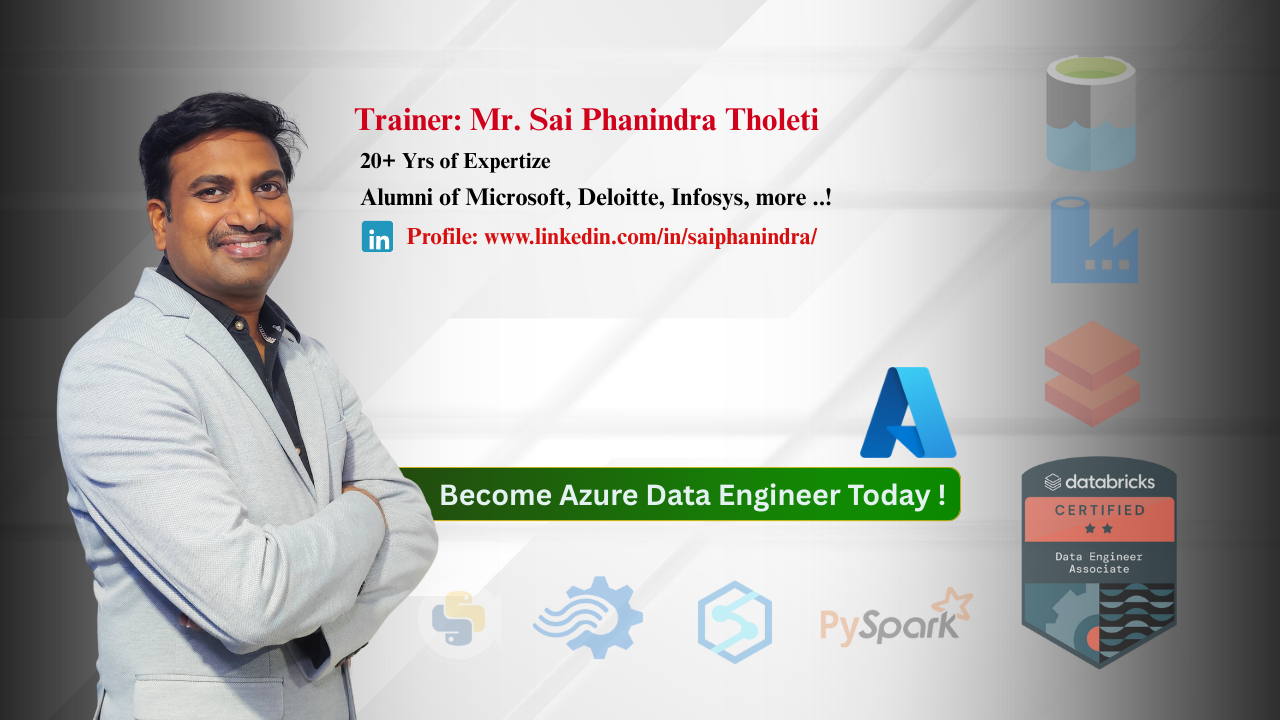

Placement Partners






















SQL SCHOOL
24x7 LIVE Online Server (Lab) with Real-time Databases.
Course includes ONE Real-time Project.
#Top Technologies


Why Choose SQL School
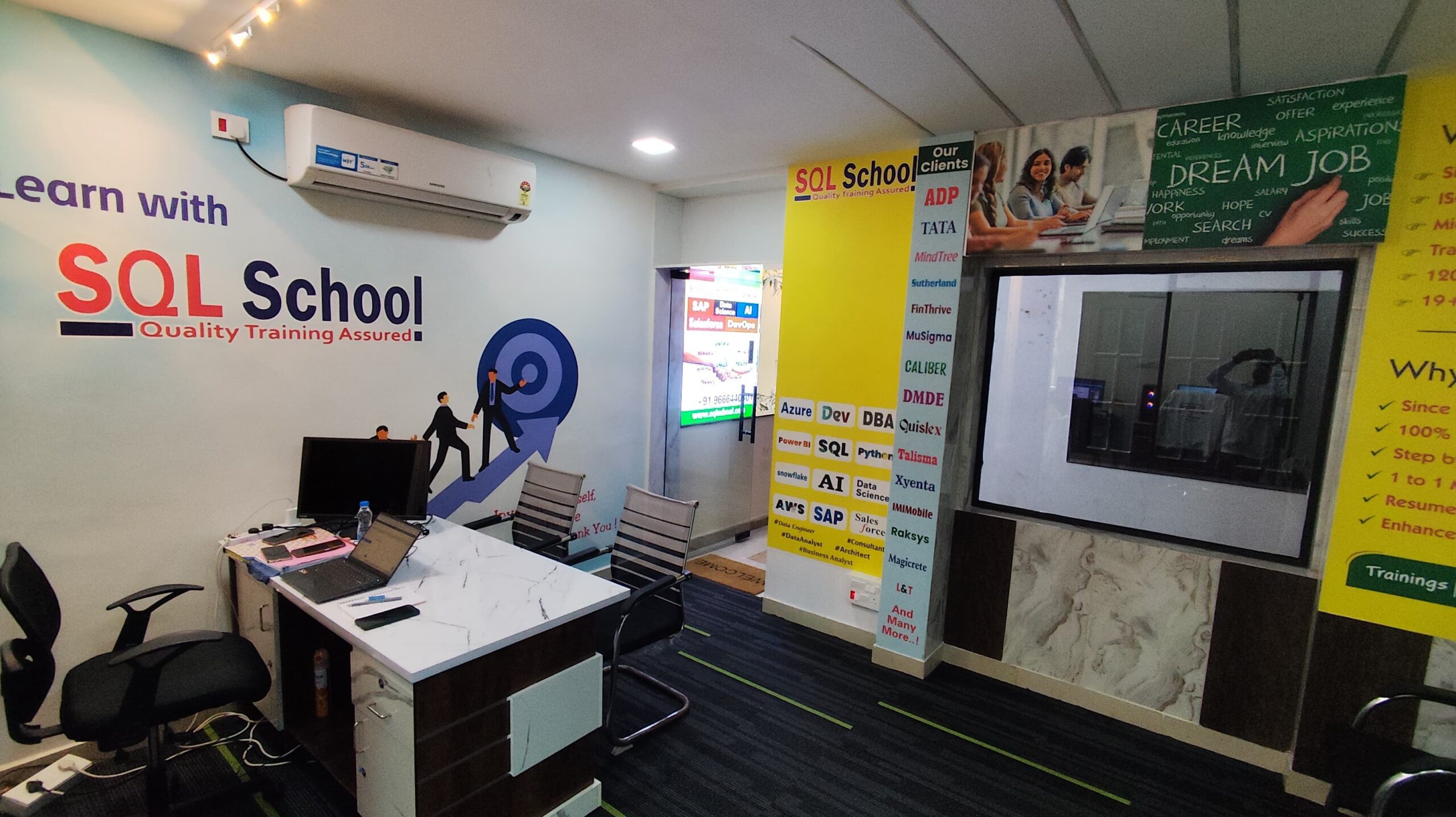
- 100% Real-Time and Practical
- ISO 9001:2008 Certified
- Weekly Mock Interviews
- 24/7 LIVE Server Access
- Realtime Project FAQs
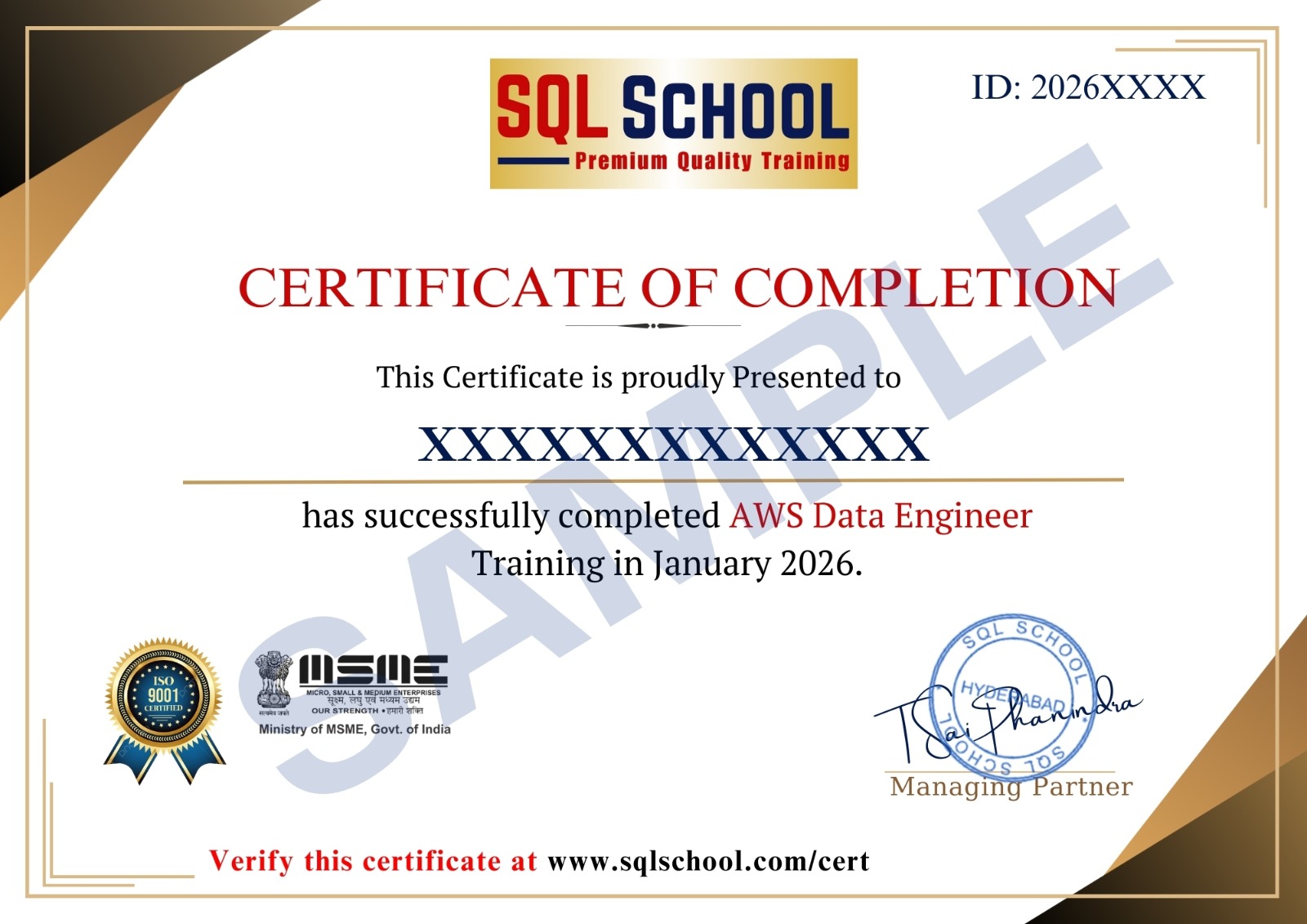
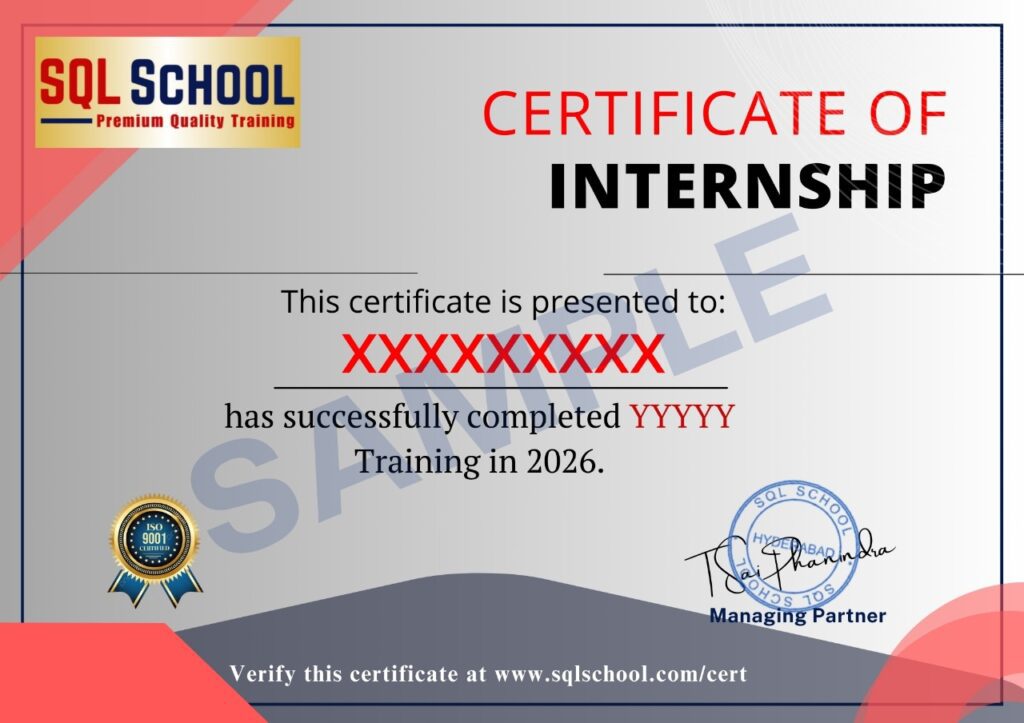
- Course Completion Certificate
- Placement Assistance
- Job Support