Database introduction, DBMS, installation, user management, SQL commands, DDL/DML/DQL/TCL, security & privileges, operators, joins, grouping, functions, constraints, keys, subqueries, and case studies.

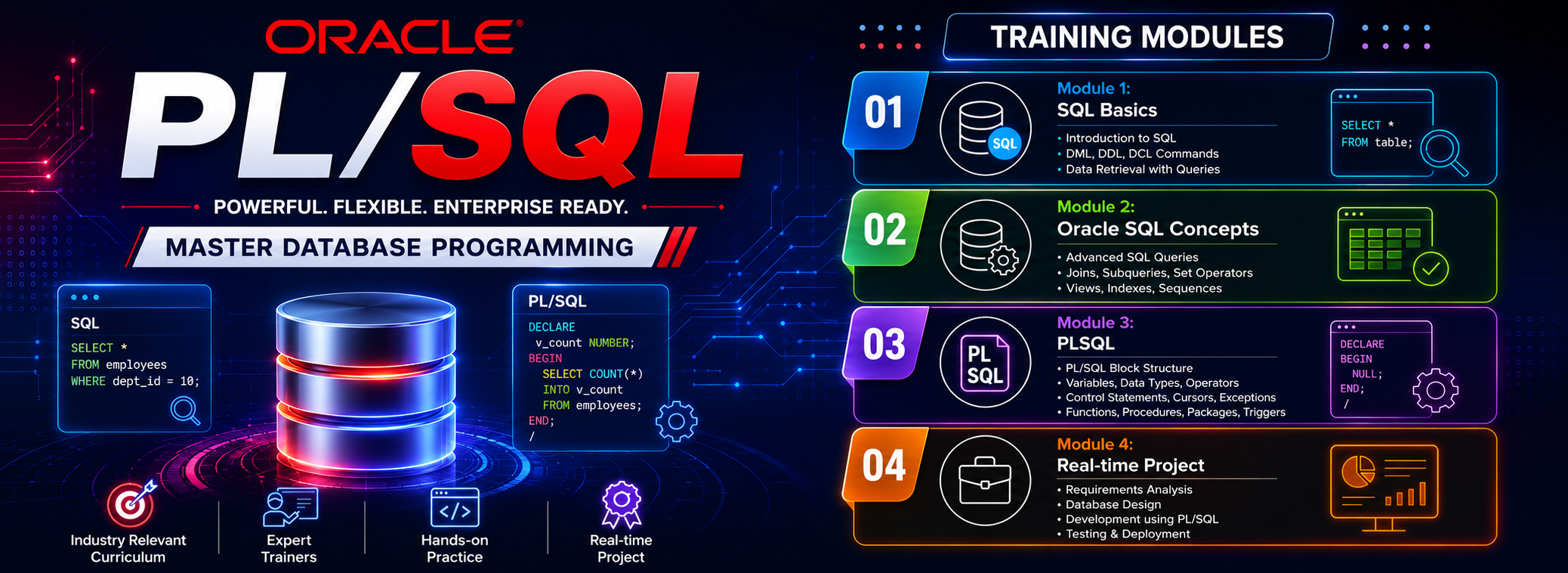
Oracle PL/SQL is Oracle’s powerful extension to SQL, used for developing robust database applications. It tightly integrates with Oracle databases, enabling advanced data manipulation and transaction control. Professionals skilled in PL/SQL are in demand for roles like Database Developer, PL/SQL Programmer, and Oracle DBA.
✅ SQL Queries, Advanced Joins
✅ PL/SQL Procedures & Functions
✅ Cursors, Triggers & Packages
✅ Exception Handling & Errors
✅ Collections & Bulk Operations
✅ Dynamic SQL, Advanced Queries
✅ Query Tuning Options
✅ Security, Roles & Access Control
✅ End-to-End Real-Time Project
✅ 1:1 Mentorship, Interview Guidance
Module 1: Database Fundamentals, Oracle PLSQL Queries
Ch 1: Database, DBMS
- Database Introduction
- Database Types, Purpose
- DBMS & Realtime Use
- Databases: Advantages
- DBMS Technologies
- Oracle DBMS: Intro
Ch 2: Oracle Installation – 1
- Oracle Introduction, Features
- Oracle Advantages, Usage
- Oracle Versions and Editions
- Oracle Installation Guidance
- Pre-Requisites and Precautions
- Oracle SQL Command prompt
- Connect SQL Developer Tool
- New Users, Permissions, Grants
Ch 3: Oracle Installation – 2
- Installation Verifications
- Installation Precautions
- Locking, Unlocking Users
- Password Resets
- Authentication Options
- SQL* Plus Technology
- Oracle System user in Oracle
- Default Sysdba user
Ch 4: Introduction to DBMS
- Features of RDBMS
- Advantages of RDBMS
- E.F Codd Rules for RDBMS
- Normalization Concepts
- Client Server Architecture
- Oracle Versions
- SQL & SQL*PLUS
Ch 5: OLTP & OLAP
- Database Types: OLTP & OLAP
- Real-world Advantages
- Relational Database Model
- Database Entities and Attributes
- RDBMS Databases: Usage
- Oracle DB OLTP Features
- Oracle an OLAP Features
Ch 6: SQL COMMANDS – I
- Structured Query Language
- SQL Operations in Realtime
- Possible Operations with SQL
- Data Definition Language
- Data Retrieval Language
- Data Manipulation Language
- Transaction Control Language
Ch 7: SQL Commands – II
- Security & Privileges (DCL)
- Queries and Statements
- Real-world uses of SQL
- Creating Users and Tables
- Table Inserts, Validations
- Data Types, DESCRIBE
- DDL Commands
Ch 8: Special Operations in SQL
- SQL Operators
- SET, AND, OR, NOT, IN
- Special Operators – IN (NOT IN)
- BETWEEN (NOT BETWEEN),
- Arithmetic & Logical Operators
- Operator Precedence
- UNION, UNION All & LIKE
- INTERSECT, MINUS, etc..
- IS NULL (IS NOT NULL)
Ch 9: Transaction Types
- DCL and TCL Commands
- Transactions in Databases
- Transaction Types and Uses
- Commit and Rollback
- Transactions with SavePoints
- Read Consistency with SQL
- Transaction types in Oracle?
- Realtime use of Transactions
Ch 10: Grouping Query Results
- Distinct Values in Tables
- Group, Aggregate function
- Group By Statement Syntax
- Group By Operations in SQL
- Having with Group By
- Order By Clause, Group By
- Grouping() Function Usage
Ch 11: Single Row Function
- Order By Clause and Group By
- SQL Group By Statement
- Arithmetic, Character Functions
- Date & Time, String Function
- Conversion, Analytical Functions
- Rank,Dense_Rank,Row_Number
- NVL(),NVL2(), NullIF(),Coalesce()
Ch 12: Constraints & Keys – I
- Importance of Data Integrity
- Data Integrity constraints
- Types of Integrity Constraints
- Domain Integrity Constraints
- Entity Integrity Constraints
- Referential Integrity
- Check & UNIQUE
Ch 13: Constraints & Keys – II
- PRIMARY KEY Constraint
- FOREIGN KEY Constraints
- Column Level & Table Level
- Adding Constraints
- Self-Referential Integrity
- Cascading Keys in Realtime
- Use Case Scenarios
Ch 14: Queries & Joins – I
- Joins and Table Comparisons
- SET Operations with Joins
- How do Joins work in SQL?
- Equi Join, Simple Join
- Inner Join and Query Conditions
- Cross Join (Cartesian Join)
- Join syntax and Ansi Syntax
- Non-Equi Join and Self Join
Ch 15: Queries & Joins – II
- Outer Joins – Types
- Cross Joins – Advantages
- Merge Joins, Sub Queries
- Join Aliases and Conditions
- Inner Self Joins with HAVING
- JOINS and GROUP BY Queries
- Inner Join and Self Join
- Realtime Use Cases
Ch 16: Views
- Understanding Views & Use
- Relational, Standard Views
- SIMPLE, COMPLEX VIEWS
- Column Definitions
- VIEWS for DML Operations
- Forced, CHECK Constraints
- READ ONLY VIEWS – Use
- Indexed Views
Ch 17: Synonyms, Sequences
- Sequences, with Synonyms
- Use of Synonym in Oracle?
- Views Versus Synonyms
- Table Synonyms Usage
- Public and Private Synonyms
- Synonym Identification Options
- Realtime Use of Synonyms
- Synonyms: Limitations
Ch 18 : Sub Queries
- Sub Queries in Real-world
- Conditions with Sub Queries
- Sub Queries, Nested Queries
- Nested Sub Query Execution
- Inner and Outer Queries
- Sub Queries and HAVING
- Performance Impact
- Retrieval of Nth Row
Ch 19: Realtime Case Study (Ecommerce / Medicare)
Module 2: PLSQL Programming
Ch 19: SUB QUERIES – II
- Delete Duplicate Records
- Advantages: Sub Queries
- Subquery, Clause Examples
- Execution of Correlated Sub
- IN, ANY SOME, ALL
- PAIR WISE & NON PAIR
- Single, Multi Row Subquery
- Multiple Column Subquery
Ch 20: PL/SQL – (Control Structures)
- Simple If, .Else, Nested If..Else
- Ladder, Selection, Case Stmt
- GOTO Label & EXIT Statements
- Iterations, Simple LOOP, WHILE
- FOR LOOP and NESTED LOOPS
- PL/SQL Select statements
- Composite Data Types
- Cursor Management in PL/SQL
Ch 21 : PL/SQL – (CONTROL STRUCTURE) – Level II
- Implicit & Explicit Cursors
- Cursor with Parameters
- Cursors with Sub Queries
- Reference Cursors
- Cursor Exit Options
- FOR Loops with Cursors
- Realtime Considerations
Ch 22: OOPS Concepts
- Object Technology and Use
- OOPS – Object Instances
- Creation of Objects
- User Defined Data Types
- Object Tables in Oracle
- Inserting rows using Object
- Data @ Object Based Tables
- Methods, Indexing Abstract
- Data type Attributes
Ch 23: ADVANCED PL/SQL – 1
- Procedures in PL/SQL
- PROCEDURES @ Parameters
- Procedures, Cursors, Queries
- ALTER and DROP of SPs
- Functions and Real-time Use
- User Defined Functions
- Nested Functions
- Comparing Functions and SPs
- Complex Procedures in PLSQL
Ch 24: ADVANCED PL/SQL – 2
- Triggers and their types?
- Follows & READONLY Tables
- Inline Views – Manipulations
- Purity Levels in Oracle
- Source Dictionary Packages
- PACKAGE Specifications
- PACKAGE Body, Big Data
- Trigger Types in Realtime
- Triggers with Procedures
Module 3: Realtime Project
- Realtime Project in Banking Domain
- Project Requirement
- Project Solution
- Project FAQs
- Resume
- Mock Interview

What is the Oracle SQL & PL/SQL Training?
This course teaches Oracle Database fundamentals, SQL queries, PL/SQL programming, Control Structures, Cursors, Functions, Procedures, Triggers, OOPS in Oracle, and a real-time project.
Who can join this Oracle course?
Anyone — freshers, Data Analysts, Database Developers, SQL Developers, Database Administrators, and professionals who want to begin or grow in Oracle technologies. The course starts from scratch.
What is the duration of the Oracle SQL & PL/SQL training?
The total duration is 6 weeks, including Oracle SQL module, PL/SQL programming module, and a full real-time project.
Does this course include Oracle Installation guidance?
Yes. You will learn Oracle installation, versions, editions, SQL*Plus, SQL Developer, user creation, grants, permissions, locking/unlocking users, and authentication.
What SQL commands will I learn?
CREATE, ALTER, DROP, RENAME, TRUNCATE, INSERT, UPDATE, DELETE, COMMIT, ROLLBACK, GRANT, REVOKE, and complete query execution flow.
Do you teach SQL Operators and Set Operations?
Yes. AND, OR, NOT, BETWEEN, IN, LIKE, IS NULL, UNION, UNION ALL, INTERSECT, MINUS, arithmetic and logical operators, and operator precedence.
Are Joins covered in detail?
Yes. Equi Join, Inner Join, Outer Joins, Cross Join, Non-Equi Join, Self Join, Merge Join, and real-time join conditions with subqueries and GROUP BY.
What are the constraints and keys covered in Oracle SQL?
Primary Key, Foreign Key, Check, Unique, NOT NULL, Referential Integrity, cascading keys, table-level & column-level constraints, and real-time use cases.
Do we learn Views, Synonyms, and Sequences?
Yes. Simple & complex views, indexed views, read-only views, synonyms (public/private), sequence creation, usage, and limitations.
Do you teach Subqueries and Nested Queries?
Yes. Single-row and multi-row subqueries, correlated subqueries, nested queries, IN/ANY/ALL operators, pairwise and non-pairwise queries, performance impact, and Nth row retrieval.
Is Transaction Management covered?
Yes. COMMIT, ROLLBACK, SAVEPOINT, auto-commit, read consistency, transaction types, and real-world transaction handling in Oracle.
What is included in the PL/SQL Programming module?
If/Else, CASE, loops, control structures, composite data types, implicit/explicit cursors, cursor parameters, cursor exit options, reference cursors, and performance considerations.
Will I learn Procedures and Functions?
Yes. Procedure creation, parameters, altering & dropping procedures, user-defined functions, nested functions, SP vs Function differences, and real-time procedure design.
Are Triggers included in the course?
Yes. Trigger types, read-only tables, trigger usage with procedures, purity levels, inline views, and real-time trigger workflows.
Do you teach Object-Oriented Concepts in Oracle?
Yes. Object types, object instances, object tables, inserting data into object tables, methods, attributes, and indexing abstract data types.
Is there a Real-Time Project included?
Yes. A complete Banking Domain real-time project covering requirements, solution, SQL + PL/SQL implementation, project FAQs, resume preparation, and mock interview support.
Is the training beginner-friendly?
Absolutely. The course starts from DBMS basics and gradually builds up to advanced PL/SQL programming and real-time development.
What training modes are available?
Live Online Training, Self-Paced Videos, Corporate Training, Real-Time Project Support, Resume Building, and Mock Interviews.
Placement Partners


SQL SCHOOL
24x7 LIVE Online Server (Lab) with Real-time Databases.
Course includes ONE Real-time Project.
#Top Technologies
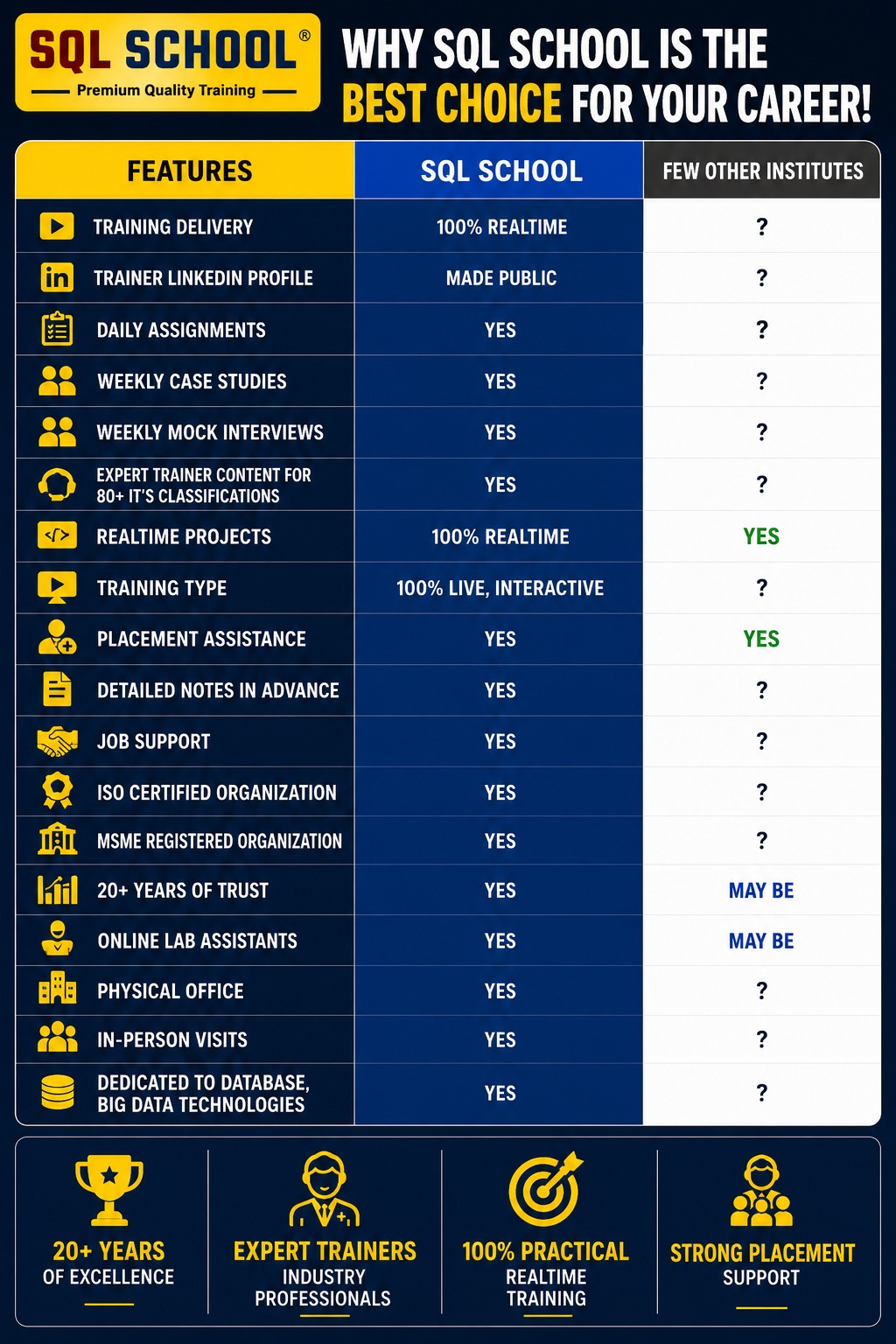
Why Choose SQL School
- 100% Real-Time and Practical
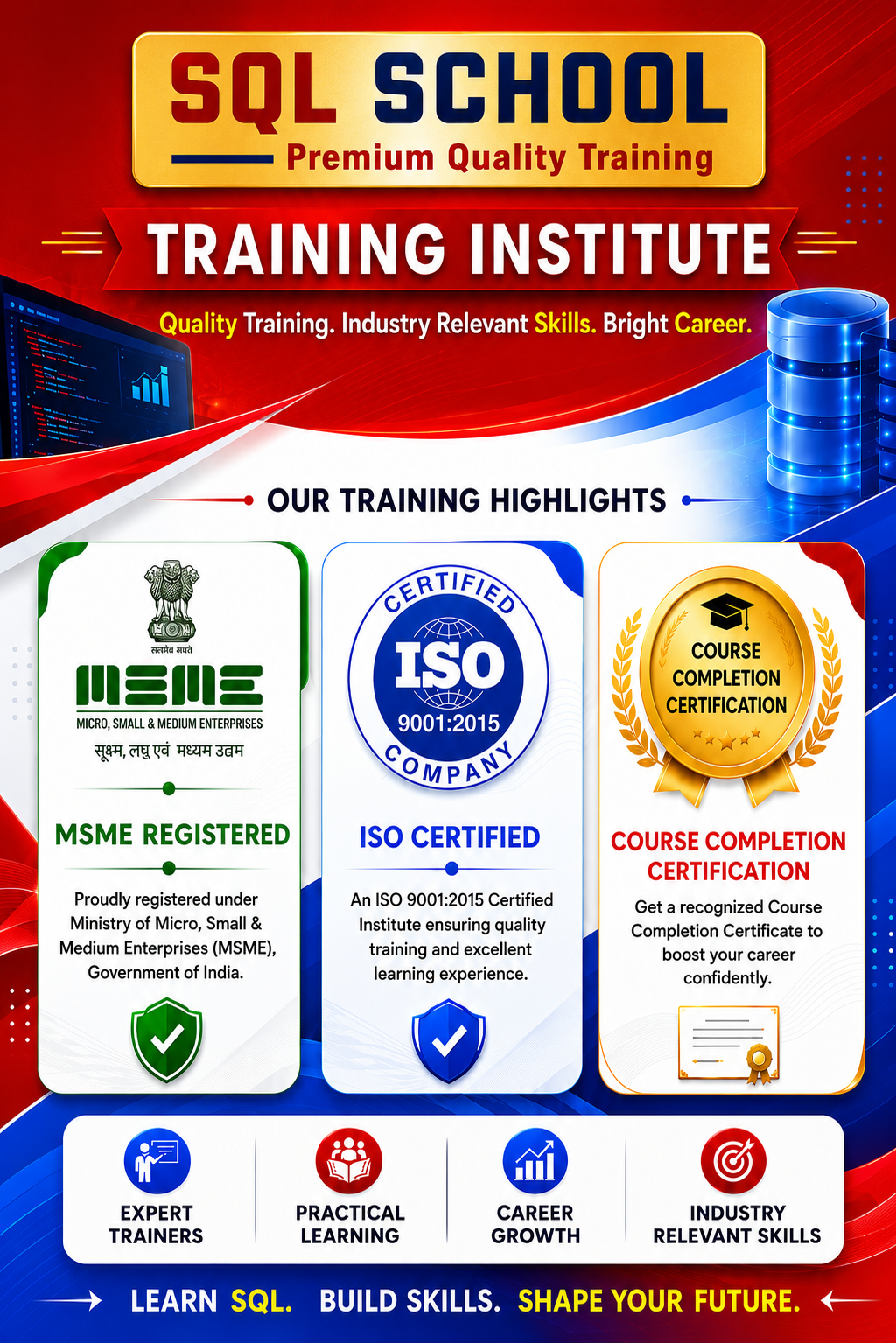
- ISO 9001:2008 Certified
- Weekly Mock Interviews
- 24/7 LIVE Server Access
- Realtime Project FAQs
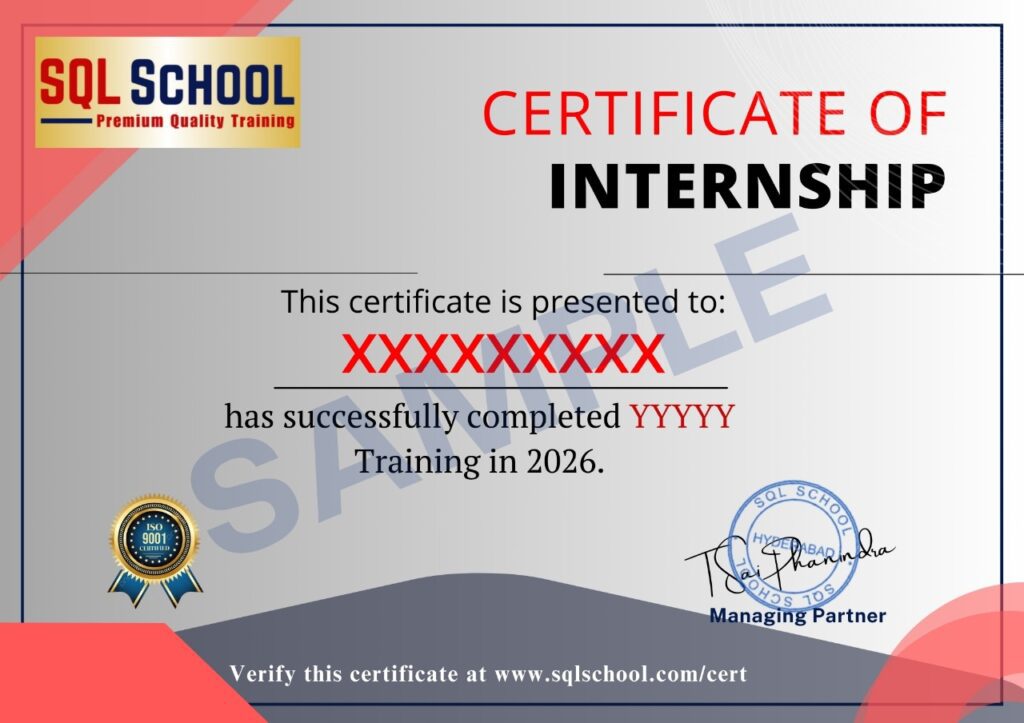
- Course Completion Certificate
- Placement Assistance
- Job Support