
Windows OS, 6 GB RAM, any processor. SQL School provides installation guidance and complete lab support.
Microsoft SQL Server is one of the stable technologies in database platform. SQL Databases are every where around us.. from Banking to HealthCare, from Petro Chemicals to Retail – SQL Server is the most preferred database systems in the IT market for last FOUR decades !
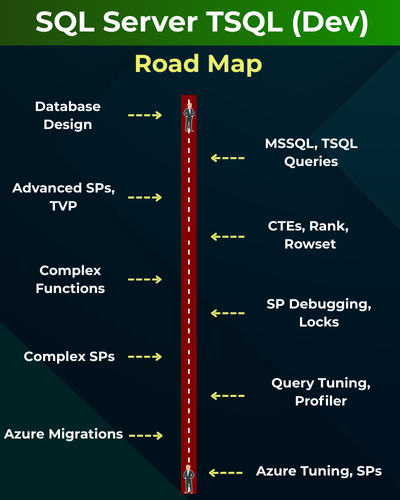
✅ SQL Queries, Joins & Subqueries
✅ Stored Procedures, Functions, Triggers
✅ Views, CTEs & Window Functions
✅ TSQL Programming & Error Handling
✅ Data Modeling & Normalization
✅ QueryTuning & Locks, Isolations
✅ Azure SQL DB Migrations
✅ Azure Tuning, Complex SPs
✅ End-to-End Real-Time Project
✅ 1:1 Mentorship, Interview Guidance
SQL Developer
Training Course Contents:
Module 1: MSSQL & TSQL Queries
Ch 1: SQL SERVER INTRODUCTION
- Database Introduction
- Types of Databases
- Need for & ETL, DWH
- BI Implementations
- SQL Server Advantages
- Version, Editions of MSSQL
- Data Analyst Job Roles
Ch 2: SQL SERVER INSTALLATIONS
- SQL Server 2022, 2019
- SSMS Tools Installation
- Database Engine (OLTP)
- SCM, Configuration Tools
- Instance Types, Uses
- Authentication Modes
- Collation, File Stream
Ch 3: SQL BASICS – 1
- Need for Databases, Tables
- Need for SQL Commands
- DDL, DML & DQL Statements
- Database Creation @ GUI
- Data Operations @ GUI
- Session ID, SQL Context
- DB, Tables, Data @ SQL
Ch 4: SQL BASICS – 2
- DDL Variants in MSSQL
- DML Variants in MSSQL
- INSERT & INSERT INTO
- SELECT & SELECT INTO
- Basic Operators in SQL
- Special Operators in MSSQL
- ALTER, ADD, TRUNCATE, DROP
Ch 5: Data Imports, Schemas
- Data Imports with Excel
- ORDER BY & UNION
- UNION ALL For Sorting Data
- Creating, Using Schemas
- Real-world Banking Database
- Table Migrations @ Schemas
- 2 Part, 3 Part & 4 Part Naming
Ch 6 : Constraints, Index Basics
- Need for Constraints, Keys
- NULL, NOT NULL, UNIQUE
- Primary Key & Foreign Key
- RDBMS and ER Models
- Identity Property, Default
- Clustered Index, Primary Key
- Non Clustered Index, Unique
Ch 7: Joins & Views Basics
- JOINS: Purpose. Inner Joins
- Left / Right / Full Outer Joins
- Cross Joins, Query Tuning
- Creating & Using Views
- DML, SELECT with Views
- RLS : WITH CHECK OPTION
- System Views & Metadata
Ch 8: Functions(UDF), Data Types
- Using Functions in MSSQL
- Scalar Value Functions
- Inline & Multiline Functions
- Date & Time Functions
- String, Aggregate Functions
- Data Types : Integer, Char, Bit
- SQL Variant, Timestamp, Date
Ch 9: Stored Procedures,Models
- Stored Procedures & Usage
- Creating, Testing Procedures
- Encryption, Deferred Names
- SPs for Validations, Analysis
- System SPs, Recompilation
- Normal Forms & Types
- Data Models, Self-References
Ch 10: Triggers, Temp Tables
- Need for Triggers
- DDL & DML Triggers
- Using Memory Tables
- Data Replication, Automation
- Local & Global Temp Tables
- Testing & Using Temp Tables
- SELECT .. INTO & Bulk Loads
Ch 11: DB Architecture, Locks
- Planning VLDBs : Files, Sizing
- Filegroups, Extents & Types
- Log Files : VLF, Mini LSN
- Table Location, Performance
- Schemas, Transfer, Synonyms
- Transactions Types, Lock Hint
- Query Blocking Scenarios
Ch 12 : Cursors & CTEs, Links
- Cursors : Realtime Use
- Fetch & Access Cursor Rows
- CTEs for SELECT, DML
- CTEs: Scenarios & Tuning
- Linked Servers, Remote Joins
- Linked Servers: MSDTC, RPC
- Tuning Remote Queries
Ch 13: Merge, Upsert & Rank
- Need for Merge in ETL
- Incremental Loads with SQL
- MERGE and RANK Functions
- Window Functions, Partition
- Identify, Remove Duplicates
Ch 14: Grouping & Cube
- Group By & HAVING
- Cube, Rollup & Grouping
- Joins with Group By
- 3 Table, 4 Table Joins
- Query Execution Order
Ch 15: Self Joins, Excel Analysis
- Self Joins & Self References
- UNION, UNION ALL
- Sub Queries with Joins
- IIF, CASE, EXISTS Statements
- Excel Analytics, Pivot Reports
Module 2: Query Tuning
Ch 16: Query Audits, Perfmon
- Query Performance Issues
- Reasons for Slow Queries
- Performance Tuning Options
- Performance Tuning Tools
- Query Store & History
- Activity Monitor, Perfmon
- DMVs & DMFs for Audits
Ch 17: Indexes & Tuning
- Indexes : Sort Locations
- Clustered & Online Indexes
- Non Clustered, Columnstore
- Included Indexes in Realtime
- Filtered Indexes & Usage
- Covering Index & Selectivity
- Indexed Views (Materialized)
Ch 18: Partitions, Statistics
- Partition Implementations
- Partition Functions & Schemes
- Primary & Secondary Types
- Data Archival with Partitions
- Compression with Partitions
- Statistics : Realtime Use
- Index, Column Stats, Updates
Ch 19: Tuning Tools, Exec Plans
- Tuning Tools and Workloads
- Profiler Tool : Trace Files
- Trace Filters and Rollover
- DTA Tool Recommendations
- PDS, & Index Size, Index Scan
- Execution Plans, Index Seeks
- Query Cost Issues, Solutions
Ch 20: MOT & Temporal Tables
- Memory Optimized Tables
- Non Clustered Primary Keys
- Stats Updates, Performance
- Temporal Tables in Realtime
- History Tracking & Testing
- Timestamp Columns Usage
- Tuning Stored Procedures
Ch 21: Locks & Isolation Levels
- Transactions & Locks
- Lock Types & Performance
- Lock Management Options
- Isolation Levels & TempDB
- Snapshots and Performance
- Deadlocks Simulations, Graphs
- Profiler Tool & LIVE Locks
Module 3: TSQL Programming & Tuning
Ch 22: Adv. Stored Procedures 1
- Declaring, Using Variables
- Using Triggers with Views
- Updatable Views, DML
- Views & Stored Procedures
- Data Distributions in Tables
- Transactions with Procedures
- Conditional Commits in SPs
- Rollback Options in Realtime
Ch 23: Adv. Stored Procedures 2
- Table Valued Parameters
- Using TVP with Procedures
- Creating User Defined Types
- Big Data Copy & Transactions
- Using SPs & Table Variables
- Transactional Integrity
- Output Parameters in SP
- IN and OUT Options Usage
Ch 24: Adv. Stored Procedures 3
- Dynamic SQL Programs
- sp_executesql Extended SP
- Formatting Queries, Nvarchar
- Cursors Types: Local, Global
- Cursor Types: Static, Dynamic
- Forward Only, Scroll Types
- WHILE Loop: @@Fetch Status
- Variables with Dynamic SQL
Ch 25: Complex Functions (UDF)
- Inline, Table Line Functions
- Multi Line Table Functions
- Using LOOPs in Functions
- Variables & Return Values
- Table Generation Logic
- Date & Time Data Types
- Calendar Data Generations
Ch 26: Complex Functions – 2
- Reading JSON Data
- Using OPENROWSET ()
- Using nvarchar(max) values
- Using PIVOT () Function
- Data De-duplication in SQL
- Recursive CTEs, Anchors
- Recursive CTEs, Anchors
Ch 27 – 30: Banking Project
- Design & Planning Phase
- Querying Phase
- Programming Phase
- Debugging Phase
- Testing Phase
- Complete Project Solution
- Project FAQs, Resume Points
Module 4: Azure SQL Dev
Ch 31: Cloud Basics, Azure Funda
- Cloud Fundamentals
- Cloud Concepts, Benefits
- IaaS, PaaS, SaaS Cloud Types
- Azure Cloud Concepts
- Azure Resources & Usage
- Azure Services & Purpose
- Azure Account & Subscription
Ch 32: Azure SQL Database
- Azure SQL Services
- Azure SQL Server Creation
- Azure SQL Databases
- Azure Firewall: Rules
- Test Connections from SSMS
- SSMS Tool: Test Connections
- ADS Tool: Installation, use
Ch 33: Azure SQL DB Migrations
- SQL DB Migration Options
- Data Migration Assistant: DMA
- DMA Tool, Migration Options
- On-Premises DB Export
- Azure SQL Database Import
- Azure Storage Account
- Linking SSMS with Azure
Ch 34: Azure SQL DB Licensing
- Azure SQL DB Licensing
- Per Database Licensing
- DTUs: Basic, Standard Types
- VPU and Plan Types
- DTU Versus VPU Licensing
- Elastic DTUs (eDTU) Usage
- Elastic Query Processing
Ch 35: Azure SQL DB Metrics
- Azure SQL DB Metrics
- CPU, Memory, Log Metrics
- Data File Metrics, Alerts
- Action Groups & Emails
- Query Performance Insight
- Automated Tuning Options
- Query Recommendations
Ch 36: Azure SQL DB Tuning, AI
- Automated Tuning Options
- Manual Tuning Options
- Server Level Tuning
- Database Level Tuning
- AI Search Service, Tuning
- AI Indexes and Practical Use
- Watermark Columns, Updates
Ch 37: Azure PaaS & Azure IaaS
- Azure PaaS: Operations
- Azure Paas: Limitations
- Azure IaaS: Advantages
- Azure IaaS Components
- Azure Virtual Machines
- Capacity & Networking
- Disk & Memory Config.
Ch 38: Azure IaaS Concepts
- Azure Virtual Machines
- SQL Server with Azure VM
- Access Azure VM from SSMS
- Migrations from PaaS
- Migrations from On-Premise
- Azure Data Studio, VMs
- Comparing SSMS & ADS Tool
Ch 39 – 40: Banking Project
- OLTP Databases in Azure
- Code Based Deployments
- Code Less Deployments
- Debugging Phases in Azure
- Testing Phases in Azure
- Complete Project Solution
- Project FAQs, Resume Points

What is the SQL Server T-SQL Training?
This course teaches complete SQL Server T-SQL from basics to advanced: SQL queries, T-SQL programming, query tuning, and Azure SQL development with real-time practical training.
Who can join this SQL course?
Anyone — freshers, non-IT students, Data Analysts, BI Developers, Data Engineers, and SQL Developers. No prerequisites. All topics start from basics.
What are the training plans available?
Plan A: MSSQL + TSQL Queries
Plan B: MSSQL + TSQL Programming + Query Tuning
Plan C: MSSQL + Programming + Tuning + Azure SQL Dev with AI
Each plan includes increasing depth and duration.
What are the core SQL basics covered?
Database creation, tables, DDL, DML, DQL, SELECT queries, operators, schema usage, Excel imports, and SQL Server installation.
Do you teach constraints and keys?
Yes. NULL, NOT NULL, UNIQUE, PRIMARY KEY, FOREIGN KEY, DEFAULT, ER diagrams, and relational modelling are covered.
What indexing topics will I learn?
Clustered, non-clustered, unique indexes, composite indexes, index tuning, index usage verification, and query optimizer basics.
Are joins taught in detail?
Yes. Inner, left, right, full outer, cross joins, multi-table joins, aliasing, join audits, and real-time comparison queries.
Do you teach Views, RLS, and metadata?
Yes. Creating & using views, DML with views, Row Level Security, CHECK OPTION, system metadata queries, and audits.
Will I learn Stored Procedures?
Yes. Writing stored procedures, input/output parameters, tuning SPs, metadata SPs, recompilation, and transaction-based procedures.
Are Functions taught in this SQL course?
Yes. Scalar, inline table-valued, multi-statement functions, date/time functions, string functions, and aggregated queries.
Do you cover Triggers and Automations?
Yes. DML triggers, DDL triggers, Instead Of triggers, replication logic, audit triggers, and automation concepts.
Will I learn transactions and ACID concepts?
Yes. Transaction control, commit/rollback, checkpoints, locks, blocking, lock hints, and real-time OLTP usage.
Do you teach SQL tuning and performance optimization?
Yes. CTEs for tuning, statistics, indexing strategies, partitions, query store, execution plans, DMVs/DMFs, and workload analysis.
What advanced T-SQL programming topics are included?
Variables, try-catch, table types, TVPs, dynamic SQL, recursive CTEs, loops, PIVOT/UNPIVOT, temp tables, synonyms, and debugging.
Is SQL Server architecture included in this course?
Yes. Database engine architecture, compiler, optimizer, SQL OS, storage, log files, filegroups, pages, extents, VLFs, and large database planning.
Do you cover locking, deadlocks, and isolation levels?
Yes. Lock types, blocking scenarios, deadlock analysis, SP_LOCK, SP_WHO2, profiler deadlock graphs, and all isolation levels including snapshot.
Is Azure SQL included in the training?
Yes, in Plan C. Azure SQL fundamentals, DB creation, networking, firewall, migrations, metrics, tuning, AI search, backups, and restores.
Are real-time projects part of the course?
Yes. The training includes mini projects, enterprise case studies, tuning assignments, and 3 real-time projects for resume placement.
What training modes are available?
Live Online Training, Self-Paced Videos, Corporate Training, Resume Support, Mock Interviews, and Free Demo Sessions.
Placement Partners






















SQL SCHOOL
24x7 LIVE Online Server (Lab) with Real-time Databases.
Course includes ONE Real-time Project.
#Top Technologies


Why Choose SQL School
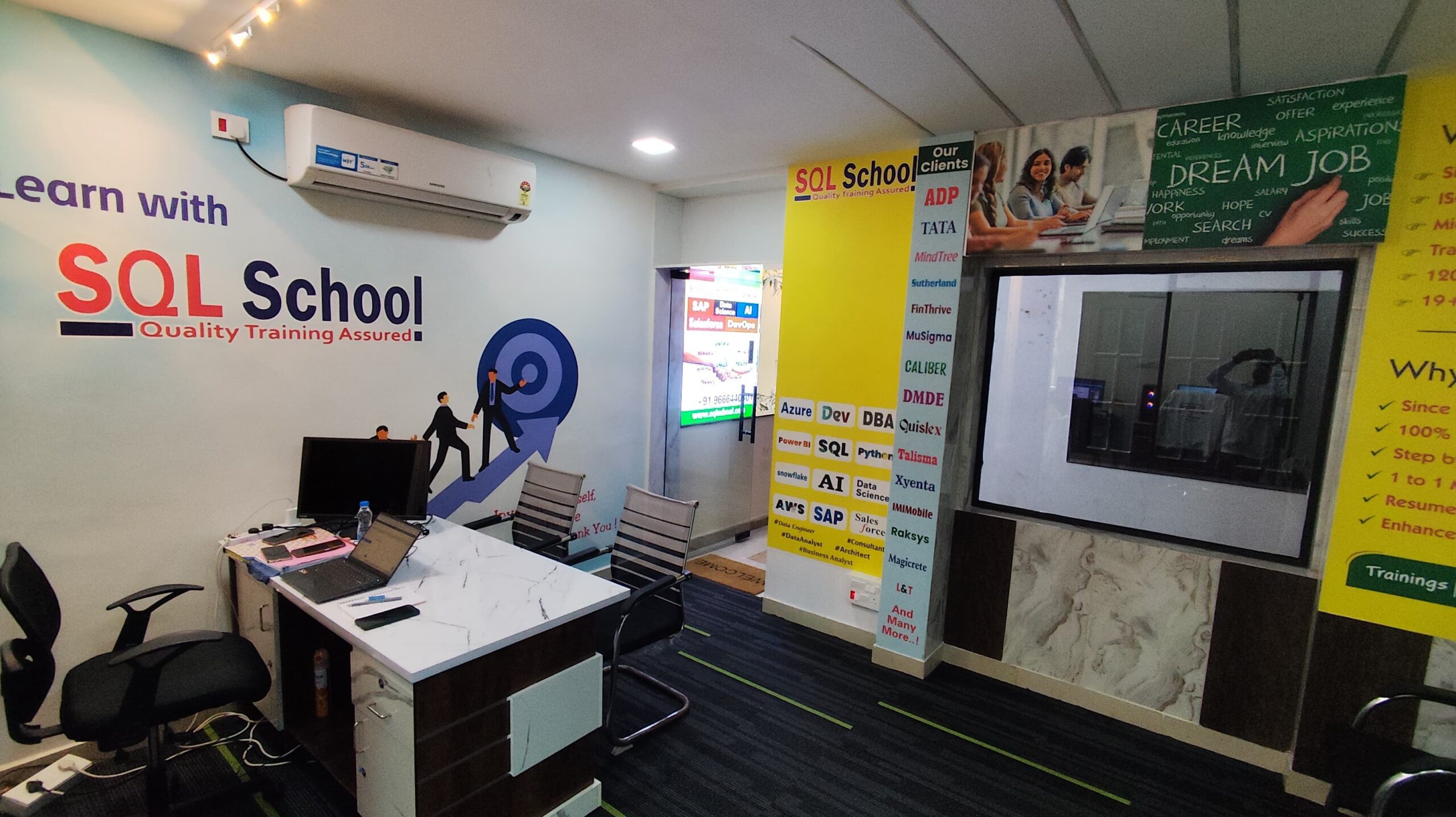
- 100% Real-Time and Practical
- ISO 9001:2008 Certified
- Weekly Mock Interviews
- 24/7 LIVE Server Access
- Realtime Project FAQs
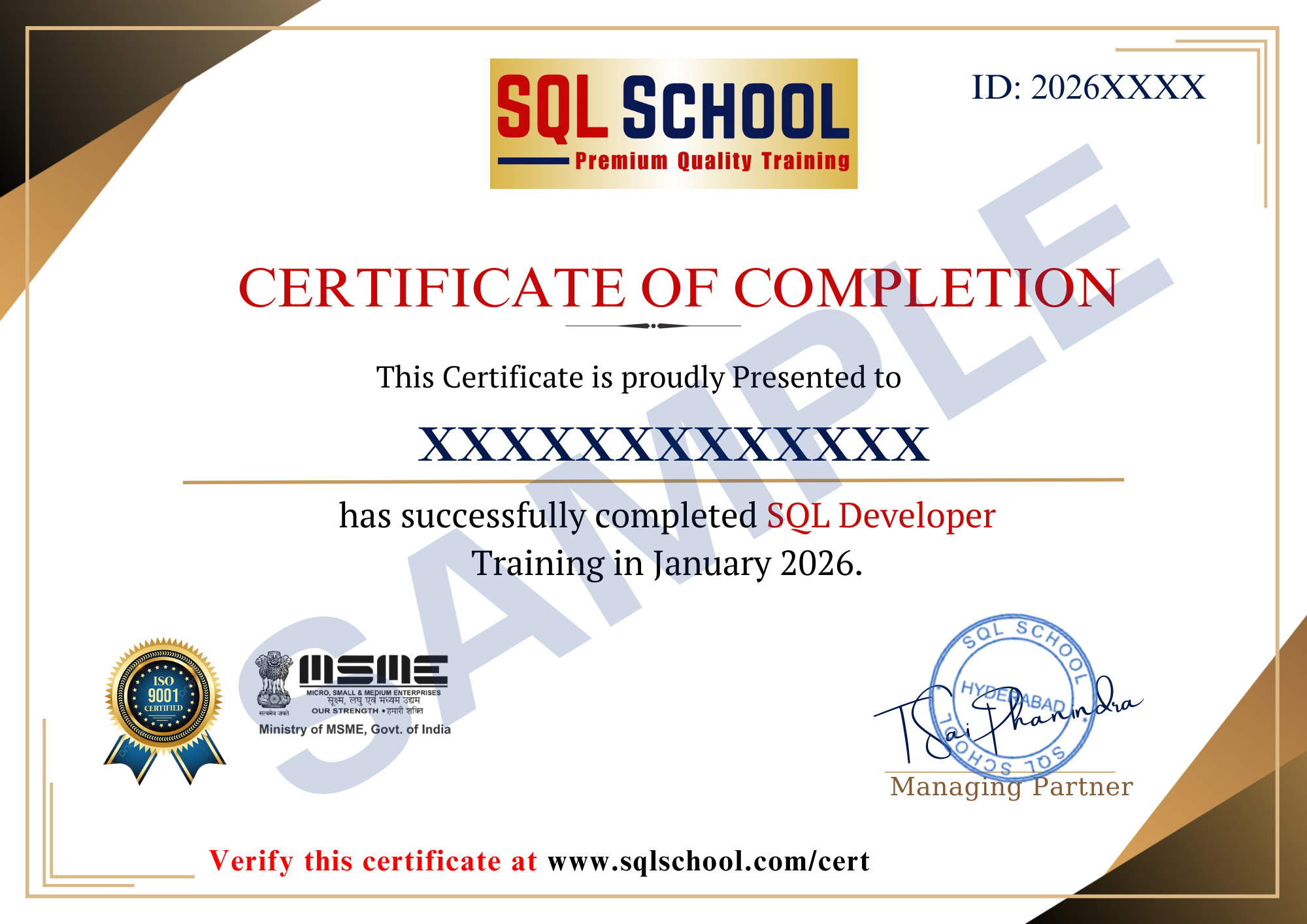
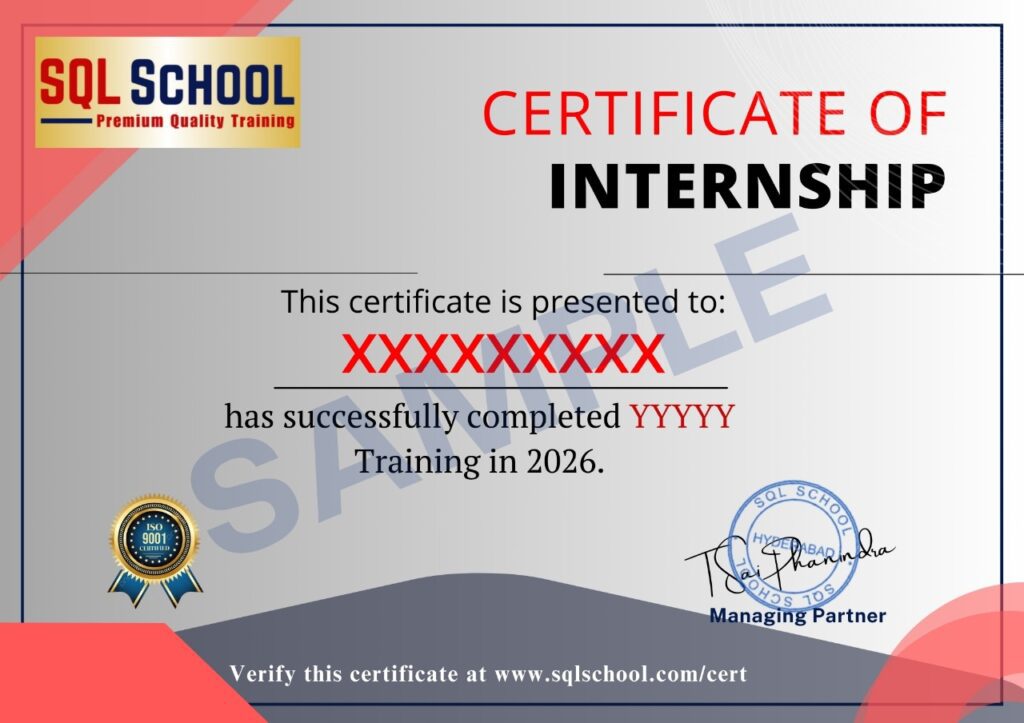
- Course Completion Certificate
- Placement Assistance
- Job Support